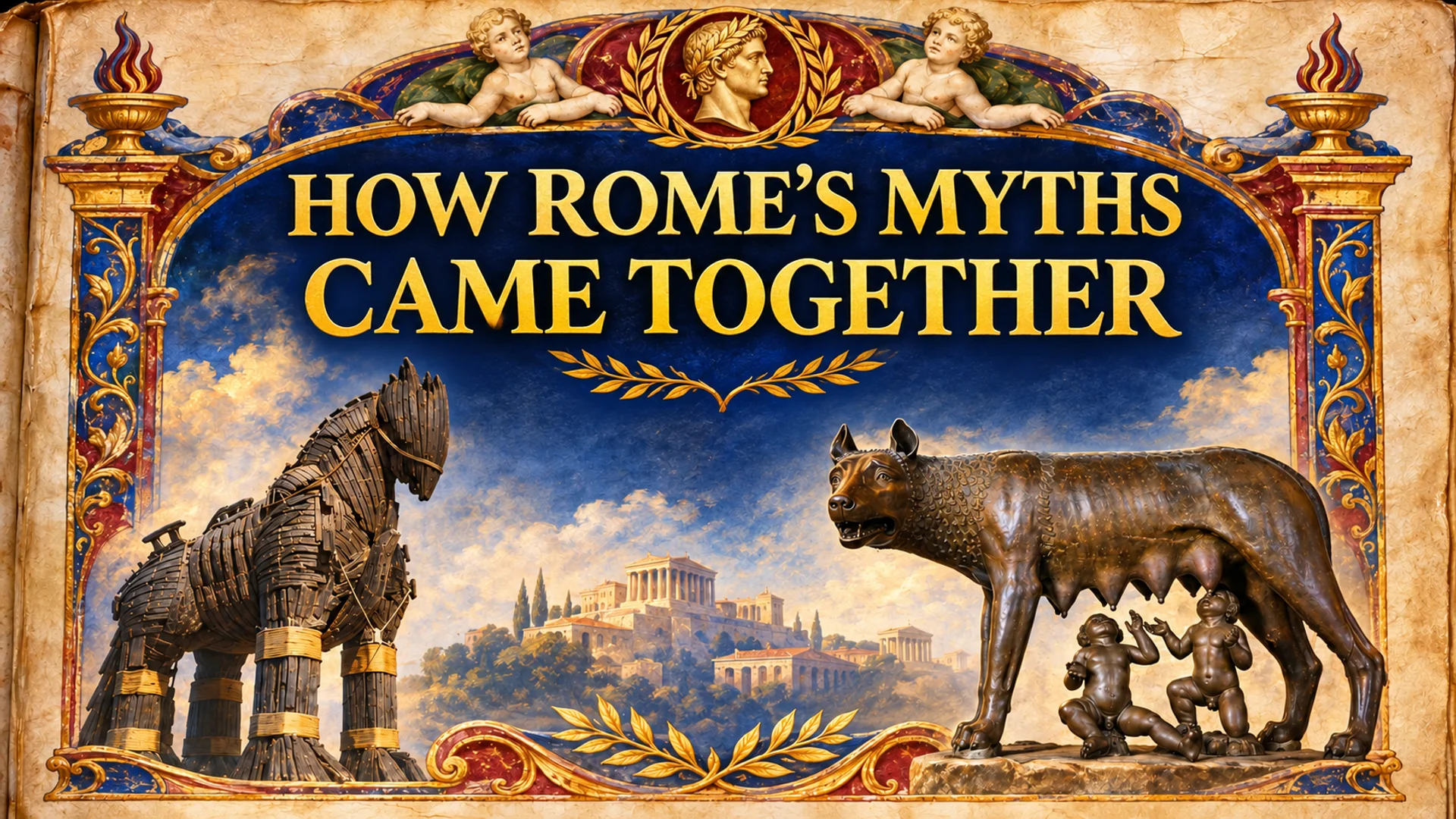
The story of the Trojan horse being dragged inside the gates and the story of Romulus, who was raised by a she-wolf, killing his brother originally had no connection to each other. Today, we naturally perceive these two stories as one continuous history not because a single original source existed since ancient times. It is because a single poem, the Aeneid, woven together from these two stories by the Roman Empire in the first century BCE according to political necessity, became the established canon. This article examines how Aeneas, a survivor of the Trojan War, became the ancestor of Rome, and which stories were deleted in that process.
There Is No Trojan Horse in the Iliad
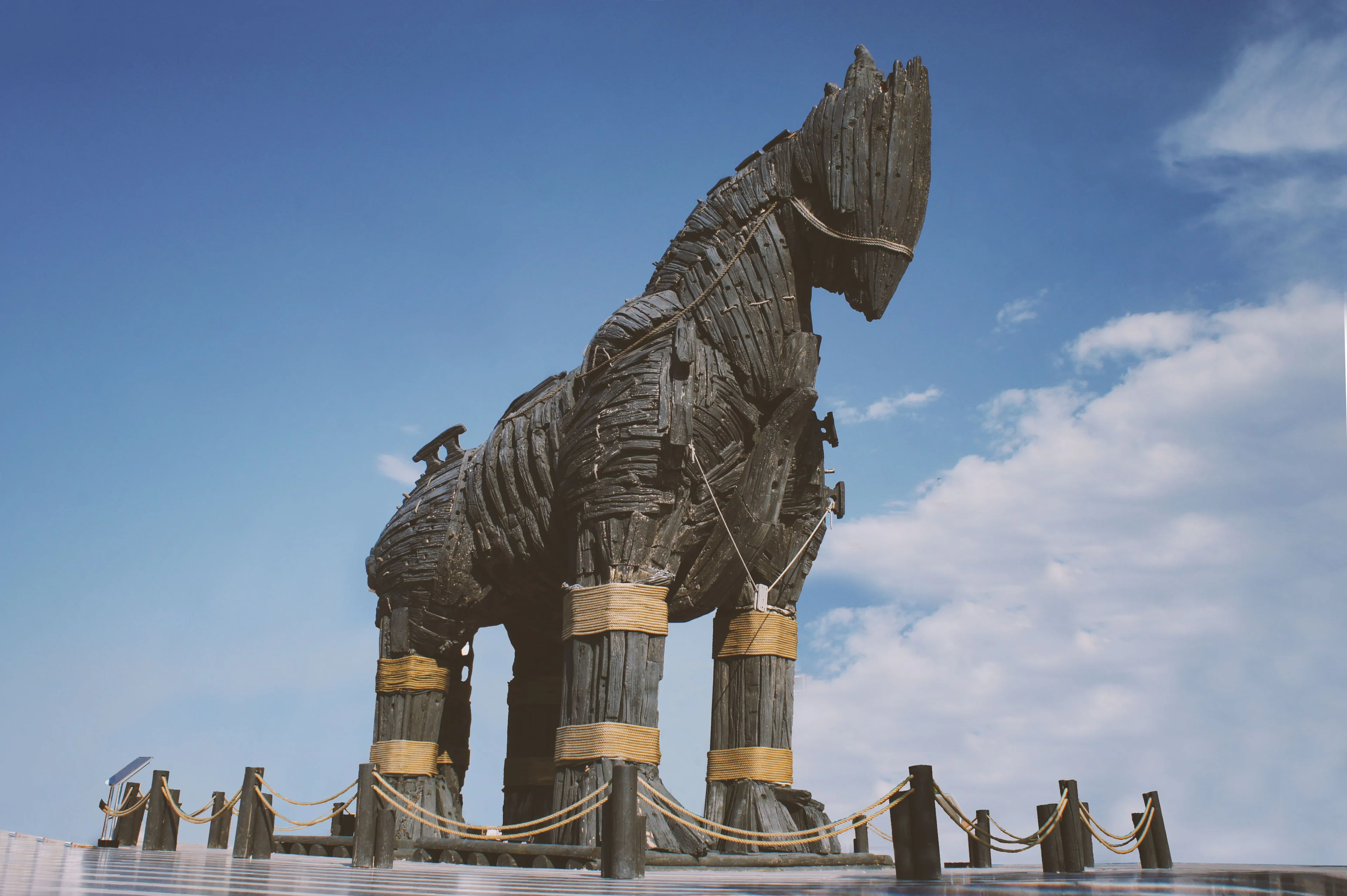
The story of the Trojan horse is often known to be from Homer's epic poem the Iliad, but the horse does not appear even in a single line in the body of the text. The Iliad begins with the wrath of Achilles, the greatest warrior of Greece, and ends with the funeral of Hector, the Trojan general whom Achilles killed 1. The famous scene of the fall of the city, where soldiers hidden inside the horse come out and set fire to the city as night deepens, is content completed in the Odyssey or in sequels written by later poets 1. In other words, the "Trojan myth" as we know it is not a fixed original written by a specific individual, but rather the result of being combined through the hands of various periods and poets.
In this way, the stories about Troy were fluid. In the 19th century, Heinrich Schliemann excavated the Hisarlik hill in Turkey according to Homer's writings and discovered golden ornaments he named "Priam's Treasure." However, subsequent research revealed that this gold was a relic from a period more than 1,000 years earlier than the estimated time of the Trojan War 1. There were nine urban layers on the hill formed over 3,000 years, and Schliemann hastily dug through the upper layers, damaging the layer that might have had chronological consistency with Homer's epics 1. Whether the Trojan War was actual history is even the subject of complex debate. Therefore, the setting that Trojan survivors migrated to Italy and founded Rome is closer to a literary and political construction than an archaeological fact.
The Brothers Raised by a Wolf and the Many Disappeared Founding Candidates
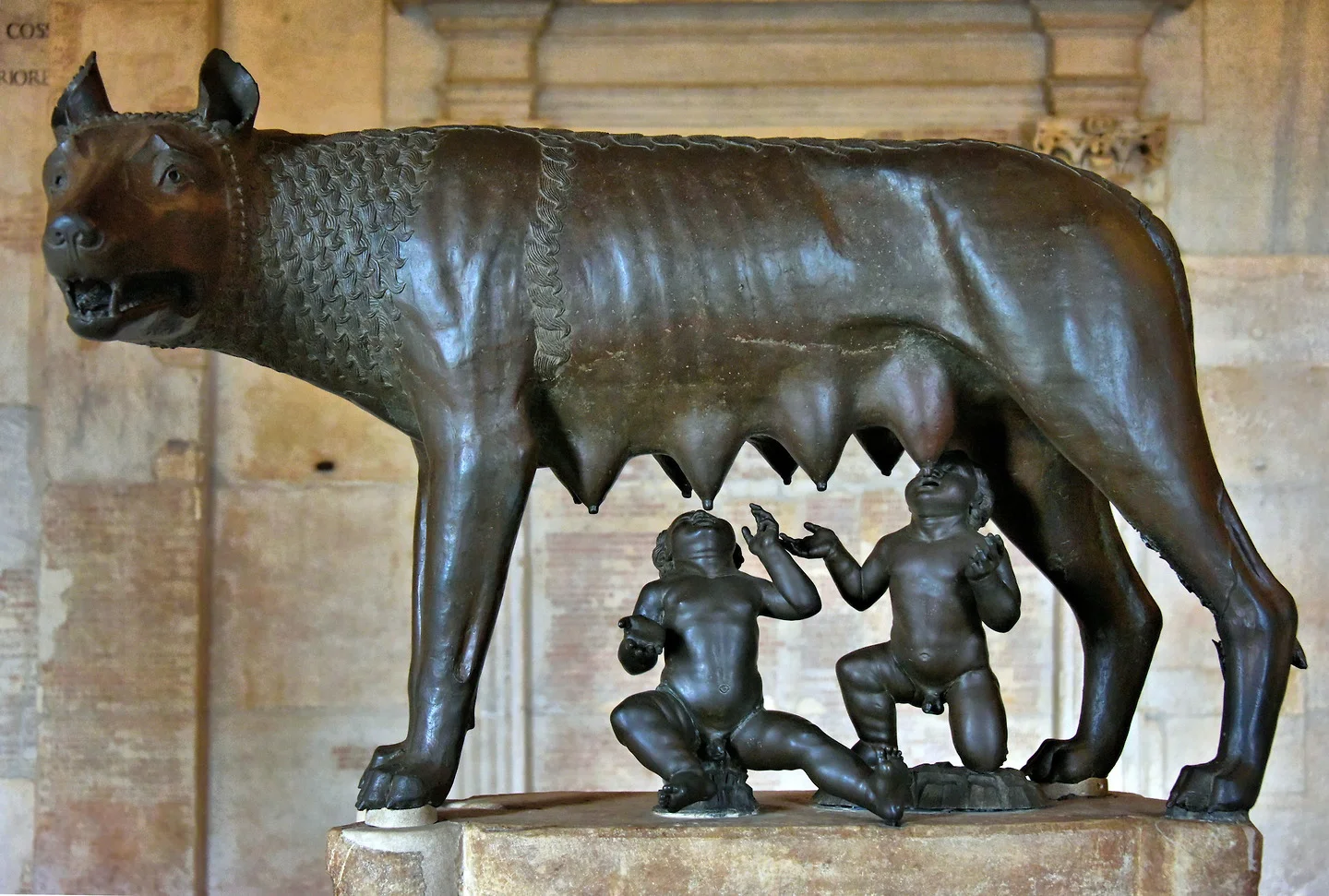
The foundation myth of Rome also developed independently in the Italian region, unrelated to Troy. Traditionally, in 753 BCE, the protagonists are the twins Romulus and Remus, born from the god Mars and the royal woman Rhea Silvia. Abandoned by the usurping uncle Amulius on the banks of the Tiber River, the infants were protected by a mother wolf and a woodpecker as they grew 2. After regaining the throne, the brothers consulted the will of the gods on the Palatine and Aventine hills to decide where to build a new city. At this time, a violent event occurred where Romulus killed his younger brother Remus, who jumped over the ramparts in mockery, and Rome was named after this event as the starting point 2.
Interestingly, ancient documents list other founding candidates completely unrelated to Troy. The ancient historian Plutarch mentioned in his Life of Romulus that versions unrelated to Troy coexisted, such as Romulus being the son of Odysseus, descendants of Heracles, or direct descendants of a local Latin king 2. This is direct evidence that the story of the Trojan horse and the brothers raised by a wolf were not originally one body, but separate narratives competing with each other.
Augustus's Commission and the Birth of the Aeneid
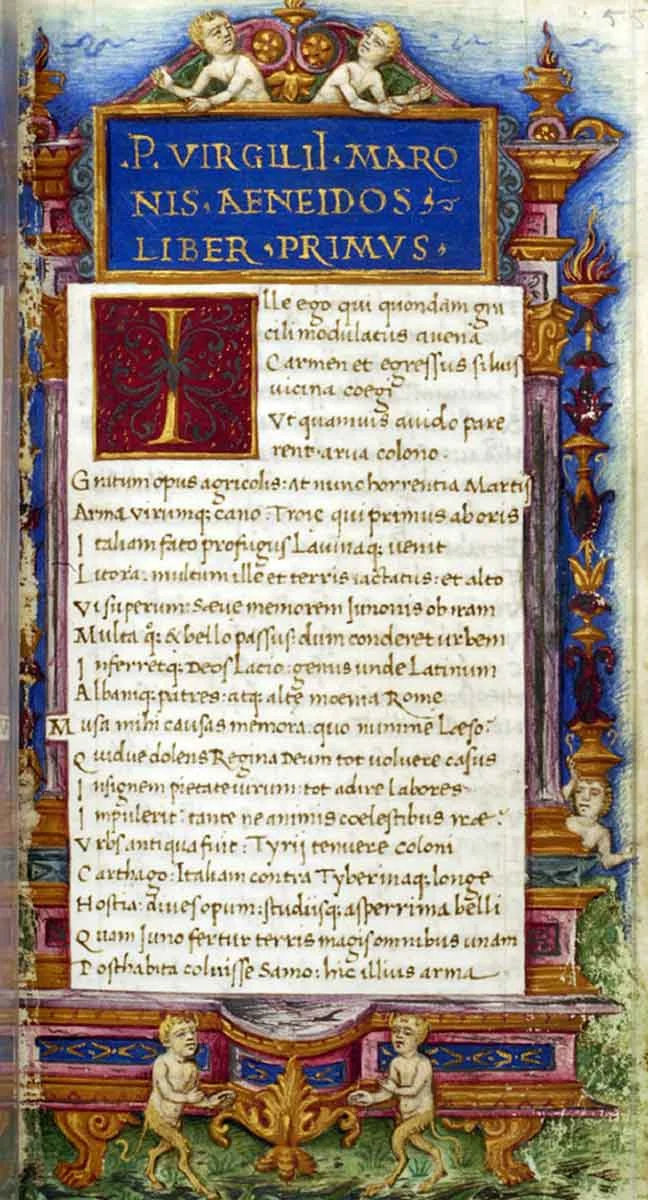
Then, how were these separate stories connected into one? At the center is Augustus, the first emperor of the Roman Empire. After ending the civil war that had lasted about 13 years and establishing the imperial system, Augustus needed an ideological foundation to prove the divinity of the Julian clan and legitimize his rule. To avoid being assassinated like Caesar, he had to replace the disgraceful elements of existing Roman myths (such as fratricide and the abduction of the Sabine women) with a sublime narrative 3. Accordingly, Augustus commissioned the poet Virgil to write a new foundation myth around 29 BCE 4.
Through ten years of work, Virgil completed the Aeneid, consisting of twelve books in total 3. He imitated Homer's style but significantly changed the character of the protagonist, Aeneas. He recreated Aeneas, who was depicted as incompetent or acting for private reasons in the Greek tradition, as a hero who prioritized national duty and piety ('Pietas') over personal happiness 3, 4. This was a device to portray Augustus himself, as a restorer of order rather than a conqueror, as a leader chosen by the gods.
How the 400-Year Temporal Gap Was Bridged
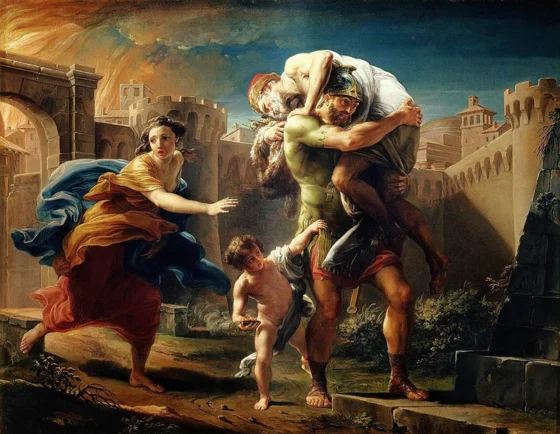
The biggest problem Virgil had to solve was the temporal void. The time when the Trojan War took place is approximately 1200 BCE, and the traditional founding date of Rome is the 8th century BCE. There was a gap of about 400 years 4.
Even before Virgil, there were attempts to connect Troy and Rome. In the 5th century BCE, the scholar Hellanicus recorded that Aeneas, aided by Odysseus, founded Rome, and in the 4th century BCE, Alcimus even set Aeneas's son as Romulus 5. However, these versions had the setting that the hero of Troy directly founded the city, resulting in a severe temporal leap.
Virgil meticulously bypassed this issue using an "indirect lineage" approach. In the Aeneid, Aeneas does not directly found Rome. He only lays the foundation for a city called Lavinium in Italy 4. His son Ascanius founds Alba Longa, and after hundreds of years, his 12th-generation descendant Romulus finally founds Rome 2, 4. This structure not only naturally bridges the 400-year temporal gap but also positions Augustus as the completer of fate at the end of this lineage by explicitly stating that the Julian clan are descendants of Ascanius (Iulus) and the goddess Venus 4. The process of a defeated Trojan being reborn as the noble ancestor of Rome was designed here.
Other Traditions That Disappeared as It Became an Educational Standard
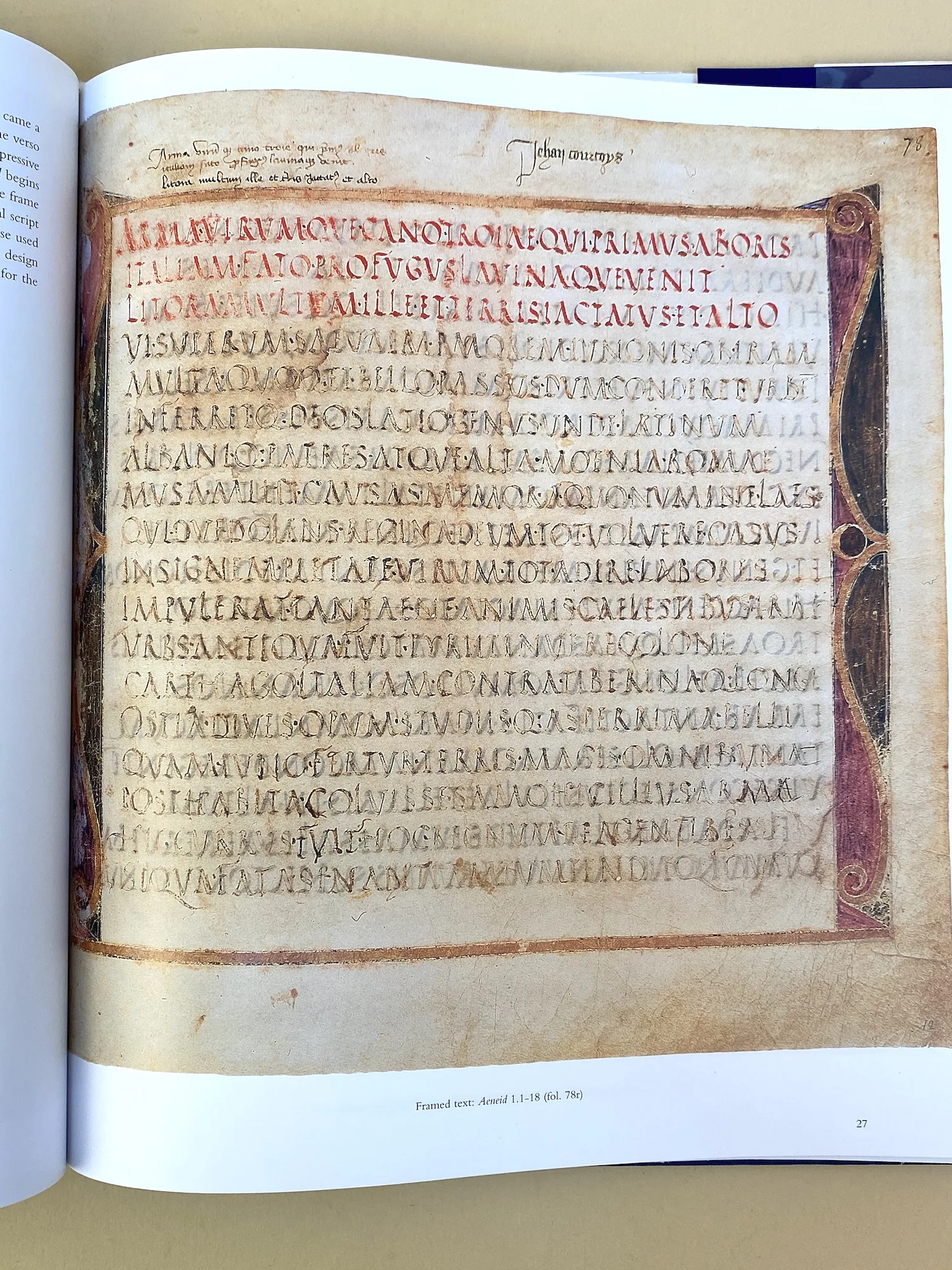
The emergence of the Aeneid brought about a change in historical consciousness beyond the appearance of a simple literary work. Within two centuries of the poem's publication, it became a mandatory educational text throughout the empire, and other foundation traditions vanished 4. Competing versions, such as the joint founding by Odysseus, the intervention of Heracles, or the direct line of a local Latin king, were forgotten, pushed aside by the overwhelming popularity and official status of the Aeneid.
Ultimately, the fact that the myths of the Trojan horse and Romulus sound like one story today is not because they were originally so. Narratives whose content and context were originally separate were consciously connected through Augustus's political intentions and Virgil's literary design. This became fixed when it became the textbook across the entire empire. Ancient Roman citizens came to accept, as their true origin, not the primitive memory of violence by the brothers raised by wolves, but the narrative of a pious hero following the plan of the gods.
References
- 3,000년 전설로만 여겨졌던 트로이가.. 땅속에서 실제로 나타난 이유 | 트로이 전쟁 슐리만 · youtube.com↩
- 로마 창립의 신화 · ko.eferrit.com↩
- [김승중의 아메리카 편지] 새로운 시작 | 중앙일보 · joongang.co.kr↩
- The Imperial Propaganda Hidden in the Aeneid | TheCollector · thecollector.com↩
- Aeneid - Wikipedia · en.wikipedia.org↩