Between Silhak and the Monarchy: The Boundary Between Collaboration and Criticism
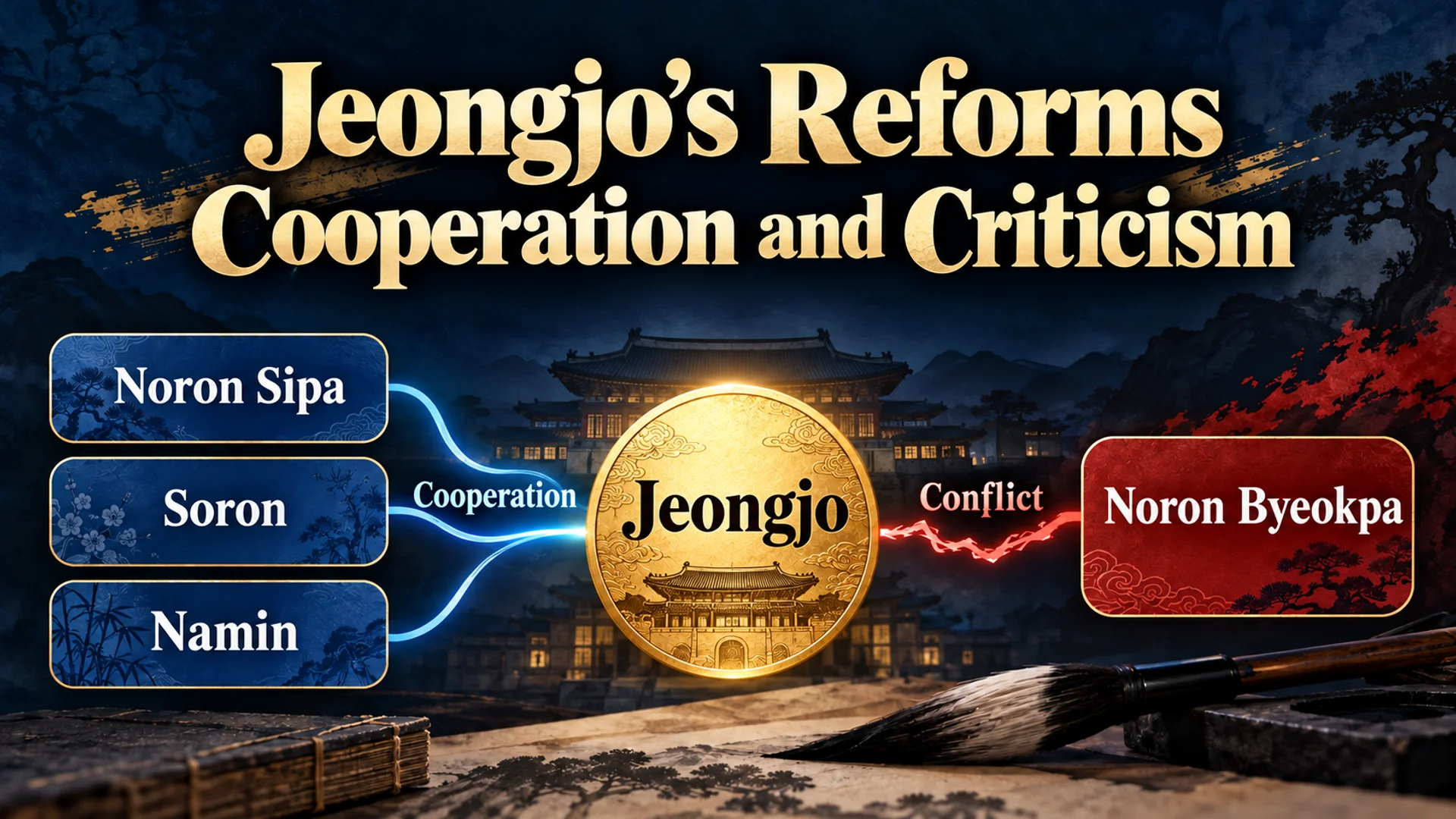
King Jeongjo (1752–1800) of the late Joseon period is evaluated as a monarch who led various reform policies, such as the establishment of the Gyujanggak, the appointment of illegitimate children (seo-eol) to office, and the abolition of the royal monopoly on trade (geumnanjeonwon) 1, 2. However, even the Silhak scholars who supported Jeongjo’s reforms and participated in policy execution did not hide their sharp critical gaze regarding the contradictions within his policies. This was because Silhak was not merely a tool for strengthening royal authority, but an ideological orientation aimed at resolving the contradictions of the feudal system and putting gyeongsechiyong (practical statecraft) into practice. Consequently, the perspectives of Silhak scholars on Jeongjo’s reforms exhibited a complex interplay of collaboration and criticism.
The Ideological Landscape Surrounding Jeongjo’s Reforms and the Backlash from the Noron Byeokpa Faction
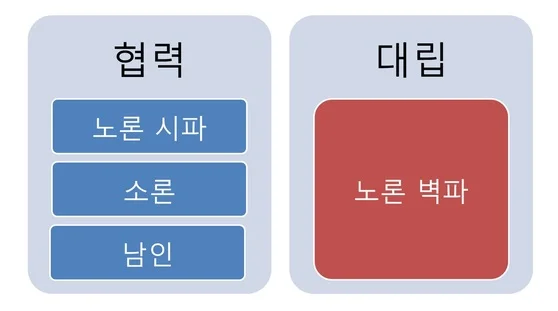
Jeongjo’s reforms focused on resolving the contradictions of the feudal system, such as land reform, based on the monarch’s transcendent authority. He politically utilized the 'Imo Righteousness' (Uiryeon of Imo) related to the death of Crown Prince Sado to collaborate with Silhak scholars such as Seo Myeong-eung, Chae Je-gong, and Bak Ji-won, seeking to alleviate the contradictions of the status system 3. Furthermore, he promoted the 'Doctrine of Monarchal Supremacy' (Gyongju-dotong-setsol), which strengthened royal authority by embracing not only Zhu Xi’s Neo-Confucianism but also Yangmingism and Western Learning 3.
However, these attempts drew strong backlash from the Noron Byeokpa faction, which emphasized traditional orthodox Neo-Confucian moral arguments 2. This was because Jeongjo’s reform policies aligned with the nature of Silhak, which valued practicality and tangible benefits. The policies in which Silhak scholars participated contained concerns about the existing scholar-official-centric social structure and criticism of institutional formalism, which manifested as political conflict with the Noron faction.
The Controversy Surrounding the Literary Style Correction and the Persecution of Western Learning
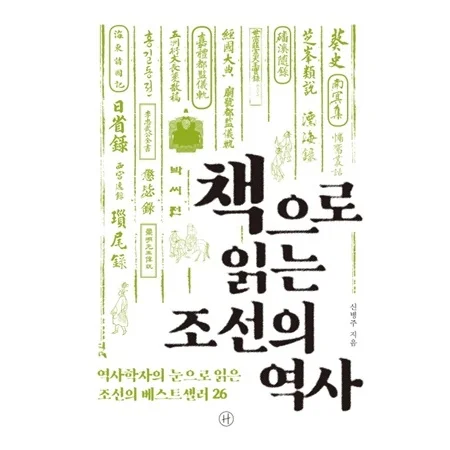
Jeongjo’s cultural policy, the 'Literary Style Correction' (Munchae Banjeong), is a case that starkly revealed the conflict with Silhak scholars. The Literary Style Correction was a measure that defined and prohibited the Qing dynasty evidential scholarship (gojeonghak) and novel-style prose (small prose or sophunmun) adopted by Silhak scholars at the time as 'miscellaneous writing (heresy)' 1.
There are conflicting interpretations regarding this measure. First, Professor Kang Myeong-gwan (Pusan National University) evaluated Jeongjo as a "persecutor of books and thought." He analyzed that the essence of the Literary Style Correction was "to hunt down heretical thinking that contradicted Neo-Confucianism," and that Jeongjo sought perfection in his reign by relying on conservative orthodox Zhu Xi school ideology 1. Kim Tae-hee, Head of Planning at the Dasan Research Institute, also defined it as a self-contradiction and self-denial of the cultural renaissance policy. Kim offered a critical perspective, arguing that since Queen Sunwon used the pretext of 'ending Western Learning' to suppress reformist forces, including Silhak scholars, after Jeongjo’s death, it is difficult to say Jeongjo bears no responsibility for the subsequent factional rule (sedo jeongchi) and bloody rebellions 1.
On the other hand, Director Lee Deok-il (Hangaram Historical and Cultural Research Institute) counter-argued that the Literary Style Correction was an advanced political strategy to check the Noron faction and defend against the persecution of Catholicism. He interpreted that after Catholic nobles burned ancestral tablets (the Jinsan Incident), demands for banning Catholicism grew, so Jeongjo diverted political arrows by banning anecdotal novels and literary collections from the late Ming and early Qing dynasties 1. He also argued that including Bak Ji-won among the targets of the Literary Style Correction was a conciliatory measure to appoint him to key posts, and a strategy to weather the tide of Catholic persecution 1. He evaluated that the ban on books was a measure criticizing the incompetence of scholar-officials due to their stubborn adherence to Chinese scholarship and emphasizing autonomous thought, and that the criticism of evidential scholarship pointed out the complacency of Qing dynasty intellectuals regarding reality 1.
The Paradox of Tangpyeong Politics and Concentration of Power
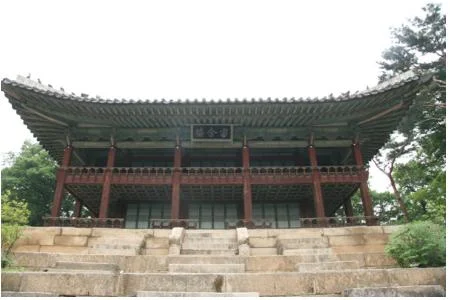
Jeongjo pursued a Tangpyeong (equalization/balance) policy to prevent the monopoly of any specific faction and distribute key positions 2. He appointed illegitimate children such as Bak Je-ga and Yi Deok-mu as royal librarians at the Gyujanggak, encouraging a practical academic atmosphere centered on the Northern School scholars and securing a base of support for strengthening royal authority 2. This Tangpyeong policy contributed to preventing the autocracy of specific clans.
However, there is also a critical view that the Tangpyeong policy failed to lead to structural changes in the political system and was merely a stopgap measure reliant on the individual capabilities of the king 2. The analysis suggests that in the process of easing factional conflict, power was concentrated instead in the king and a small circle of Silhak scholars around him 2. Ultimately, fearing a weakening of royal authority after his death, Jeongjo arranged for the Crown Prince’s consort to be from the Noron Sipa faction, but instead, the Kim Jo-sun family seized power, leading to the full-fledged emergence of sixty years of factional rule (sedo jeongchi) 2.
Recognizing the Limits of Silhak and Jeongjo’s Reforms
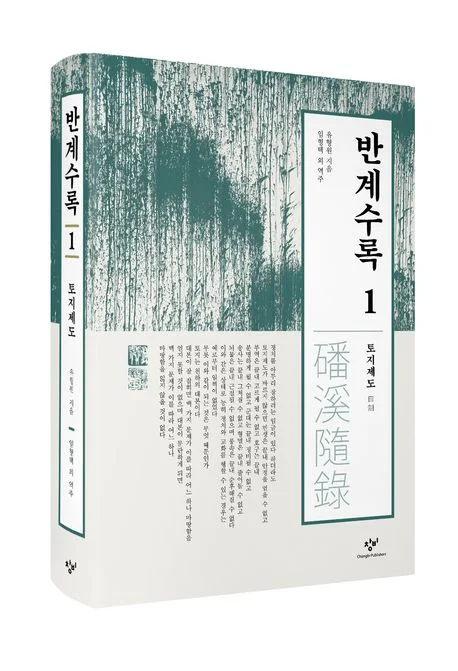
Late Joseon Silhak was the highest reform ideology, aiming not just for simple policy advisory but for the establishment of a new national system 3. Jeongjo attempted to reflect Silhak ideology in policy by continuing the Tangpyeong discourse, but the foundational institutional groundwork—such as utilizing Yu Hyeong-won's Bangkye Su-rok, adopting Choe Seok-jeong’s theory of codifying laws, and establishing the Gyungyeokpup—was evaluated as the achievement of his father, King Yeongjo 3. Jeongjo inherited this and attempted institutional completion by discussing national blueprints with Silhak scholars centered around the Gyujanggak, but he failed to reach the systematization of power structures 3.
Jeongjo’s reforms operated within the limitation of collaboration between two minority forces: the king and Silhak scholars 2. The reason Silhak scholars had to criticize policy self-contradictions like the Literary Style Correction while participating in royal authority strengthening policies was their inability to overcome the structural conflict arising between the ideals of gyeongsechiyong (practical statecraft) and the reality of monarchy-centered politics. With Jeongjo’s sudden death, the fruits of reform politics combined with Silhak ideology were frustrated, leading to the factional rule (sedo jeongchi) era of the 19th century 3, 2.
References
- “책과 사상을 탄압” “노론 견제 노림수” · hani.co.kr↩
- [역사 NIE] 정조의 개혁은 왜 후대로 이어지지 못했을까 | 중앙일보 · joongang.co.kr↩
- 탕평(蕩平) - 역주조선왕조실록 :: 한국학진흥사업성과포털 [한국학중앙연구원] · waks.aks.ac.kr↩