On November 4, 2026, the National Maritime Heritage Research Institute announced the discovery and excavation of two Goryeo Dynasty shipwrecks—the Mado No. 5 and No. 6 vessels—in the Mado sea area of Taean, South Chungcheong Province. Known as the “Gyeongju of the Sea,” this site came under investigation after 26 Goryeo celadon pieces were hauled up in a fisherman’s net in 2007; the Mado No. 1 through No. 4 vessels were subsequently identified 12. In excavation news, however, the aspect that warrants a longer perspective is not the announcement of the vessels’ ‘discovery,’ but the long wait that follows.
Wood weakened like a sponge can suffer irreversible damage if allowed to dry for just 30 minutes after being brought to the surface 3. This is precisely why the goal of modern underwater archaeology is not ‘to retrieve quickly’ but ‘to preserve the original form after retrieval.’
How the Underwater Environment Alters Artifacts
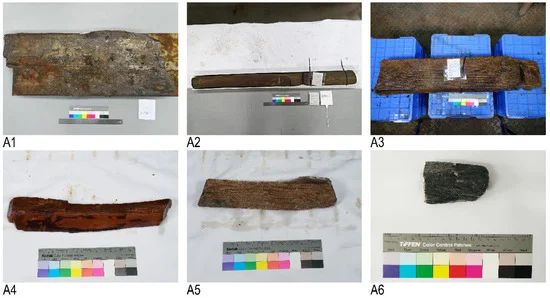
Wood buried in seabed sediments for centuries may look like timber on the outside, but its interior is hollow. According to the Yeongnam Cultural Heritage Research Institute, wooden artifacts excavated from low-lying wetlands or lakes have most of their cell walls decomposed by long-term burial, retaining only their external shape. Exposing such artifacts to air without special treatment causes shrinkage and deformation, making safe storage itself impossible 4.
The Mado sea area case illustrates this well. During the 2014 investigation of Mado No. 4, a wooden anchor approximately 6.1 meters long was recovered. This wooden anchor, which had been submerged in the sea for over 300 years, surfaced with a surface riddled with holes 2. It served as valuable data demonstrating the structure of Hansun (traditional Korean ships) built entirely without iron nails, while simultaneously providing empirical evidence of how severely the seabed environment had compromised the wood. Near the wooden anchor, approximately 130 stones were also identified, which were likely used to secure the anchor 2.
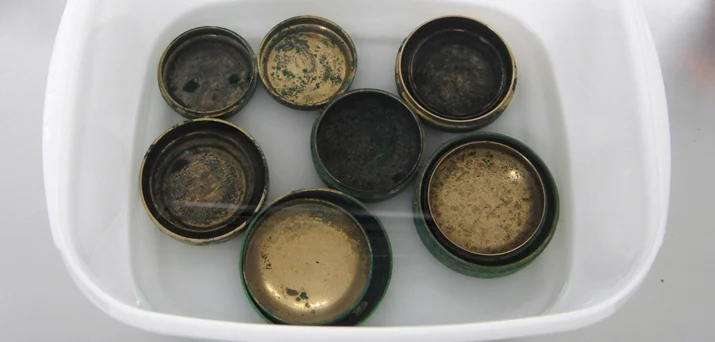
Ceramics change in a different manner. When ceramics or earthenware remain submerged in seawater for extended periods, water-soluble salts such as chloride ions permeate their pores (tiny holes on the surface and inside). If these salts are not removed and the artifacts are dried, the water evaporation causes the salts to solidify and expand into crystals, potentially causing fatal cracks and damage to the artifacts 5. Chlorine ions remaining inside iron artifacts also continue corrosion by reacting with oxygen and moisture in the atmosphere 6.
Removing Salts from Ceramics: The Principle of Osmotic Pressure
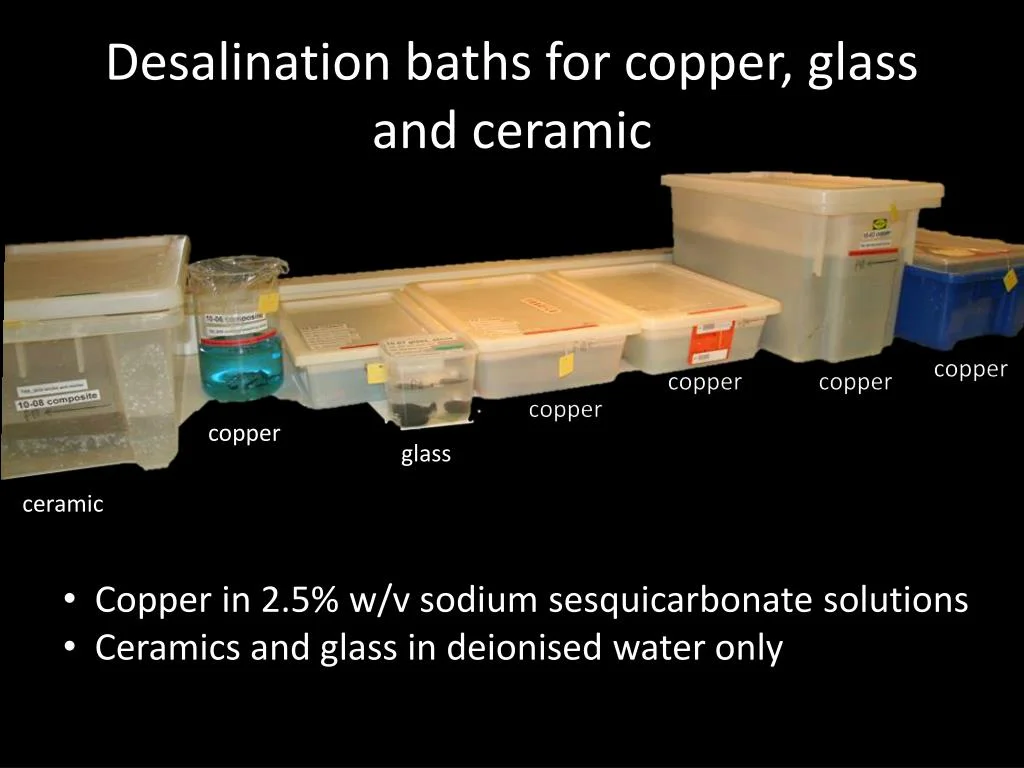
How are these salts removed? According to conservation science documentation, desalination utilizes the principle of osmotic pressure: when artifacts are soaked in fresh water, salt ions inside the artifacts move to the external water due to concentration differences 5. While distilled water is theoretically optimal, tap water is sometimes used to account for actual water quantities; in such cases, the chloride ion concentration of the tap water itself (typically around 7–10 ppm) is measured beforehand and used as a baseline 5.
The core lies in determining ‘how long to soak’ through measurement. The desalination solution is typically replaced at least once a week. Each time, the chloride ion concentration is measured using an ion meter, or a visual check is performed for the presence of white precipitate (silver chloride) by adding two drops of 10% nitric acid (HNO₃) and two drops of 13% silver nitrate (AgNO₃) solution to a test tube containing the desalination solution. The process is deemed complete only when the desalination solution maintains its original concentration and specific salt ions cease to leach out from the artifact 5.
It is noteworthy that treatment duration varies significantly depending on the material, even for ceramics. Earthenware or buncheong ware, fired at lower temperatures with large, porous pores, allows salts to enter and exit freely, enabling short-term desalination. Conversely, celadon or high-temperature fired ceramics, with very small and dense pores, experience slow rates of salt ingress and egress, requiring longer desalination periods. In contrast, white porcelain (with an absorption rate of 0.4% or less), which has a thin, dense glaze that prevents salt penetration, requires virtually no desalination 5. It is, effectively, a meticulous customization process providing different answers for each individual artifact.
A Decade of Hardening: Filling Wood with Chemicals
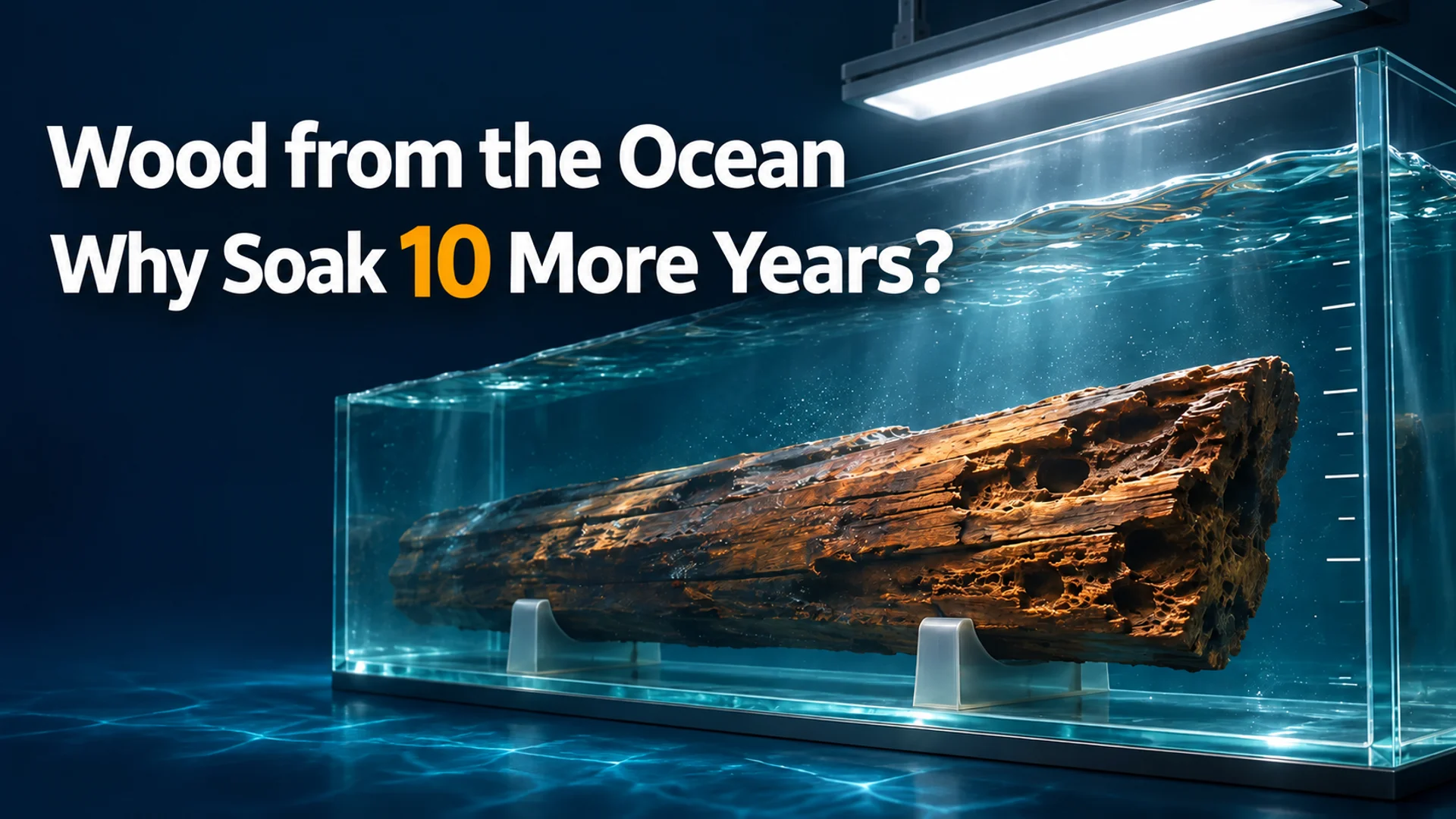
Wood treatment is far more painstaking than ceramic treatment. If the water inside the cells is left untreated, the wood shrinks and deforms as it dries. Therefore, instead of removing the water, the space must be filled with chemicals such as PEG (polyethylene glycol) to support the cell walls. This hardening process can take up to 10 years or more, depending on the artifact’s condition 3. It takes modern technology 10 years to hold on to wood from 800 years ago.
This work is not conducted in test tube-sized experiments but in facilities capable of soaking entire ship sections. The Yeongnam Cultural Heritage Research Institute has a large immersion tank capable of treating large timber 3.5 meters long and 1.5 meters wide, while delicate small artifacts such as lacquerware or herbaceous materials are preserved using vacuum freeze-dryers 4. Freeze-drying removes moisture by vaporizing it under vacuum while it remains frozen, reducing capillary contraction that occurs in the liquid state and preventing the shape from collapsing.
PEG used in hardening is sensitive to humidity. If temperature and humidity fluctuate during exhibition, the chemicals may leach out, causing the artifacts to collapse again. Therefore, restored traditional Hansun and artifacts require continuous environmental management even within exhibition halls 3. Temperature and humidity are constantly managed to ensure that what was hardened does not collapse again.
Chlorine Ions Must Be Removed from Metals Too
The fact that treatment differs by material is even clearer with metals. According to the Cultural Heritage Conservation Science Center, iron artifacts are soaked in alkaline solutions such as NaOH (sodium hydroxide) or sodium sesquicarbonate to extract chlorine ions that cause corrosion. This process involves periodically changing the solution until the chlorine ion concentration falls below 10 ppm. Subsequently, the material is reinforced through vacuum or natural impregnation with acrylic resin to prevent oxygen and moisture from penetrating 6.
A different prescription is used for copper alloys such as bronze. This method involves creating a protective film on the artifact’s surface to suppress corrosion by soaking the artifact in a 3% Benzotriazole (B.T.A) solution to allow the chemical to penetrate internally. Once treatment is complete, cracks or damaged areas are joined with acrylic- or epoxy-based resins and color-matched to distinguish restoration sites. The principle followed is that restoration areas should be distinguishable within 30 cm, but appear so natural that they are difficult to distinguish beyond 1 meter 6.
Waiting Without Retrieval Is Technology in Itself
Here, the paradox of modern underwater archaeology emerges. Retrieving without preparation results in destruction, leading to the introduction of a ‘strategy of waiting’—deliberately not retrieving until technology is ready. During the excavation of the Sinan vessel in 1976, specialized technology and equipment were lacking, necessitating reliance on the Navy. It was difficult to establish a systematic conservation plan amidst strong tides, and as a result, some components suffered limitations such as pest corrosion due to delayed retrieval 3.
Conversely, recently, leaving artifacts in the sea and waiting for mature technology has become one solution. The case of the South China Sea No. 1 ship in China illustrates this starkly. To seal the hull and surrounding soil without disassembly, a specially manufactured steel lifting box was pressed down to a seabed depth of 15 meters and lifted by a 5,000-ton crane barge. The vessel thus retrieved was transferred to an underwater exhibition hall called the ‘Crystal Palace,’ where it maintains an environment at the same depth of 12 meters as the sea and circulates 800–1,000 cubic meters of seawater per day. It remains waiting underwater until excavation technology is fully equipped 3.
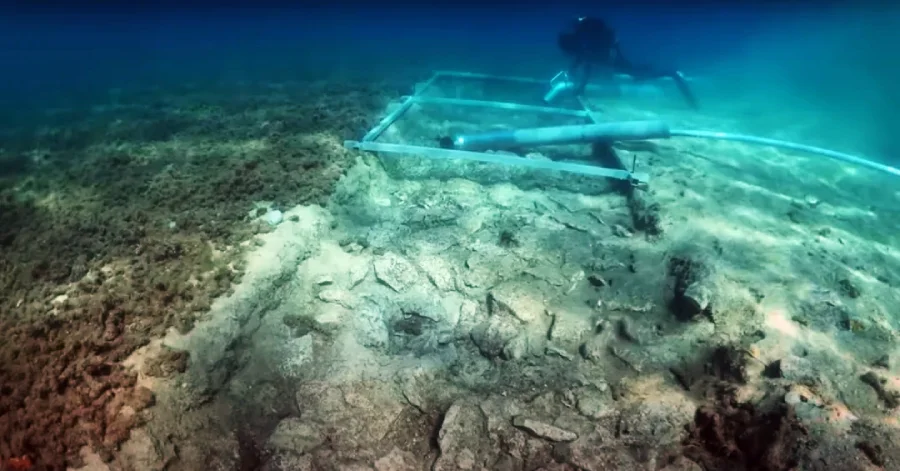
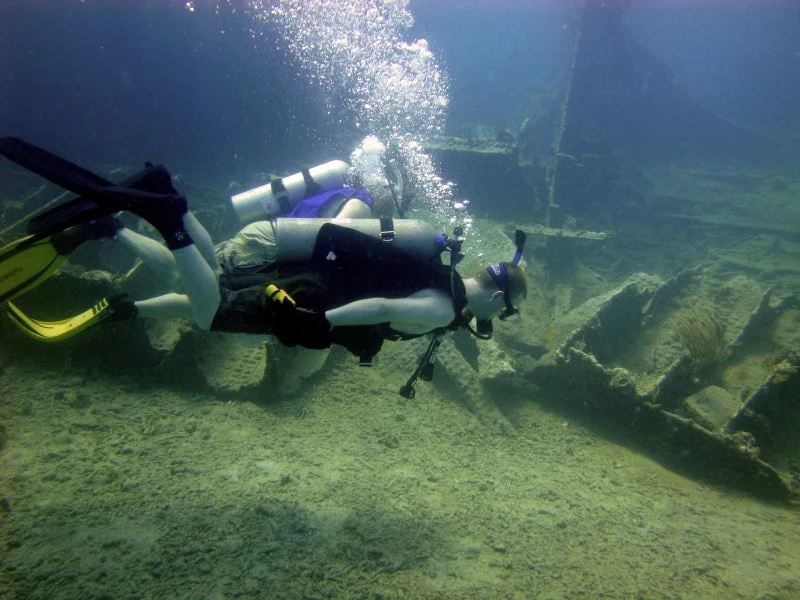
The precision of on-site work has also increased in line with this trend. In the current Taean Mado ship excavation, divers equipped with cameras and microphones on their helmets communicate in real-time with the barge, even when visibility is poor underwater. Work is halted immediately if there is a risk of artifact damage. For position recording, a 1m x 1m square grid is laid out, and instead of shoveling, vacuum suction pumps are used to carefully remove water and mud together 2. The fact that the Mado sea area is subject to over a decade of annual surveys and is referred to as the ‘Tomb of Ships’ is an extension of this philosophy of not rushing unnecessarily 2.
For underwater artifacts, the moment of retrieval is not the finish line but the starting line. Hands cannot leave wooden artifacts until chemicals fill the cells, ceramic artifacts until salts are removed from the pores, and metal artifacts until chlorine ions drop below 10 ppm. Therefore, the true weight of today’s news, ‘Discovery of Mado Nos. 5 and 6,’ rests on the long and cautious period of conservation that begins afterward.
References
- 국립해양유산연구소 · seamuse.go.kr↩
- 태안 마도해역 ‘마도 4호선’ 발굴조사 현장을 가다 · youtube.com↩
- "망가뜨릴 바엔 기다린다"… 수중 유물 발굴이 보존 과학으로 진화하는 이유 - 이글루스 · egloos.com↩
- 영남문화유산연구원 · ynicp.or.kr↩
- 해양에서 출수된 문화재 탈염 처리, 탈염(脫鹽) 방법, 토기 및 도자기 문화재 보존처리, 문화재 보존과학 · m.blog.naver.com↩
- 문화유산보존과학센터 · nrich.go.kr↩