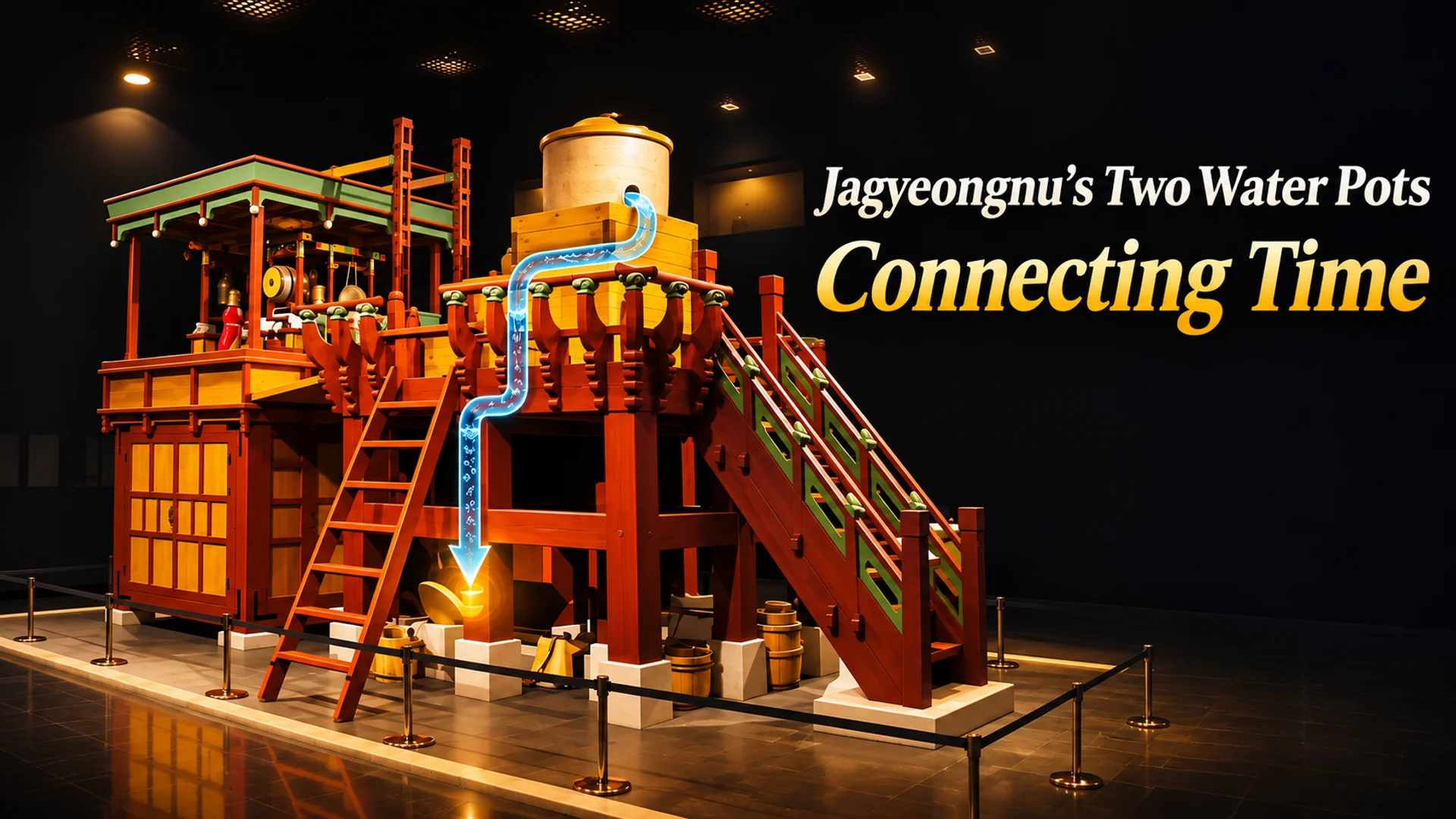
The water clock Jageukru (自擊漏) of the Joseon royal palace contained two water-receiving vessels, known as receiving jars (수수호·受水壺), in which water flowed to measure time. Unlike sundials, which could not be used when the sun was absent during the day, Jageukru was a national standard timepiece that measured time by the rate at which water filled the jars, automatically striking bells, drums, and gongs regardless of day or night or weather conditions 1. So why were two receiving jars used instead of just one?
The answer lies in a design intended to preserve the continuity of time signals. When a single receiving jar became full, it required physical time to drain the water and reset the balls to their original positions. This interruption in the flow of water created a gap in the water clock’s operation. If the strikes of the bell due during this gap were delayed, the citywide time-announcement system would become disrupted. To prevent this, Joseon inventors completely separated the draining and resetting operations from the water flow. They prepared a second receiving jar in advance with the balls already set in place, allowing the water pipe to be switched over instantly.
The Relay of Urban Time Announcements That Could Not Be Interrupted
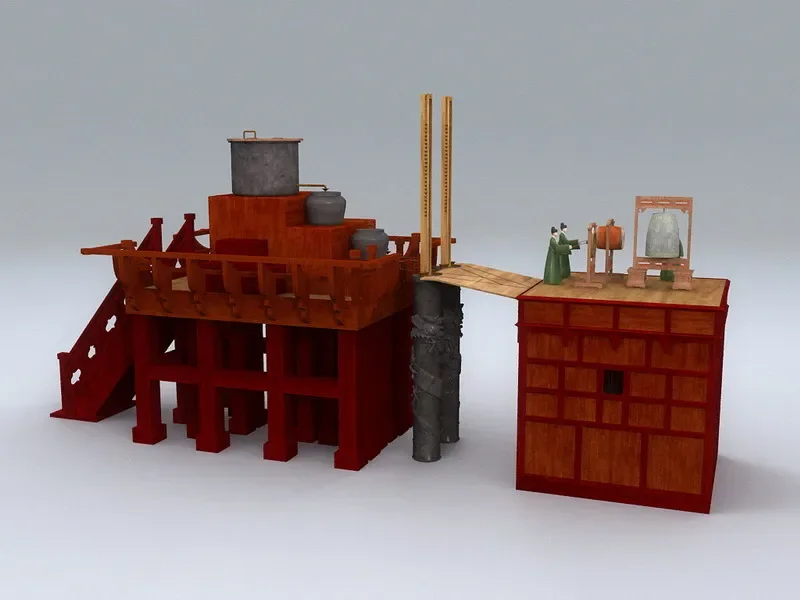
Because the sounds emitted by Jageukru were not merely alerts, the switchover between receiving jars became a critical challenge. The method of announcing the time in Seoul at that time functioned like a relay. A gatekeeper at the main gate of Gyeongbokgung Palace would hear the drum sound strike three times automatically within Jageukru and then strike the drum on the palace gate tower three times. Once this sound reached the official responsible at the Belfry (종각), the designated time would finally be announced throughout the city 2.
In such a structure, if the time signal from any single unit were delayed, all subsequent signals passed to the next stage would become misaligned in a chain reaction. The urgent need for the time-announcement system to remain uninterrupted is closely linked to actual historical circumstances. During the reign of King Sejong, records frequently noted droughts and poor harvests; administrative tasks such as agricultural scheduling depended on accurate time management 3.
A Dual-Jar Design That Eliminated Gaps in Time Measurement
To eliminate time delays caused by switching receiving jars, Jageukru adopted a sophisticated operational method in which the two jars were used alternately 2. When one jar filled with water, the water pipe was immediately moved to the other receiving jar, which had already been prepared with the balls set in place, allowing water to flow into it. The first jar, no longer receiving water, could then be drained and emptied in the meantime. This gave attendants ample time to individually place iron balls into the holes of the bronze plate inside. Once preparation was complete, the first receiving jar stood ready for the following day.
In essence, the two receiving jars ensured the continuity of time announcements by maintaining a state in which, while one jar was actively receiving water, the other was already fully prepared. This design overcame the physical limitations of draining water and manually resetting balls by switching to a pre-set jar while the water continued to flow.
Modern Archaeology Restores a Six-Hundred-Year-Old Design
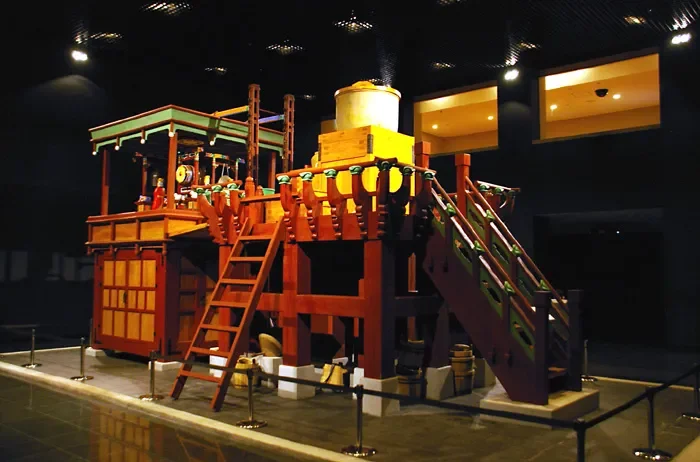
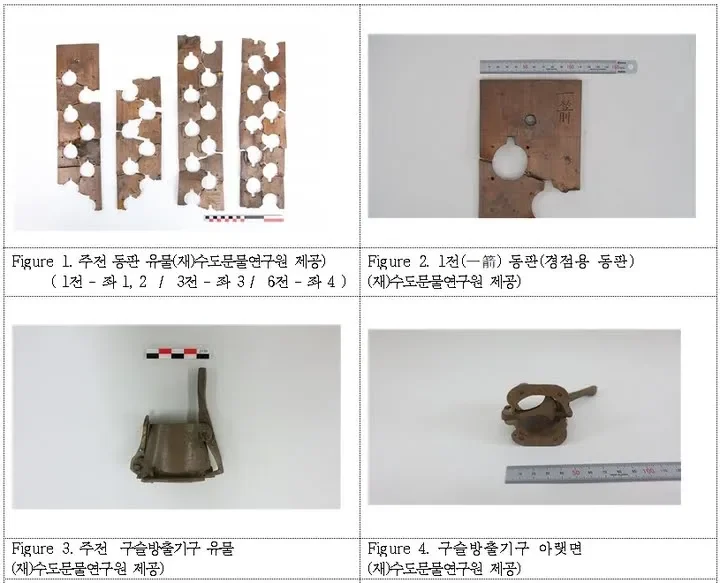
The jujeon (籌箭), considered a core component of Jageukru’s time-announcement mechanism, had no surviving physical artifacts and was described only in the written records of the Annals of the Joseon Dynasty 2. The 2007 reconstructed version had to rely solely on the historical records, leaving unresolved issues with the jujeon system, such as balls bouncing off when they dropped.
A decisive clue to solving this problem emerged in June 2021. Authentic jujeon components, which had remained unseen for centuries, were excavated.
The water vessels that have survived to the present day, including the dual-jar assembly, belong to the Jageukru rebuilt by Park Se-ryong in the thirty-first year of King Jungjong’s reign (1536). It was a substantial device, with the largest water vessel (파수호) measuring 93.5 centimeters in diameter. Designated National Treasure No. 229, it is currently housed and displayed at the National Palace Museum of Korea 2.
Jageukru was selected for registration as Honorary Patent No. 4 in recognition of its technical features and effectiveness 4.
Ultimately, the two receiving jars of Jageukru represent a breakthrough in overcoming the physical limitations of mechanical devices through system-level design. The concept of redundancy—using pre-set jars alternately to prevent the clock from stopping while one was being drained—can be seen as a highly modern problem-solving approach devised six hundred years ago to ensure the uninterrupted flow of time signals in the city.
References
- 자격루 - 위키백과, 우리 모두의 백과사전 · ko.wikipedia.org↩
- 자격루 · namu.wiki↩
- 영상한국사 I 057 자격루, 혼천의, 측우기, 이앙법 - 세종시대 농업 생산성을 올리기 위한 노력 · youtube.com↩
- 거북선·측우기 등 선조들의 발명품 14점 ‘명예 특허’ · khan.co.kr↩