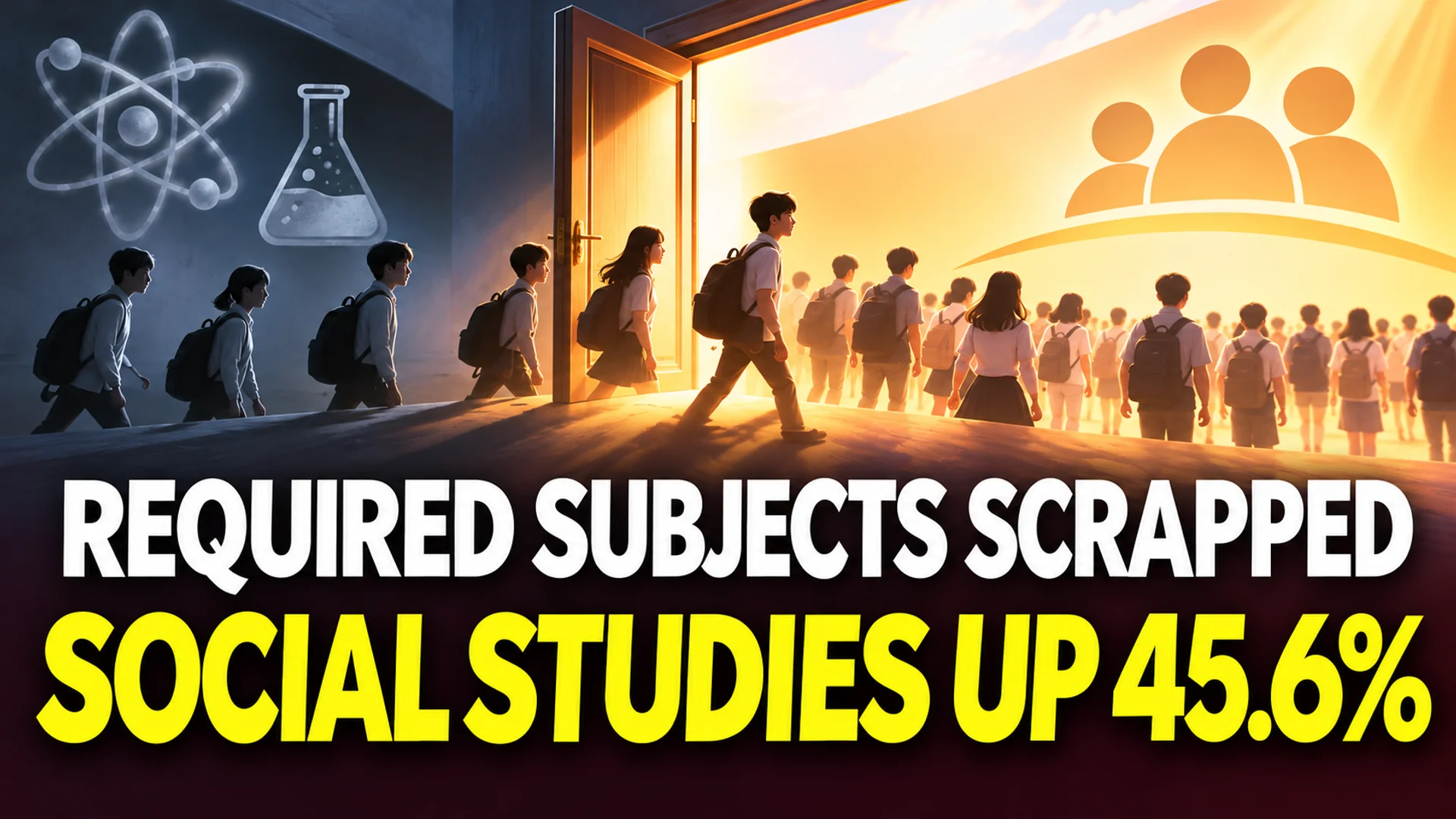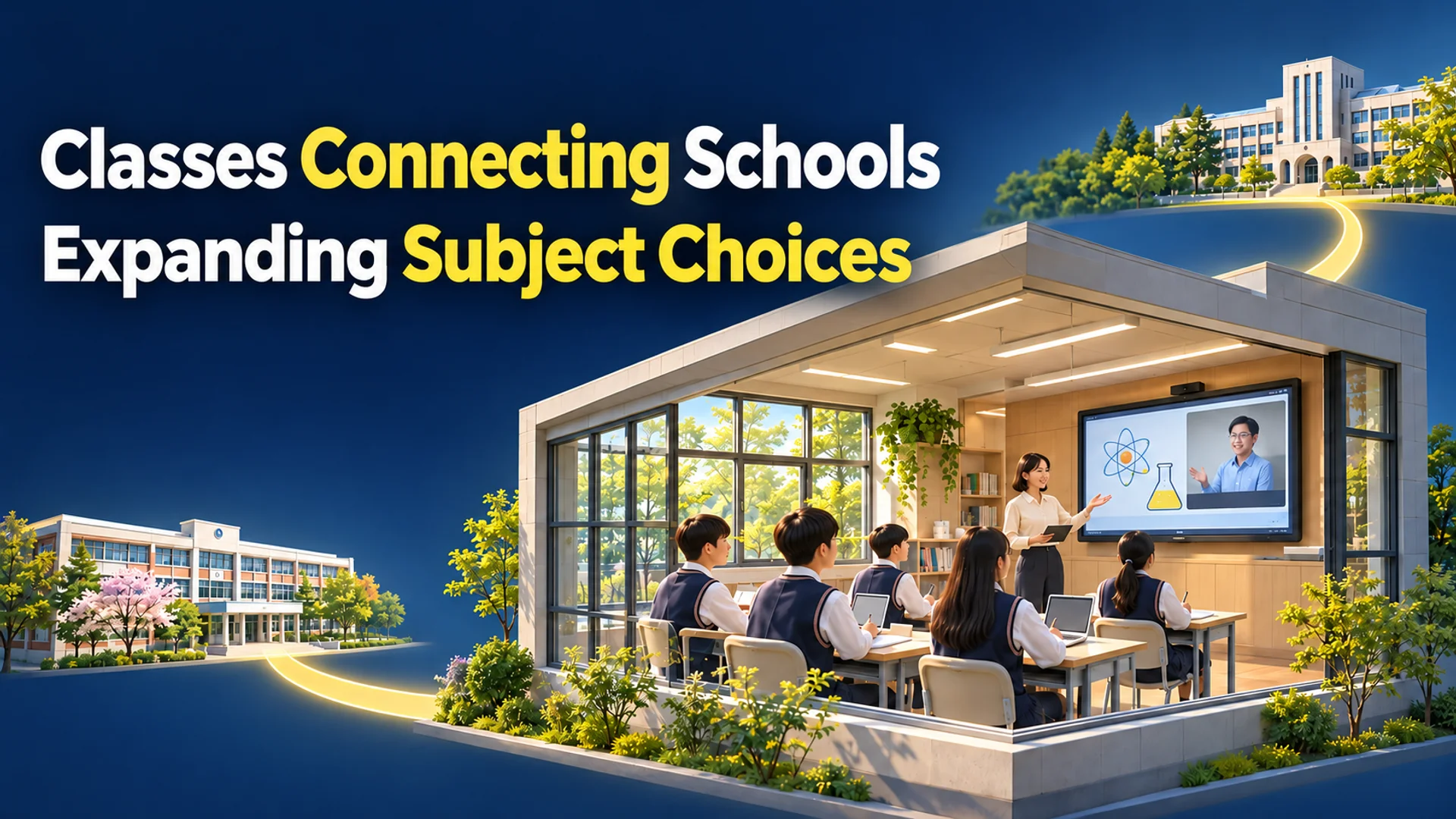
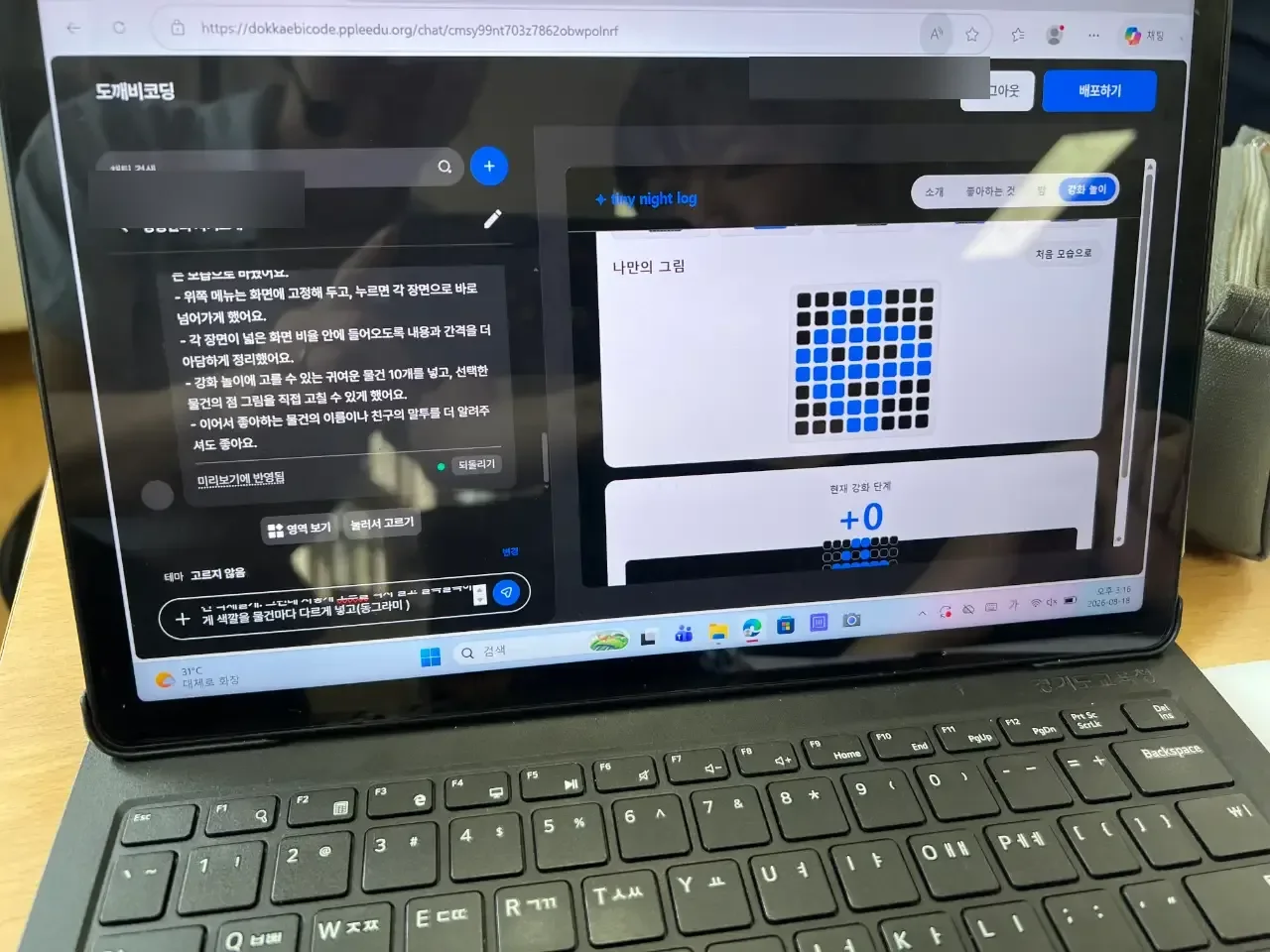
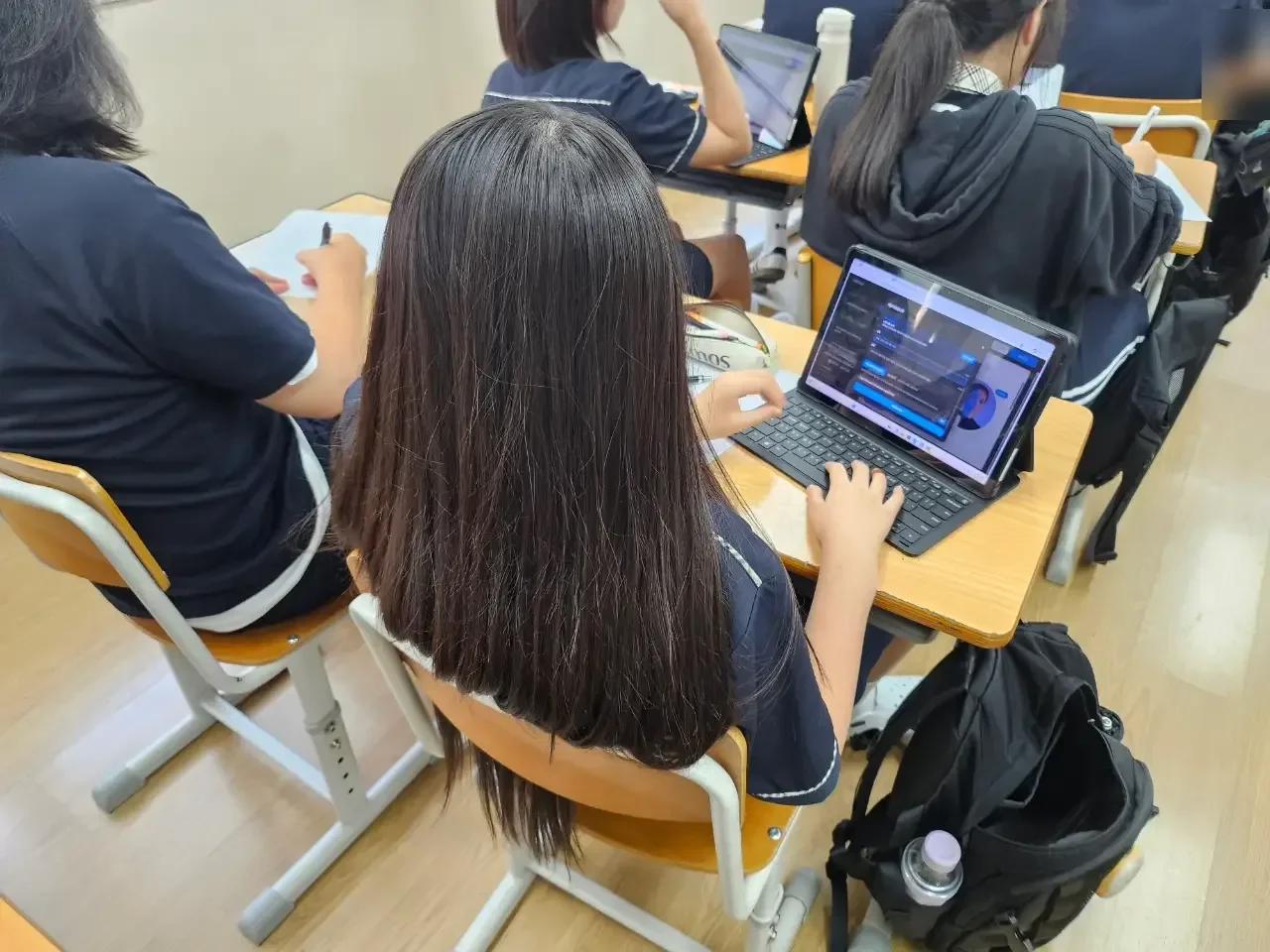
A class was held in which 456 students completed a web page that appeared on the screen after engaging in vibe coding for 100 minutes. Vibe coding is a method where a program is generated by inputting natural language sentences, rather than directly typing complex code. In a survey conducted at a middle school in August 2026 during this class, which was run by People Edu, a company that has operated AI education programs, the most frequent response indicating areas for improvement was that "time was too short" (19 cases), and there were also 8 requests to "please teach our class again next time" 1.
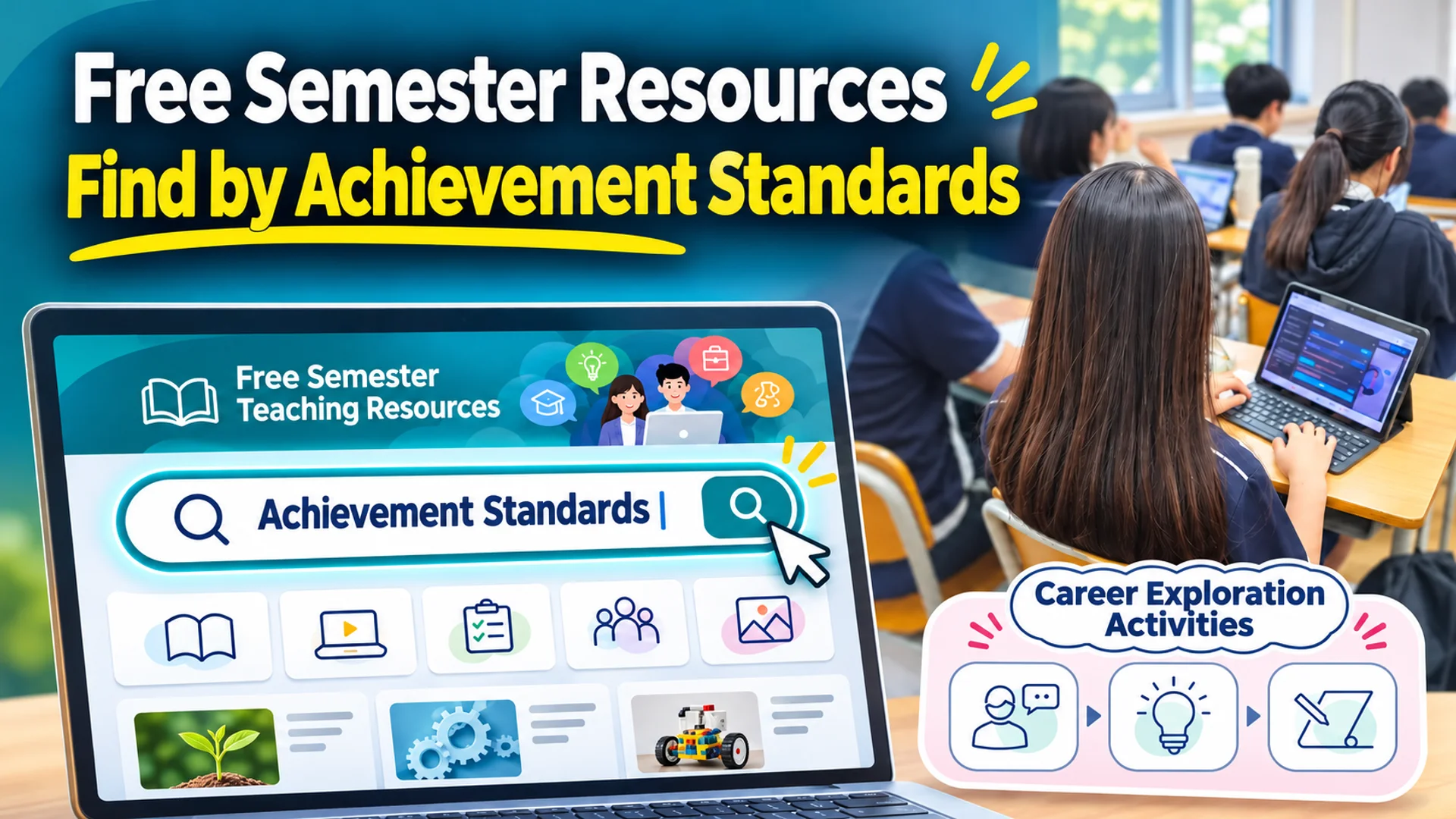
If such a high level of student engagement is confirmed in a short, one-off session, the criteria for searching for teaching materials must change to structure this into a full-semester regular curriculum. Public platforms like EduNet T-Clear allow users to find materials based on achievement standards. When materials selected through achievement standards lead to student outputs in actual classrooms, they serve as the basis for process-centered assessment in the free semester system and for entries in the school record.
Assessment Principles of the Free Semester System and Differences in Material Search
The free semester system is a program where one semester of the middle school curriculum is designated for discussion- and hands-on activity-centered learning. During this period, uniform written examinations are avoided, and the content of activities is recorded in the school record 1. Consequently, free semester teaching materials are not used for extracting exam questions, but rather as means to help students perform activities and create outputs.
The methods of searching for and applying materials also differ from those of general subjects. This is because the topic selection and career exploration activities of the free semester system differ from methods that rely on memorizing specific subject content. Therefore, adjusting search criteria from "subject name" to achievement standards in the curriculum allows for the efficient acquisition of materials suitable for the topics.
How to Find Materials Based on Curriculum Standards
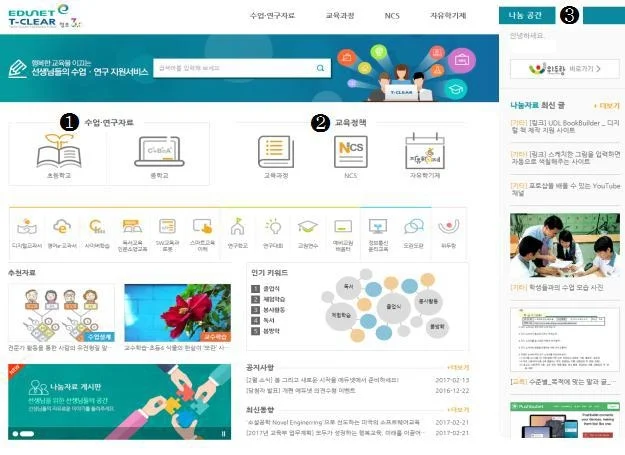
The key to searching for free semester materials is inputting "achievement standards." Achievement standards are curriculum benchmarks that specify the competencies students must reach upon completing a unit in sentence form. EduNet T-Clear supports search functions by achievement standard, helping users easily find necessary materials 2. This involves teachers entering the exact achievement standard sentences found in curriculum documents as search terms, instead of searching merely by subject name, such as "Science."
Searching this way yields lesson design materials, teaching and learning materials, and assessment materials linked to the relevant achievement standard, allowing teachers to secure lesson materials and assessment tools for activity verification needed for the free semester system at once. The Korean Teachers & Education Welfare Service notes that EduNet T-Clear provides the original text of the national curriculum along with educational policy materials such as student assessment and free semester information, as well as training materials 2. Thus, information on free semester policies and training materials can also be checked on the same platform.
As of November 2026, the EduNet main screen displays materials for the 2022 revised curriculum, along with November's event-based teaching materials and experiential learning guidance information. A recommendation section indicating which materials students in the same grade are viewing most frequently is also operating 3. Referencing materials that have received positive responses from students in other classes can serve as one criterion for selecting free semester lesson topics.
Concurrent Use of Regional Office of Education Portals and Career Experience Channels
Material searches do not end with national-level platforms alone. If materials reflecting regional characteristics are needed, regional offices of education portals should be used concurrently. The Gyeongsangbuk-do Office of Education’s 'My Friend Education Net' places teaching and learning materials, research competition materials, career education materials, and the National Curriculum Information Center (NCIC) on a provincial-level portal 4. Teachers who understand the classification system of national platforms can easily understand and access menus on regional portals by applying the same criteria.
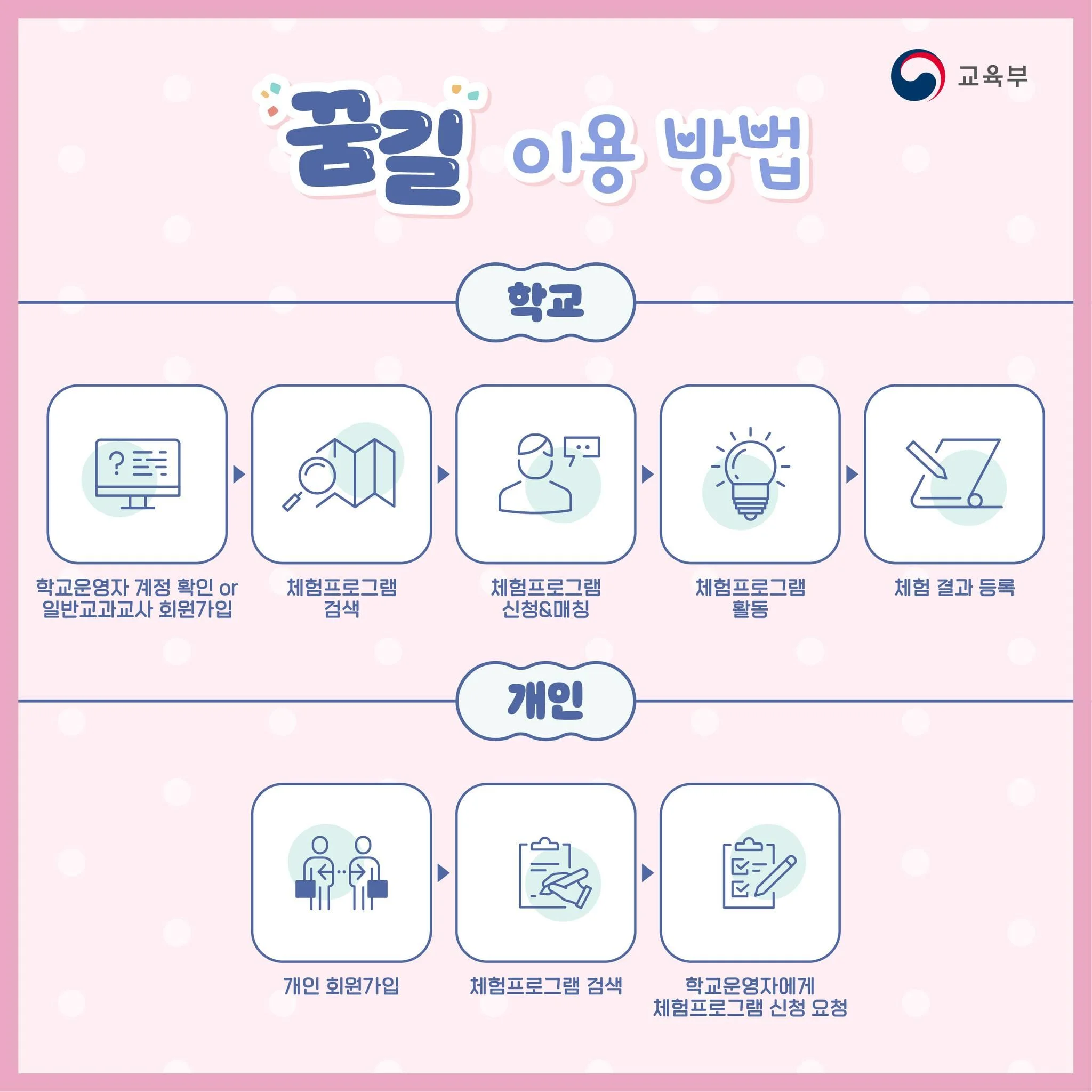
When planning career exploration or experiential learning, it is advisable to separate the search channels. The Ministry of Education guides 'Dream Road (Career Experience Network)' as a major service separate from EduNet 5. While experiential learning guidance and recommended experience sites appear on the EduNet main page 3, it is efficient to separate channels by searching for learning materials to be used in the classroom on EduNet and information on institutions where students will experience activities directly outside school on Dream Road.
Lesson Application Case Study Through a 34-Session One-Semester Plan
The process by which materials result in student records in actual lessons is concretely confirmed in the 34-session plan released by People Edu. This plan divides free semester activity hours into four blocks: literacy (6 sessions), creation (12 sessions), problem-solving (12 sessions), and presentation (4 sessions). It is specifically designed to ensure that student outputs are produced at sessions 6, 18, and 30, which mark the end of each block 1.
Given the nature of the free semester system, which avoids uniform written exams, outputs must remain at the end of each block to serve as the basis for process-centered assessment and activity content recorded in the school record. For example, at the end of the literacy block, a list of "Things not to ask AI," created together by the class, is completed, and at the end of the problem-solving block, team-specific web services, complete with distribution addresses, are finished and retained 1. These outputs function as activity records for the free semester lessons.
People Edu recommends limiting lesson tools to two—an AI creator tool and a vibe coding tool—to ensure students do not lose focus. The reason is that continuously introducing new tools consumes class time with account creation and login error handling, reducing the time students have to explore tools independently 1. Additionally, it recommends scheduling consecutive 2-session blocks (90 minutes) over single middle school sessions (45 minutes). This is because it is difficult to produce meaningful outputs in a single-session structure that ends once access and explanations are complete.
Insights from Actual Middle School Lesson Operation Data
The effectiveness of lesson materials and operational methods can be partially confirmed through People Edu’s internal aggregation data. In data aggregated on October 17, 2026, the attendance rate for middle school courses scheduled during regular class hours was 98.5%, higher than the 66.9% for courses conducted in youth centers and care facilities outside the regular timetable. In the same aggregation, the satisfaction rate for middle school courses was 4.62 out of 5 1. This section indicates that activities within the school timetable, where attendance is guaranteed, are a basic prerequisite for reliably creating outputs.
Given that shortcomings in one-off sessions were drawn from singular experiences, a design that repeats production and revision on a 12-session scale and leaves outputs at the end of each block aligns better with student requests than materials used only once or short sessions. However, this operational data should be read with the premise that it was internally aggregated by People Edu, the provider of the program 1.
Thus, when the selected materials are completed as outputs such as lists, videos, or web services at the end of each block, they provide the basis for assessing the activity process and recording it in the school record, even in the free semester system, which avoids uniform written exams.
References
- 자유학기제 AI 교육 34차시, 도구 2개로 편성표 구성하기 | 피플에듀 · ppleedu.org↩
- 교수학습 자료의 보고, 에듀넷 티클리어 · m.blog.naver.com↩
- 에듀넷 · edunet.net↩
- 경북교육포털서비스-내친구교육넷 · gyo6.net↩
- 교육부 · moe.go.kr↩