When people hear “resource circulation,” they often picture discarded plastic bottles being transformed into clothing or new containers. But a single plant growing on a classroom desk shows a cycle of circulation that nature completed long before human intervention. “Colorful School 2026,” a program run by four organizations—Hyundai Motor Company, the National Institute of Biological Resources, the Seoul Metropolitan Office of Education, and IPC Social Cooperative—is an environmental education initiative designed to let middle school students confirm this cycle with their own hands while growing native plants in their classrooms. This article examines the specific flow of why a six-month observation period from germination to fruiting leads to learning about resource circulation.
Why “Native Plants” Specifically?
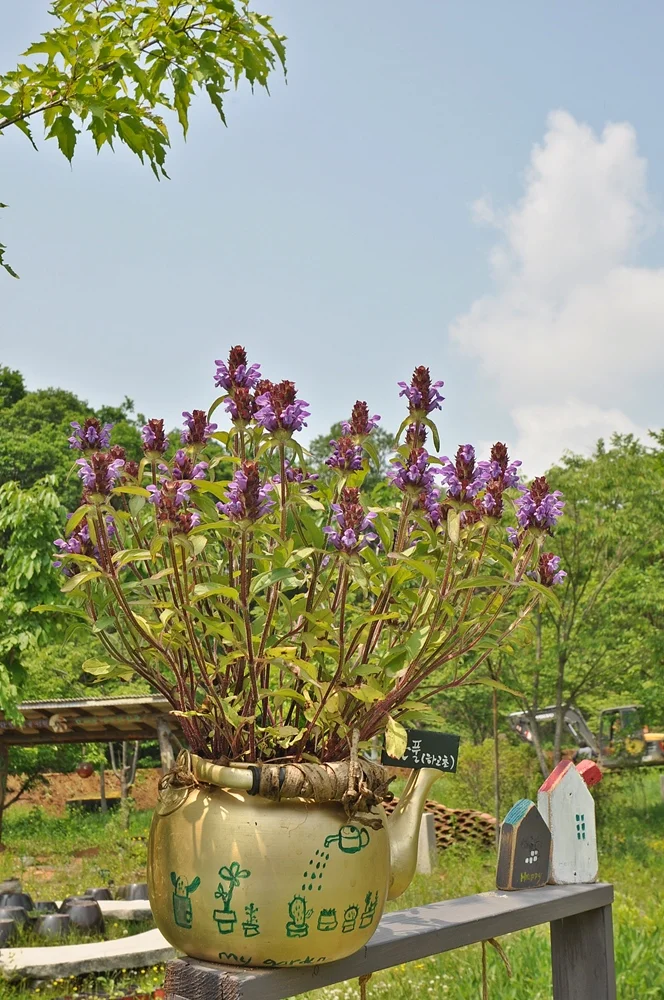
The plants observed by students were three species: Trientalis europaea (starflower), Prunella vulgaris (self-heal), and Chrysanthemum zawadskii var. latilobum (mountain chrysanthemum). All of these are “native plants” indigenous to Korea. Unlike “naturalized plants” introduced from elsewhere for cultivation or horticultural purposes, native plants are defined as those that have closely adapted to the local ecosystem, including its climate, soil, and insects. While what students first touch are soil and seeds, they are in fact observing the adaptive structures that the Korean ecosystem has accumulated over a long period.
In May 2026, the four organizations signed a memorandum of understanding to launch the “Colorful School” program. Students from environmental clubs at five middle schools in Seoul—Daechi, Muncheon, Songrye, Punnap, and Hangdong—participated, and the National Institute of Biological Resources provided seeds and seedlings for starflower, self-heal, and mountain chrysanthemum 1.
From Germination to Fruiting: Completing the Closed Loop
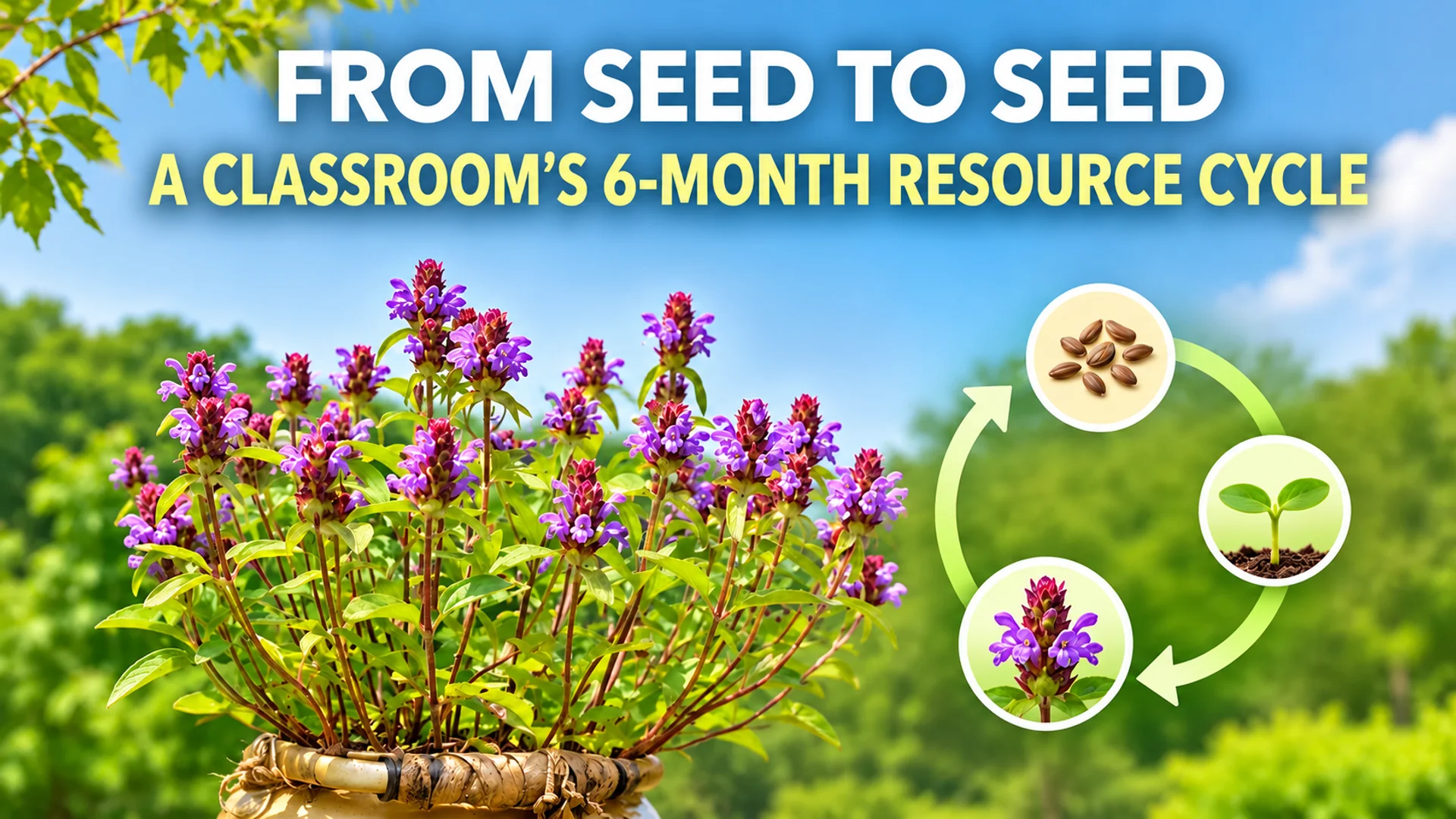
In ecosystems, the principle of resource circulation is very specific. Plants absorb water and nutrients from the soil to grow stems and leaves, flower, and exchange pollen to secure genetic diversity. Fertilized flowers transform into seeds containing nutrients and genetic information, and when mature seeds fall to the soil, they return as resources for the next generation.
Students participating in “Colorful School” directly observed, over six months in their classrooms, the cycle of seeds sprouting, growing into flowering plants, and producing seeds again 1. They planted seeds and confirmed “germination,” witnessed the moment seedlings grew leaves and reached “flowering,” and observed the process where “fruiting” followed after the flowers fell. The depth of learning created by physically brushing out new seeds with the same hands that planted them is entirely different from simply reading about “ecosystem circulation” in a textbook.
Tactile Waste Circulation: Recycled Plastic Plaques and Keyrings
If the plant life cycle demonstrates nature’s circulation, human waste circulation might seem like a separate domain. The “Colorful School 2026” results-sharing event provided devices to connect these two domains. At the event held on November 7, 2026, at the National Institute of Biological Resources in Incheon, plaques made from boards recycled from waste plastic, engraved with the program logo, school names, and messages, were delivered to the five schools 1. These plaques are expected to be displayed in each school’s science room to encourage the continuation of activity records and environmental practices.
The venue also operated booths where students could engage in hands-on activities. Typical activities included melting waste plastic pieces to create recycled keyrings and decorating bags with environmental message patches 1. A postcard stamp booth was also prepared, where images were added to postcards each time students answered biodiversity quiz questions correctly 1. Students who had observed the process of plants “becoming seeds again” in their pots participated in tasks transforming waste plastic into “reused” materials, gaining a sensory understanding that the principle of circulation also applies to human activities.
From Textbook Words to Physical Movement of the Hands
Resource circulation becomes a completely different concept when felt with hands compared to when recited as a slogan. “Colorful School 2026” was not simply a tree-planting event. It was an educational curriculum that involved observing the closed loop of ecosystems reusing resources on their own for six months, and then expanding that principle to human-created waste flows. Just as the starflower, self-heal, and mountain chrysanthemum grown by students from Daechi and Muncheon middle schools and four other schools returned from seeds to seeds, the recycled plastic keyrings made by students at the booths and the recycled plaques delivered to schools show that waste can become a resource again. It was a six-month period during which a single small seed in a classroom pot changed the word “resource circulation” from textbook characters into physical movement of the hands.
References
- 현대차, 중학생 환경교육 성과 공유…자생식물 키우고 생물다양성 배워 · ww2.asiatoday.co.kr↩