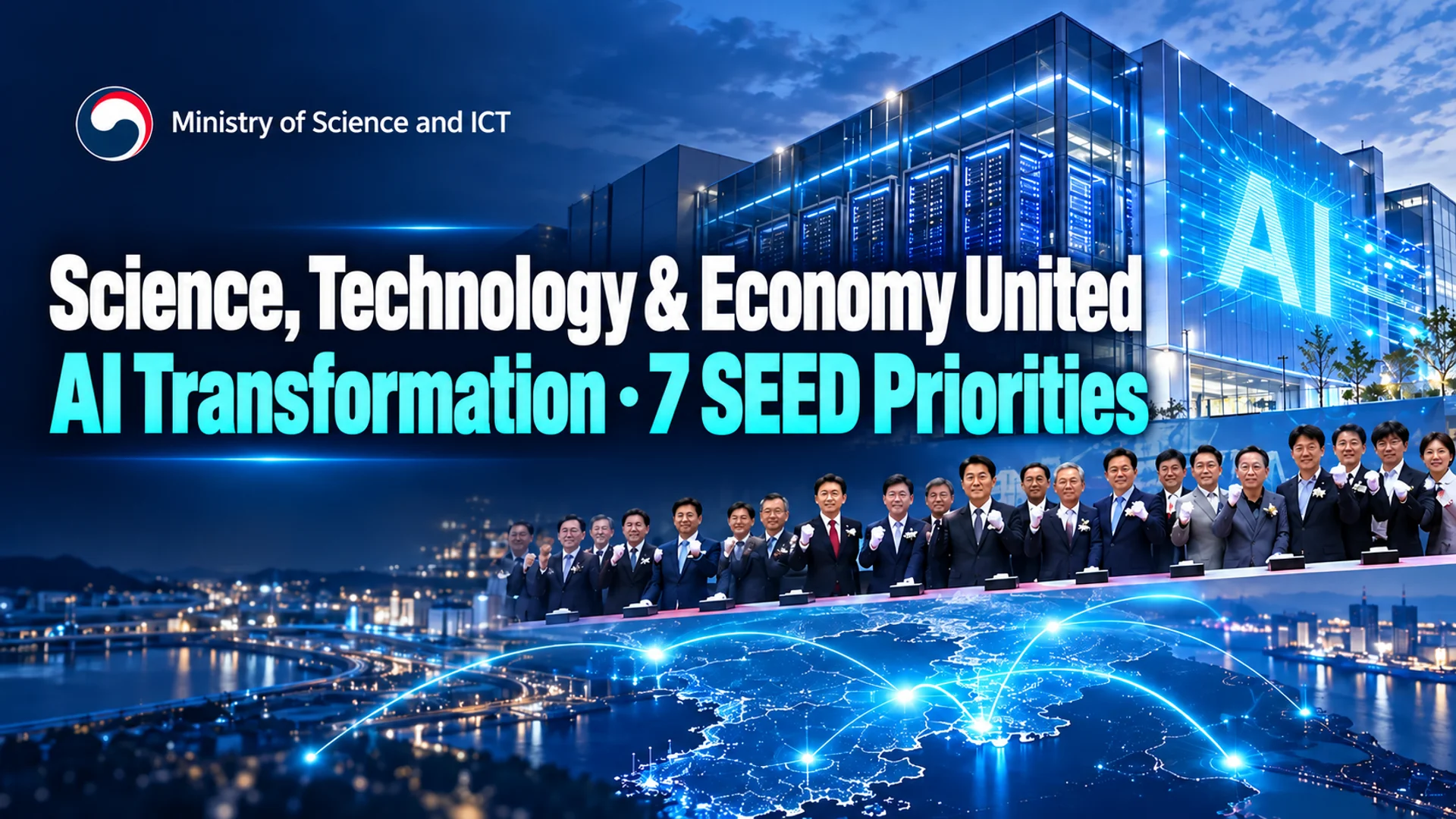
On October 28, 2026, the government took a significant administrative step to break with past practices by holding the first-ever joint meeting of the Economic Ministers' Meeting and the Science and Technology Ministers' Meeting. This marks the first time the science and technology ministerial meeting has been held jointly with economic-related ministerial meetings since its launch in November of last year. Jointly chaired by Deputy Prime Minister and Minister of Science and ICT Bae Kyung-hoon and Deputy Prime Minister and Minister of Economy and Finance Lee Hyung-il, this joint session declared a “unified” system that closely links science and technology policies with economic and industrial policies.
At the core of this shift in policy direction lies the "7 SEED Projects," aimed at securing the nation's future growth engines. To achieve the core missions of the 7 SEED Projects, the government has decided to establish inter-ministerial collaboration across all stages—from research and development (R&D) to technology demonstration, commercialization, and new industry cultivation. In other words, the policy framework is being completely redesigned to link investment around core missions rather than individual project units. This article examines in detail the government’s vision for a new growth drive outlined in this meeting, as well as specific measures to accelerate the AI transition, which will serve as its driving force.
7 SEED Projects: Core Growth Strategies for Future Food

The "7 SEED Projects," positioned as the top priority of economic policy, is a strategy focused on investing in core technological fields that will underpin the nation's future competitiveness. Deputy Prime Minister Lee Hyung-il, who attended the meeting, explicitly mentioned quantum technology, space, and small modular reactors (SMRs) among the seven specific fields, emphasizing the need to accelerate the commercialization of these advanced future technologies. This reflects a policy intent to prevent past R&D investments, which often stagnated at the development stage, from stalling at the commercialization phase where technology meets the market and industry.
In particular, as securing energy has emerged as a critical variable determining success or failure in global technological competition, securing energy sources such as SMRs has become an essential requirement for the national economy, transcending mere technological development. The government plans to actively incorporate private-sector demands into the 7 SEED Projects to overcome technological challenges and secure early advantages in future energy sources and core technologies through the "K-Moonshot" strategy.
| Key Policy Agenda | Core Direction and Goals | Schedule |
|---|---|---|
| 7 SEED Projects | Inter-ministerial coordination from R&D to commercialization, reflecting private-sector demand | Implementation plan finalized within 2026; main projects to begin in 2027 |
| Governance Structure | Establishment of a public-private joint "Frontier Board" for collaborative resolution of regulations and licensing issues | Establishment and operational preparation within the year |
| Leap to AI Leadership | Connecting technological achievements to improved quality of life and creation of new industries | Continuous promotion |
Establishment of the "Frontier Board" and Finalization of Implementation Plan by Year-End
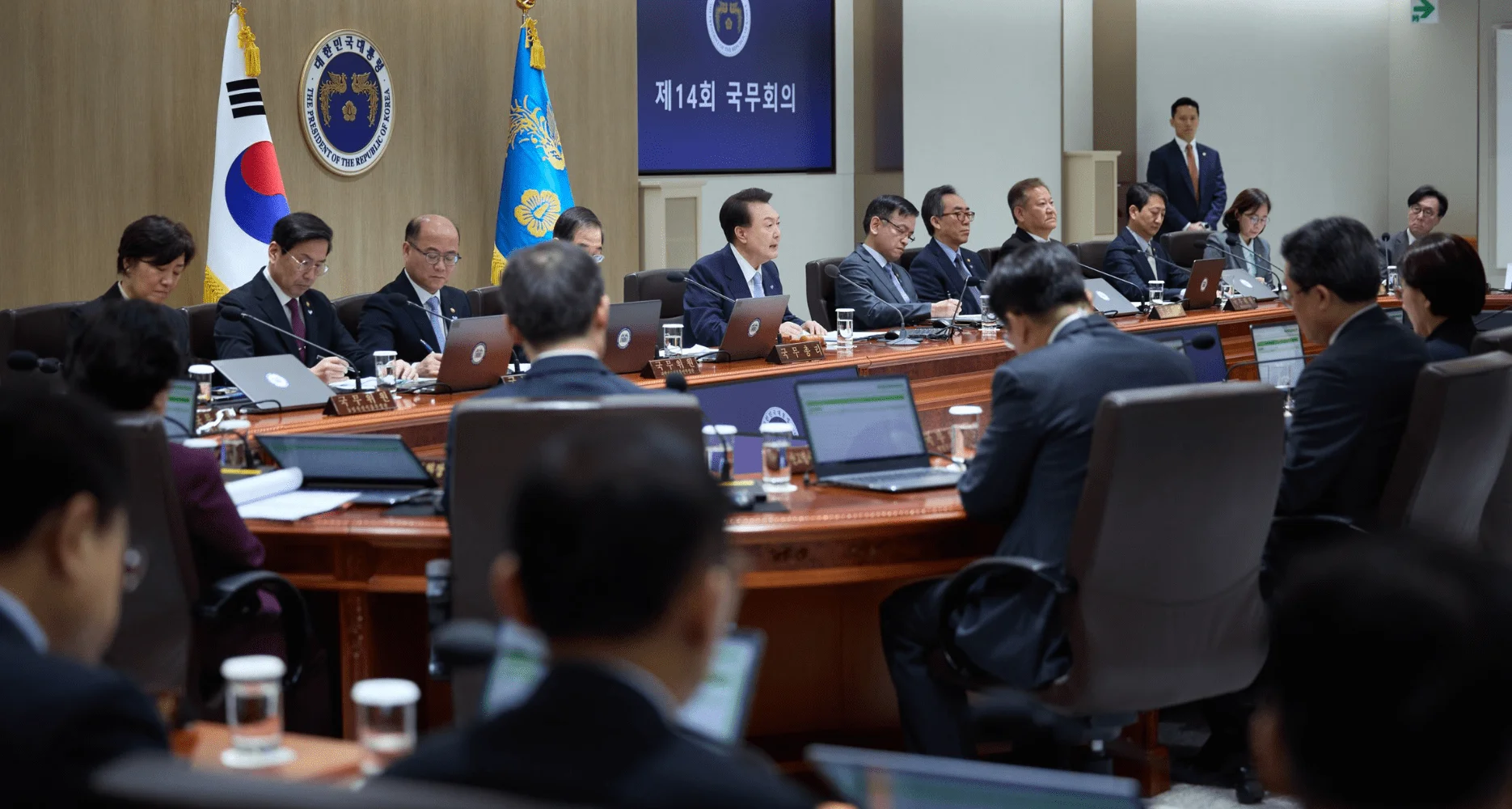
The success of large-scale national projects depends on how swiftly and flexibly they are executed. To prevent the 7 SEED Projects from being hindered by the limitations of traditional bureaucracies that cannot keep pace with the field, the government is introducing an executive body called the "Public-Private Collaboration Framework." This is the establishment of the "Frontier Board."
The Frontier Board will play a role in jointly resolving complex regulatory and licensing issues that arise during project execution through collaboration between the public and private sectors. Since new technologies often fall into legal blind spots, causing significant delays in field entry, this body serves as a key channel to break through such bottlenecks.
Once the policy direction is set, the most important factor is adhering to a clear timeline. The government has decided to finalize specific sectoral implementation plans by the end of 2026. Based on this plan, main projects involving fund disbursement and project launches are expected to begin in 2027. This year will focus on completing policy design and foundational infrastructure, with efforts accelerated starting next year to yield tangible industrial outcomes.
AI: Shifting from "Speed Adjustment" to "Speed Responsibility" and Expanding Infrastructure
In this meeting, Deputy Prime Minister Lee Hyung-il clearly stated, "From fundamental technology R&D to commercialization, science and technology policies must be integrated with economic and industrial policies." At the center of this integrated policy lies the AI transition (AX). Deputy Prime Minister Bae Kyung-hoon noted that South Korea has already been included among the top-tier AI-leading countries and ranks first in Asia in the Global Innovation Index, achieving excellent results. He stated that policy efforts will now be concentrated on securing future core technologies and accelerating the national AI transition, which remain the remaining challenges.
To bring this AI transition into actual industries and citizens' lives, the government has finalized specific infrastructure and service restructuring plans.
| AI Transition and Infrastructure Details | Specific Contents and Target Dates |
|---|---|
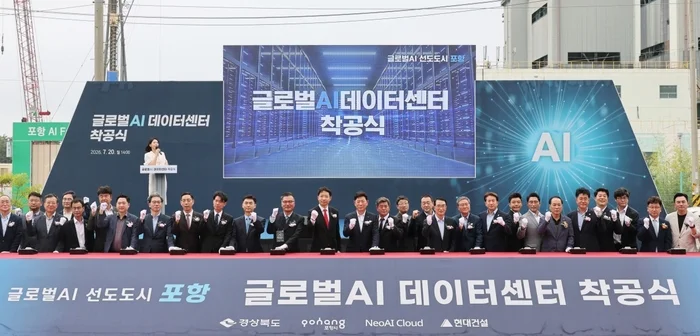
| AI Data Center Construction | Construction in Pohang, Gyeongsangbuk-do, valued at 600 billion won Targeting completion in November 2027 and operations launch in January 2028 |
| Integration of Local Government Systems | Integrating administrative systems of 243 local governments into cloud/AI-based systems across 16 metropolitan cities and provinces Sequential launch in 2028–2029 |
| Smart Port Development | Creation of "Physical AI Ports" according to the Ministry of Oceans and Fisheries' "AX Strategy" |
In particular, the construction of data centers, crucial for AI computing resources, is cited as a representative example of pursuing both regional economic revitalization and the expansion of national computing infrastructure. The development of Physical AI ports is also a government experiment and strategic move aimed at maximizing industrial efficiency by directly applying AI technologies that operate in physical spaces, such as robotics and autonomous driving, to logistics sites.
Consistency of Social Policies Supporting the Economy
Technological innovation and growth ultimately derive their value from their connection to people's lives. The joint session discussed not only advanced technology and industrial agendas like AI or SEED Projects but also broader social issues. Deputy Prime Minister Lee Hyung-il emphasized that "the ultimate goal of growth is improving citizens' quality of life and mitigating polarization," noting the importance of building a foundation for the fruits of innovation to be distributed evenly across society.
To this end, the government has designated housing, jobs, and financial services for the common people—closely tied to citizens' daily lives—as three core social policy tasks and has launched an inter-ministerial task force. This design aims to create a virtuous cycle where the growth of advanced industries naturally translates into improvements in daily life.
The sector with the most concrete institutional reforms announced is the retirement pension system. Measures have been included to eliminate inefficiencies in the financial system in line with the pace of technological innovation and to more securely protect workers' retirement lives.
- Mandatory External Funding: From 2028, external funding for retirement benefits will be gradually mandated for workplaces with 100 or more employees. This reduces the risk of unpaid retirement allowances in the event of business bankruptcy and strengthens beneficiaries' rights.
- Expansion of Fund-Type Pensions: The introduction of fund-type retirement pensions is being promoted to further improve returns and strengthen beneficiaries' rights.
- Overhaul of Operator Evaluation Criteria: Criteria for selecting and evaluating operators will be completely overhauled to be "return-focused," enhancing the operational efficiency of pension assets.
- Prevention of Interest Losses: The notification point for applying default options will be moved forward to "two weeks" before maturity. This is a highly practical regulatory improvement aimed at reducing the period of interest loss caused by pensions being left unattended after maturity.
A New Trajectory for Growth Policies: Expectations for a Virtuous Cycle
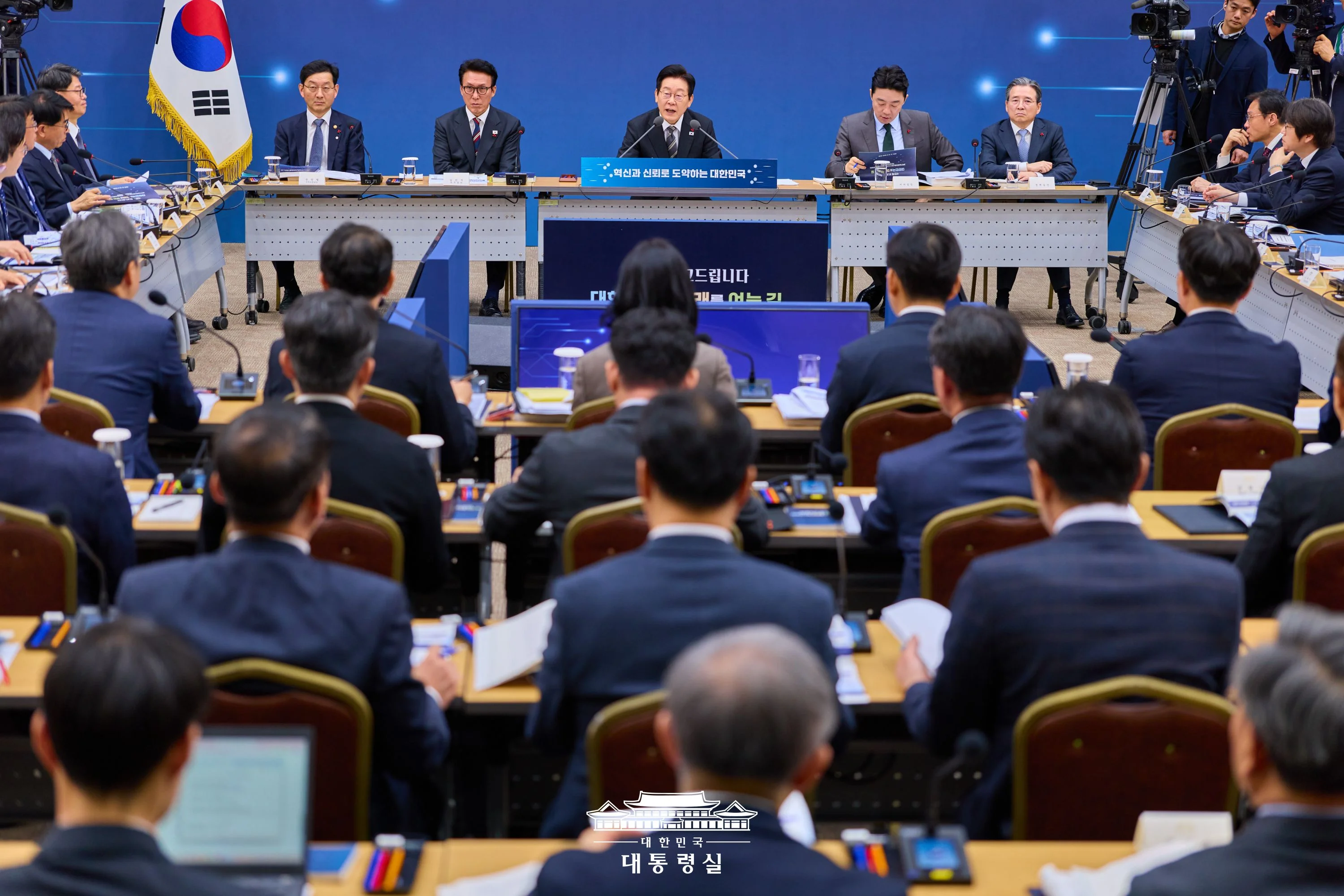
Science and technology and the economy are no longer operating separately. In the past, R&D, industrial, and macroeconomic policies were often designed within the silos of respective ministries. However, this first joint session on October 28, 2026, has become the signal that puts an end to such practices.
From the development of foundational technologies requiring robust basics, such as quantum, space, and SMRs, to the construction of large-scale infrastructure like data centers and cloud integration, and up to the overhaul of retirement pensions to secure retirement funds, all issues discussed in this meeting point toward one massive goal. It is the completion of a "virtuous cycle" where future growth engines (7 SEED Projects and AI) are secured, and the outcomes generated in the process naturally flow into social values such as stabilizing people's lives and mitigating polarization.
Of course, for this massive policy experiment to completely transform the structure of the national economy, numerous detailed adjustments and intense dialogue with the market will be necessary. However, the implementation plans to be finalized within the year, the main projects to begin in 2027, and the AI cloud infrastructure to be built throughout 2028–2029 have already set specific timelines. There is high anticipation regarding what substantive changes this new growth trajectory, where government ministries act as a "unified" body, will bring to South Korea's economy and industrial ecosystem.