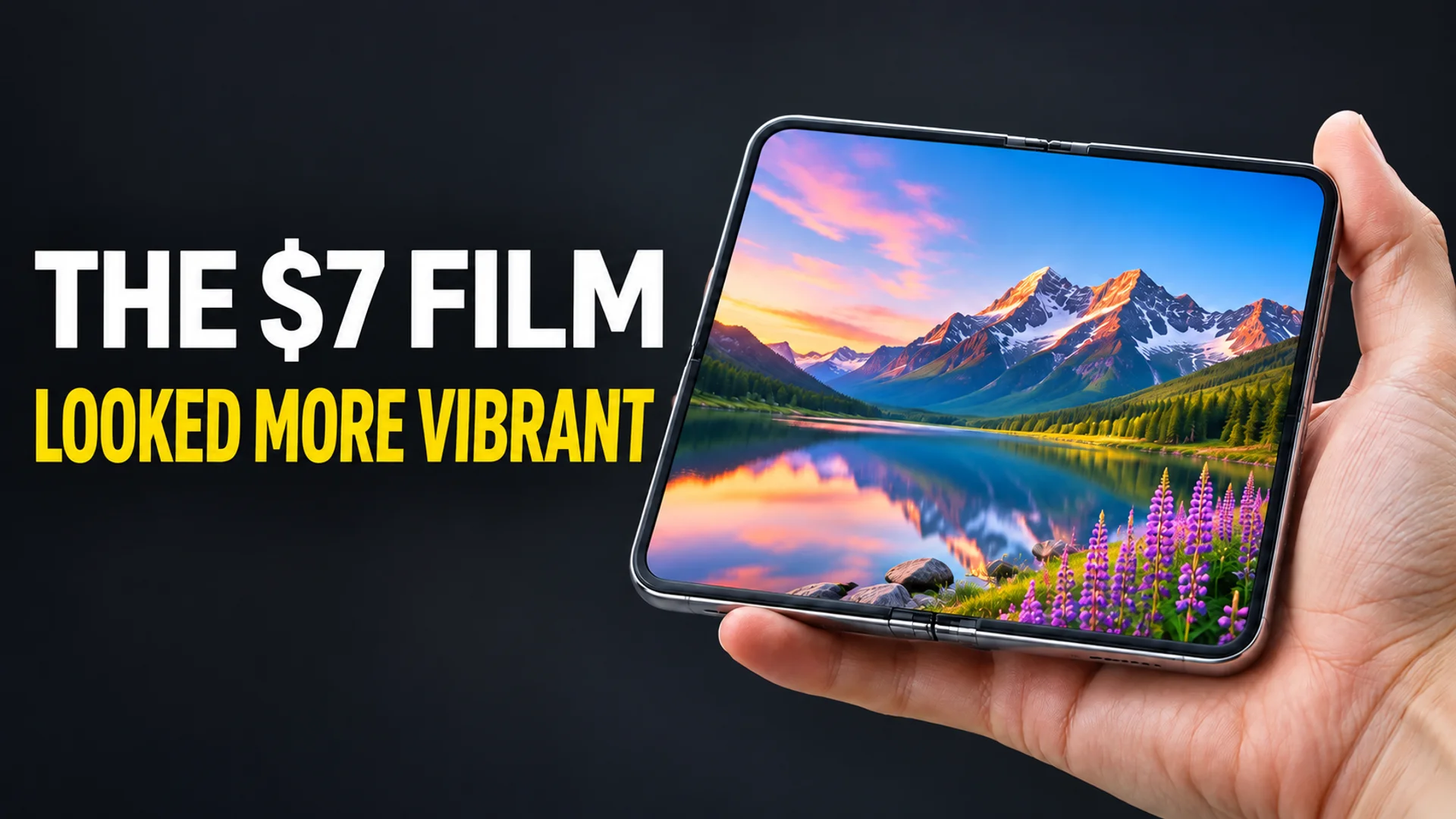
Nano-texture on Apple’s first foldable iPhone, the iPhone Duo, is a premium surface treatment applied to a custom polymer cover layer developed by Apple in-house, and is considered far more costly than standard matte films. However, an unexpected result was revealed in a review published by YouTube channel B-NOTE in October 2026. When a smartphone fitted with a KRW 10,000 low-reflective film and the iPhone Duo were compared side by side under identical outdoor lighting, their glare-reduction effects were similar. Interestingly, in the color comparison, the screen with the KRW 10,000 film appeared richer and sharper. This experiment raises questions about the assumption that expensive Nano-texture offers superior image quality overall. This article analyzes the shared physical principles behind Nano-texture and standard matte films, as well as the practical differences confirmed under microscopic examination and in real-world use.
The Shared Principle of Scattering Light to Reduce Reflection
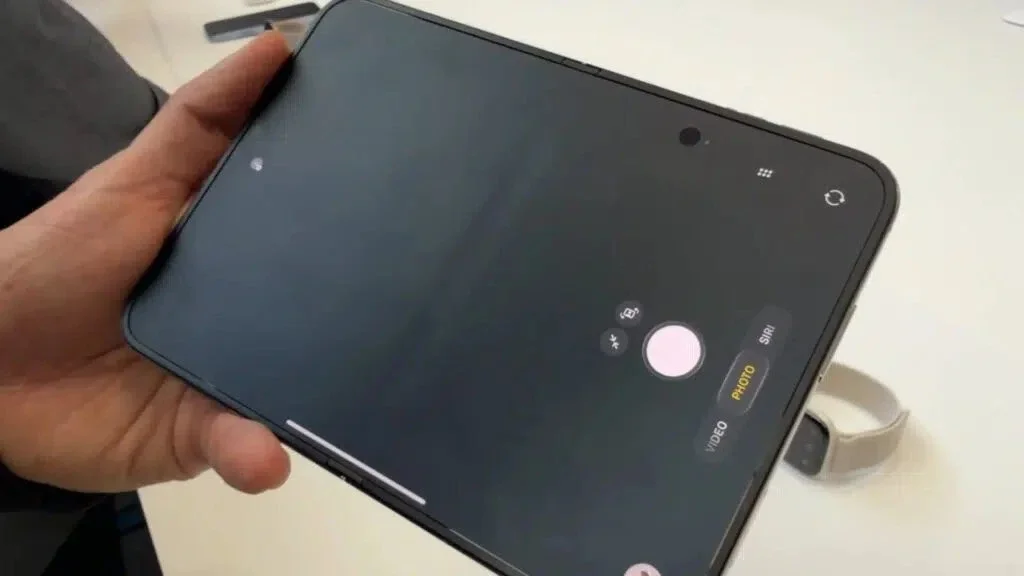
The fundamental principle behind glare reduction is the same for both matte films and Nano-texture. Both surfaces create microscopic unevenness (凹凸), causing incoming external light to scatter in all directions rather than reflecting like a mirror in a single direction. When light is scattered, reflections of the surrounding environment on the screen become blurred, allowing users to identify on-screen content even outdoors.
However, this principle comes with an unavoidable trade-off. The microscopic unevenness on the surface scatters not only external light but also bends the light emitted from screen pixels as it travels toward the user’s eyes. According to a report by Vietnamese media outlet Báo Đà Nẵng in September 2026, such structures reduce color reproduction and clarity, causing a haze-like blurriness over the screen. 1
The experience of Reddit user Thewtfpanda illustrates this concretely. He reported replacing the Nano-texture model of his Apple iPad Pro with the glossy version after working approximately 40 hours per week, citing text blurriness and subtle visual discrepancies. This suggests that whether it is Nano-texture or a low-cost matte film, the inherent limitation of obscuring light emitted from pixels remains the same. 1
Differences in Surface Precision Confirmed Under a Microscope
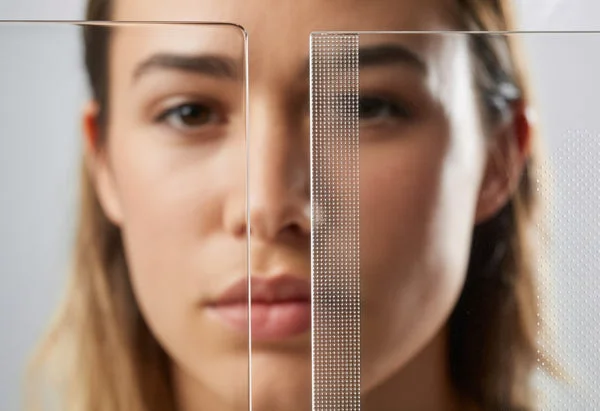
B-NOTE directly compared the surfaces of a KRW 10,000 low-reflective film and Nano-texture under a microscope, revealing subtle differences between the two technologies. In magnified images, the low-reflective film displayed rough and irregularly formed surface particles. While this rough structure is effective at scattering light and preventing reflections, it causes grainy noise or a hazy appearance when viewing the screen closely. Additionally, rubbing the surface with a finger produces a distinctive gritty friction.
In contrast, the Nano-texture surface was significantly smoother and more densely etched than the film. As a result, it effectively scattered light without displaying the film’s characteristic coarse particulate texture or visual noise. The tactile feel was also smooth rather than gritty like the film. The core value of Nano-texture lies not in the superiority of the underlying principle of “light scattering” itself, but in controlling that principle through a more precise process to eliminate noise and a rough texture. 2
Advantages and Limitations of a Permanent Integrated Structure
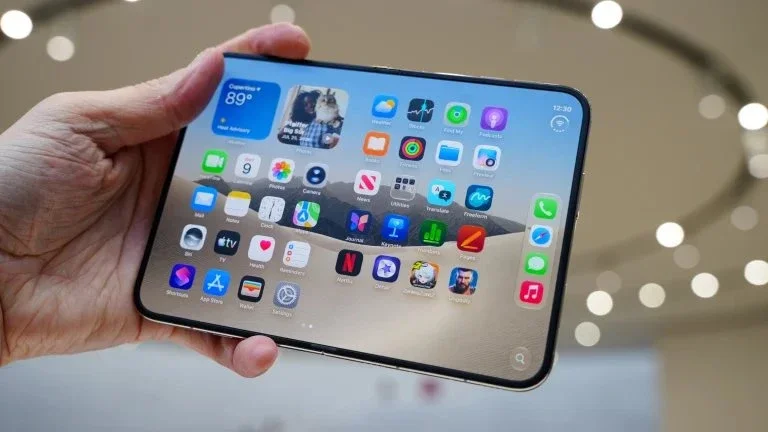
The decisive difference between Nano-texture and a simple “premium film” is its structural position. According to reports citing MacRumors, Apple’s disclosed internal display for the iPhone Duo consists of ten layers in total. At the very top sits a custom polymer cover layer developed by Apple. Apple stated that this material is up to 40% stiffer than existing industry materials and is topped with a scratch-resistant coating. 3
Nano-texture is not a layer that can be applied and removed from glass, but a topmost component of the display panel itself. When B-NOTE magnified the Under-Display Camera (UDC) area, the structure showed the Nano-texture layer physically covering the OLED emitting elements. Because the polymer layer is positioned directly above the emitting elements, brightness and image quality losses caused by pixel light scattering are structurally unavoidable. 2
Due to these structural characteristics, an exception was created where Nano-texture is not applied in the UDC area. The reviewer interpreted this as likely omitting the microscopic texturing in this section to prevent image quality degradation in the camera lens. As a result, a paradoxical situation arises where only the UDC area appears relatively shiny, creating a noticeable texture difference from the surrounding screen. 2
These physical limitations remained valid in outdoor tests. According to B-NOTE’s findings, Nano-texture appeared to have slightly reduced color expressiveness because it directly covers the emitting elements, while devices fitted with low-reflective films showed richer saturation under the same conditions. B-NOTE did not identify a single deterministic factor for the film’s richer colors, but it was clear that Nano-texture is not free from color degradation due to light scattering. 2
Ultimately, the difference between Nano-texture and matte films is not “which one blocks glare more effectively.” Both technologies function sufficiently to ensure outdoor readability. The dividing lines are “precision” and “reversibility.” Nano-texture offers a precise tactile feel that reduces glare without graininess or grittiness, along with integrated durability. However, because the texturing permanently covers the emitting elements, image quality degradation persists throughout the device’s lifespan. Conversely, matte films have the disadvantage of coarse particle texture and feel, but they can be removed at any time if unsatisfactory, allowing a return to the original sharp screen. Whether to permanently imprint the device with a trade-off of sacrificing image quality to block glare, or to keep it removable, becomes the practical criterion for purchase.