
Have you ever imagined that a single character error hidden within a library recording a phenomenal 325 million downloads per week could shake the entire global AI ecosystem?
The CVE-2026-48710 vulnerability, also known as 'BadHost', which recently sent shockwaves through the security community, has turned that exact scenario into reality. This vulnerability is not merely a single-line coding mistake; it is a striking example of how fragile the trust boundaries of the modern AI infrastructure we have built can be.
If you are using FastAPI or operating AI model serving frameworks like vLLM or LiteLLM, this article will serve as more than just news—it will be a survival guide.
1. The Magic of a Single Character: How Authentication is Bypassed
Normally, when a web server receives a request, it inspects the path to verify "who this person is." For example, if a request comes in via the /admin path, it checks for an authentication token. However, the BadHost vulnerability cunningly twists this inspection logic.
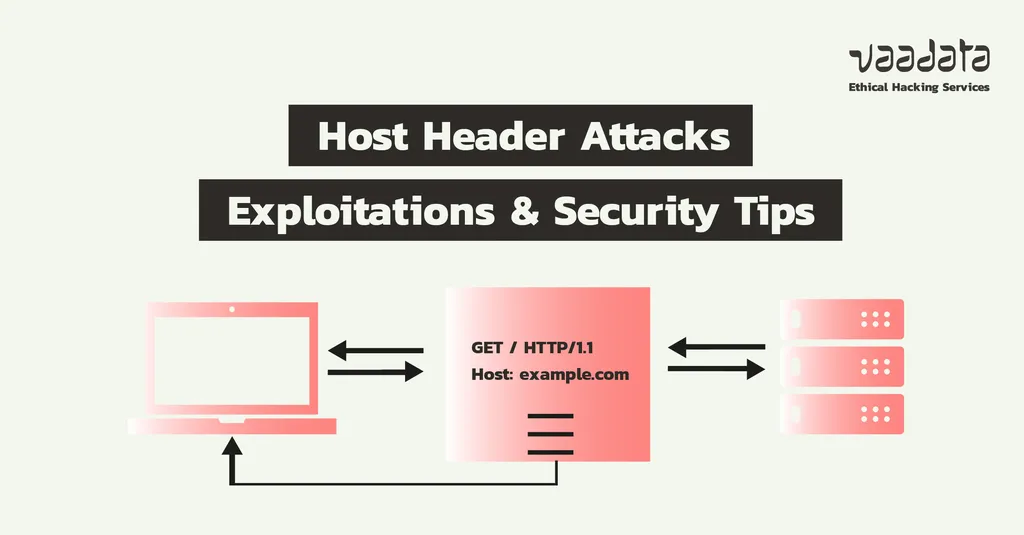
The core of the problem lies in how Starlette, a Python-based asynchronous framework, reconstructs URLs. Starlette combines the value of the Host header with the requested path to create the full URL, but it contains a flaw where it fails to properly validate special characters included in the Host header.
An attacker uses a trick like the following:
Host: example.com/health?x=
When this request enters the server, a bizarre situation occurs:
- The Security Middleware's View: "Hmm, looking at the
Hostheader, the path is/health. This is a public page that doesn't require authentication. Pass!" - The Actual Application's View: However, as the URL is reconstructed internally by the server, the request may actually be delivered to a protected path, such as
/protected.
In technical terms, this is called Parser Disagreement. The moment different software components look at the same data and produce different interpretations, the walls of security crumble. It is like a gatekeeper opening the door thinking, "The guest is going to the living room," only for the guest to bypass the living room and walk straight into the master bedroom.
2. The AI Ecosystem Takes a Direct Hit: Why is it More Dangerous?
The reason this vulnerability is even more terrifying is that its scope of impact exceeds imagination. It is not just a matter of a few websites being breached.

Many libraries that serve as the backbone of the AI technology we currently use are built upon Starlette.
- FastAPI: The most popular Python web framework.
- vLLM & LiteLLM: Core infrastructure for efficiently serving Large Language Models (LLMs).
- MCP (Model Context Protocol) Servers: Tools that allow AI agents to access user data (emails, calendars, etc.).
MCP servers, in particular, are highly vulnerable points. The MCP specification requires certain endpoints (such as OAuth discovery) to be open even without authentication. If a BadHost attack is combined with this, an attacker can hijack an AI agent's permissions to read a user's emails, intercept financial information, or even remotely control IoT devices.
In fact, security researchers' scans confirmed risks ranging from biopharmaceutical clinical data to personal health information and even corporate M&A data. This is not just a technical flaw; it is a warning light for the entire privacy protection system in the age of artificial intelligence.
One point worth noting: many people wonder, "If an LLM reviews the code, wouldn't it catch something like this?" However, this incident clearly demonstrates the limitations of LLMs. Even if individual code modules appear perfect on their own, the subtle differences arising from the interaction between modules are areas that current AI finds extremely difficult to detect.
3. Defense Strategy: How to Protect Our Services
So, what should we do? Simply being anxious is not enough. Security relies on 'prevention' and 'layered defense.'

First, the fastest and most certain method is to update.
The Starlette developers have already released version 1.0.1, which resolves this issue. It has been patched to ignore invalid characters in the Host header. If your current environment is using a version of Starlette lower than 1.0.1, review your update immediately.
Second, actively utilize a Reverse Proxy.
Placing a proven reverse proxy such as Nginx, Apache, Traefik, or Caddy in front provides a strong defense. A well-configured proxy can normalize or validate the incoming Host header, blocking manipulated headers before they reach the backend server (like Uvicorn).
Note of Caution: If, in your proxy settings, you use a default_server rule to pass all traffic through instead of matching specific domains, using a proxy may become useless. You must apply whitelist-based host validation.
Third, you must change your coding practices.
This is the most important practical step for developers. Using request.url.path when determining authentication in middleware can be dangerous. Instead, use scope["path"]. Since scope is data derived directly from the HTTP request line, it is safe from path distortion caused by Host header manipulation.
Fourth, use the correct features of FastAPI.
For FastAPI users, instead of path-based custom middleware, it is better to use the Depends() or Security() features provided natively by FastAPI. Because these use route matching methods, they are outside the scope of this vulnerability.
4. Summary and Conclusion
Today, we examined a critical vulnerability, CVE-2026-48710 (BadHost), which reveals a weak point in modern web security.
- Nature of the Vulnerability: An attack that bypasses authentication by manipulating the
Hostheader to distort the server's path interpretation. - Wide-ranging Impact: It includes core libraries of AI infrastructure like FastAPI and vLLM, making it fatal for AI agent security.
- Countermeasures: Update to Starlette 1.0.1 or higher, validate headers through a reverse proxy, and develop the habit of using
scope["path"]at the code level.
Security is not an event that ends with a single patch; it is a continuous process. In a modern development environment that relies on external libraries, we must always remember that a single line of code we write determines the 'trust boundary' of the entire system.
Why not check right now if there are any middlewares in your projects that use request.url.path?
Is your service being protected safely? If you have any questions or your own security know-how, please share them in the comments!
References
- BadHost – CVE-2026-48710: Starlette Host-Header Auth Bypass · news.ycombinator.com
- Behind a Proxy - FastAPI · fastapi.tiangolo.com
- Host Header Attack (Cache Poisoning) - 네이버 블로그 · m.blog.naver.com