When preparing quarterly business review (QBR) materials, we often give AI our data and ask it to "create slides." The AI faithfully fills in the blanks and draws charts, but the key insights required for the meeting still fall to human effort.
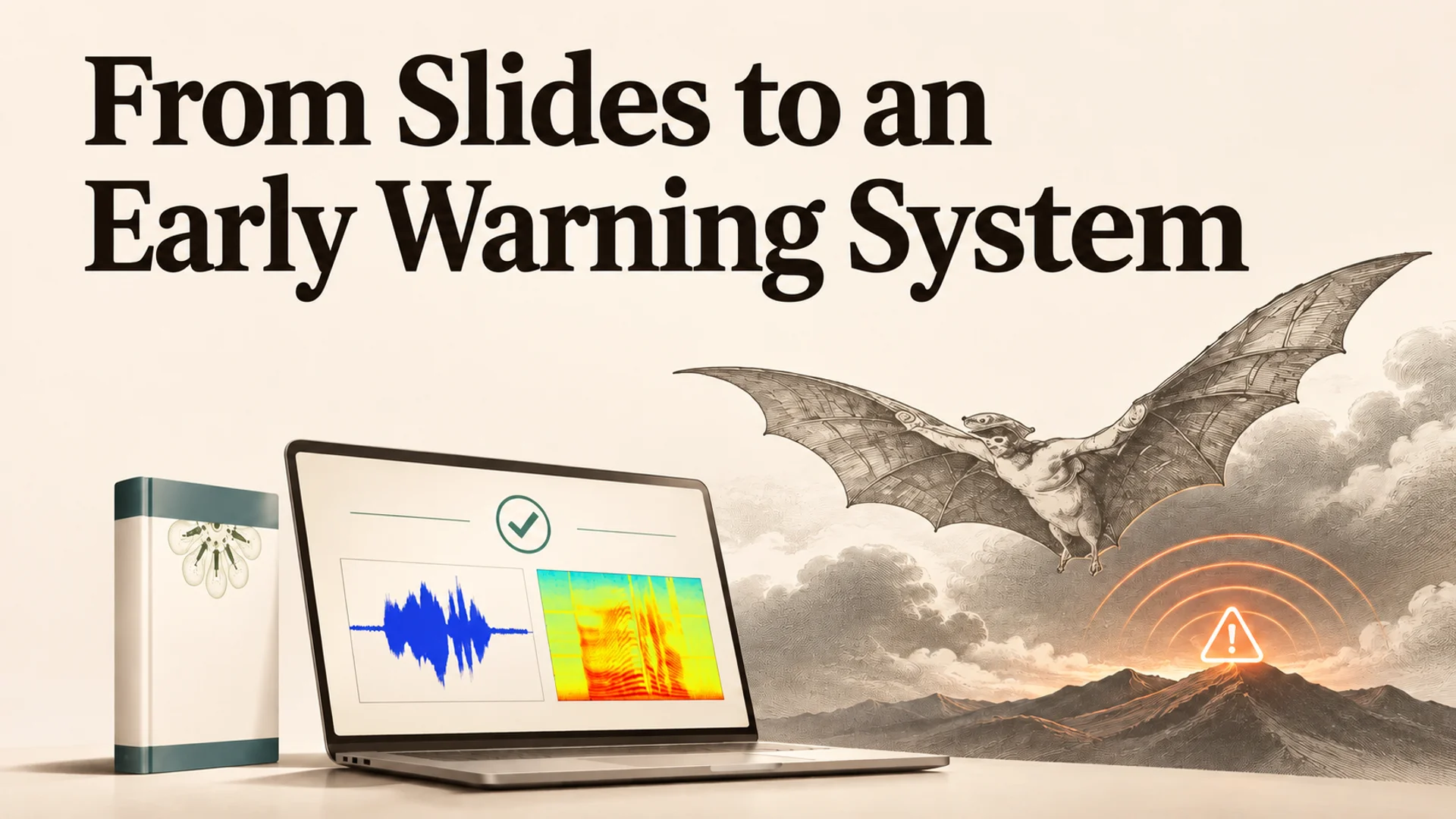
At this point, there is an approach that fundamentally changes the level of the output. In October 2026, Anthropic Engineering Manager Felix Rizeberg proposed a different prompt for quarterly reviews in his blog. He suggested asking Claude to "design a way to better achieve the purpose than the quarterly presentation materials, prove with historical data that the time to detect issues has been brought forward, and run this alongside the existing process for one quarter." The core of this technique is that, even when using the same data, the object of the request shifts from 'writing slides' to 'designing a verifiable system.' Rather than making the prompt longer, Manager Rizeberg’s proposal is about shifting the 'object' of the request to the AI. 12
AI Utilization Divided by Speed, Altitude, Depth, and Range
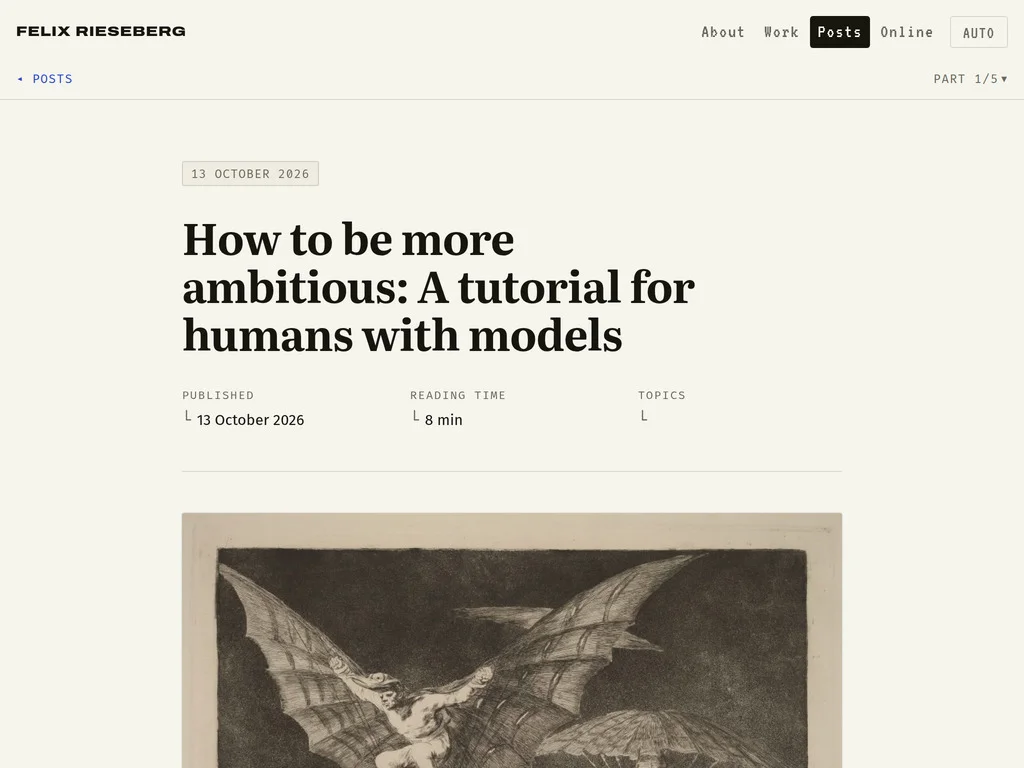
Manager Rizeberg points out that the capabilities of AI models are not uniform across all areas. Mathematician Terence Tao expressed that model capabilities are uneven, stating they are "amazing in some directions but terrible in others." To address this imbalance, he divided 'ambition' into four levels: Speed, Altitude, Depth, and Range. The first level, Speed, involves processing the same tasks faster and is widely understood, so it is omitted here; the focus is on the subsequent three levels.
It is commonly believed that longer prompts with more detailed guidelines yield better results, but the key lies not in the length but in the nature of the intended outcome.
- Altitude: Instead of instructing on individual tasks, you present the ultimate goal or the system itself.
- Depth: You request the tools and raw data actually used by experts, and verify them.
- Range: You draw on perspectives and investigative techniques from fields beyond the specific domain. 12
Raising Altitude: From 'Filling Templates' to 'Designing Systems'
The most concrete example is the process of preparing for a Quarterly Business Review (QBR). Manager Rizeberg used the case of a fictional company named 'Acme' to demonstrate how to raise the level of abstraction in the request in three steps, even with the same data.
Step one is the basic 'template filling.' It asks, based on the data, "what changed, why it changed, and what needs to be done." Step two redefines the outcome as 'decision-making.' He instructs, "Derive three urgent decisions and organize the possible directions along with pros and cons," transforming a mere listing of information into meeting agenda items. Step three deconstructs the format itself. The final request is as follows:
"The reason for this review is to enable management to detect issues early and deploy capital and personnel in the right places. Design a new way to achieve that purpose better than quarterly presentation materials. Prove, based on our company's historical data, that this approach would have detected issues earlier, and run it alongside the existing process for one quarter."
The intended output of this request is not a slide deck, but a new operational process that competes with the existing method, validated by its predictive power on historical data. Manager Rizeberg explains that this approach is most effective when the output necessitates substantive discussion. However, for the AI to actually change the workflow in this process, an environment must be pre-established where the model can install software and access the operating system. He revealed that to keep apps from crashing, he gave Claude access to crash reports, mapped versions to git commits, granted access to Windows, macOS, and Linux computers, and allowed it to independently verify fixes. 12
Raising Depth: From Mimicking Tone to 'Independent Verification'
The second level is raising depth. Manager Rizeberg observed that "when you tell a model to act like an expert, it often keeps the actual methodology intact and just changes the vocabulary." For example, if you say, "Act like a data analytics expert," the model tends to use specialized terminology but ultimately stops at markdown tables or simple summaries.
The secret to raising depth lies not in tone but in tools and data. When the AI tries to draw text tables, you must require it to use databases or statistical models employed by top-tier data scientists. Specifically, you should have it directly access raw data to adversarially test conventional wisdom, and establish an independent external judge to evaluate the results, rather than letting the model assess whether its own answer was correct. To this end, he published the following prompt template.
나는 이 작업의 '더 큰' 버전이 아니라 '더 깊은' 버전을 원해.
프롬프트를 다시 작성하기 전에 다음을 먼저 답해줘:

(1) 이 분야 최고의 전문가라면 내가 요청하지 않은 무엇을 여기서 수행할까?
(2) 이미 가공되어 요약된 자료 대신, 그들이 출발점으로 삼을 가장 원시적인(rawest) 데이터는 무엇일까?
(3) 그들이 사용할 구체적인 방법론과 도구는 무엇일까?
(4) 너나 나(주관적 판단) 외에, 결과물이 옳다는 것을 객관적으로 증명해 줄 수 있는 기준은 무엇일까?

그런 다음, 정확히 그 내용을 요구하도록 내 프롬프트를 다시 작성해 줘.
This request functions to force the model to discover 'expert tools' and 'independent verification criteria' on its own. 12
Broadening Range: Unpacking Nouns into Verbs and Avoiding Role-Play
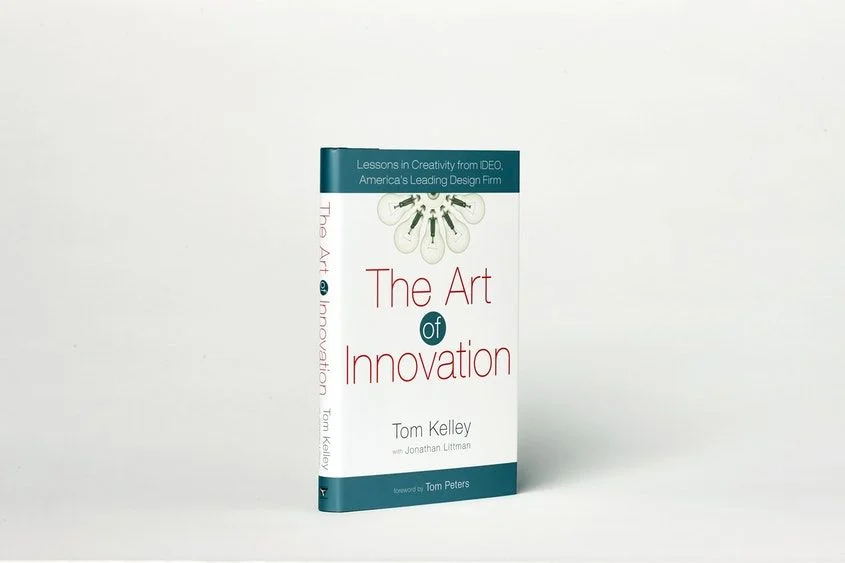
The final level is the strategy of broadening range. This begins by defining the task name by unpacking it into 'verbs.' A technique from Tom Kelley and Jonathan Littman's book The Art of Innovation, it reframes a quarterly business review not as a simple 'presentation (noun)' but as "persuading busy people with a narrative on causality and enabling them to make decisions within 30 minutes amidst uncertainty (verb)." By viewing it through this verb-based lens, the need for perspectives from other fields—such as psychology, journalism, and statistics—beyond data analysis becomes clear.
However, simple role-play like "Speak like a short-selling investor" should be avoided. Mimicking tone alone does not yield high-level research results. Manager Rizeberg emphasizes that instead, you should instruct the AI to "do the actual work a short-selling investor performs when researching their position." The true meaning of broadening range lies in activating the actual investigative techniques of the field, not in role-play. 12
Conclusion
The 'ambitious prompting' proposed by Manager Rizeberg is not a template for filling in a prescribed format. The potential of AI leads to a qualitative shift in output quality only when the direction of the request shifts from 'writing slides' to 'designing an early warning system' (Altitude), pushes from 'creating tables' to 'verifying with independent statistical tools and raw data' (Depth), and expands from 'mimicking a presenter' to 'performing cross-disciplinary research' (Range), given the same data. However, it must be remembered that for these instructions to translate into actual system design and verification beyond simple text generation, a technical environment where the AI can access databases or external tools is a prerequisite.
References
- 앤트로픽 직원 추천 프롬프트(젬 아르곤 번역) · gall.dcinside.com↩
- How to be more ambitious: A tutorial for humans with models · felixrieseberg.com↩