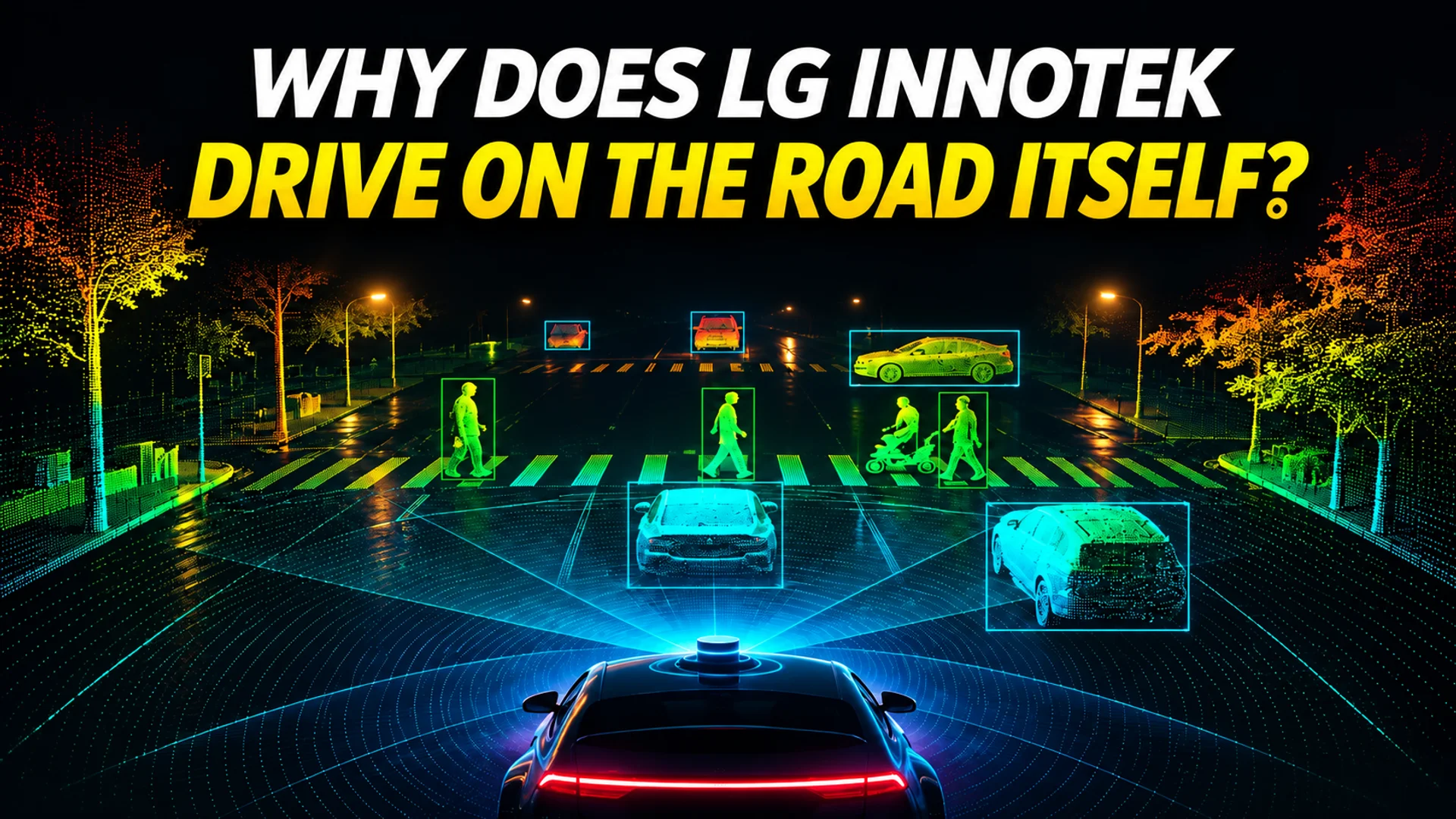
It is rare in the automotive industry for a component manufacturer of vehicle cameras or LiDAR sensors to operate its own vehicles directly on the road rather than supplying only finished car manufacturers. However, LG Innotek has deployed its own vehicles for collecting autonomous driving data on roads in the Seoul, Incheon, and Gyeonggi regions. These vehicles do not run to verify the requirements of a specific customer. Instead, they directly record the complex variables encountered on real roads and use that data to fine-tune the compatibility between sensors and software.
As autonomous driving technology advances, it is no longer sufficient to simply make high-quality parts. The process of combining information from cameras, radars, and LiDARs to perceive the surroundings has become increasingly sophisticated. LG Innotek goes out onto the road to collect data itself because this combination process depends on actual measured data rather than theoretical calculations. This ongoing initiative shows that a component supplier is moving away from the traditional model of delivering products based solely on specifications, and is evolving into an entity that verifies the performance of the overall system.
Why Autonomous Vehicles Need Multiple "Eyes"
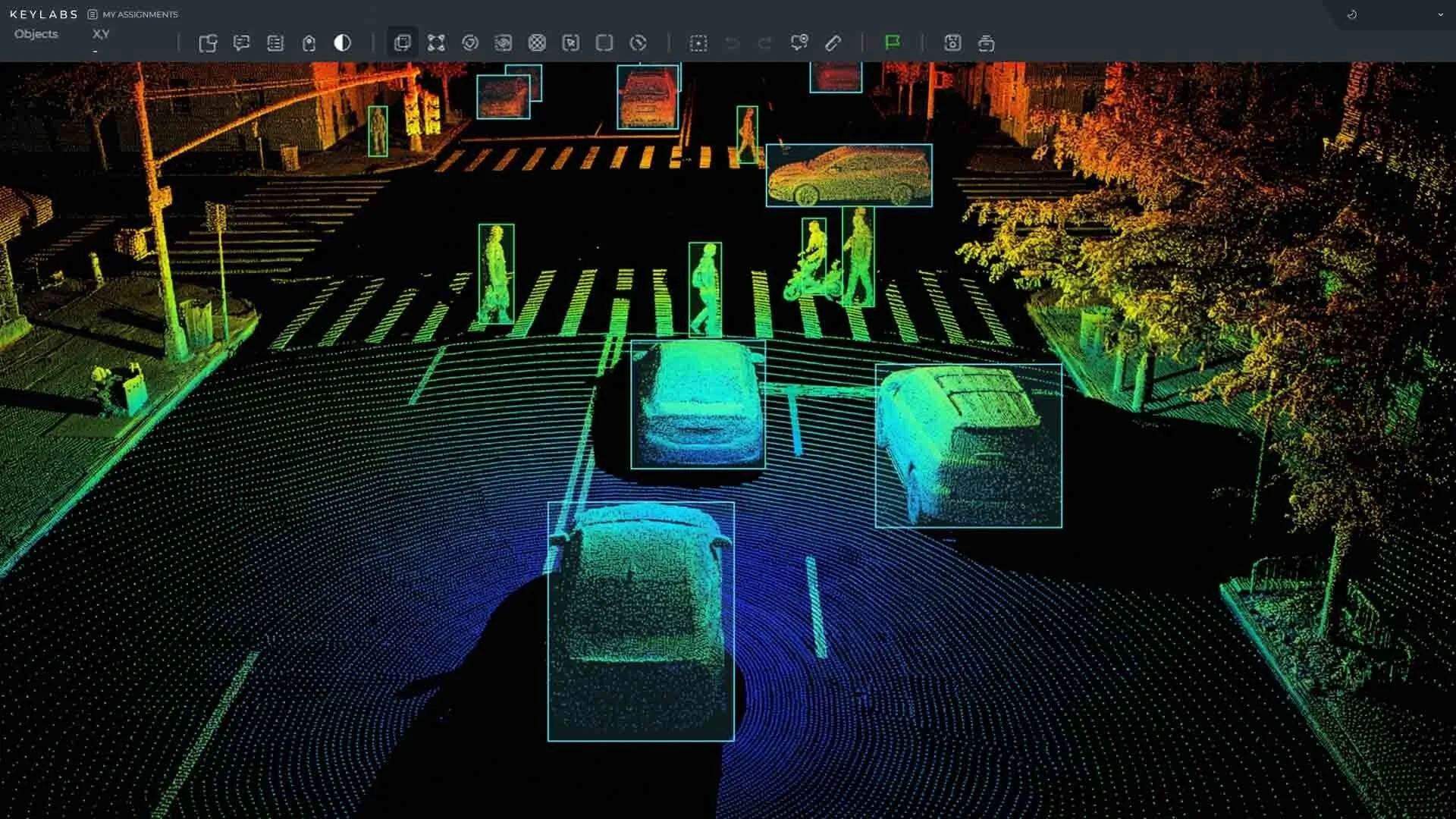
Relying on a single sensor has clear limitations when an autonomous vehicle needs to understand the road ahead. Because each sensor operates on a different principle and has distinct strengths and weaknesses, sensor fusion technology that combines them is essential.
First, a camera excels at identifying the shape of objects, lane markings, and traffic light colors, much like human eyes. However, it is highly sensitive to lighting conditions. During heavy rain, strong backlighting when exiting a tunnel, or in dark nighttime environments, it may fail to identify objects or deliver distorted images.
Radar uses radio waves to measure the distance and speed of objects. It is less affected by weather conditions such as rain or fog and has strong speed detection capabilities, but it is less effective than cameras or LiDARs at determining the exact size or shape of objects.
This is where LiDAR (Light Detection and Ranging) plays a critical role. LiDAR emits laser light hundreds of thousands of times in all directions. By measuring the time it takes for the light to bounce off objects and return, it generates precise 3D coordinates. In other words, LiDAR spatially defines not only that an object is present, but also how far away and how large it is.
The three sensors complement each other's weaknesses. For example, consider a scenario where a black sedan is driving slowly 30 meters ahead on a rainy night. A camera might misinterpret reflected light, failing to detect lane markings or blurring the outline of the vehicle. By combining the 3D spatial data provided by LiDAR with the speed data measured by radar, the system can accurately recognize the black sedan and calculate collision risks even in dark, rainy conditions.
LG Innotek states that it is one of the few global manufacturers capable of supplying all three core modules—camera, radar, and LiDAR—with its own proprietary technology. However, even if each sensor performs its role perfectly, autonomous driving becomes unstable if the software that integrates and makes judgments based on this data does not sufficiently understand real-world road conditions.
Collecting "Edge Cases" on Real Roads
The company plans to expand its fleet to approximately 20 vehicles by 2028, including those for data collection and software development1.
These vehicles focus on collecting "edge case" data. Edge cases refer to exceptional situations where the system struggles to operate normally. LG Innotek has identified the following specific scenarios as primary targets for data collection1.
- Black vehicles in heavy rain: Recognition data for situations where the LiDAR signal is weakened by rain on black vehicles with low light reflection.
- Backlight at tunnel exits: The temporary loss of visibility experienced by cameras when transitioning from a dark tunnel into bright sunlight.
- Irregular lanes in construction zones: Sections where paint-only lane markings have faded or temporary markers are haphazardly placed.
The real-world road data collected in this manner is transferred to a "Digital Twin" environment for reproduction. A digital twin is a simulation that accurately replicates real-world road environments in a virtual space. LG Innotek repeatedly verifies the chaotic data collected from real roads in the virtual world, refining the sensors' recognition algorithms. Because this trains the system with actual noisy data rather than theoretical models, field adaptability is enhanced1.
Software development vehicles within the fleet are categorized into two operational methods1.
- Open Loop: The software analyzes data, but the driver maintains control of the vehicle.
- Closed Loop: The software directly controls the vehicle for real-world driving verification. The entire process, from sensor input to vehicle control, is verified in reality.
It is unusual for a component manufacturer to operate its own vehicles and collect data. Typically, component makers supply parts according to specifications provided by automakers or software companies, while integration verification is handled by the customer or specialized firms1. LG Innotek adopted this approach to directly identify data discrepancies between sensors and minimize system integration errors starting at the component stage.
Combining Hardware and Signal Processing Algorithms
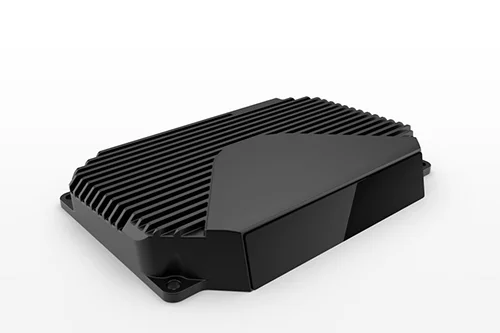
Alongside data collection, LG Innotek has pursued technical collaborations to enhance the performance of LiDAR itself. In July 2025, LG Innotek formalized cooperation with US-based LiDAR specialist Aeva on LiDAR sensor production and signal processing2, 3.
Aeva excels in FMCW (Frequency Modulated Continuous Wave) 4D LiDAR technology. While conventional LiDAR measures only distance based on the round-trip time of light, FMCW detects changes in light frequency to measure both distance and speed simultaneously. This enables the detection of subtle object movements, allowing for more precise analysis of pedestrian gait changes or vehicle lane deviation2, 3.
This collaboration follows a clear division of labor2.
- Aeva: Provides the underlying technology for FMCW LiDAR and AI-based signal processing algorithms.
- LG Innotek: Handles mass production, high-precision semiconductor packaging, and optical module manufacturing.
In essence, hardware performs the physical role of collecting light, while the AI algorithm interprets the frequency changes of that light. This represents an effort to build "intelligent sensors" that combine hardware and software.
Against the backdrop of these technical developments, LG Innotek is focusing on the automotive electronics sector. As of its August 2024 announcement, the company filed over 3,500 patents related to automotive electronics components in the past five years and expanded the share of automotive electronics in its total patent portfolio to 40%4. Additionally, LG Innotek experts selected by the Agency for Technology and Standards are participating as key members in international standardization efforts for LiDAR distance measurement sensors4. This is interpreted as a strategy to secure leadership in global technical standards beyond component manufacturing capabilities.
From Component Supplier to "System Designer"
Min Jong, LG Innotek's Chief Technology Officer (CTO), described the trend in autonomous driving solution development as follows1.
"Autonomous driving solutions are evolving from enhancing the performance of individual sensors to jointly optimizing sensors and software based on data."
This statement accurately reflects LG Innotek's current path. It signifies a transformation from a "component supplier" that simply manufactured and delivered lenses or modules, to a "system optimization entity" that ingests real-world road data and autonomously adjusts sensor recognition capabilities.
Complex sensing technology to understand intricate environments is also essential in the "Physical AI" market, including humanoid and service robots1.
Ultimately, the vehicles LG Innotek deployed on Seoul roads are not demonstration vehicles for a specific customer. They are an "internal testbed" for independently collecting and verifying the data necessary for sensors and software to function together as "eyes" and "brain." This process of a component manufacturer accumulating data directly on the road and strengthening system integration capabilities suggests that LG Innotek's position in the future global autonomous driving component supply chain is expanding beyond simple manufacturing to include design and verification stages.
References
- LG이노텍, 자율주행 센싱 데이터 수집 차량 운행 본격화… 센서 퓨전 기술력 고도화 · mtnews.net↩
- LG이노텍과 Aeva의 'AI 센서 제휴'가 관심 끄는 이유 · newsmc.net↩
- LG이노텍, 미국 아에바와 '라이다 동맹'…미래 모빌리티 시장 선점 박차 · dpg.danawa.com↩
- LG이노텍, 5년간 전장 특허 3500건···“글로벌 시장 입지 선점” · khan.co.kr↩