
"I just performed a merge, so why did the code I worked on before disappear?"
If this question pops up in your team's Slack channel, you are facing a "disaster" that goes far beyond a simple service outage. The recent GitHub incident was a shocking event that went beyond mere connectivity issues, demonstrating how the version control system we trust most can destroy our most precious asset: the codebase.
Today, we will take a deep dive into the recent fatal technical incident at GitHub, the structural problems hidden within its ecosystem, and how we should prepare for the future.
1. It's not just a simple 'outage': Why code integrity collapsed
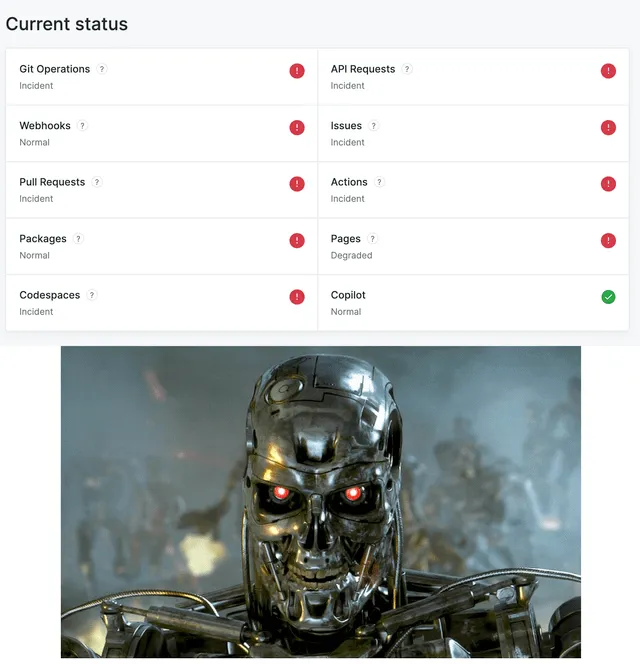
Typically, the server failures we experience are limited to things like "the site won't load" or "the API response is slow." However, the core of this GitHub incident was a much more terrifying loss of data integrity.
The incident originated during the process of merging a Pull Request (PR). In a normal workflow, new code should be added to the existing code. However, due to an error in the system's internal logic, performing a merge actually caused previous important commits to be reverted.
Why is this so critical?
- Historical Distortion: Changes that the development team had clearly implemented vanished without a trace, and the code was forcibly transitioned to a past state that it had never previously inhabited.
- Confusion over Accountability: When code changes unintentionally, it becomes extremely difficult to determine whether it was a developer's mistake or a platform error.
- Collapse of Trust: The very reason for the existence of a Version Control System (VCS)—the "accuracy of change history"—has been undermined.
Rather than a simple temporary service halt, the fact that the towers we have built can crumble due to a single platform bug has dealt a significant psychological blow to all engineers.
2. What has changed since the Microsoft acquisition?
Following this incident, heated debates have erupted in communities like Hacker News. The core suspicion is whether the frequency of outages has increased since GitHub was acquired by Microsoft.
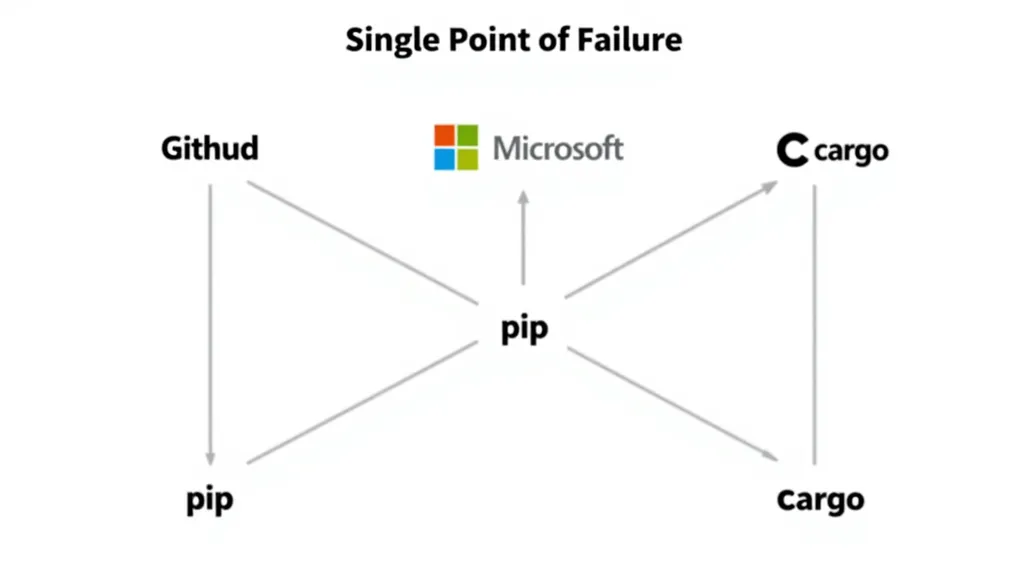
Users point out that GitHub is increasingly becoming a Single Point of Failure. They argue that stability is being shaken due to frequent structural changes, such as the transition to Azure infrastructure after the Microsoft acquisition, changes in internal engineering teams, and the migration of GitHub Actions to .NET.
Of particular note is GitHub's monopolistic position. While we might say, "If GitHub is unstable, why not just move to GitLab or Codeberg?", the reality is not so simple.
Think about the package managers we use every day:
pip install(Python)cargo build(Rust)go get(Go)
These commands still rely heavily on repositories hosted on GitHub. In other words, if GitHub collapses, it goes beyond a simple website being inaccessible; the build environments and deployment pipelines of the entire world could be paralyzed simultaneously. Due to this ecosystemic dependency, developers are caught in a "strange relationship of dependency," feeling anxious yet unable to leave GitHub.
3. Strategy for survival: Doubt your automation
So, how can we protect our code from the errors of this massive platform? This incident has left us with several painful lessons.
First, automation tools do not guarantee integrity. We trust CI/CD pipelines and automated merge processes, but if the platform's backend logic is flawed, automation becomes "a tool that rapidly propagates an incorrect state." You must include steps to verify outputs both before and after automated processes.
Second, we must realize the importance of the local environment again. When the server state is abnormal, what will ultimately save us is the local Git history and backups remaining on our computers. It is essential to develop the habit of verifying that code has been reflected as intended locally after every important merge.
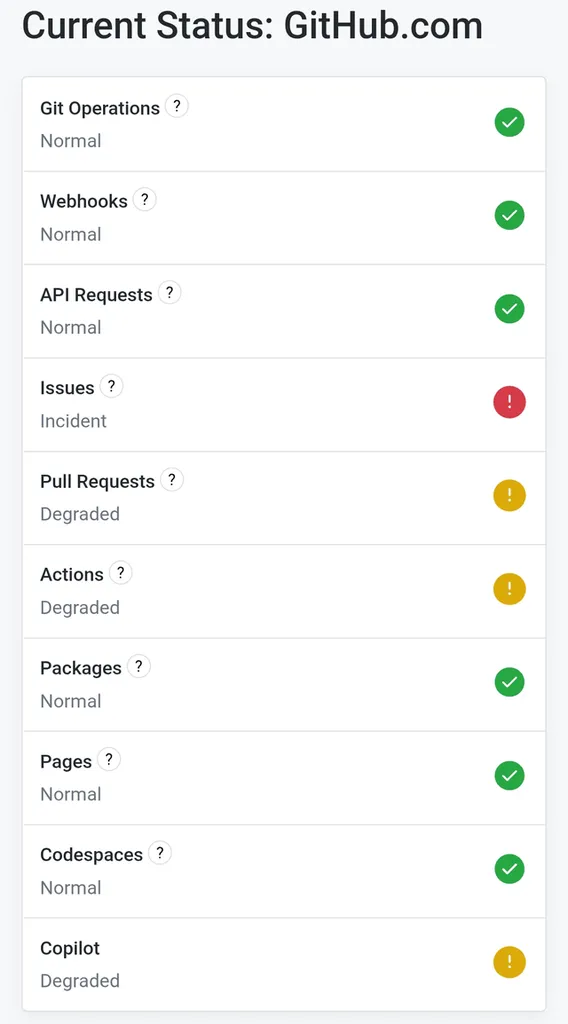
Third, actively utilize status monitoring systems. GitHub operates various notification channels to transparently disclose information when an incident occurs.
- Email/SMS: Basic emergency notifications.
- Slack Integration: Set up to ensure the entire team is immediately aware by linking with collaboration tools.
- Webhook: Useful when technically automated responses are required.
Rather than panicking with "Why isn't this working?" when a failure occurs, a professional approach is to establish a system to programmatically identify and respond to the current situation through the GitHub Status page.
4. New leadership and movements for change
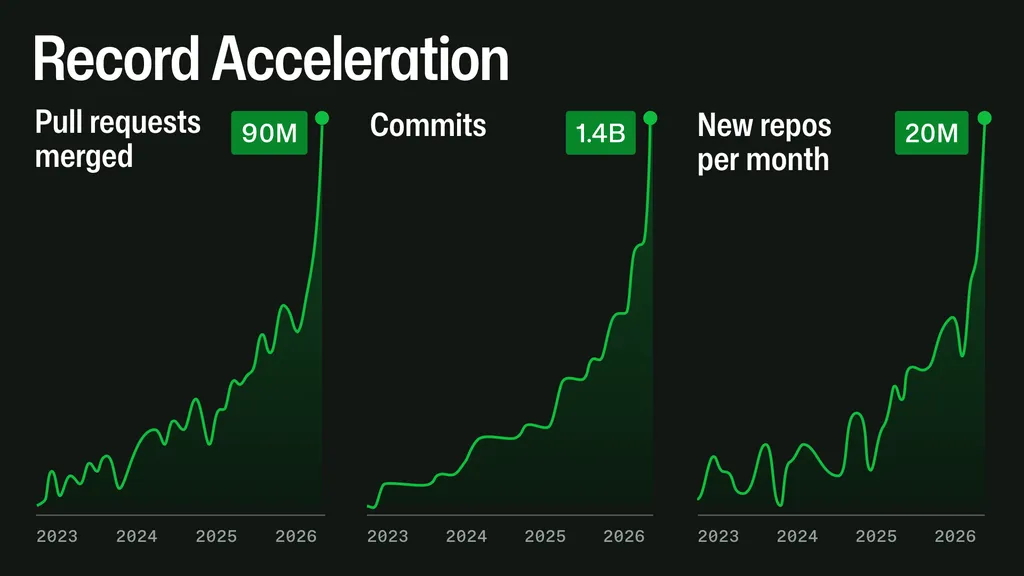
Meanwhile, GitHub is showing movements to strengthen organizational stability amidst this chaos. A prime example is the addition of Vladimir Fedorov as the newly appointed CTO (Chief Technology Officer).
Having led large-scale engineering teams during his 12 years at Facebook (Meta), he emphasizes a developer-first mindset. This is interpreted as GitHub's strategic will to resolve the recent series of outages and data integrity issues, and to regain the lost trust of its users.
Whether GitHub, which is walking a tightrope between platform stability and innovation, can build an even more robust infrastructure through this CTO appointment remains a task for us developers to watch.
Summary and Conclusion
This GitHub incident was not just a connectivity failure; it was a terrifying warning that a platform's logic error can rewrite the very history of the code. While GitHub's monopolistic position has provided us with convenience, it has simultaneously presented the risk of being a massive single point of failure.
Ultimately, the best we can do is:
- Do not blindly trust automated merge processes; always verify the results.
- Maintain local environments and separate backup strategies.
- Respond agilely to outage situations through the GitHub Status notification system.
Platforms can shake at any time. But our code must not.
What do you think about GitHub's monopolistic position and these recent outages? If GitHub were to stop working tomorrow, how would your team respond? Please share your thoughts in the comments!
References
- Incident with Git Operations, Issues and Pull Requests [resolved] · news.ycombinator.com
- An update on GitHub availability · github.blog
- Incident History - GitHub Status · githubstatus.com



