On September 17, 2026, the U.S. Securities and Exchange Commission (SEC) announced an "Innovation Exemption," opening a five-year window for selected blockchain exchanges to trade tokenized real U.S. stocks. Market reaction following the announcement was immediate. Gemini’s stock surged 31% and Securitize’s rose 21.7%, while Robinhood gained only 2.8% 1. Upon reviewing the details, the difference in market response was not coincidental. The "stock tokens" currently offered by Robinhood and Kraken do not align with the new rules, whereas those provided by Securitize do 1. Despite sharing the term "blockchain stocks," the regulatory distinction converges on a single criterion: who legally owns the underlying shares.
Same Name, Two Distinct Products
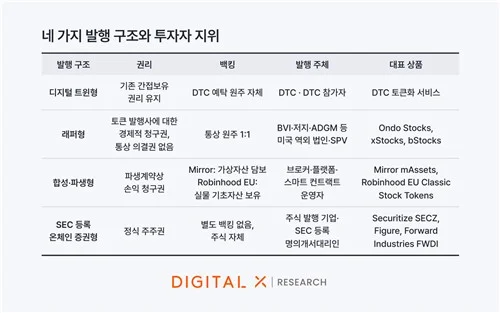
To general readers, "blockchain stocks" may appear as a single concept. However, the market hosts two entirely different products under this label. A report by the DigitalX Research Center, titled "Tokenized Stocks: From Grey Zones to Regulated Markets," categorizes tokenized stocks into four types based on issuance structure: digital twin, SEC-registered on-chain securities, wrapper, and synthetic/derivative 2. The core of regulatory debate lies in the gap between wrapper-type and on-chain security-type products.
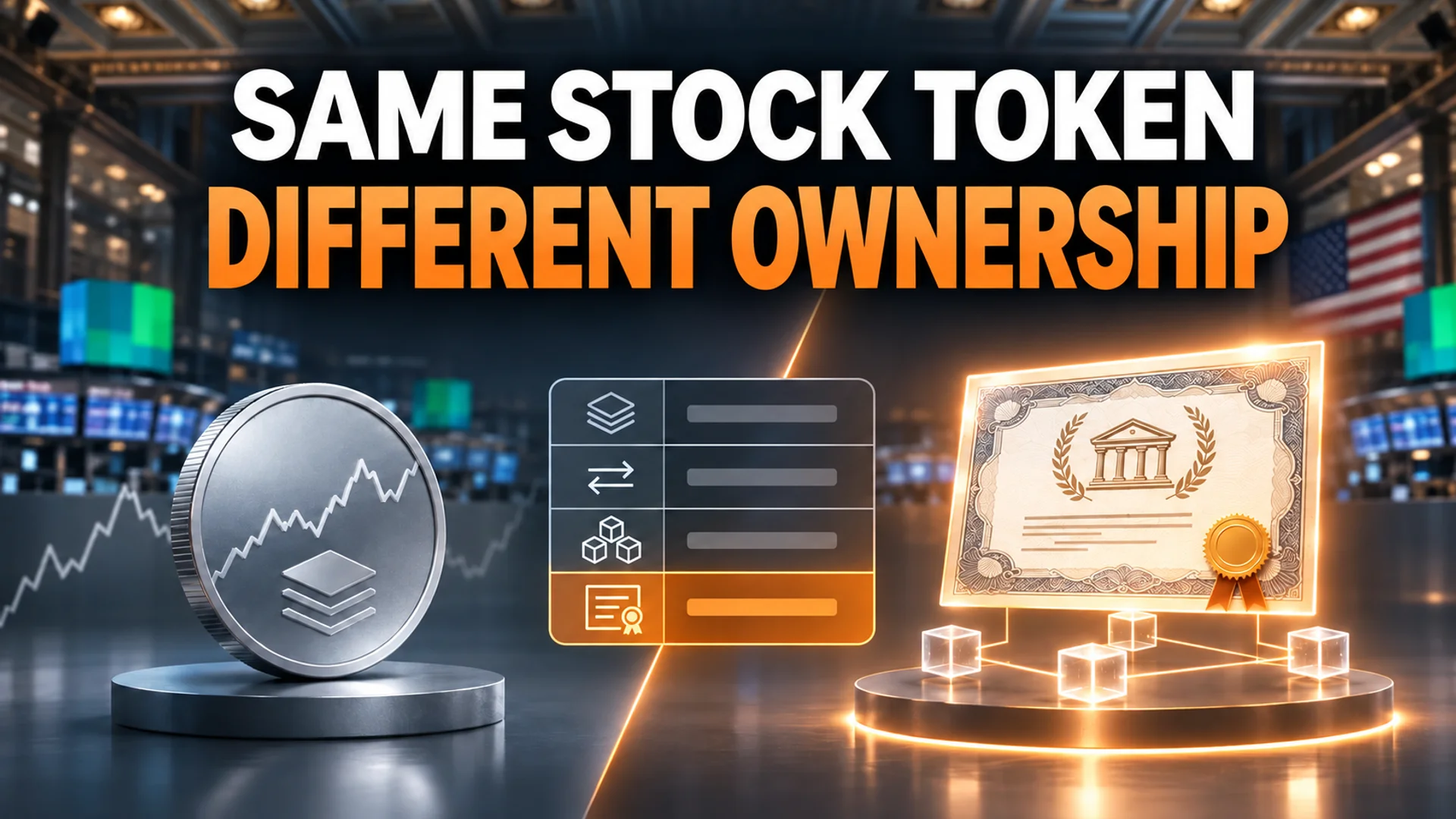
Wrapper-type tokens are products designed to track stock prices. Robinhood’s stock tokens, Kraken’s xStocks, and Ondo Global Markets fall into this category 1. Purchasing these tokens yields returns linked to price fluctuations, but the legal ownership of the underlying shares remains with the broker or a Special Purpose Vehicle (SPV) 1. An SPV is a separate legal entity that holds assets in isolation to prevent commingling with other business activities. Consequently, the entity listed in the shareholder register is not the token holder but the SPV; token holders do not receive voting rights, and their entitlement to dividends is not legally guaranteed 1.
In contrast, on-chain stock types record actual SEC-registered shares on the blockchain. Platforms such as Securitize, Superstate, and Dinari offer such products, where token holders are directly registered as shareholders in the shareholder register 1. Rights to participate in voting, receive dividends, and engage in corporate actions such as mergers and stock splits are vested directly in the holder 1. Robinhood’s offering resembles a copy that merely mimics price value, whereas Securitize’s offering represents the digital transfer of the original instrument. The divergent market reaction immediately after the announcement reflects the market’s anticipation of this distinction 1.
Not 'Permission' but a 'Narrowly Designed Testbed'
Through this Innovation Exemption, the SEC enabled tokenized securities exchanges (TSVs) and liquidity providers to operate without registering as stock exchanges or dealers 1. Given the substantial regulatory burdens associated with stock exchange registration under the Securities Exchange Act of 1934, this exemption is interpreted as a significant shift. However, the exception clauses were narrowly designed from the outset 1.
A key condition explicitly excludes price-tracking synthetic tokens and securities-based swaps 1. Only tokens possessing the same rights and privileges as common stock are permitted 1. Furthermore, caps on the number of listed securities and trading volumes clarify that this is a limited sandbox rather than a full market opening 1.
The provision granting issuers the right to written notice and objection is also noteworthy. Effectively, it acknowledges the issuer’s right to veto, such as Apple refusing the tokenization of its shares 1. Additionally, smart contracts must be public and auditable on permissionless blockchains, and all trading participants must complete Know Your Customer (KYC) verification 1. This differs from decentralized finance, which often operates without control and under anonymity. The rule expires after five years, during which the SEC will consider whether to establish more permanent regulations 1. The term "opened" is accompanied by these significant qualifications.
Legislative gaps prompted the release of these conditions. After Congress failed to pass the CLARITY Act, a digital asset market structure bill, in the Senate on September 15, 2026, the SEC proceeded with this measure under its own legal authority two days later 1.
Settlement Remains 'Hybrid' Despite Technological Advances
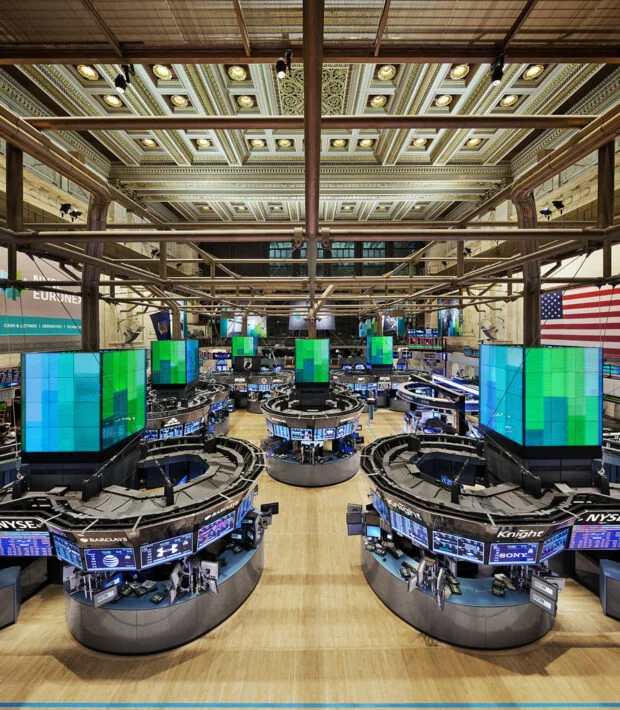
A gap persists between institutional permission and actual operational readiness. Robinhood launched the testnet for its proprietary Layer 2 blockchain, the "Robinhood Chain," in February 2026 and has already issued approximately $17 million worth of tokenized stocks to European users 3. The New York Stock Exchange (NYSE) is building a separate exchange aiming for 24-hour trading and immediate settlement (T+0), while Nasdaq adopts an approach allowing users to choose between traditional and tokenized formats within its existing order books 3. The Depository Trust & Clearing Corporation (DTCC) received approval for a three-year tokenization pilot targeting Russell 1000 constituents, major ETFs, and U.S. Treasuries in December 2025, planning to launch services in the second half of 2026 while maintaining existing CUSIP identifiers 43. A CUSIP is a unique identifier for each security; maintaining this number is essential for ensuring compatibility between tokens and existing systems 4.
Yet, settlement mechanisms within this infrastructure remain incomplete. Research firm Yellow notes that current tokenized infrastructure operates as a "hybrid model" 5. Transactions are first cleared under traditional T+1 standards (final settlement by the next day) before being tokenized 5. Consequently, the promise of immediate settlement (T+0) for exchange-listed securities remains a goal rather than an accomplished fact 5. Obstacles such as operational vulnerabilities of permissionless blockchains, smart contract risks, and opposition from primary regulators (NASAA) and banking lobbies are also highlighted 5. While infrastructure advances ahead of legal frameworks, the pace at which legal certainty is secured remains slow.
Relevance to Korean Readers
This distinction is not irrelevant to Korean readers. According to the DigitalX Research Center, the value of tokenized stocks circulating on blockchains reached approximately $3.58 billion as of October 23, 2026, representing a 5.3-fold increase from the beginning of the year 2. This growth is steep compared to the 54% increase in the total real-world asset (RWA) market during the same period 2. However, 82% of this outstanding balance consists of offshore products provided by Binance, Ondo Finance, Robinhood, and others, with wrapper-type structures that offer returns solely linked to price fluctuations accounting for the majority 2.
The issue lies in domestic regulations. While amendments to subordinate legislation have been pre-announced ahead of the revised Electronic Securities Act taking effect in February 2027, current regulations focus on domestic issuance and do not comprehensively cover tokenized stocks issued and traded overseas 2. Given the growing overseas trading of tokenized domestic listed stocks, such as SK Hynix, the report suggests that institutional measures to encompass offshore products are urgently needed 2.
Domestic token securities regulations also contain liquidity-limiting structures. Under Financial Services Commission guidelines, distributed ledger requirements do not necessitate a separate virtual asset, effectively permitting issuance only on private blockchains. Small-scale public offering limits are capped at KRW 3 billion (Tier II allows KRW 10 billion) 6. Industry observers warn that operating separate channels for each issuer risks fragmenting the market 6. It should be noted, however, that this analysis is based on contributions from 2023 and reflects the personal views of the authors 6.
Ultimately, a Question of 'What You Are Buying'
The statement that "U.S. stocks can now be traded on the blockchain" is accurate. However, the scope is narrowed to on-chain stocks registered in the shareholder register, while wrapper-type tokens, which merely track prices, are explicitly excluded from this exemption 1. The confusion surrounding the announcement stems from the conflation of two products under the same name, "stock tokens," which differ significantly in terms of ownership attribution, voting rights, and dividend entitlements. For Korean readers, the fact that the revised domestic Electronic Securities Act has not yet taken effect and that most of the currently growing volume consists of offshore wrapper-types are critical factors 2. Therefore, if interested in tokenized domestic stocks on overseas platforms, determining which category the product falls into and which rights actually remain is the starting point for fully grasping this issue.
References
- Wall Street Just Got Permission to Put Stocks on the Blockchain. Here’s What Actually Happened — and Who Really Benefits · blog.mobyticktrading.com↩
- 디지털엑스 리서치센터 "토큰화 주식 연초 대비 5.3배 성장" | 연합뉴스 · yna.co.kr↩
- The Race to Lead Tokenized Stocks in America - NYSE, Nasdaq · commodara.com↩
- ↩
- 왜 의회가 토큰화에 나서는가 | Yellow · yellow.com↩
- 토큰 증권은 금융 시장에 혁신을 가져올 수 있을까? | 쟁글 · xangle.io↩