Gold price down 25% since the start of the year, yet central bank purchases in the third quarter rose 42% year-on-year
In early November 2026, two reports released by the World Gold Council (WGC) presented figures that at first glance appeared contradictory. For the third quarter, global central bank net gold purchases were recorded at 321 tonnes. This represents a 42% increase from the same quarter one year earlier 1. However, market commentary published in the same week noted that the international gold price, having reached an all-time high in January 2026, had since corrected by approximately 25% 1.
When prices fall significantly, the urge to 'sell before prices fall further' typically strengthens. Indeed, there were periods during which individual gold traders and funds in exchange-traded funds (ETFs) exited the market. Yet, central banks managing national foreign exchange reserves opened their accounts wider and increased gold holdings 2. Why were central banks becoming the largest buyers at a time when the gold price had fallen by a quarter?
The real reason for buying gold with money: an asset, not 'debt'
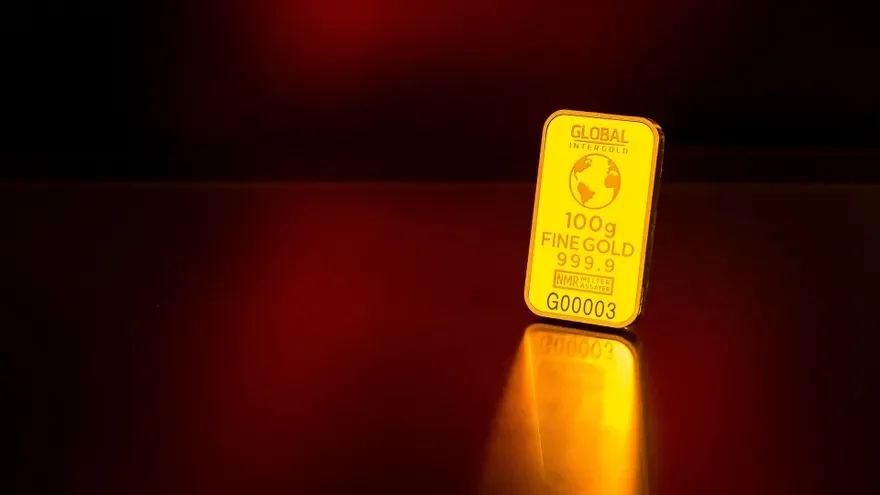
To state the conclusion first, central banks are not 'investing' in buying and selling gold; rather, they are selecting 'holdings assets' intended to be kept for more than ten years. Investors seek capital gains by buying when prices rise and selling when they fall. In contrast, central banks look not at current prices but at how the global financial order might shift over the next ten years.
There are two primary reasons why central banks deliberately purchase heavy gold. First, gold is not a 'liability asset.' Holding US Treasury bonds or US dollars requires trust in the fiscal situation and creditworthiness of the issuing country, the United States. However, gold is not the debt of any country and is unrelated to the risk of a sovereign state becoming insolvent 3. In other words, the fact of holding gold does not depend on the counterparty's ability to repay its debt. Even if the US government declares a default or the creditworthiness of a specific currency declines, the value of gold is not directly linked to that country's insolvency.
Second is geopolitical safety. When inter-state conflicts lengthen or international sanctions intensify, a country may be excluded from settlement networks based on specific currencies. To reduce dependence on US assets and create independent safeguards, central banks are structurally increasing the share of gold 34. The reason central bank buying does not stop even when rising interest rates short-term suppress gold prices is that gold is defined not as a 'target for capital gains' but as a 'safeguard against a collapse in the monetary order' 3.
'Planned' purchases, not reactive trading
Examining how this purposefulness manifests in the data reveals easily that central bank actions are not simple price reactions. Compared to the past, the very nature of central bank buying has changed completely. According to data introduced by CoinDesk in September 2026 citing Goldman Sachs estimates, until 2022, global central banks' average monthly gold purchases were around 17 to 20 tonnes. However, estimated central bank purchases in July 2026 were 44 tonnes, exceeding the pre-2022 monthly average of 17 tonnes by more than 158% 4. The rolling 12-month moving average of purchases was also 58 tonnes, nearly three times the historical average 4.
More noteworthy is the 'plan for the future.' In a survey by the World Gold Council targeting central bank officials worldwide, 45% of respondents stated they 'plan to increase their country's gold holdings.' This was the highest ratio since the survey began. Simultaneously, 89% of respondents predicted that global official gold holdings would increase over the next year 2. This suggests not immediate responses to price fluctuations, but pre-set medium- to long-term portfolio rebalancing goals.
Looking at quarterly central bank net purchases, first-quarter 2026 central bank purchases stood at 57 tonnes (an early report mentioned 244 tonnes combining central banks and public institutions, but the WGC later revised this to 57 tonnes based on central bank criteria alone). Second-quarter purchases surged more than fivefold to 289 tonnes, setting a record for the most active second quarter ever, and rose further to 321 tonnes in the third quarter 321. Despite the second-quarter gold price undergoing the largest quarterly correction in a decade, central bank purchases instead increased more than fivefold 2. This indicates a trend where, after a sluggish first quarter, purchases structurally expanded significantly from the second quarter onward, maintaining and strengthening that level. However, regarding the causality between price direction and purchase volume, the WGC states only that this rebound supports the long-term structural rationale for central bank buying, without attributing causality to a single factor 2. For reference, the 244 tonnes reported in May for the first quarter combined central banks and public institutions, whereas the later revised 57 tonnes for the first quarter covers only the central bank scope, meaning the aggregation bases differ 32. Even taking this into account, the fact that second- and third-quarter purchases significantly exceeded those of the same periods a year earlier remains unchanged, suggesting that central bank gold demand has entered a structural trend exceeding pre-2022 averages.
Conflicting calculations of buying and selling seen in major country cases
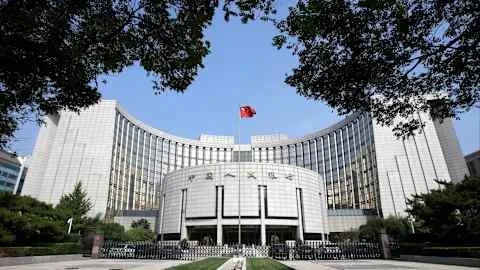
These movements are clearly revealed through specific national examples. In the second quarter of 2026, Poland emerged as the largest single-country buyer with 51 tonnes, while China's central bank purchased 33 tonnes 2. Uzbekistan also ranked among major buyers by purchasing 25 tonnes in the first quarter 3. These countries are interpreted as fulfilling strategic goals to increase the gold share in their foreign exchange reserves, rather than merely capturing a decline in the price of gold—an asset that pays no interest in the short term—as a 'low-price buying opportunity.'
Strong demand from these institutions has also influenced financial analysts' perspectives. Bernard Dahdah, an analyst at the French financial institution Natixis, maintained a long-term bullish gold outlook despite the significant correction in gold prices from peak levels in the first half of 2026. His conclusion was based on the analysis that structural factors such as renewed buying by central banks worldwide and global portfolio shifts away from US assets would support the downside of prices 5.
Of course, not all central banks unconditionally buy gold. During the same period, the Central Bank of Russia sold approximately 44 tonnes of gold in the first half of 2026 6.
| Category | 2026 Trends in Major Countries | Background and Purpose | | :--- | :--- | :--- | | Buying (e.g., Poland, China) | Poland purchased 51 tonnes, China 33 tonnes in Q2 2 | Securing debt-risk-free assets and long-term diversification of foreign reserves | | Selling (e.g., Russia) | Sold approximately 44 tonnes in H1 2026 6 | Primary purpose was covering fiscal deficits reaching 4.6 trillion rubles by March; sales to supplement lack of FX liquidity also mentioned 6 |
The prolonged Ukraine war has reduced oil and gas export earnings and dried up overseas liquidity, depleting the nation's coffers.
What is important here is that the causes for both selling and buying are not 'price signals.' Poland buying 51 tonnes and Russia selling 44 tonnes were not because the gold price was at a specific level, but due to each country's fiscal situation and geopolitical needs. While price fluctuations may influence the 'timing' of their asset purchases or sales, they are not the key variable determining 'whether to buy at all.'
A market visible only when understanding non-price sensitivity
To summarize, while individual investors make trading decisions based on price tables, central banks were tapping different calculators: 'assets with no insolvency risk' and 'the urgency of national fiscal and liquidity conditions.'
The World Bank pointed out that gold prices faced downward pressure due to increased opportunity costs of holding gold—an asset that pays no interest—caused by the sustained high-interest-rate stance of the Federal Reserve 7. Gold is an asset that generates no interest upon holding, unlike deposits or bonds. Therefore, if market interest rates remain high, selling pressure may increase as holding bonds is judged more advantageous than holding gold. Indeed, in the first half of 2026, funds outflowed from some gold ETFs due to these factors 2.
However, investment and central bank purchases accounted for roughly half of global gold demand in the first half of 2026, indicating that demand for long-term holding was firmly supported 7. The recording of 321 tonnes in purchases during a quarter when gold prices fell 25% is not a market error. It proves how structural and firm the central banks' resolve is to secure 'non-liability assets' unrelated to national defaults or sanctions when the variable of price is uncontrollable.
The fact that central banks bought 321 tonnes of gold in the third quarter of 2026, even as prices fell 25%, is because they position gold not as a trading target but as a 'holding asset that is not the debt of any country and is unrelated to insolvency.' As long as 45% plan to increase holdings according to WGC surveys, the rolling 12-month average purchases remain around three times the pre-2022 average (58 tonnes vs. approximately 20 tonnes), and quarterly purchase volumes continue to be 42% higher year-on-year, short-term price corrections do not constitute a condition to halt buying.
References
- World Gold Council | The Authority on Gold · gold.org↩
- ↩
- 전쟁·물가·AI 랠리 충돌…지금 금 시장은 '재편 구간'이다 · v.daum.net↩
- Gold Price Analysis: Record Central Bank Buying Meets Growing Bearish Pressure | CoinCodex · coincodex.com↩
- Gold Price Forecast 2026: Natixis Analyst Keeps $4,600 Year-End Target Despite Correction - News and Statistics - IndexBox · indexbox.io↩
- ↩
- World Bank sees gold holding above $4,000 through 2028, but warns silver faces steeper correction · kitco.com↩