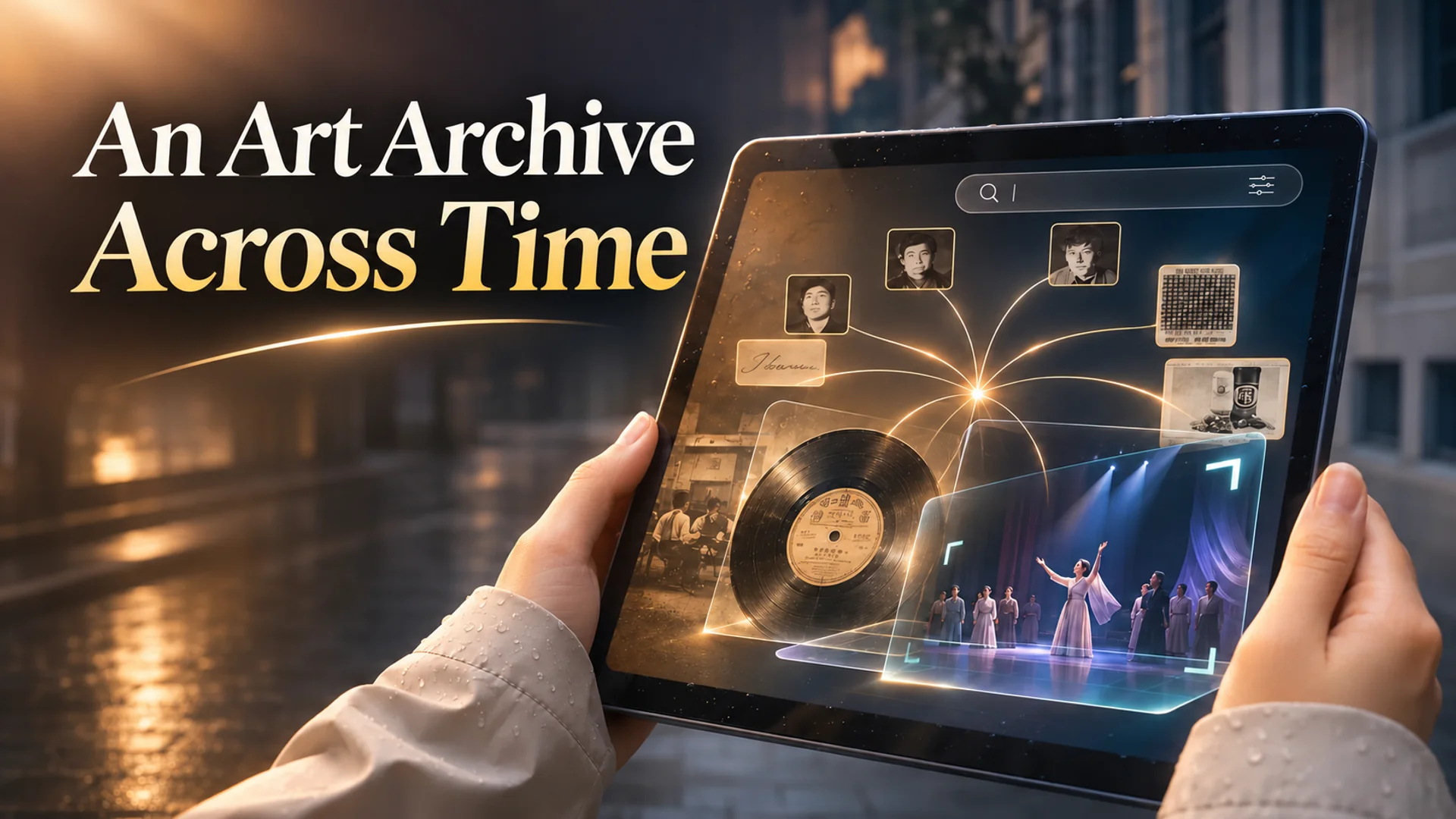
The mode of appreciation once confined to viewing artworks through the glass doors of exhibition halls is now expanding beyond digital screens. When you open the search list of the Korea Arts Digital Archive (DA-Arts), traditional folk tale performances recorded in the phonograph era sit alongside recent theater videos staged only a few years ago. Decades of temporal gaps and barriers of media disappear within the screen. You can access art materials simply by searching the archive’s vast records, even without directly visiting an exhibition hall. Currently, the most reliable and actually available channel is opening a digital archive, while information on public art in urban streets is being researched in forms accessible through Augmented Reality (AR) technology.
Search Lists Where Boundaries of Time and Media Disappear
Digital archives have evolved beyond simple file storage into collections of art materials connecting the past and the present. 'DA-Arts,' the public online viewing service established by the Arko Arts Research Center, is a representative place where this can be confirmed. This platform provides approximately 130,000 digital holdings, including scripts, videos, and photos produced in the fields of performing arts and visual arts, enabling search and appreciation even without visiting theaters or exhibition halls1, 2.
Looking at the actual search lists on the platform allows one to intuitively understand what digitalization means. The 'Korean Phonograph Records' section contains audio records such as 'Chunhyangjeon: Mongryong and Chunhyang’s Farewell Song (3),' 'Simcheongjeon (24): Pigdeok’s Wife’s Escape,' and 'Jindo Arirang,' which vividly demonstrate past methods of narration and the transmission process of folk tales1. In the 'Performance Videos' section within the same list, recent theater videos like 'Cyrano de Bergerac' and 'The Cry of the Soil,' produced in 2024, are searched within the same structure1.
Design works by stage designers ranging from Jang Jong-seon (1918–1989) to Park Dong-woo (1962), as well as digital facsimiles of traditional paintings like Pungyeong City Plans and Flower-and-Bird Paintings, can all be searched within a single archive1.
Structure Connecting Records to Create Unexpected Knowledge
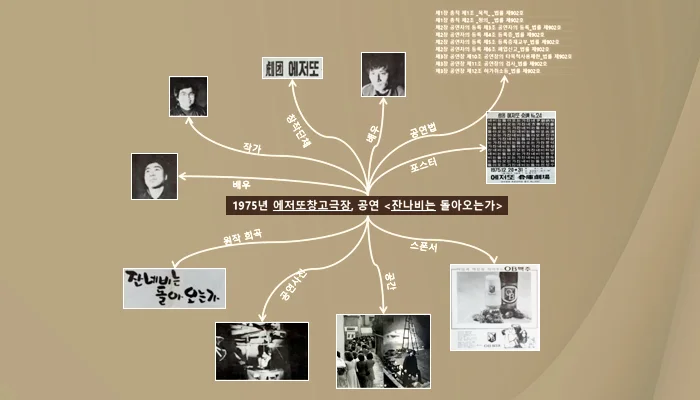
Beyond the increase in the volume of materials, the concept of a 'Semantic Digital Archive' that explicitly reveals the semantic relationships between archived entities is emerging. Introducing the concept proposed by Tim Berners-Lee, the founder of the web, to art records, this method is designed so that both computers and humans can understand how individual materials—such as text, images, and videos—are related in meaning3. This enables users to follow entirely unexpected links starting from a specific work.
Australia’s performing arts comprehensive database, 'AusStage,' is a clear case demonstrating how this structure works3. It features nine data types connected to each other, including performances, creators, organizations, and spaces. When a user clicks on the name of a specific actor or director on the information page for the play Hamlet, performed at the Victoria Theatre in 1891, a graph unfolds showing the performances within Australia and the collaboration networks in which they participated3.
This method of connection can lead not only to simple art material searches but also to social historical discoveries. In a study on building a semantic digital archive of small theaters in the 1970s, researchers identified interesting facts by inferring semantic relationships in performance data3. By connecting numerous records that listed 'OB Beer' as a sponsor for theater performances in 1975, the study proved through data the process by which beer transformed from a consumer good centered on entertainment establishments to an everyday beverage seeping into theaters and daily spaces3. New insights are created when records connect with other records.
Such semantic approaches have also been attempted in domestic performance records. In 2020, NamSAN Art Center previewed the construction of an archive organizing records of approximately 250 performances conducted over about a decade since 2009 into eight data types, including figures, spaces, and concepts, and visualizing this as a network graph3. This plan was announced coinciding with the center’s end of operations on December 31, 2020.
How to Freely Download and Process Records from Around the World
Beyond directly viewing and searching art records, there are platforms aiming for ways to freely bring them in and reuse them. 'Europeana,' a digital library built with the participation of over 3,000 institutions, including libraries and museums across Europe, is a model that well illustrates this direction2.
The most significant feature of Europeana is its adoption of the 'Linked Open Data (LOD)' approach, which connects metadata with each other rather than simply collecting data2. Thanks to this data protocol, even if a user searches for the single word 'Beethoven,' they can simultaneously discover records of completely different forms, such as his 'autograph letters' and 'sheet music'2. Furthermore, most digital materials are applied with the 'CC0' license, allowing anyone to freely download, edit, or repurpose them into new creations without the need for separate permission from copyright holders2.
The digital archive of the New Museum, a contemporary art museum in the United States, is also noteworthy as a case of institutional record disclosure. Since its opening in 1977, the New Museum has digitized and made available on its website over 10,000 images, videos, audio materials, and exhibition outputs collected over more than 40 years2. It functions as an online media database involving more than 5,500 artists, curators, and organizations, and is open for anyone to access materials through searches by type and classification2.
The Future of Communicating with Urban Art via Smartphones and Augmented Reality
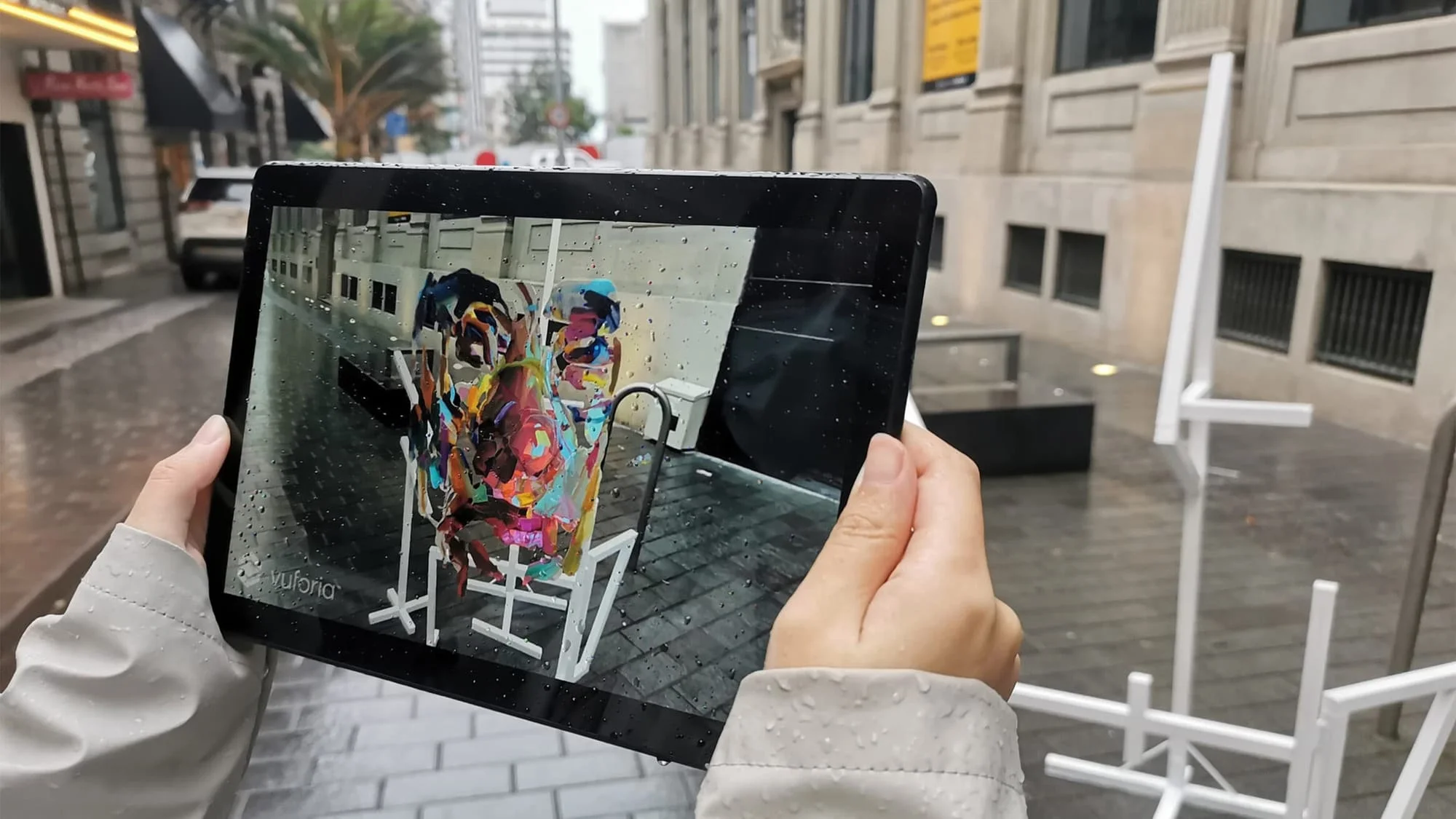
Meanwhile, efforts are continuing to appreciate public art works installed throughout cities, beyond records inside exhibition halls. Currently, public art policies actively reflect citizens' opinions during the installation stage of works. However, issues regarding the lack of a post-management system concerning how citizens and works communicate after the works are installed on streets or plazas, and what the utilization plans for the works are, have been continuously raised.
To resolve this issue technically, service design researchers have proposed a smartphone-based approach. A study published in the Korean Journal of Design Research in December 2020 proposed a service model called 'AR-Based Public Art AR Smart Guide'4. Augmented Reality (AR) refers to a technology that overlays computer-generated images or information onto the actual space in front of the eyes via a smartphone screen.
According to this proposal, citizens can immediately verify information such as the background of an artwork installed somewhere in the city and the artist's intention simply by pointing their smartphones toward the work4. The core objective of this research is to create a service ecosystem where citizens interact with artworks through intuitive information provision on-site, going beyond mere informational signs that simply read out text4. However, this study remains at the stage of an academic conceptual proposal that designs and presents the necessity for a smart guide system linking citizens and art, rather than an empirical verification of effectiveness in the field4. Therefore, it is not yet confirmed as a universalized app immediately available on every street.
Screens You Can Open Now
The channel to encounter art without going to an exhibition hall is already within the screen in our hands. You can search for the Farewell Song from Chunhyangjeon from the phonograph era in DA-Arts and play the 2024 performance videos from the same list. You can also download CC0 materials from Europeana and edit them directly. As semantic relationships accumulate in archives, starting from one work leads to following connections that were entirely unexpected. Regarding public art in city streets, AR guides have been proposed academically, and research is being conducted on the direction in which smartphones could read artwork information when stepping out into the streets beyond the screen. What you can do right now is to open DA-Arts or Europeana and type a line of title into the search bar.
References
- DA-Arts 한국예술디지털아카이브 · daarts.or.kr↩
- 공공디자인 종합정보시스템 · publicdesign.kr↩
- 관계와 의미로 연결된 새로운 발견 · arte365.kr↩
- 서비스 디자인 씽킹을 적용한 공공미술 활용방안으로서 AR 스마트가이드 제안 - 학지사ㆍ교보문고 스콜라 · scholar.kyobobook.co.kr↩