Just as zodiac horoscopes divide personality traits by birth date, the “Twelve Earthly Branches” (sibiji) of East Asian cultures serve as a classical tool for classifying people according to their birth year or hour. However, to read webtoons or novels based on the Twelve Earthly Branches in depth, one should focus not on the outcomes of fortune-telling, but on the structural characteristic of being “a closed system of exactly twelve slots.” Understanding how a fixed number of slots generates conflict and serves as the foundation for character design reveals how a familiar motif operates as a completely different narrative engine.
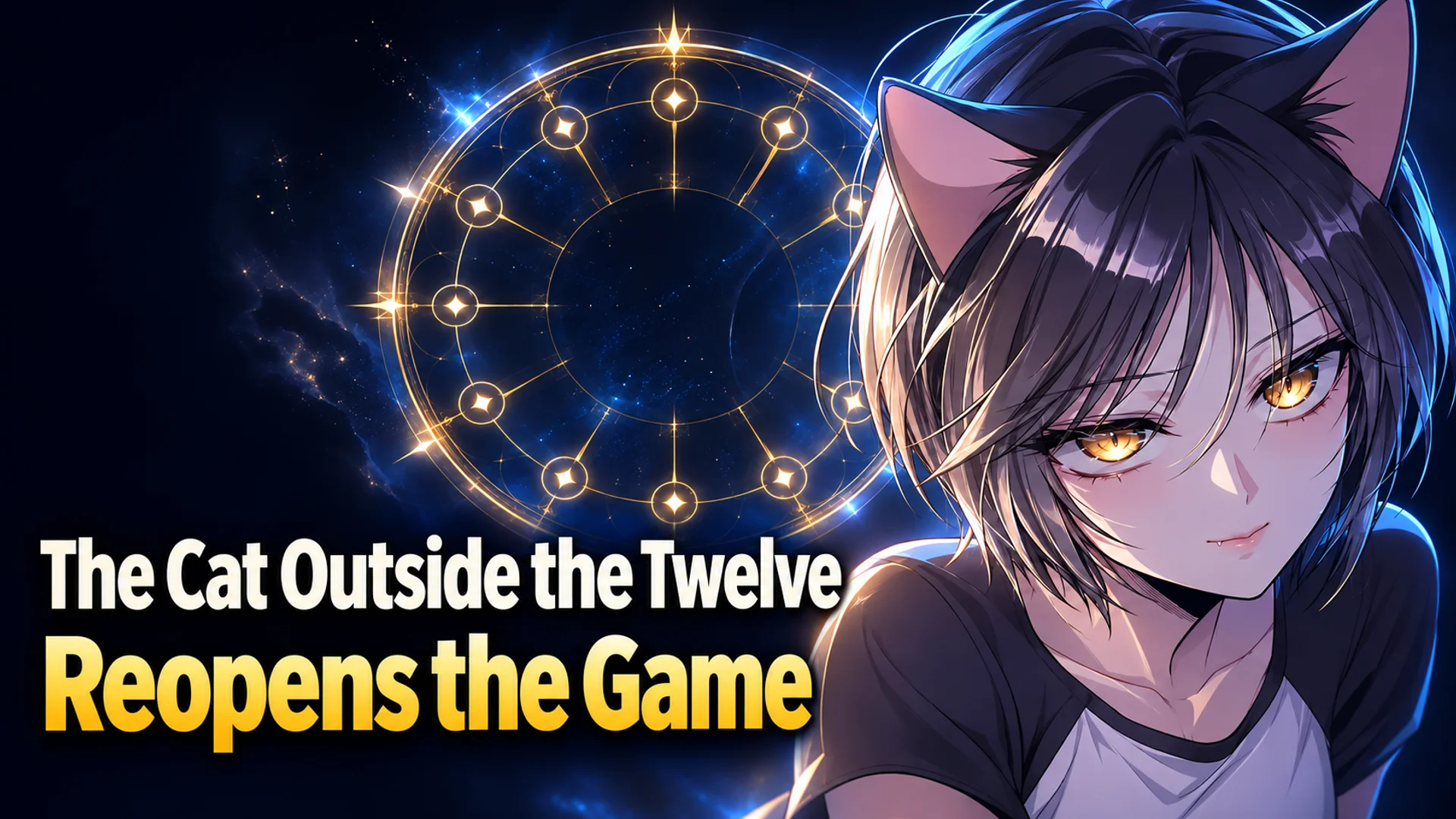
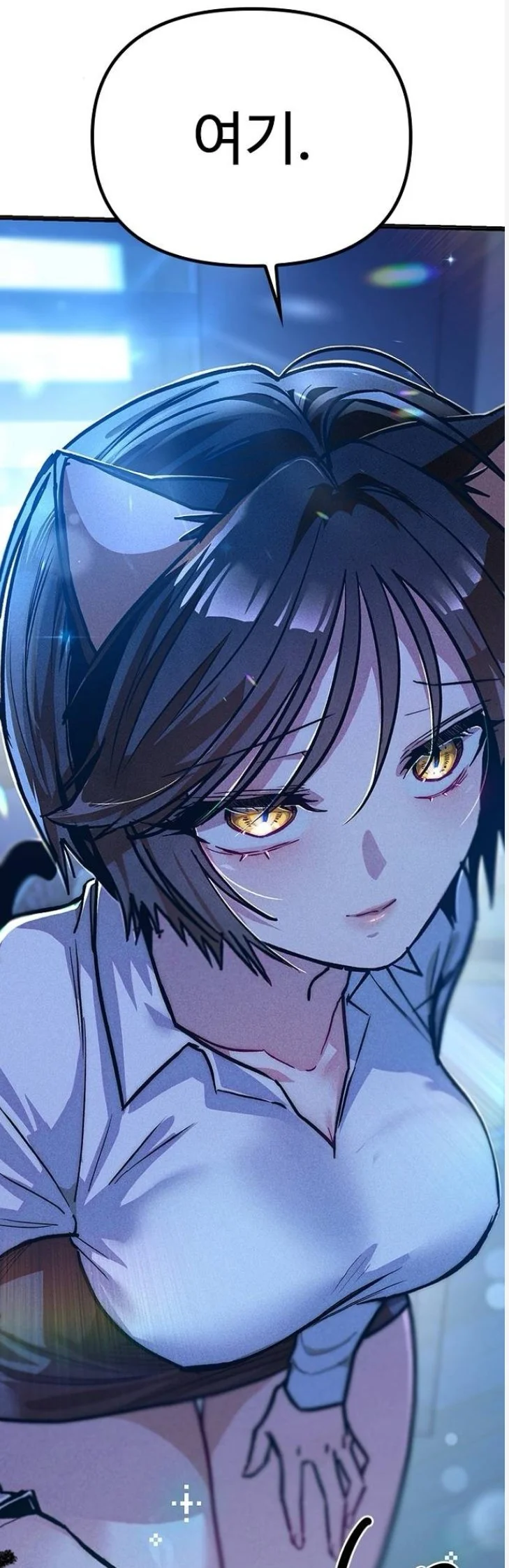
Naver Webtoon’s The Twelve Zodiac Girls is a striking example that illustrates this structural feature. The premise—where “Cat Nina,” who was pushed to 13th place in a game to select twelve gods, emerges and restarts the game after thousands of years—would be impossible to establish without the fact that the traditional Twelve Earthly Branches consist of exactly twelve animals 1, 2.
Why Exactly “Twelve Slots”?
Understanding why the traditional Twelve Earthly Branches are fixed at “twelve” items, rather than thirteen or eleven, allows for a deeper grasp of the narrative tension in serialized works. The sexagenary cycle (ganji), a time-reckoning system used in the Han character cultural sphere including Korea, China, and Japan, is created by combining ten Heavenly Stems (cheongun) with twelve Earthly Branches (jiji). The sixty combinations produced by the interaction and circulation of the Heavenly Stems and Earthly Branches, known as the yukjaegapja, were traditionally used as the standard for counting dates and times. In this context, the number “12” inherent to the Earthly Branches was not arbitrarily chosen by creators but is an essential unit of the traditional calendar for recording time and sequence 3.
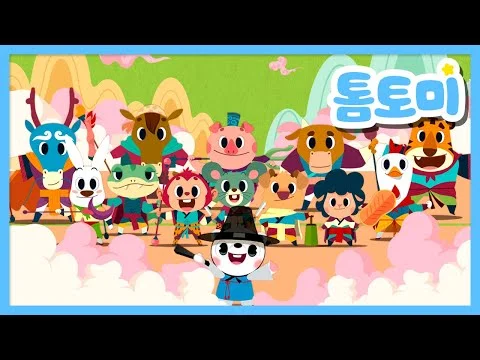
Furthermore, the characters themselves representing the Earthly Branches (such as ja, chuk, in, myo, etc.) did not originally denote animals. The Twelve Earthly Branches were not originally characters signifying animals; however, influenced by Buddhism and other factors, twelve animals became associated with each branch, and this is believed to have settled into the “ttee” (zodiac animal sign) culture of representing one’s birth year with an animal 3. An examination of the children’s song “Tomtomi,” released in 2024, which features a song about the twelve zodiac animals, reveals that the personalities of the twelve animals (such as smart, diligent, brave, etc.) are clearly distinguished, and no thirteenth animal is mentioned 4. This solid and fixed list of twelve species becomes the starting point that contemporary serialized work authors presuppose when crafting their stories.
Actions by Time Period Become Character Personalities
In serialized works based on the Twelve Earthly Branches, the way each character’s abilities or personality traits are assigned is often not the creator’s improvised imagination but rather an adoption of the traditional “correspondence between time and action.”
In the traditional calendar, each Earthly Branch represents a two-hour time period into which the day is divided into twelve sections. The behavior of the animal active during that specific time was adopted as the symbol for that branch 3.
- Hour of the Rat (11 PM–1 AM): The time when the rat is most active.
- Hour of the Tiger (3 AM–5 AM): The time when the tiger is most fierce.
- Hour of the Pig (9 PM–11 PM): The time when the pig is in deep sleep.
When works dealing with the Twelve Earthly Branches, such as The Twelve Zodiac Girls, assign “superpowers” or “combat abilities,” they utilize this correspondence of time-based behaviors as a pre-existing dictionary for character design. Since the traditional correspondence between the times linked to each branch and animal behaviors is already a shared code 3, it reduces the need for complex explanations for both the author and the reader. Just as in the nursery rhyme from the children’s content “Tomtomi,” where the rat is fixed as “smart and frugal” and the ox as “diligent and dependable,” the Twelve Earthly Branches function as a shared personality template for the public.

Conflict Triggered by the “Impossible Thirteenth”

With Nina’s emergence, the game to select twelve gods, which had not been held for thousands of years, reopens, causing the twelve gods to descend into the human world, and the story begins 1, 2.
The key point here is “border violation.” If the Twelve Earthly Branches were not a system fixed at twelve but a flexible list, the cat would simply enter as the thirteenth god. However, because the system is closed and the slots are limited, the conflict between Nina and the twelve gods leads to inevitable friction. Without the constraint of twelve slots, the desperate situation of “being pushed out” itself would not have occurred.
How to View It as a Reader: The Boundary Between Inside and Outside
If you have felt bored by content that ends with a simple “Today’s horoscope is good/bad” like zodiac forecasts, pay attention to the “regularity of structure” and “violation of that structure” in serialized works using the Twelve Earthly Branches as a motif. Questions readers can ask include:
- Are the twelve slots filled? You can examine how each of the twelve animals from the traditional system is adapted into a character and how well their abilities correspond to the time-based behavioral traits (e.g., the rat’s industriousness, the tiger’s fierceness).
- Who is encroaching from outside the boundary? Track how the author attempts to resolve the conflict when a being not on the traditional list, like Nina, tries to claim one of the twelve god positions or shakes the system.
Ultimately, the appeal of Twelve Earthly Branches serialized works lies not in viewing a collection of twelve traditional characters, but in observing the chemical reactions that occur when external elements are introduced into a closed world of twelve. Because there is a fixed framework, the actions of the being pushed out of that framework feel more desperate and dramatic.
References
- 십이지소녀 · 열한시 · 11pm.app↩
- 십이지소녀 · m.comic.naver.com↩
- 띠, 십이지신(12지신), 십이간지(12간지), 육십갑자는 어디서 온 것인가 - 음양오행 시간 순서 - 띠는 음력 양력 기준?! · m.blog.naver.com↩
- ↩