We often associate the word “original” with inventing a new material that has never existed in the world or handcrafting a form that has never been seen before. Yet many works that caused significant ripples in art history began by taking objects or sounds that already existed and changing their use and context. Originality often arises not because the raw material itself is new, but from the process of deciding how to select and transform what already exists, thereby generating new value.
For this kind of originality to emerge, two main pathways generally operate. One involves removing an object’s original function, giving it a new name, and shifting it into the context of an exhibition. The other is a technical reconstruction that chops up and flips existing audio sources to erase traces of the original song while retaining only its emotional framework. Below, we examine how these two pathways produce artistic originality through specific cases involving Marcel Duchamp, J Dilla, and Kanye West.
Removing Function and Renaming an Object
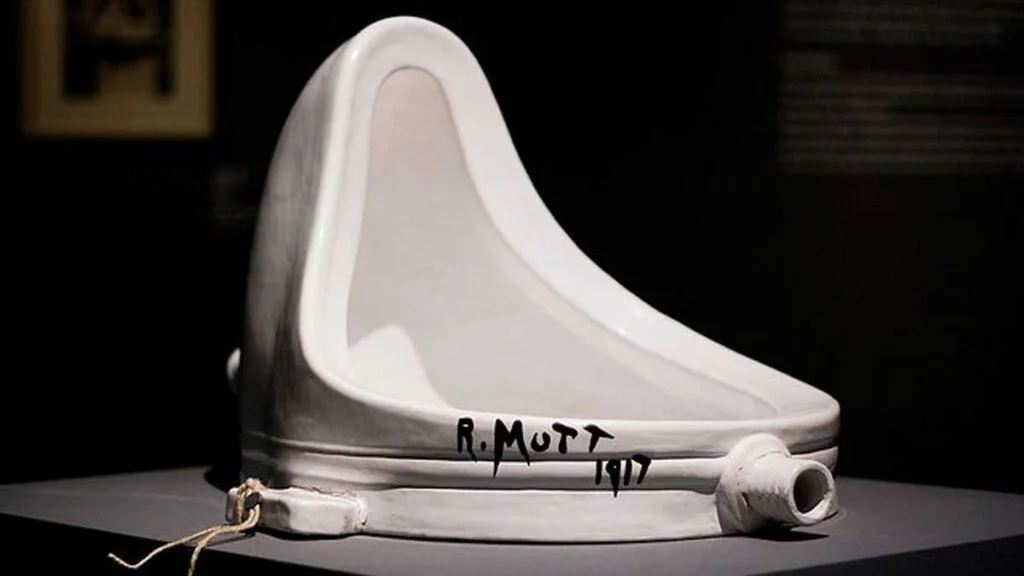
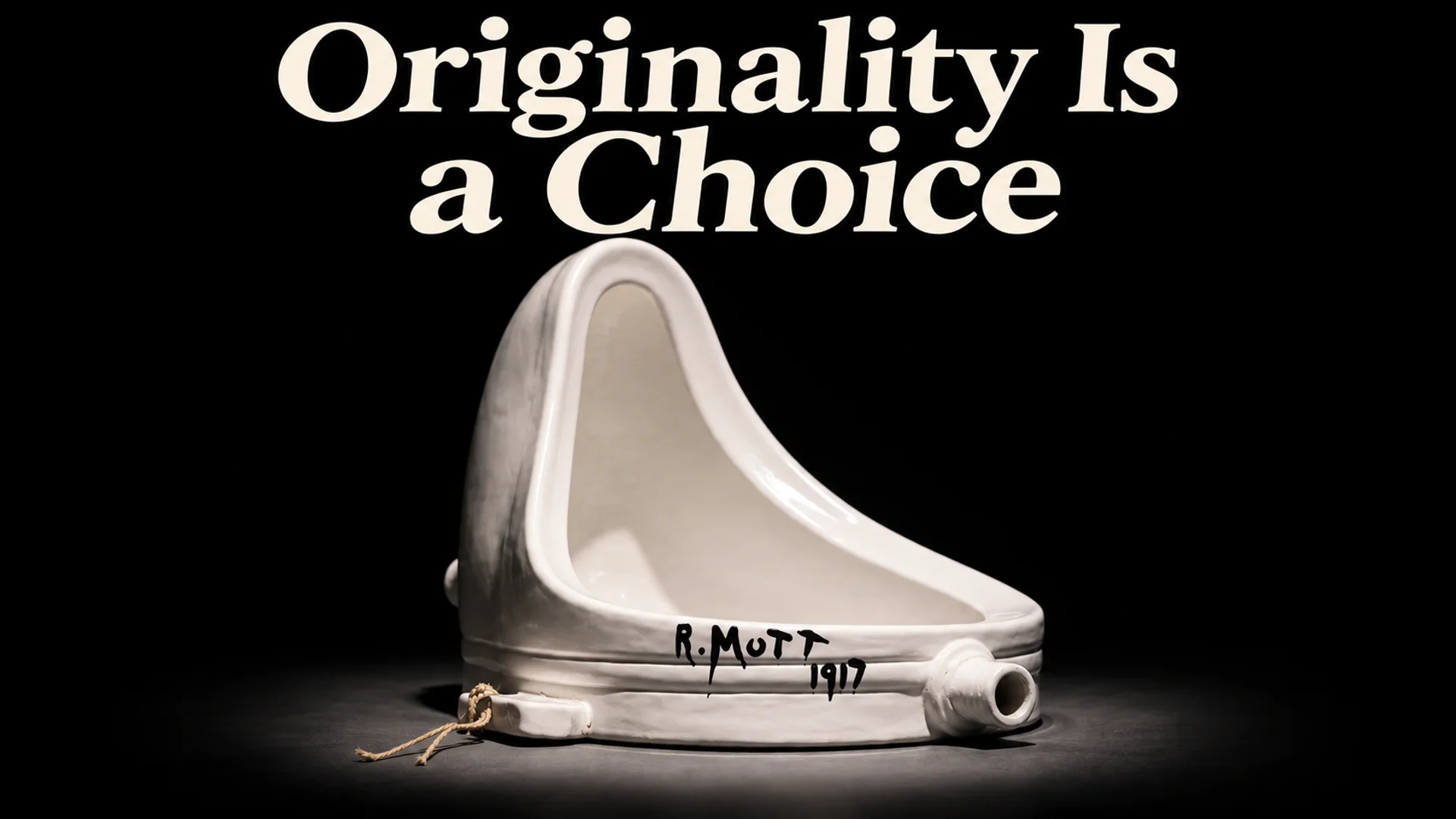
In 1917, French-born artist Marcel Duchamp submitted a mass-produced porcelain urinal to the Society of Independent Artists exhibition under the anonymous signature “R. Mutt.” When placing the urinal in the exhibition space, he laid it on its side at a ninety-degree angle rather than in its original orientation. According to Algosaja, a guidebook for French museums, this physical arrangement removed the object’s function while leaving only its meaning. By erasing the intrinsic value of the urinal as an object and retaining only the spatial context of the exhibition, Duchamp posed the question to the audience: “Why can’t this be art?” 1
Duchamp’s originality is further clarified by his act of “selecting” the object and assigning it a “name.” The signature “R. Mutt” on the submission form was not arbitrary. According to a blog column, the “R” was taken from “Richard,” a French slang term for nouveau riche, and “Mutt” was a twist on “Mott,” part of the name of the manufacturer, JL Mott Ironworks 2. According to the English Wikipedia, Duchamp himself acknowledged that he intended this name to carry a dual meaning, referencing a popular comic strip character of the time and the concept of the nouveau riche 3.
By intentionally concealing the artist’s authority and adopting a playful name, this act opened a new perspective in which creation is possible without visual beauty or sculptural technique. Indeed, in a 1962 letter to Hans Richter, Duchamp stated, “When I look at a commonplace readymade object, I discover a strange beauty hidden within it” 2. Duchamp’s approach became known as “Readymade,” attributing originality not to the act of making a new object but to the act of selecting one and changing its context.
This originality in naming and selecting also extended to other forms. In 1919, Duchamp drew a mustache in pencil on a postcard reproduction of Leonardo da Vinci’s Mona Lisa and titled it “L.H.O.O.Q.” When read aloud in French phonetics, this title translates to the slang phrase “Her bottom is hot” 2. Even a masterpiece revered for centuries became, for Duchamp, a “readymade” object that he could select, scribble on, and rename. With minimal visual intervention, the authority of the original was disrupted, transforming it into a new work.
Fragmenting and Reassembling the Sounds of the Original
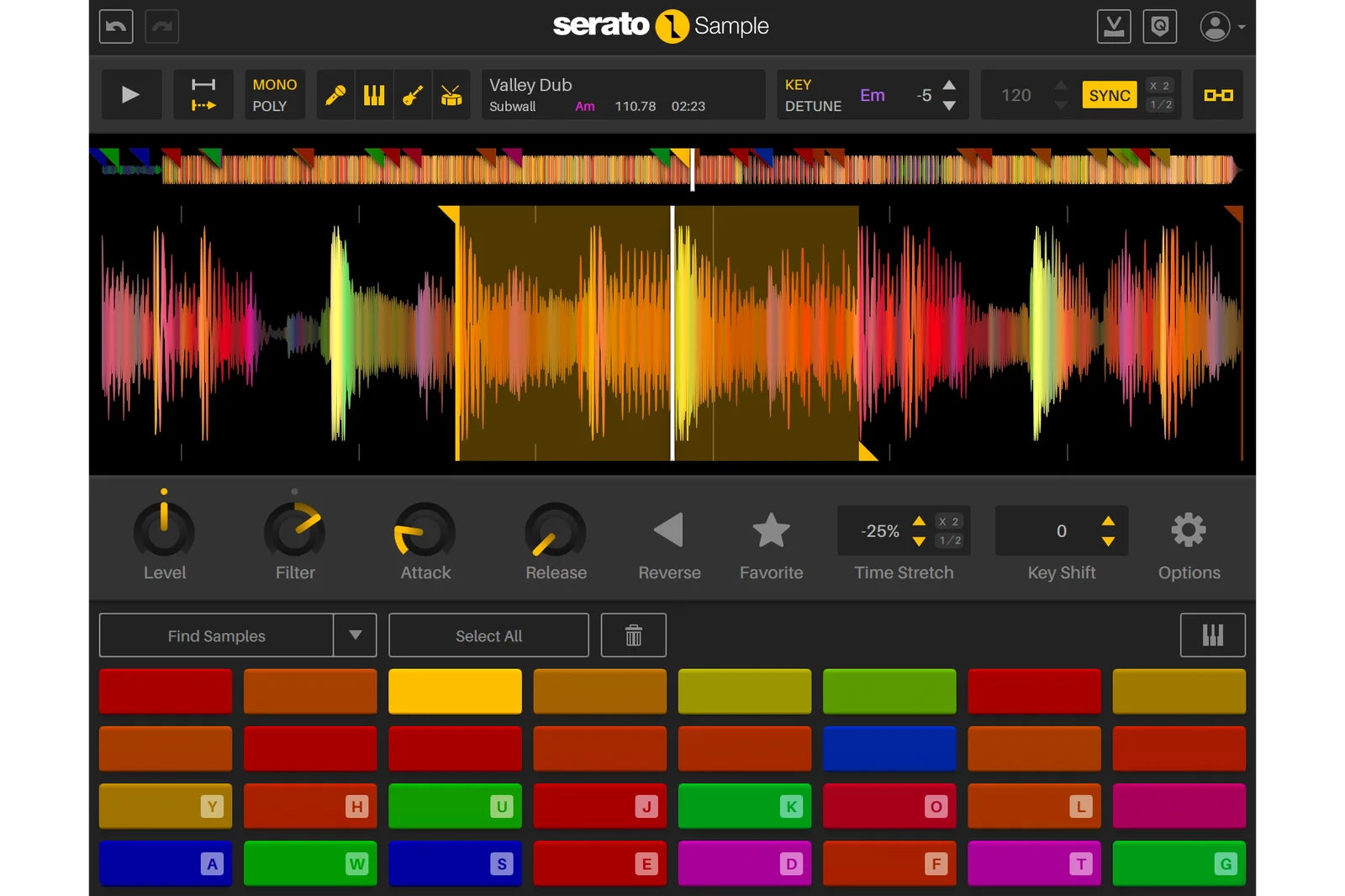
If art has a method of removing an object’s function and shifting its context, music generates originality through technical transformation that deconstructs and reassembles the structure of existing sounds. In hip-hop, “sampling” involves taking audio from existing sources. However, when this process involves such precise transformation that the original form is almost entirely erased, the result is recognized as a new creative work.
The working style of American producer J Dilla is a representative example of this transformation process. According to music encyclopedia resources, J Dilla intentionally slowed down original tracks when sampling. He typically did not chop the tracks based on the main melody, which is the usual standard, but instead segmented them into tiny units of about one second based on the “snare drum” (the percussive sound produced by striking the rim). He then joined these segments seamlessly. Furthermore, he sometimes played the original track in reverse and sampled from that result to assemble it into a completely different song 4.
This extreme deconstruction and reassembly of the original’s form produces a unique result: although the source of the material is erased, the original’s distinctive emotional framework is preserved. Kanye West’s fifth studio album, My Beautiful Dark Twisted Fantasy, serves as a case study confirming the distinctiveness of such transformation. Most tracks on this album were created through sampling, and it received perfect scores from both Rolling Stone and Pitchfork, American music critics with markedly different perspectives 4.
Interestingly, it was later revealed that the album’s hit “Blame Game” sampled a piano piece by Aphex Twin, and “POWER” sampled a rock track by King Crimson, both without prior permission. Despite potential legal and ethical objections to unauthorized use, critics rarely denied the musical achievement of these two tracks or dismissed them as mere plagiarism. According to sources, these tracks are acknowledged as outstanding musical reinterpretations in which the original’s musical identity is difficult to detect at a casual listen 4.
Difference Emerging Not from Novelty of Material but from the “Mode of Decision”
These two cases demonstrate how originality arises in different fields. The shared structure and specific differences of the two pathways can be summarized as follows.
| Category | Case and Specific Decisions | Mode of Generating Originality |
|---|---|---|
| Art (Marcel Duchamp) | Turning a urinal on its side and signing it “R. Mutt” | Physical removal of function (placement), anonymous naming that erases the artist’s authority, and shifting to the institutional context of an exhibition |
| Music (J Dilla) | Segmentation based on snare drum in units of about one second; sampling after reverse playback | Erasing the original form and source of the sample through technical transformation (chopping, speed adjustment, reversal) |
| Music (Kanye West) | Selecting original tracks across genres and eras, then reconstructing by adjusting pitch and BPM | Achieving independent artistic success through musical reinterpretation that transcends the aura of the original |
Ultimately, originality does not come from sourcing “materials no one has seen.” Duchamp selected a urinal that underwent no sculptural processing and decided to lay it on its side to remove its function. J Dilla decided to use snare drums rather than melodies as the basis for chopping tracks into units of about one second and sampling after reverse playback. Kanye West selected original tracks spanning genres and eras and decided to erase traces of the originals by adjusting pitch and BPM.
Consequently, originality emerges at the level of “what to select, where to place it, and how to transform it with what technique” from the given materials. Although a urinal or melody that did not exist in the world was not newly invented, these decisions and technical transformations applied to the materials disrupt familiar perceptions in the audience’s sight and hearing, creating new value. This approach of dealing with what already exists expands the scope of creation from “directly crafting objects by hand” to “reconstructing existing things with a new perspective.”
References
- 현대 예술사에서 획기적 사고의 전환을 요구하는 뒤샹의 샘 · algo-voyage.com↩
- 마르셀 뒤샹 · m.blog.naver.com↩
- en.wikipedia.org/wiki/Fountain_(Duchamp) · en.wikipedia.org↩
- 샘플링 · namu.wiki↩