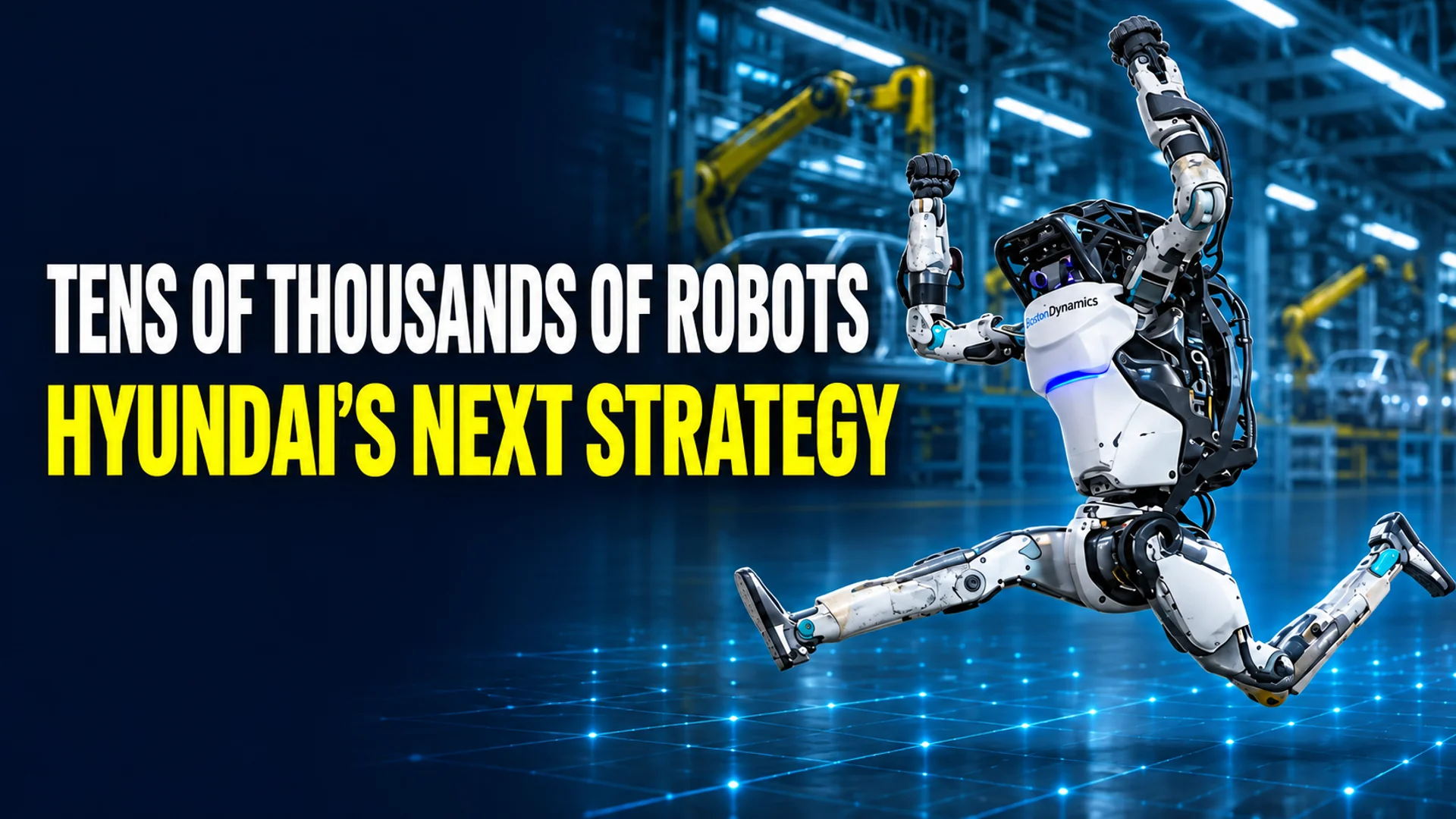
In April 2025, the Hyundai Motor Group signed a contract to deploy three robots developed by Boston Dynamics at scale across its U.S. factories and logistics centers. The robots to be introduced include 'Spot,' a quadruped robot that walks on four legs; 'Stretch,' which automatically lifts and transports boxes; and 'Atlas,' a humanoid robot shaped like a human. While the specific purchase volume has not been disclosed, the number of robots to be deployed is expected to reach tens of thousands 1. This decision to deploy machines equipped with legs rather than wheels on production floors demonstrates that automakers are moving beyond simply selling vehicles to building businesses that intelligently manage the physical world.
This development is not merely a solution to labor shortages. Hyundai Motor Group Chairman Euisun Chung is also broadening the definition of "mobility." The future envisioned by Chairman Chung is not limited to automobiles on the road. The goal is to integrate devices that autonomously perceive, decide, and move within environments—such as factories, residences, and the sky—into a single artificial intelligence (AI) system.
What is 'Physical AI' as Drawn by Automobile Companies?
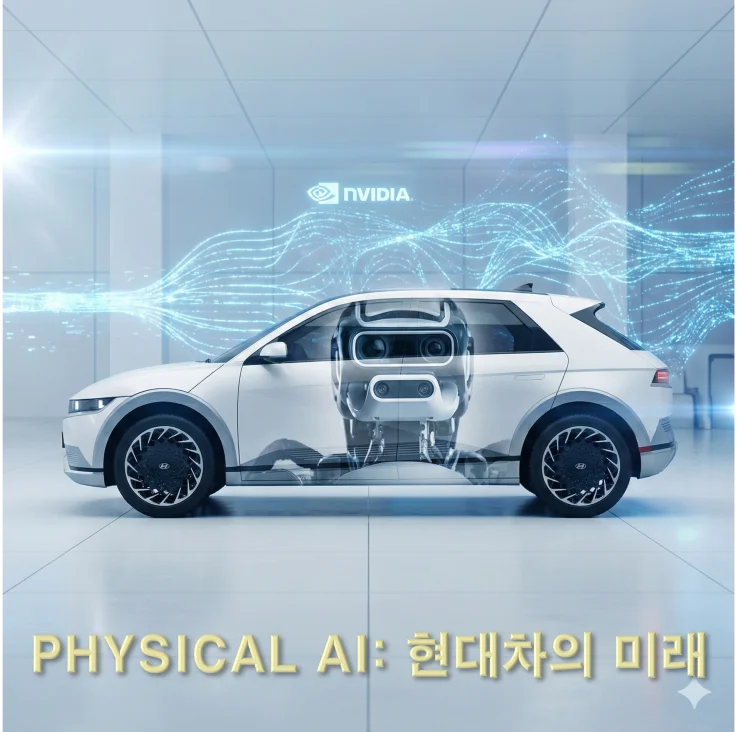
At the AI Summit held in San Francisco, U.S., in July 2026, Chairman Chung presented the Hyundai Motor Group's ultimate vision as "city-wide integrated intelligence." According to an Insight Korea report, this concept involves imbuing devices that move the physical world, such as cars and robots, with AI to enable them to perceive and act autonomously. Ultimately, this aims to operate an entire city as a single AI, where energy supply chains, logistics systems, and mobility solutions are seamlessly connected. What is commonly referred to as "physical AI" goes beyond analyzing data in the digital world; it signifies the capability of machines to physically react and perform tasks 2.
To realize this vision, the Hyundai Motor Group has already secured the necessary technological components within the group. Motional and 42dot are developing autonomous driving software, while Supernal creates urban air mobility aircraft. HTWO handles hydrogen energy, Boston Dynamics handles robots, and Hyundai Mobis handles actuators, which function as robot joints. Although each division has grown independently, the calculation is that by unifying them under a common operating system called AI, the group can transform from individual product manufacturers into a company that controls entire city infrastructures 2.
How Did Robots Break Free from 'Pre-Programmed Paths'?
For robots to work in factories or logistics sites without detailed human instructions, they must be able to balance and adjust their movements autonomously, even in unpredictable situations. In the past, industrial robots typically stopped operating if they deviated from pre-defined trajectories or paths. However, the technology has moved to the stage of "dynamic balance control." Starting in 2024, Boston Dynamics transitioned from hydraulic control systems to electric ones. In March of the following year, it demonstrated walking, running, and crawling abilities through reinforcement learning, referencing human movement data 1.
In fact, when the commercial version of Atlas, 'All New Atlas,' attempted a backflip on the CES stage in January 2026, the landing was not perfect. However, the robot placed its right foot backward and immediately shifted its center of mass upward, regaining balance without falling. This indicates that it performed immediate corrective actions before the programmed sequence of motions had ended 1. In a video released in February of the same year in collaboration with the RAI Institute, the 'All-Electric Atlas' also demonstrated autonomous environmental judgment and dynamic balance control abilities, running on snowy, slippery terrain and overcoming irregular obstacle courses 1.
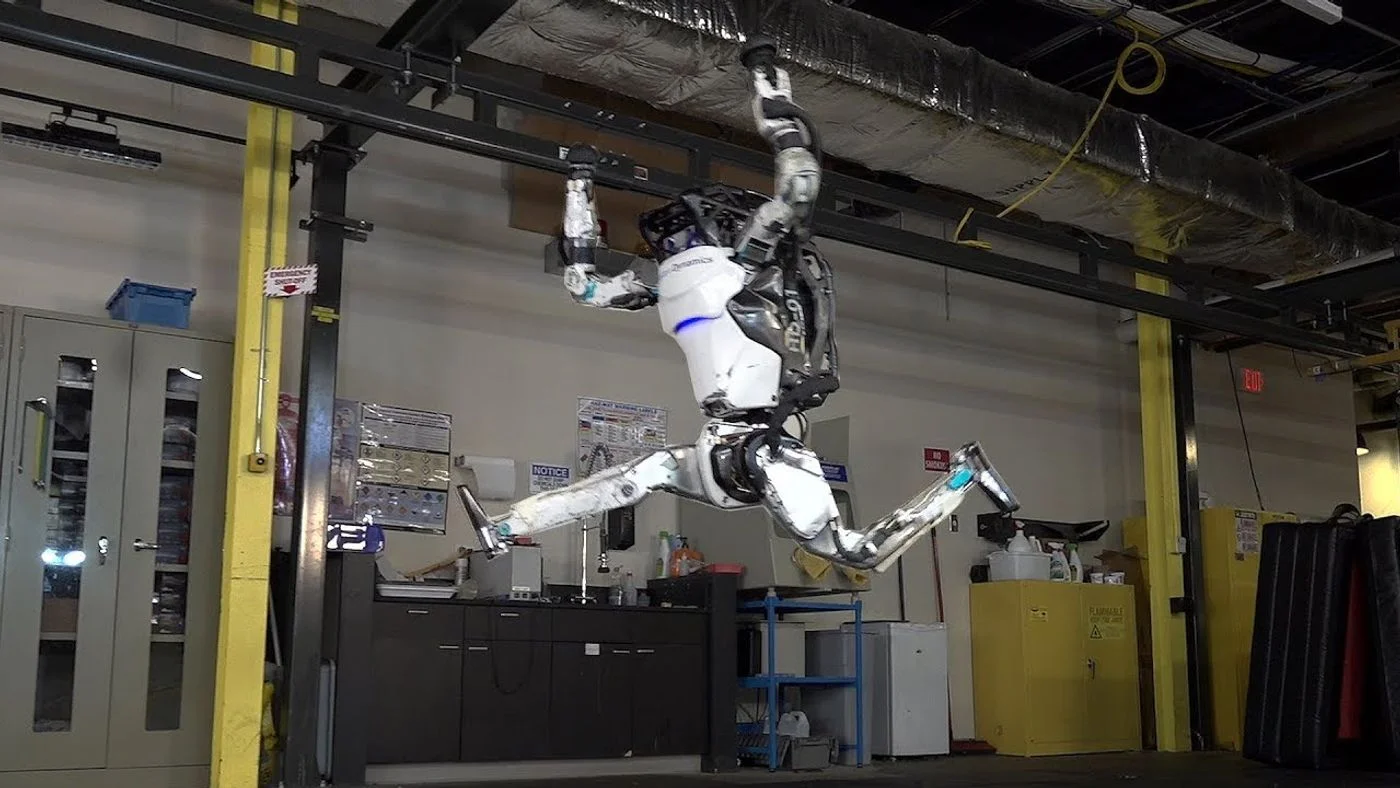
Such capabilities are essential conditions for complex assembly factories or logistics sites with severe weather. Unlike machines that move only along fixed lines, machines that autonomously consider floor conditions, slopes, and obstacle locations enhance the flexibility of industrial infrastructure. In fact, the Hyundai Motor Group is promoting an "AI Factory," which connects the entire manufacturing process, including production and logistics, with AI. In this vision, Boston Dynamics' robots are expected to play a core role in manufacturing 2, 1.
Why Did Toyota Build a 'City Where People Actually Live'?
Toyota chose an approach of using "real life," rather than industrial sites, as a testing ground. At the center of this is the futuristic demonstration city "Woven City," announced by President Akio Toyoda at CES 2020. Located in Susono City, Shizuoka Prefecture, Japan, this city completed its first phase of construction in October 2024, and approximately 100 residents began living there in September 2025. Woven City is a living laboratory that validates cars and robots in human streets and yards, not in labs 2.
According to an Insight Korea report, Toyota is validating mobility, robot, and logistics services in everyday life within this city 2. Joby Aviation, a leading U.S. company in the flying car (electric vertical takeoff and landing, or eVTOL) industry, also joined the Woven City project in April 2026. Joby and Toyota have more than a simple financial partnership. On June 30, 2026 (local time), Toyota and Joby agreed to establish a joint venture named "Joby Toyota Aero Manufacturing Preparation Company (JTAMPC)." The equity split is 51% for Toyota and 49% for Joby, and Joby agreed to grant this joint venture exclusive manufacturing rights for its eVTOL 3 series 4.
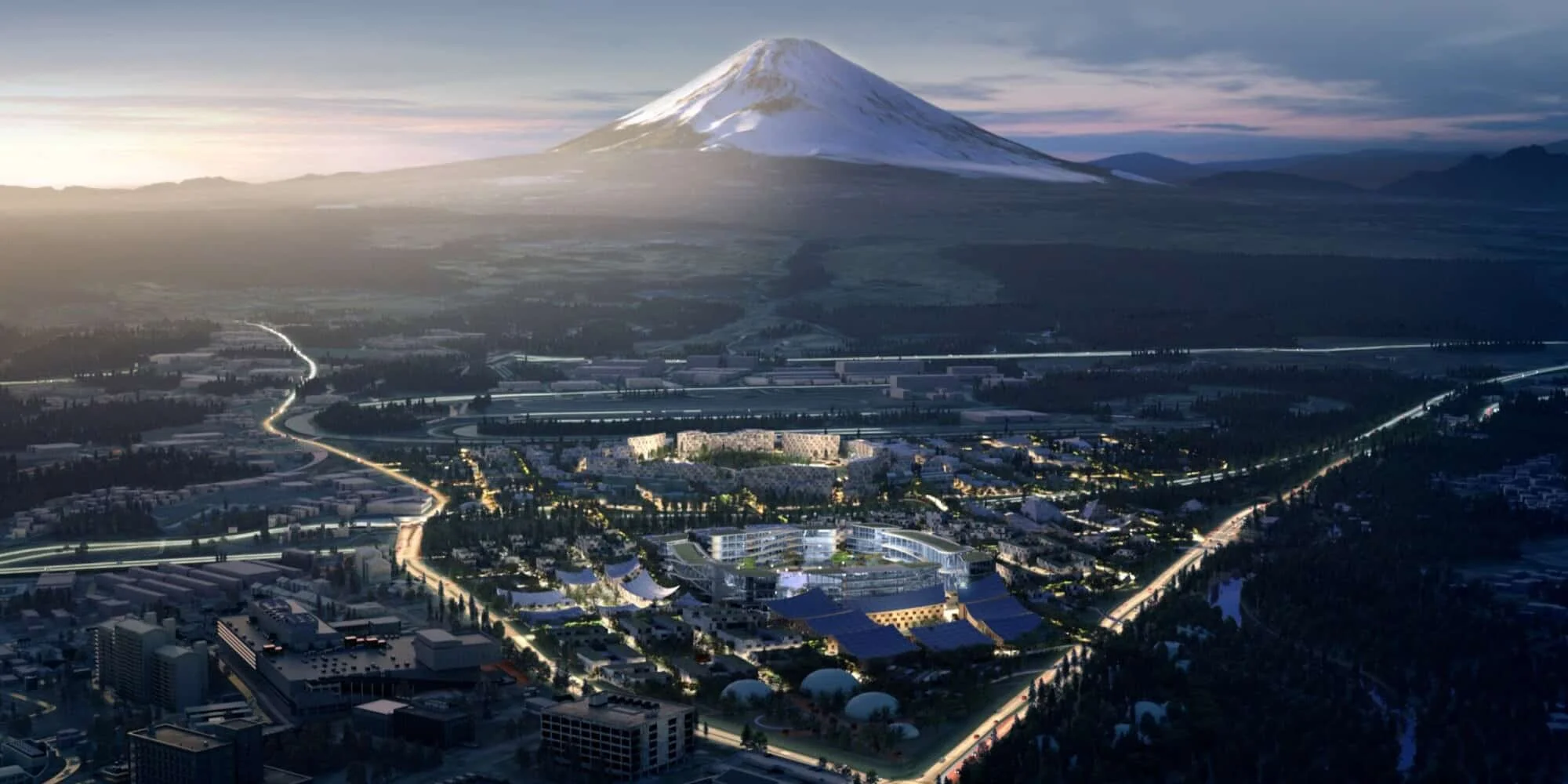
The goal of this joint venture is the mass production of eVTOLs. Toyota chose a strategy of extending manufacturing know-how externally rather than developing the aircraft itself, through a partnership that transfers its automobile mass production know-how to Joby 4. Toyota production engineers residing at Joby’s Marina factory in California to support process design and production line design follow the same logic 4. Woven City serves as Toyota's demonstration base to confirm that these technologies work harmoniously without being disconnected from real people.
Differences in Reading 'Mobility'
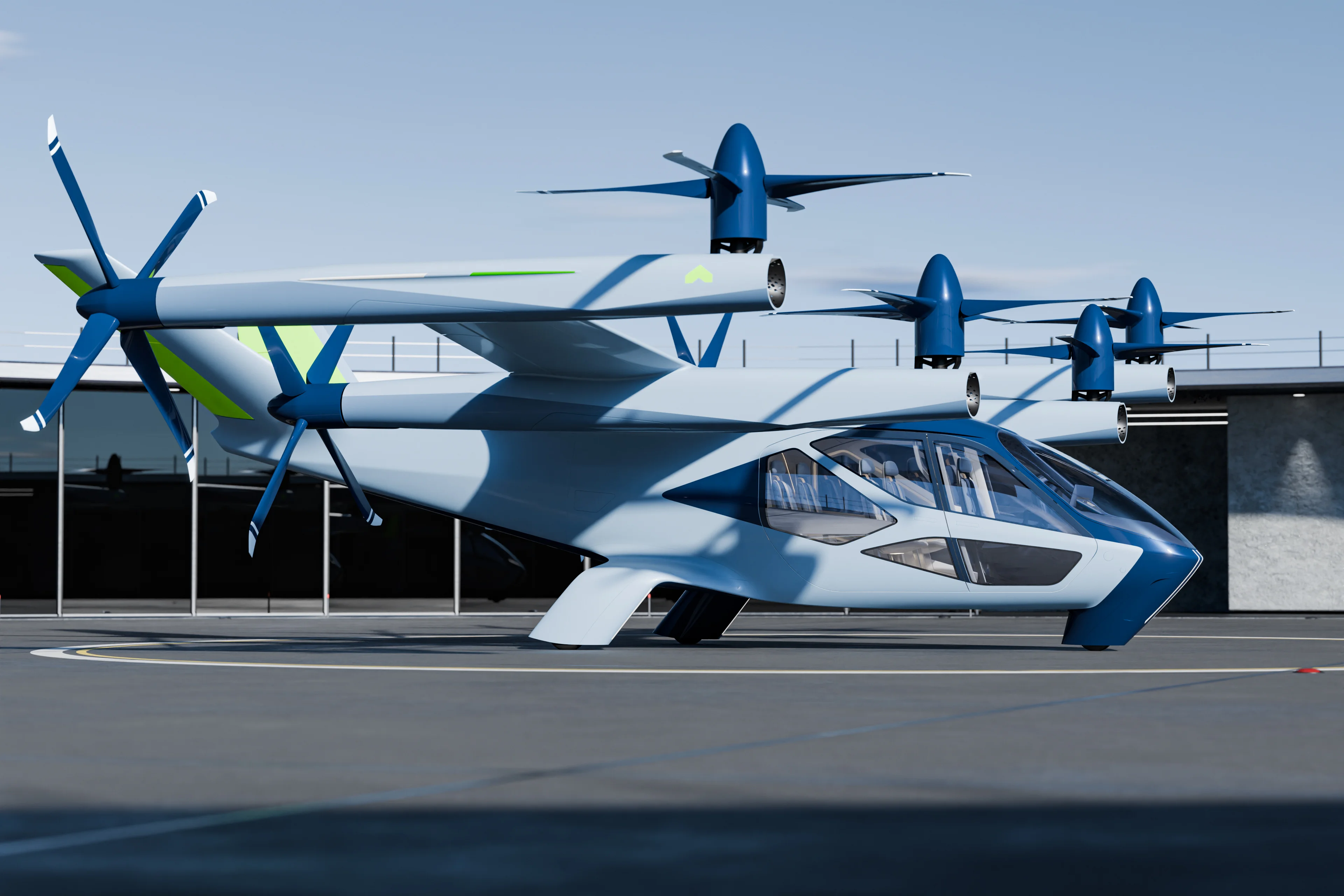
The Hyundai Motor Group and Toyota are looking in the same direction, but the position from which they begin the first step is clearly different. The Hyundai Motor Group is directly developing sky vehicles through Supernal (revealing the S-A2 model at CES 2024, with commercialization targeted for 2028) and deploying robots at scale in factory sites. It focuses on vertically integrating industrial infrastructure internally, such as jointly developing electrified powertrains for aviation with Korea Aerospace Industries (KAI) 4. In other words, it is rapidly layering robots and an AI operating layer onto already running production sites and logistics networks.
On the other hand, Toyota first validates how technologies interact with real life in Woven City. It adopts a collaborative approach of bringing in specialist companies like Joby through a joint venture to transplant manufacturing know-how, refining services amidst the complex variables of living environments 4. Analyses suggest that the global automotive market has entered a mature stage, limiting sales growth, and that technological gaps are narrowing due to electrification, making growth through manufacturing alone clearly limited 2, 4. Therefore, both companies are trying to shed the label of being product manufacturers of just "cars."
Ultimately, mobility after the automobile is not a single wheeled car. It is an operating system that oversees machines reading the environment and moving across ground and sky, factories and residences. The Hyundai Motor Group is putting effort into independently controlling everything from autonomous driving software to robot joints and hydrogen energy within this ecosystem, while Toyota focuses on expanding the ecosystem by combining validated city infrastructure with the manufacturing capabilities of external experts. However, the city-level integrated intelligence proposed by the Hyundai Motor Group is currently at the blueprint stage, and specific business methods, such as which city infrastructure will integrate the technology and which affiliates will participate, have not yet been finalized 2.
References
- 보스턴 다이내믹스 · namu.wiki↩
- 정의선 현대차 회장 ‘AI 도시’ 구상...토요타와 진검승부 벌인다 · insightkorea.co.kr↩
- 서울경제 · sedaily.com↩
- ‘현대차’ 정의선 vs ‘토요타’ 아키오, 하늘서도 맞붙는다 · insightkorea.co.kr↩