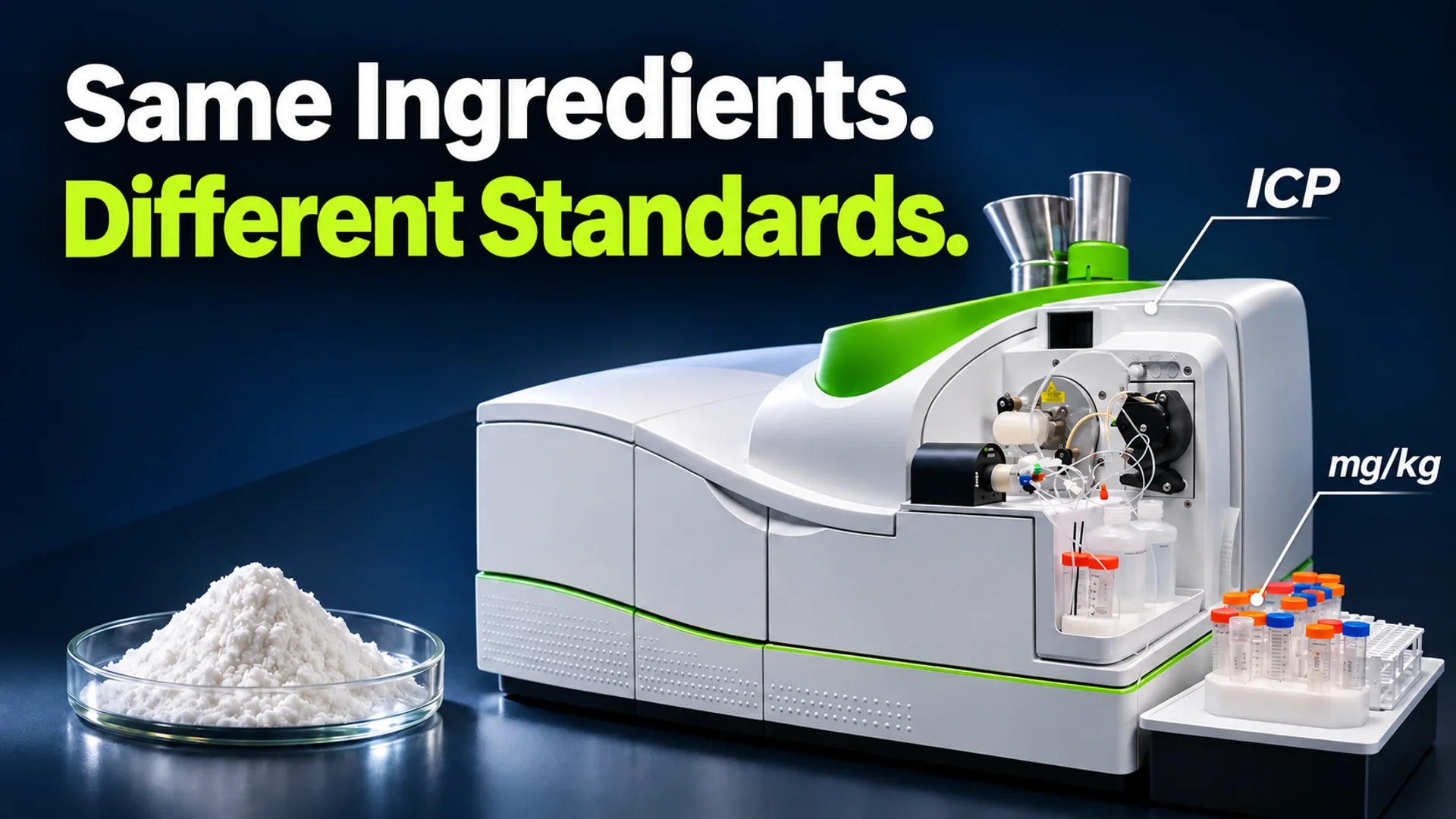
The magnesium supplement you sip while sweating through a hike or run, and the magnesium compound used as a desiccant in factories, often share the same chemical formula. So why do experts advise checking product labels to ensure the raw materials meet “food additive” standards?
The core issue lies not in the type of raw material molecule, but in the “management procedures” it has undergone. Approval as a food additive does not simply mean a harmless substance was chosen. It means that heavy metal impurities such as lead and arsenic were precisely measured using sophisticated analytical instruments in units of mg/kg (milligrams per kilogram) and strictly passed permissible limits. For individuals who engage in high-intensity exercise and consume nutrients in specific quantities daily, these quantitative standards serve as a practical line of health defense.
Heavy Metals and Impurities Managed Quantitatively
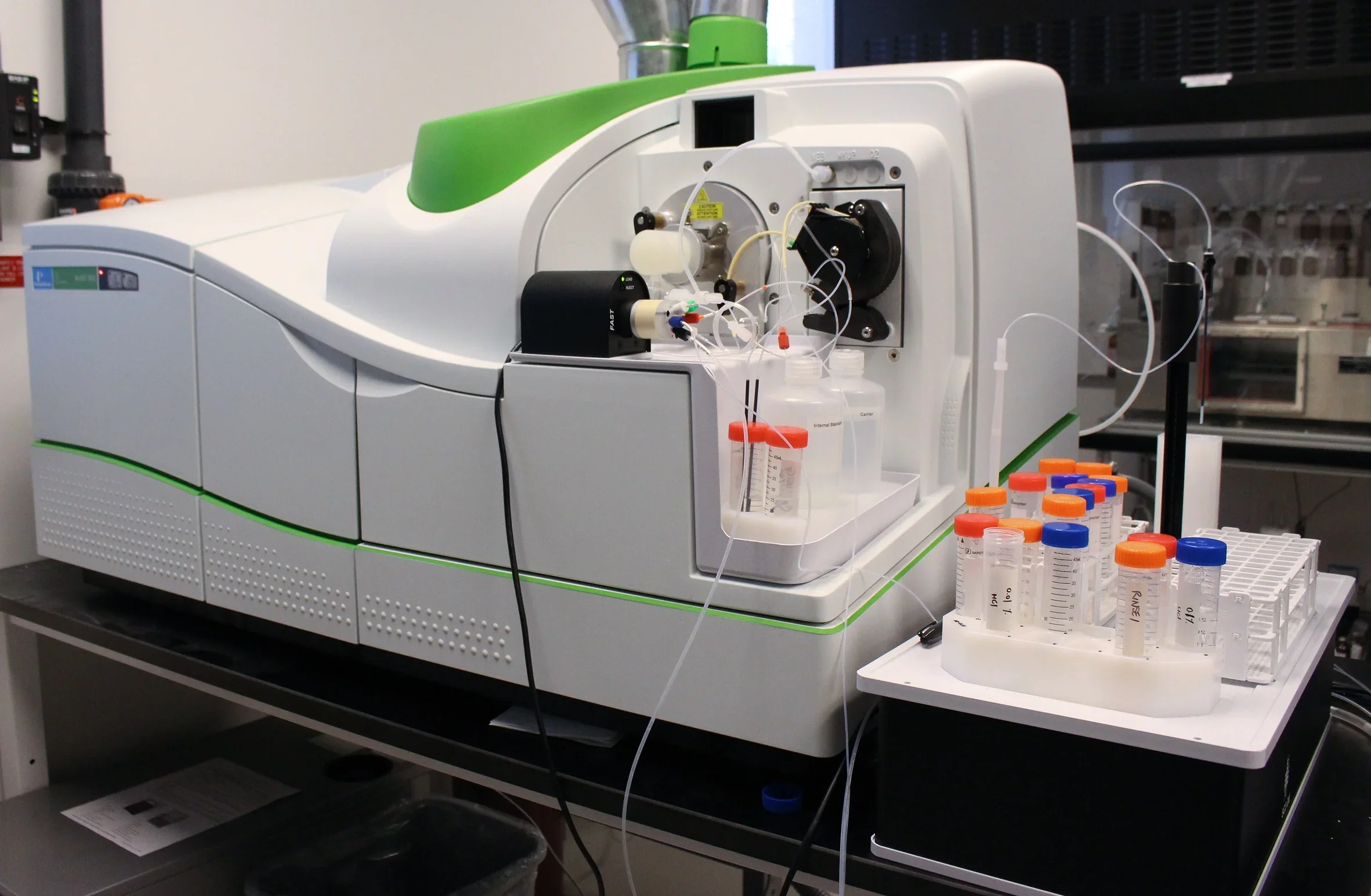
Even if the ingredient names are identical, the amount of impurities present in the product can vary significantly depending on the grade of the raw material. The Ministry of Food and Drug Safety (MFDS) manages the standards and specifications for food additives very specifically to ensure safety.
In July 2025, the MFDS announced a draft ordinance comprehensively revising the standards and specifications for food additives, aligning the management system with international standards. The most notable change in this revision is the update to impurity testing methods and measurement units. The previously used “Inductively Coupled Plasma Atomic Emission Spectroscopy” was renamed “Inductively Coupled Plasma Spectroscopy (ICP),” and the Inductively Coupled Plasma Mass Spectrometry (ICP-MS) method was introduced as a subordinate test method to enhance analytical accuracy 1.
ICP spectroscopy is an analytical technique that sensitively and accurately detects trace amounts of heavy metals such as lead and arsenic in raw materials. This revision explicitly mandates the use of ICP spectroscopy for measuring heavy metals in seven items of colorants 1. Additionally, measurement units have been unified from the past ppm (parts per million) to international units of mg/kg or mg/L 1. This measure aims to reduce errors and apply consistent standards internationally.
Notably, this revision added “primary uses” (what types of food they may be used in) for ten items, including cross-linked carboxymethylcellulose sodium, vitamin B2, magnesium oxide, and magnesium stearate 1. If supplements consumed during hiking or running use food additives that have passed these item-specific standards, it can be viewed as a product where heavy metal and impurity exposure is controlled according to management criteria.
Why Are Food Manufacturing Facilities Placed on a Different Track?
Low heavy metal content alone does not automatically qualify a substance for edible use. Even if the raw material itself is a chemical substance also used for industrial purposes, it undergoes a different regulatory track when produced in bulk for edible products.
Standards related to food manufacturing are documented in an official document called the “Compendium.” The Compendium is a legal guideline defining how manufacturing, processing, cooking, use, and preservation should be conducted throughout the entire process 2. The “Food Additive Compendium” details the standards for various additives included in product manufacturing, such as vitamins, preservatives, texture improvers, flavors, and colorants 2.
According to the description on the upload channel ‘[ES Food Ingredients] Relative Ingredient Laws,’ food manufacturing and food additive manufacturing are separate industries requiring distinct licensing standards 2. Even if both licenses are held, production must adhere to the respective licensing standards, and if the standards differ, one must follow the corresponding procedures 2. In other words, when raw materials are received and processed into edible products at a factory, they must be manufactured in facilities applying food-specific management standards.
If these standards are violated and results fall short of Compendium requirements, manufacturers face administrative penalties such as business suspension or fines 2. Conversely, industrial chemicals do not undergo these dedicated licenses and precise heavy metal testing tracks premised on direct human consumption, so they often do not include safety records at the same level as edible products.
Why Raw Material Purity Matters More During High-Intensity Exercise
Why do quantitative standards for raw materials and impurity management become increasingly important for people who engage in high-intensity exercise? This relates to the physiological pathways by which the body uses nutrients during exercise.
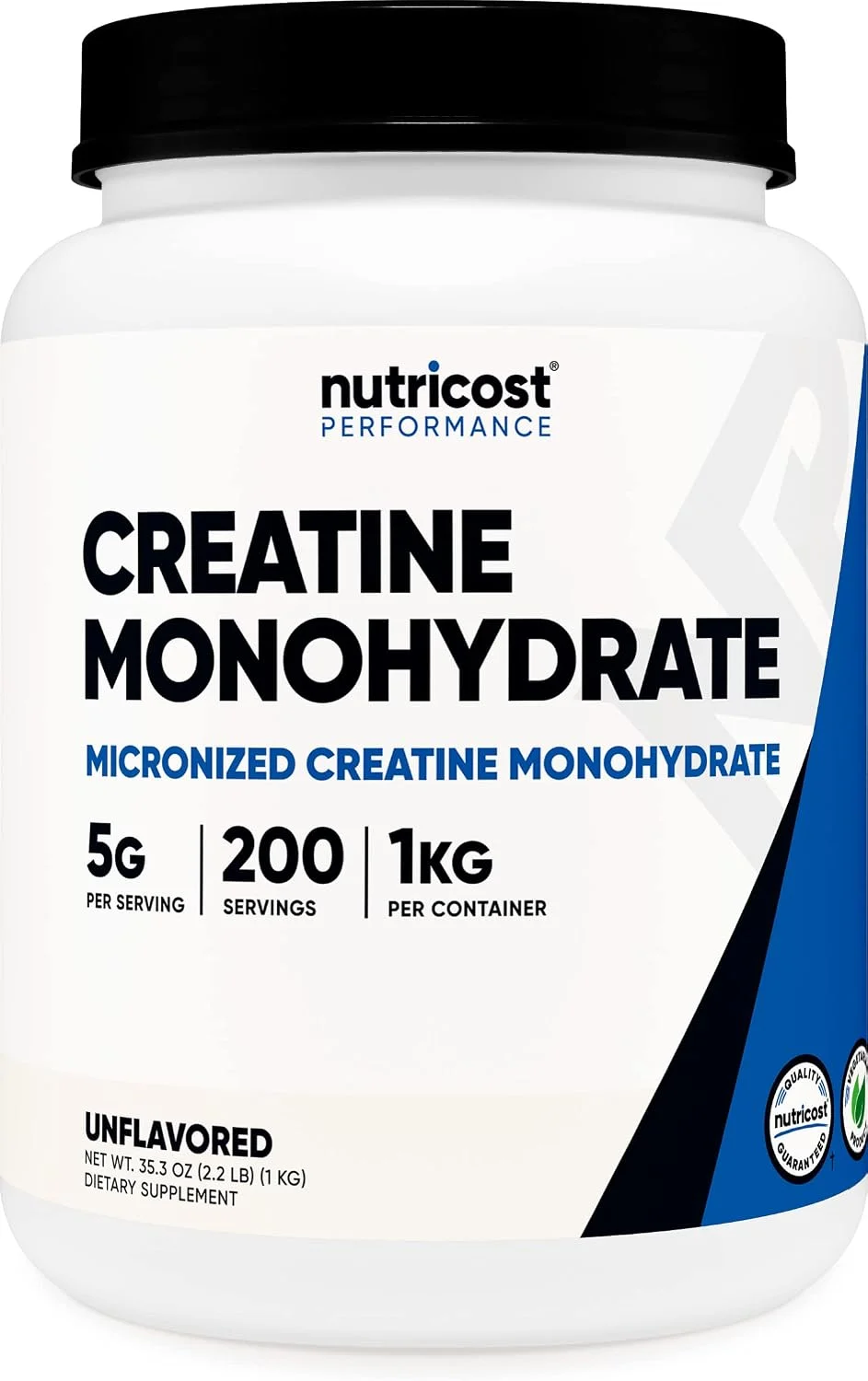
Let us look at the example of creatine shared by pharmacist ‘Little Pharmacist’ on Naver Blog. Creatine is a substance synthesized in our body and primarily stored in skeletal muscles, used to supply energy immediately during intense anaerobic exercise 3. Approximately 95% of the body’s creatine goes to muscles and is stored in the form of “phosphocreatine” with a phosphate group attached; when energy is depleted during high-intensity exercise, the separation of this phosphate group provides energy to muster the final effort 3.
Creatine is thus a representative ingredient recognized for the function of “improving exercise performance” in the domestic health functional food market 3. Considering these characteristics, Little Pharmacist recommends creatine monohydrate, which has the best research foundation and recognized functionality in Korea, and suggests consuming a daily dose of 3g depending on circumstances 3.
The issue is that ingredients taken in specific quantities daily during high-intensity exercise and directly involved in muscle metabolism, like creatine, result in a higher frequency of exposure to potential impurities or unnecessary additives that may enter the body. Little Pharmacist advised checking the ingredient label to ensure the product contains only creatine monohydrate and is free from unnecessary ingredients such as artificial sweeteners, flavorings, or dairy products 3. Selecting raw materials that meet food additive standards is a practical means of reducing exposure to impurities.
Additionally, creatine intake may pose a risk of reduced kidney function, so sufficient hydration is necessary to prevent dehydration. Caution is also advised when consuming creatine with caffeine, as caffeine may reduce creatine’s effectiveness 3. Only when the exact ingredients enter the body with exact purity can one expect the intended benefit of improved exercise performance without unwanted burdens.
How to Directly Check the Standards for Your Supplements
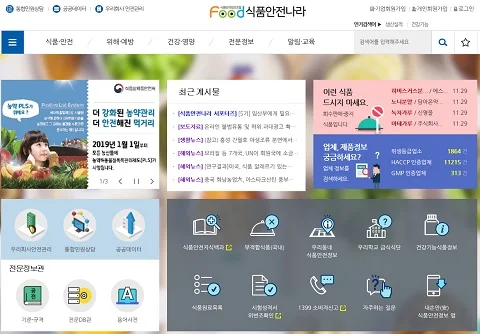
Verifying whether the raw materials in your supplements meet food additive standards rather than industrial standards is simpler than one might think. This is because the standards and specifications that all manufacturers and consumers must reference are transparently published online.
The MFDS launched the “Health Functional Food Compendium” online service on November 11, 2022, to allow everyone to access standardized information on health functional food raw materials and products 4. This service is provided through the large information portal Food Safety Nara, which attracts approximately 27 million visitors annually 4.
On this portal, standard information organized by type, including food, health functional foods, and food additive compendiums, is available 365 days a year, 24 hours a day, via PC and smartphone 4. Notably, since the system reorganization in 2022, entering a search term immediately displays the relevant compendium text, and necessary items can be downloaded or printed 4.
The Health Functional Food Compendium contains all core information, including manufacturing standards, daily intake levels, and precautions for consumption 4. Therefore, if you consume ingredients consumed daily as high-intensity exercise energy sources, like creatine, it is most certain to check via Food Safety Nara before purchase whether the raw material and its ingredient name comply with allowed standards and daily intake limits.
Ultimately, even for the same chemical raw material, there is an institutional difference between those approved as food additives and those that are not, specifically regarding test methods that quantitatively manage heavy metals via ICP spectroscopy and manufacturing license standards specialized for edible use. When hiking or running creates high energy demands on the body, it is wise to choose products equipped with these precise safety management standards beyond the molecular formula.
References
- 식품의약품안전처>법령/자료>법령정보>입법/행정예고 | 식품의약품안전처 · mfds.go.kr↩
- ⭐필독영상⭐ 식품공전 제대로 알고 제조하자! 🧪📋 · youtube.com↩
- 크레아틴 복용법과 부작용 제대로 알고 먹자!! · m.blog.naver.com↩
- 건강기능식품 기준‧규격, ‘건강기능식품 공전’ 온라인 서비스 제공 · esocialtimes.com↩