
Every developer has likely had this experience at least once: you push your code ahead of an important deployment, only to suddenly see a 'Connection Timeout' message or find the Pull Request (PR) page unresponsive. Your heart sinks, and the question "Why is this happening?" flashes through your mind.
In May 2026, a massive incident at GitHub—upon which millions of developers worldwide depend—turned this fear into reality. This outage was not merely a case of a server being temporarily slow. It was a 'complex failure' where GitHub's core engines, ranging from Pull Requests and Issues to Git operations and API requests, were simultaneously destabilized.
Today, we will dive deep into why this incident occurred and what we must prepare for when building our development environments.
Unexpected Chain Reaction: Why Did GitHub Stop?
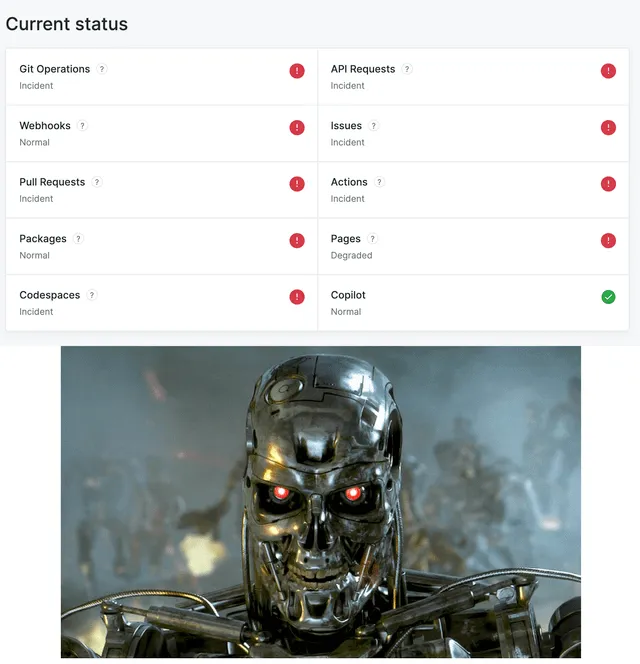
The most terrifying aspect of this outage was its pattern of 'Cascade Failure.' It wasn't simply that one server failed; it was a structure where multiple processes collapsed one after another in a domino effect.
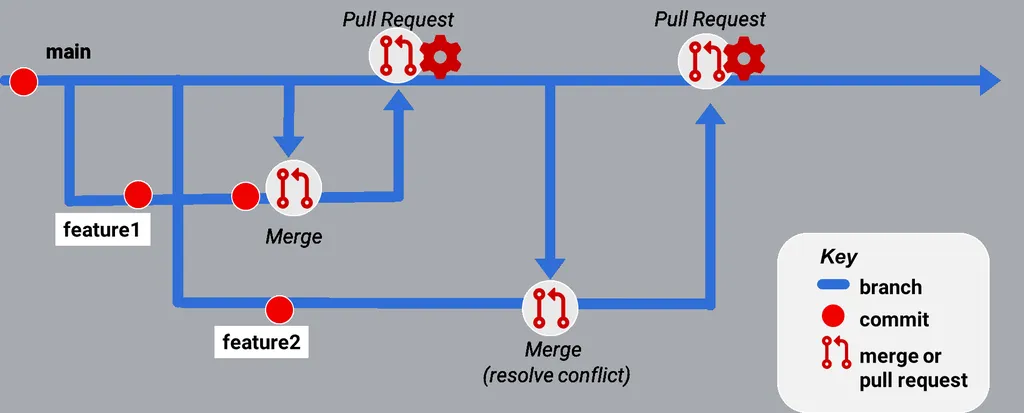
The incident began during a large-scale Pull Request merge process. To handle numerous code changes, operations to clone and merge Git repositories surged, which instantly exhausted server resources. But the problem didn't end there.
GitHub's systems are organically interconnected. As Git operations were delayed, the API endpoints that were supposed to be linked in real-time began to fail to respond. As API responses slowed down, other services waiting for them began throwing Timeout errors, eventually causing the Issue tracker and PR management systems to collapse like dominoes.
What particularly tormented developers was the data inconsistency issue. In the process of Git push events being transmitted to the Issue system via API, synchronization broke down. This led to confusion such as issues remaining in an 'Open' state even after a bug was fixed, or completed tasks being reported repeatedly. This went beyond a simple technical error, resulting in a fatal consequence that paralyzed the entire development team's workflow.
The Post-mortem Dilemma: Can We Find the Real Cause?
After the incident was resolved, heated debates erupted in communities like Hacker News. The core of the debate was: "Is the post-mortem provided by GitHub truly sufficient?"
Some experts in the tech community responded cynically. They pointed out that "it is physically impossible to perform a perfect post-mortem for every issue that occurs at this speed." If a company only provides a superficial conclusion like "analysis prior to deployment was insufficient," it cannot be considered a true Root Cause analysis.
On the other hand, there were strong practical counterarguments that investigating organizational issues requires much more time and manpower. The logic was that if one tries to dig into every single detail every time a failure occurs, the service recovery itself could be delayed.
An interesting point here is that the introduction of AI tools is being discussed as an alternative to resolving technical debt. Instead of human engineers scouring all the logs, AI could analyze patterns to find precursors to failure or find correlations between complex logs. This suggests that the way we manage the reliability of large-scale platforms is changing beyond simple technical problems.
Practical Response Guide: Managing API Rate Limits and Ensuring System Stability
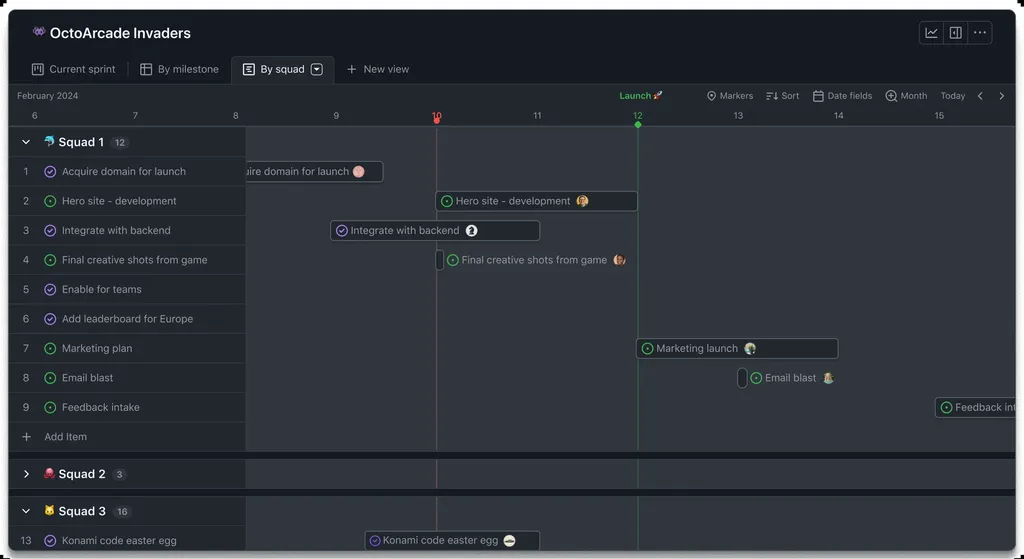
While we cannot control the failures of these massive platforms, we can control the code we write and the systems we design. In relation to this GitHub incident, here is a summary of API and system management strategies that every developer should know in practice.
1. How to Handle API Rate Limits Wisely
Most services, including GitHub, limit the number of API calls to protect server resources. Ignoring this can lead to your service being blocked.
- Authentication is Essential: Unauthenticated users are limited to 60 calls per hour, but by authenticating with a Personal Access Token (PAT), the limit is significantly increased to 5,000 calls per hour. This is the easiest and most certain way to 'upgrade.'
- Utilize Conditional GET Requests: You don't need to check if data has changed every single time. Design your system to receive a
304 Not Modifiedresponse usingETagorLast-Modifiedheaders if the data hasn't changed. In this case, the rate limit count is not consumed. - Optimize GraphQL: While REST API limits are based on the number of calls, GraphQL limits are based on query complexity (points). You must request only the necessary fields to avoid wasting 'points.'
2. Implement Exponential Backoff
When an API returns a timeout or a 5xx error, repeatedly retrying immediately is like adding fuel to a fire.
Recently, it has become easy to solve this using AI tools like GitHub Copilot Chat. For example, when using Python's requests library, it is recommended to add Exponential Backoff logic that increases the retry interval exponentially.
- Example: Wait 1s Wait 2s Wait 4s Wait 8s... This is a very elegant solution that increases the probability of success while gradually reducing the pressure on the server.
3. Make Asynchronous Processing and Webhooks a Habit
Just because you need real-time updates doesn't mean you should constantly call the API (Polling), which is very risky. Instead, adopt the Webhook method, where the server sends a signal to your side when an event occurs. This drastically reduces the number of API calls while increasing system responsiveness.
Closing: Toward a Reliable Development Ecosystem
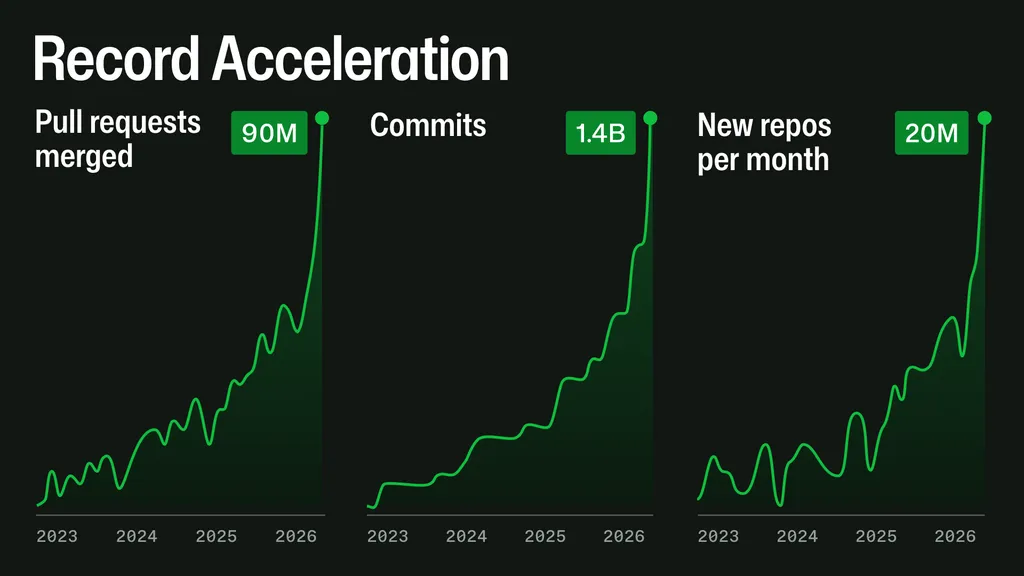
This GitHub incident left us with an important lesson. The modern software development environment is a massive web of interconnected code repositories, issue trackers, and numerous external APIs. We witnessed that if one part of the web breaks, the whole thing can shake.
Ultimately, the key is 'Resilience.' Even if we cannot prevent platform failures, the ability to design a system that responds flexibly and returns to a normal state as quickly as possible when a failure occurs is the capability of a senior developer.
Beyond just writing code, you must develop an eye for understanding the flow and connections of the entire system. The starting point is knowing the limitations of APIs, designing retry logic, and building automated monitoring mechanisms.
How many 'safety devices' for potential failures are prepared in your code today?
How do you manage API failures or rate limit issues in your projects? Please share your own know-how in the comments!
References
- Incident with Pull Requests, Issues, Git Operations and API Requests · news.ycombinator.com
- An update on GitHub availability · github.blog
- Incident History - GitHub Status · githubstatus.com
- API 속도 제한 처리 - GitHub 문서 · docs.github.com
- [질문] "API 속도 제한 초과" 정확히 어떻게 제한을 업그레이드하나요? · reddit.com
- GitHUB API Rate limiting - velog · velog.io



