
You must check your FastAPI and Starlette versions immediately. The recently discovered CVE-2026-48710 vulnerability, dubbed 'BadHost', is not just a simple bug. It is a critical security loophole where an attacker, by manipulating only the Host header, can completely neutralize the authentication systems you have worked hard to build and easily gain access to sensitive data within AI agents.
🚨 Bottom Line First: What You Need to Do Right Now
If you are a developer or security operator reading this, there is no time to hesitate. The key is to immediately upgrade Starlette to version 1.0.1 or higher. If an immediate update is impossible in your environment, you must change your settings in reverse proxies like Nginx or Traefik to strictly validate the Host header.
This vulnerability strikes a direct blow to modern AI service stacks (vLLM, LiteLLM, MCP servers, etc.) based on FastAPI. It is not merely a matter of "one website being breached," but a structural flaw that can allow an attacker to hijack the permissions held by AI agents, potentially handing over users' emails, medical data, and even control over cloud infrastructure.
🔍 What is the problem? The subtle mechanism of 'BadHost'
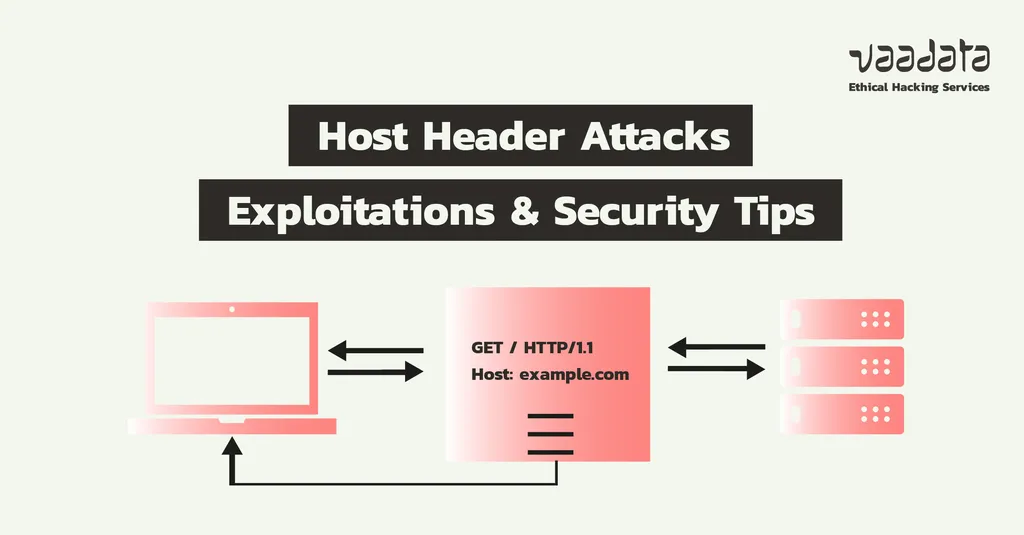
The core of this vulnerability lies in the "discrepancy between the path the server sees and the path the framework recognizes." How does the terrifyingly named 'BadHost' work?
Normally, when we operate a web server, security middleware checks: "Does this user have permission to enter the /protected path?" However, an attacker sends a cunning request like the following:
GET /protected
Host: example.com/health?x=
Now, a magical (but terrible) thing happens:
- Actual Routing: The server looks at the requested path
/protectedand decides, "Ah, this is a location that requires authentication." - Starlette's Interpretation: However, the
request.urlobject inside the Starlette framework misinterprets the/health?x=part included in theHostheader as part of the path. Consequently, the framework mistakenly believes the user is accessing a safe path called/health. - Authentication Bypass: The authentication middleware sees
/healthas safe and lets the request pass, but the actual logic executes at/protected. Ultimately, the attacker enters the house without ever opening the door.
This is not a simple typo-level bug. It is a design-level flaw that occurs during the interaction between three different code components. It is a vulnerability so sophisticated that even the latest AI models (such as Anthropic) would find it difficult to discover such subtle logical loopholes on their own.
🌐 Why is the AI ecosystem uniquely at risk?
The reason this vulnerability has caused worldwide panic is due to the structure of the AI infrastructure stack.
Most modern AI services run on Starlette and FastAPI, which are Python-based asynchronous frameworks. In particular, the following core components are directly exposed to this vulnerability:
- LLM Inference and Proxy Servers: Core engines that serve models, such as vLLM and LiteLLM.
- MCP (Model Context Protocol) Servers: Gateways used by AI agents to communicate with external tools (email, calendar, databases). Since MCP often requires unauthenticated OAuth discovery endpoints by design, it becomes a very attractive pathway for attackers.
- AI Agent Frameworks: Agents with various permissions to perform user commands can be hijacked through this vulnerability.
Beyond simple web page defacement, the 'loot' an attacker can obtain upon infiltration is immense. It can range from sensitive medical information like clinical trial data to corporate cloud management permissions, or even the ability to read and write to an individual's entire email inbox.

✅ A 4-Step Defense Strategy to Prevent Damage
Alright, enough with the fear. Let's establish a concrete action plan for what we must do.
1. Top Priority: Update Starlette
This is the most certain and only fundamental solution. Immediately upgrade Starlette to version 1.0.1 or higher. The latest version is designed to ignore abnormal paths included in the Host header, thereby fundamentally blocking this attack.
2. Redesign Authentication (Move away from Path-based Auth)
Many developers implement path-based authentication in middleware using request.url.path. However, this vulnerability specifically targets the ability to manipulate request.url.path.
- Alternative: Instead of
request.url.path, use the unmanipulatablescope["path"]. - Better Way: Instead of middleware, perform authentication at the endpoint level using FastAPI's built-in features like
Depends(),Security(), or the@requires()decorator. Since FastAPI's routing algorithm operates based on the actual HTTP path, it is safe from this vulnerability.
3. Defense in Depth via Reverse Proxy
Exposing ASGI servers (like Uvicorn) directly to the internet is extremely dangerous.
- Place an RFC-compliant reverse proxy like Nginx, Caddy, or Traefik in front.
- These proxies normalize and validate the
Hostheader according to standards, preventing malformed headers from ever reaching the framework.
4. Conduct Vulnerability Scanning
If you are worried that your server might already be under attack, try using online scanners provided by security communities (such as X41 D-Sec). You can quickly check if your service is using a vulnerable version of Starlette.
💡 Closing: The Importance of Supply Chain Security

This CVE-2026-48710 incident leaves us with an important lesson: a single open-source library we use, and a tiny piece of logic within that library, can collapse the entire massive AI ecosystem.
Taking care of the security of the Supply Chain we depend on has become as essential a skill for modern developers as writing the code itself. Rather than being complacent with "my code is safe," we must constantly ask, "Are the tools I am using safe?"
Open your terminal right now and type pip show starlette. Is your service safe?
What countermeasures is your team preparing for this vulnerability? Or have you experienced similar header manipulation attacks? Please share your experiences in the comments!
References
- BadHost – CVE-2026-48710: Starlette Host-Header Auth Bypass · news.ycombinator.com