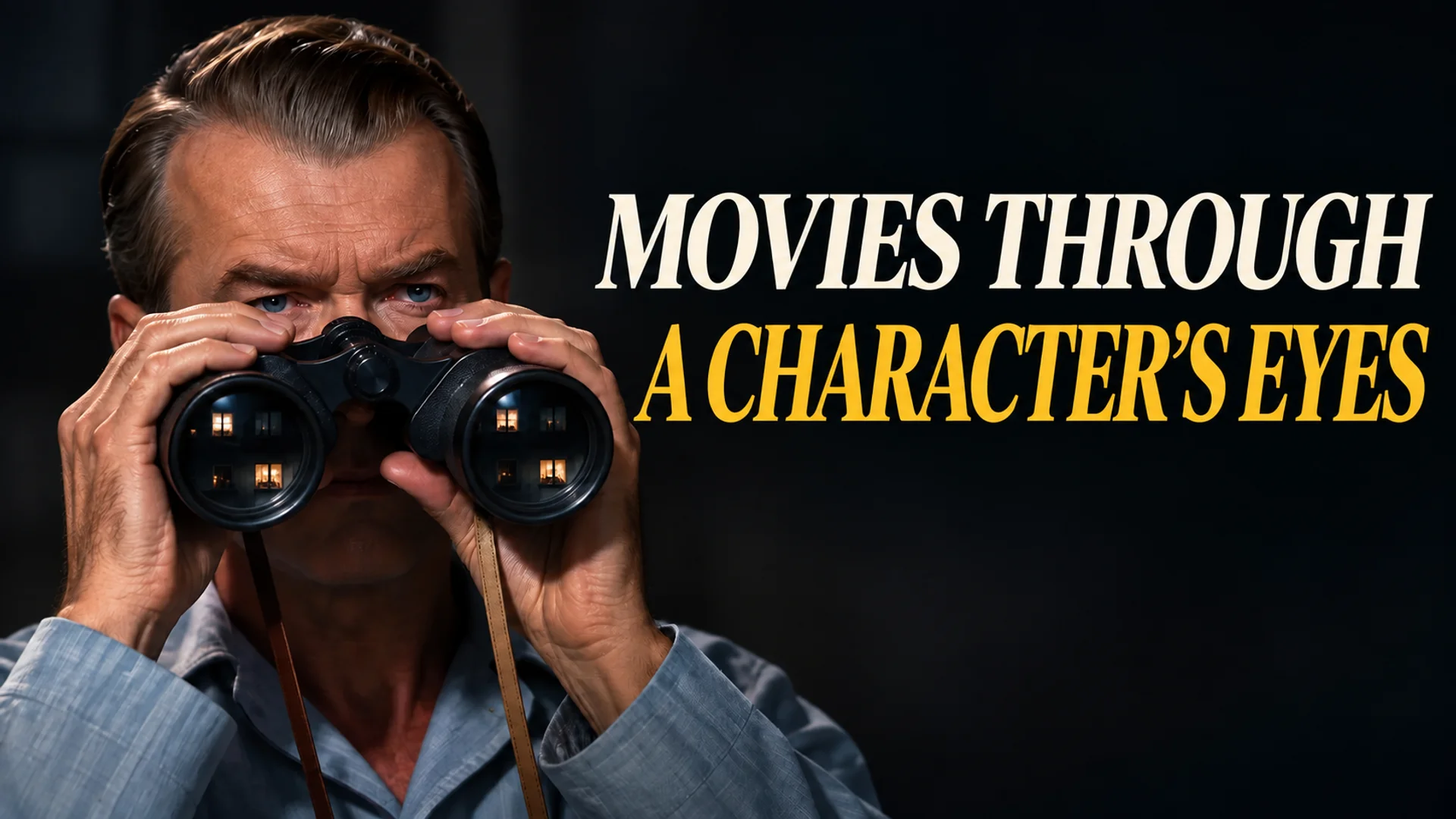
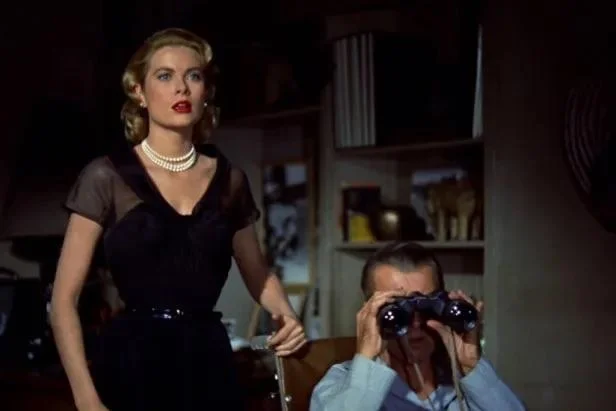
When watching Alfred Hitchcock’s thriller Rear Window (1954), the audience knows nothing beyond what the protagonist Jeff, confined to a wheelchair, observes through his binoculars. Clues to the crime appear on screen only at the exact moment Jeff turns his head. This experience results from a design in which the camera serves not merely as a tool for observation but as a substitute for the character’s eyes. In film, the cinematographic technique that transfers one character’s perspective to the audience’s, allowing them to share directly what that character sees, is called the 'point-of-view shot (POV shot)' 1.
For a POV shot to function effectively, it requires not only changes in camera position but also a specific editing pattern. By naturally linking the shot of the character’s eye or gaze with the shot of what that gaze lands on, the audience perceives, “I am seeing this scene now through the character’s eyes.”
The three-step process of guiding the gaze
According to the film glossary FilmSites, a POV shot refers to subjective filming that presents a scene from the character’s viewpoint. This technique is typically used to establish perspective by combining it with a three-step editing pattern called the 'shot reverse shot,' which alternates between the character’s reaction and the object of their gaze 1.
This structure guides the audience’s perception in the following sequence:
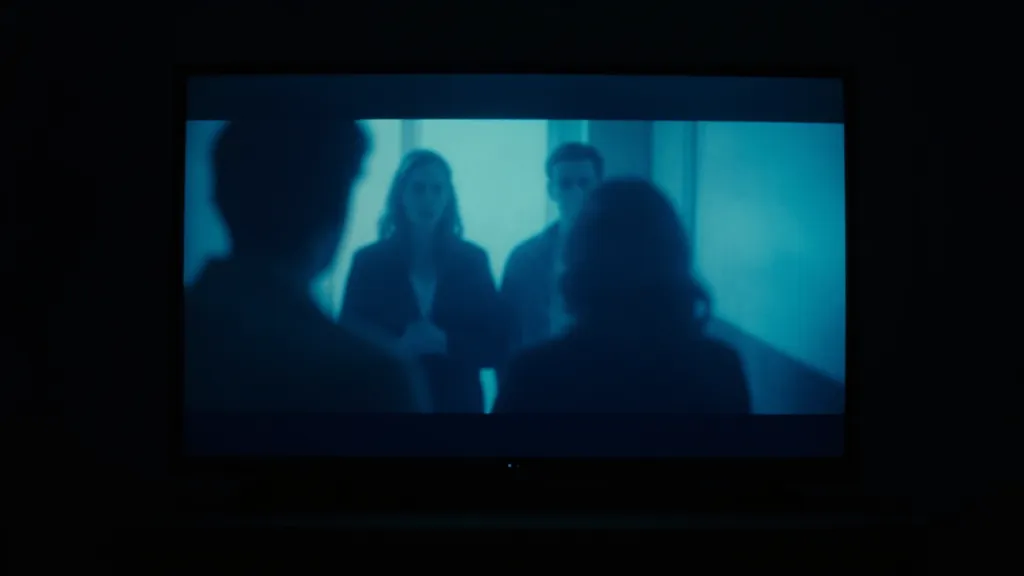
- The shot of the character looking: This shot shows the character’s face as they fix their gaze somewhere off-screen. The audience intuitively senses that the character is concentrating on something.
- The character’s POV shot: This shot captures the scene or object the character is viewing. At this point, the camera is positioned at the character’s eye-level. Shooting at eye level is the physical precondition that most closely resembles how people typically perceive the world, fostering a natural sense of connection between the audience and the character 2.
- The shot of the character’s reaction: This shot returns to show the character’s facial expression or emotional shift upon confirming the object seen in the POV shot.
When these three shots are linked seamlessly, the audience interprets shot 2 not as a simple objective view, but as the 'subjective vision actually being seen' by the character in shot 1. In essence, editing aligns the scope of the character’s information with the scope of the audience’s information.
When it becomes the eyes of the villain or the protagonist
This structure of POV shots and shot reverse shots is widely used across genres to build narrative tension and psychological immersion.
In Rear Window, events unfold from Jeff’s perspective, restricting the audience’s knowledge to only the traces Jeff tracks through his binoculars. The villain’s next moves, which Jeff does not know, do not appear on screen, simultaneously inducing the same anxiety and curiosity in the audience that Jeff experiences 1.
Conversely, the opening of John Carpenter’s Halloween (1978) was filmed from the perspective inside the killer’s mask, aligning the audience’s eyes with the villain’s eyes 1. The audience first sees the vulnerable victim as the killer sees them, acting as a device to heighten fear. Another thriller, The Silence of the Lambs (1991), implemented a special type of POV shot by using night-vision goggles to show that the subject is perceived only through a specific tool 1.
In a more extreme example, the 1947 film Lady in the Lake was shot almost entirely from the protagonist’s first-person perspective. According to lecture notes on film theory from Fiveable, such a completely subjective experience allows the audience to become deeply immersed with the character visually and emotionally, but simultaneously creates a limitation where the audience, like the character, remains unaware of what the character does not know 3. Thus, the choice of perspective simultaneously controls the audience’s access to information and their emotional empathy.
Difference from a 'camera following the gaze'
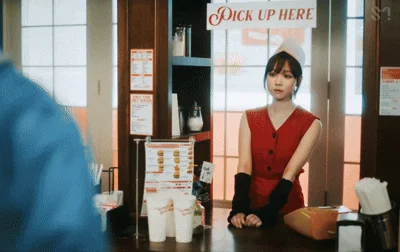
Among cinematographic techniques related to gaze, 'panning' is often mentioned, but it is distinct from the POV shot. Panning is a technique that rotates the camera left and right while keeping its position fixed, used to display wide spaces or track the direction of a character’s gaze 4.
For example, in the music video for the group SEVENTEEN’s Left & Right, the scene where the camera rotates along with a character turning their head to look from left to right is panning 4. Here, the camera acts as an 'observer' that 'informs' the audience of the direction the character’s gaze has turned.
In contrast, the POV shot leaves the observer’s position and enters the location of the character’s gaze, becoming the gaze 'itself'. If panning indicates, “That character is looking over there,” the POV shot provides the experience of “You are looking over there now.” This is a fundamental difference.
Ultimately, the editing style in Rear Window, which sequentially links Jeff’s focused face, the woman through the binoculars, and Jeff’s astonished face, confining the audience’s field of vision to the character’s sight, is the 'shot reverse shot' that completes the POV shot. This structure, which binds the audience’s knowledge within the scope of information perceived by the character, is the core principle that enables experiencing the story from the character’s perspective.
References
- Film Terms Glossary: P · filmsite.org↩
- Understanding Shot Angles and Levels · soundstripe.com↩
- ↩
- 관객의 눈이 되어주는 카메라 워크 : 영상 촬영 기법 5가지 · openads.co.kr↩