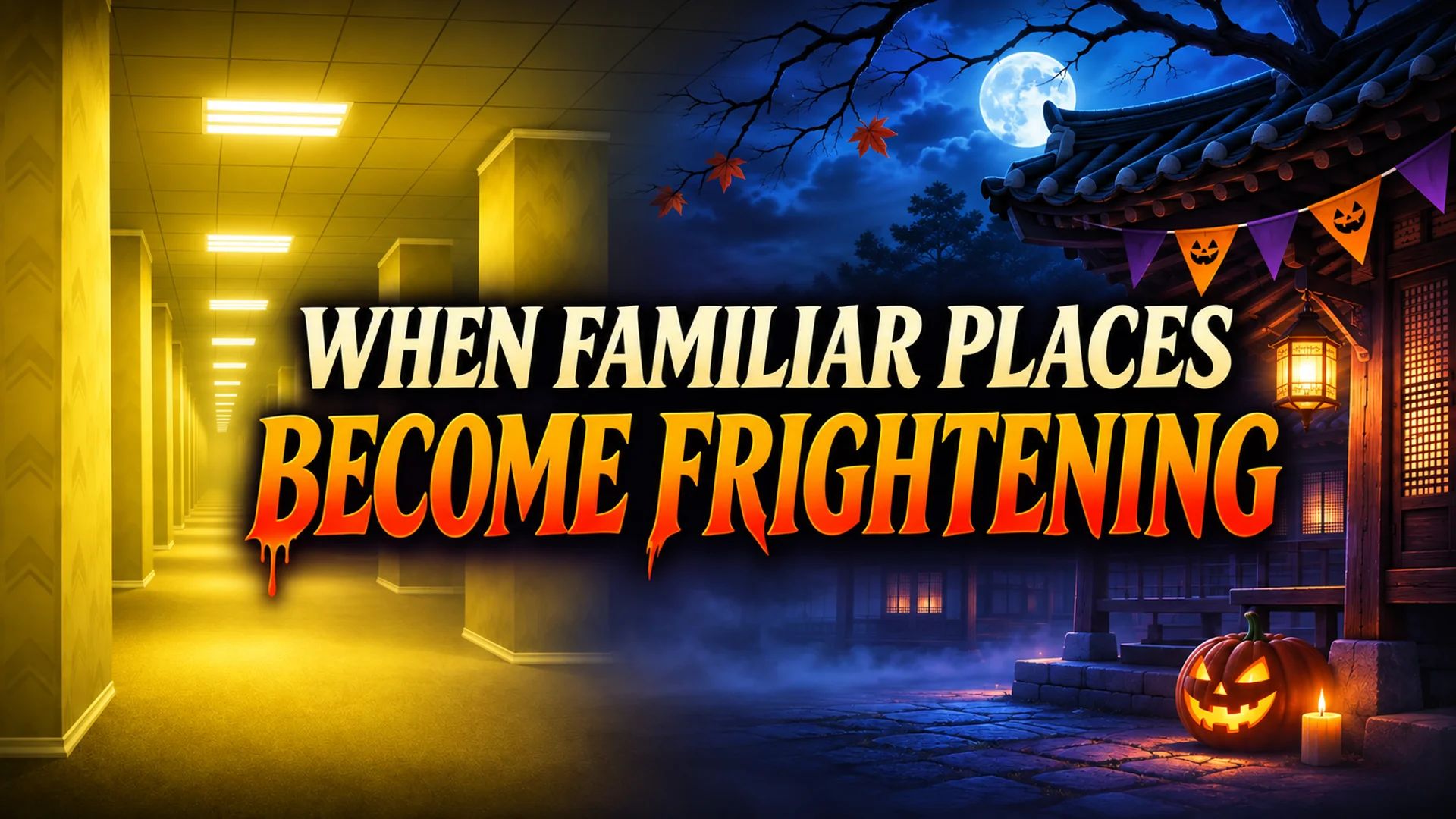
The way horror content rapidly permeates the public consciousness does not begin with the creation of new monsters. Cases observed during the 2026 Halloween season demonstrate that horror operates most intensely when a familiar space is subtly altered. On global gaming platforms, the 'Backrooms'—a vacant office hallway that everyone has passed through—were offered at a discount as a popular horror game. Domestically, an online first-person shooter game applied the theme of a widely known ghost story program to its 'Folk Village' map, a location many have visited during school field trips. The catalyst for horror arises not from the intrusion of a new world, but from the dissonance of recognizing that familiar space: "Why has this place I know become like this?"
The Backrooms: A Familiar Space Distorted into the Unfamiliar
Valve conducted a horror game discount event titled "Scream Fest 5" on Steam from October 27 to November 3, 2026. The event featured a wide range of titles, from classic horror and psychological horror to games featuring jump scares and supernatural elements, with some titles discounted by up to 90% 1. A notable title on this event’s list is Escape the Backrooms, which was offered with a 20% discount during the event 1.
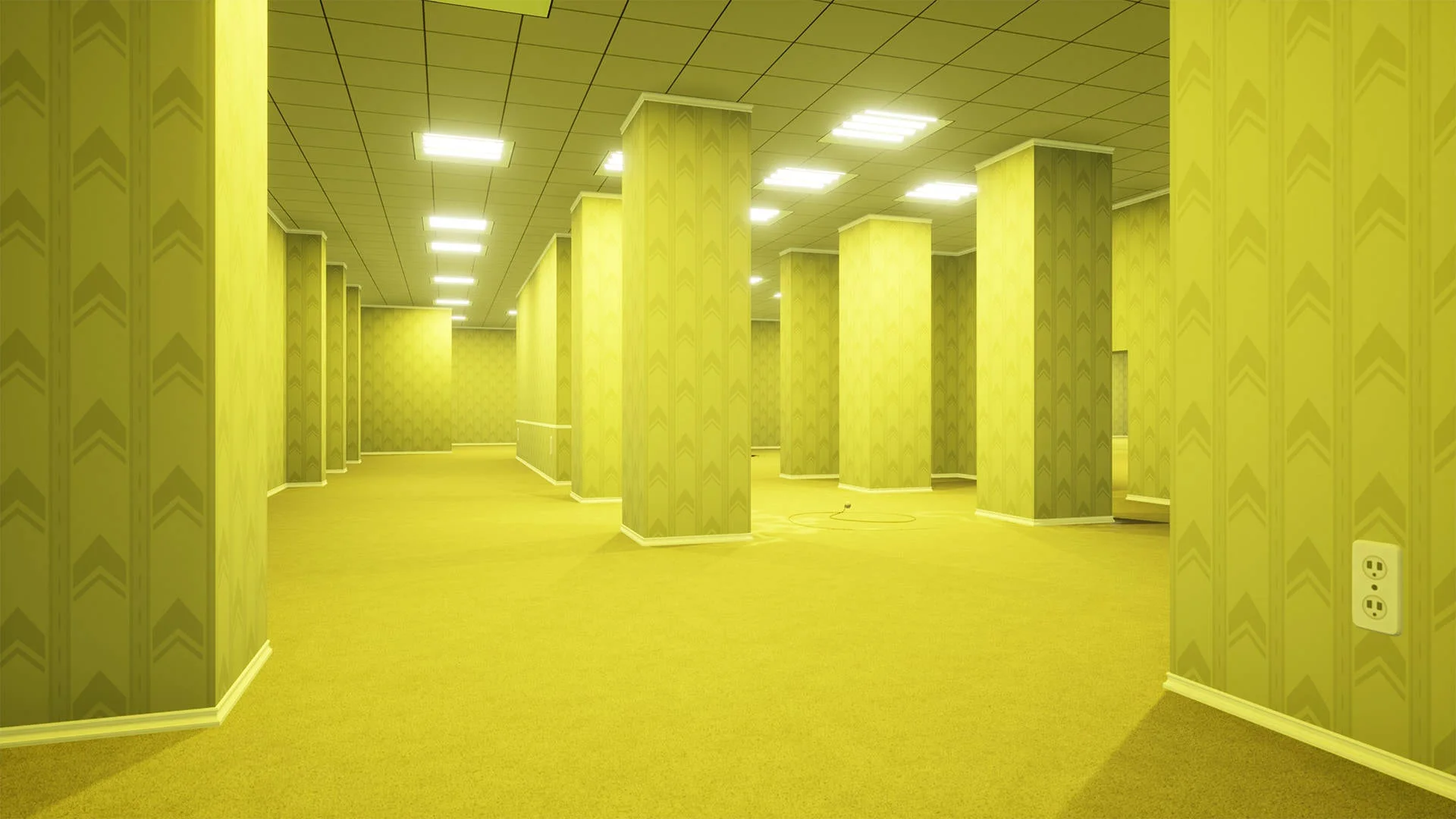
The Backrooms originated from an urban legend about endlessly walking through monochromatic, empty office hallways buzzing with fluorescent lights. Unlike traditional horror stages set on unfamiliar alien planets or massive castles, the Backrooms’ stage consists of commonplace hallways that office workers and shopping center visitors pass by multiple times a day. The core of Backrooms horror is not the fear of being in an unfamiliar place. Instead, the chilling sensation emerges from the cognitive dissonance of "I thought I could escape here, so why am I still in the same room?" The fact that Valve included this game in the Scream Fest 5 list demonstrates that spatial horror based on the Backrooms is already being distributed as a mainstream horror product on a global platform 1.
The Folk Village from Textbooks Becomes a Battlefield for Shooters
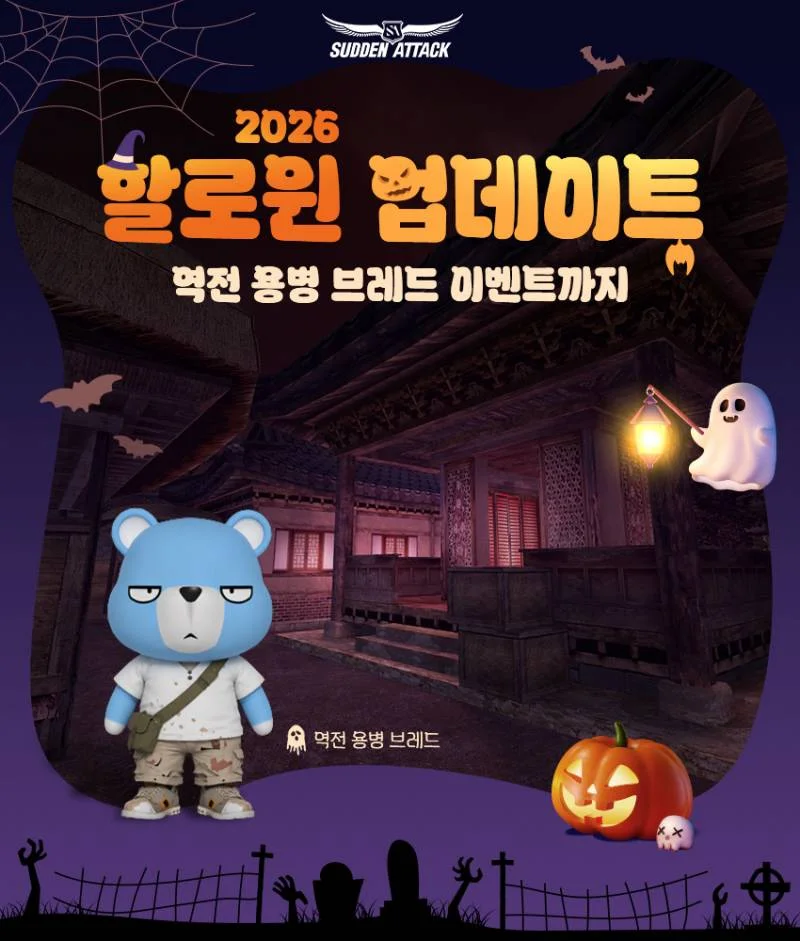
The domestic gaming industry has applied the same principle. Nexon, which operates the online first-person shooter Sudden Attack, implemented an update on October 29, 2026, to change battlefield themes in celebration of the Halloween season 2. The most notable change was transforming the existing 'Folk Village' battlefield into a "Legacy of Legend" (Jeonseogui Gohyang) theme, which was operated until November 12 2. The Folk Village is a space that most Koreans have visited several times, either during elementary school field trips or weekend outings. "Legacy of Legend" is the title of a long-running, well-known horror drama in Korea. The conceptual intent lies in the natural overlap between the visual stage of the Folk Village and traditional Korean houses (hanok) with the emotional tone of that program.
Rather than creating a new, unfamiliar Halloween map, Nexon layered the sentiment of a horror program deeply ingrained in the bones of Koreans onto the already existing Folk Village map 2. Users can eliminate enemies on this battlefield and the '3rd Supply Point - Halloween' battlefield to earn 'Halloween Coins' 2. The moment the sentiment of long-standing horror overlaps with a familiar battlefield featuring stone-walled paths and traditional houses, players simultaneously recall memories of school field trips and memories of watching television. Warping the Folk Village stored in memory provides an experience that causes a sudden hesitation far more intuitively than building a new, bizarre fortress.
A Generation That Consumes Ordinary Objects as Special

The phenomenon of horror becoming popularized by distorting familiar memories can be understood through the psychological mechanisms revealed in Generation Z’s consumption patterns, which appeared around the same time, although not within the horror genre. Channel A’s Kim Sang-ha, Team Leader of the X-Space Team, analyzed this generation’s SNS trends in a weekly column for Dong-A Ilbo. He recorded the characteristics of Generation Z, who share ordinary daily life in special ways, through three examples 3.
The first is the 'Nationwide Recorder Contest' held by Kakao Pay on October 17. The event gained attention as comedian Yoo Young-woo served as the host, and participants performed modified nursery rhymes on the recorder, an instrument used in school performance assessments 3. The second is a video by idol group Miaow that cheered by naming high schools across the nation. The third is the event where Captain Q, the iconic figure behind the 'Ttongsul' meme discontinued in 2015, was relaunched as authentic rum on October 21 and sold out 3. Team Leader Kim diagnosed that Generation Z "holds a special attachment to things they have in common with themselves or things they belong to" 3.
Of course, this column does not directly analyze the horror genre. However, these cases—which exploded in participation by stimulating ordinary materials and a sense of belonging—are based on the same principle as the production choices in Sudden Attack and the Backrooms, which used 'places people have visited' as their stages. It is a design that intentionally reinterprets the ordinary things everyone knows to connect them to personal belonging or nostalgia, rather than forcibly injecting unfamiliar elements.
Halloween as a Commercial Catalyst
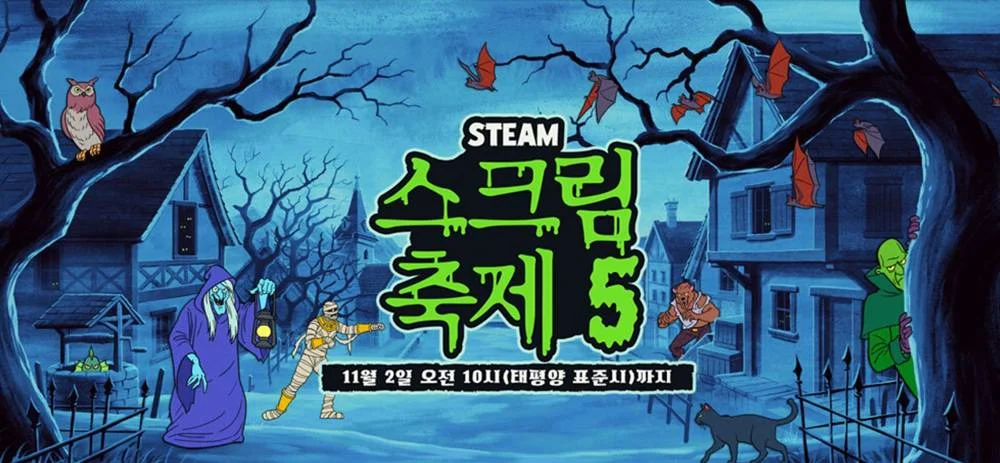
A specific commercial schedule known as Halloween plays a significant role in allowing horror content to permeate daily life naturally. Valve’s Steam Scream Fest 5 ran from October 27 to November 3, introducing various horror games 1. Simultaneously, Nexon’s Halloween-themed battlefields operated until November 12 to drive user participation 2.
The horror genre does not always overflow into daily life. However, Halloween acts as a trigger that translates existing maps into horror, fills discount lists with horror, and revives old memes. This commercial calendar simultaneously transforms content routinely consumed by the public into the language of horror. However, these large-scale discount events do not inherently verify the quality of the content itself. We can only confirm the structural foundation through which horror is delivered into the hands of the public via the scheduling pipeline of massive distribution networks.
Ultimately, the flow of horror content observed during the 2026 Halloween season does not expend energy on creating new worlds. It brings in the Folk Village and office hallways where we have already set foot and subtly twists the familiar memories associated with those places. The catalyst for horror is not unfamiliarity, but 'the moment a known place goes awry.' Thanks to this design principle, we feel clear horror in the yellow hallways of the Backrooms or the Folk Village dressed in the theme of Legacy of Legend.
References
- 핼러윈 앞두고 공포 게임 최대 90% 할인… 스팀 ‘스크림 축제5’ 시작 · game.donga.com↩
- "민속촌에 찾아온 할로윈" ‘서든어택’ 시즌 업데이트 실시 · game.donga.com↩
- Z세대의 특별한 추억 공유 · weekly.donga.com↩