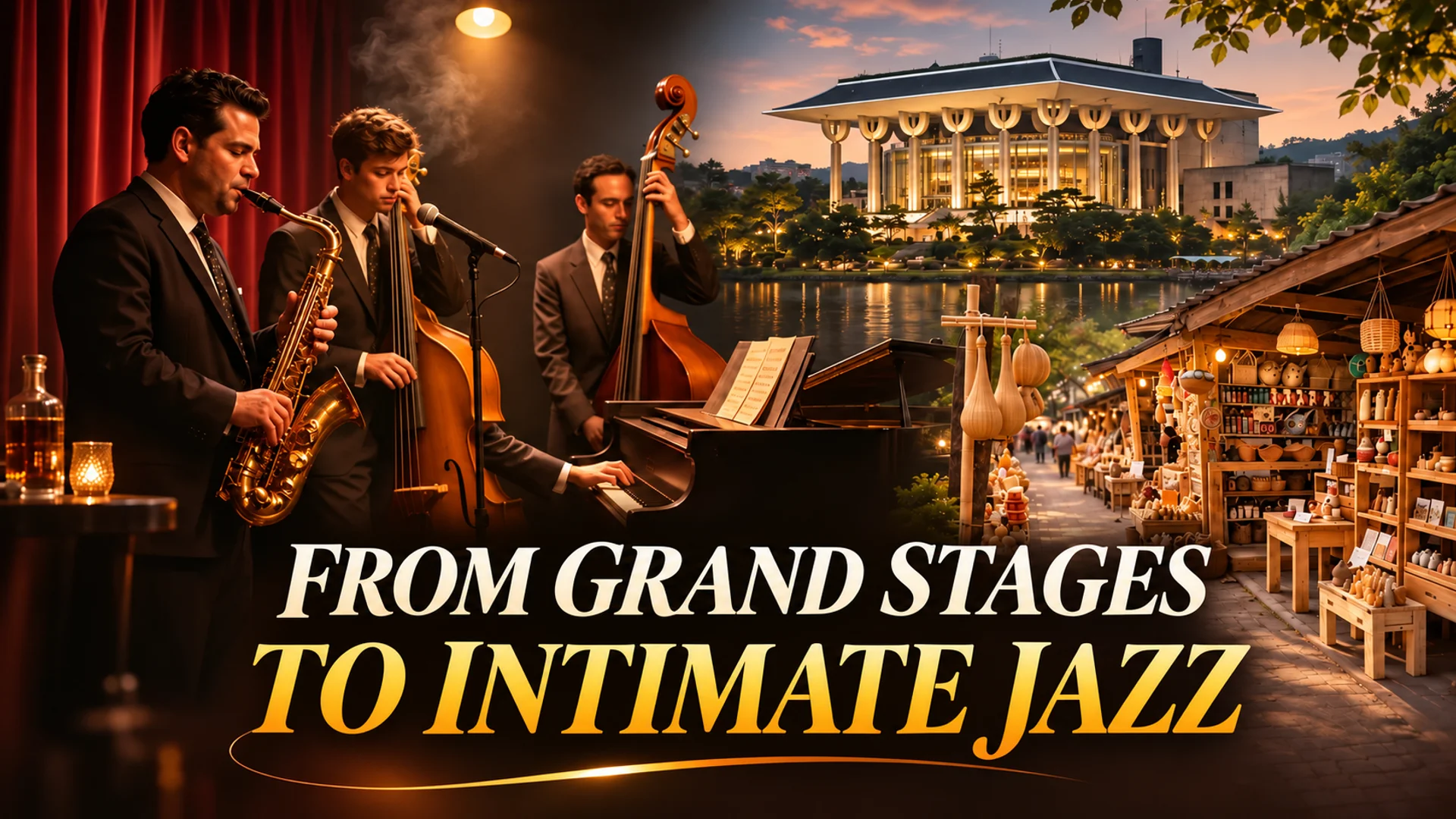
In early December 2025, the night in Jinju, South Gyeongsang Province, was filled with two scales of jazz. On the grand stage of the Gyeongnam Culture and Arts Center, top-tier artists from home and abroad produced majestic sounds, while in distinctive local spaces within the same city, performers in smaller ensembles ranging from quartets and quintets to duos played in close proximity to the audience. What separated these two spaces was not simply a difference in the recognition levels of the lineups. The organizing committee of the Jinju International Jazz Festival created a separate track called the ‘Jinju Winter Jazz Festa,’ physically separating the stage size and the distance between performers and the audience 1. Audiences could now choose their ‘listening position’ themselves, deciding whether to watch the grand international stage or hear the dense melodies in local spaces.
The Majesty of Large Ensembles, The Density of Small Ensembles
Launched in 2018, the Jinju International Jazz Festival celebrated its eighth edition in 2025, held from December 2 to 6 at the Gyeongnam Culture and Arts Center and various locations in Jinju. According to reporting by Kim Won-kyum of Sport Chosun News, the organizing committee operated the ‘Main Stage’ centered on large performance halls in parallel with the ‘Jinju Winter Jazz Festa’ utilizing Jinju’s unique local spaces 1.
Conversely, the organizing committee stated, “This year in particular,” they looked beyond large performance halls to create the new ‘Jinju Winter Jazz Festa.’ This track featured the New Orleans jazz band ‘Jowoon and Good Friends,’ Ahn Jae-jin Quartet, Park Sang-a Quintet, and others 1. The organizing committee described this track as ‘closer, warmer, emotional jazz.’ This represents a design aimed at encouraging dense communication, rather than just a banquet of grand sounds.
The Terem Quartet from Russia, the Spanish duo ‘Magali Sarre & Manel Fortiá,’ and the Joe Kayat Quartet were programmed in both the Main Stage and the Jinju Winter Jazz Festa tracks 1. Magali Sarre & Manel Fortiá, consisting of a double bassist and two vocalists, reinterpret Latin American and Catalan songs. In smaller spaces, their delicate harmonies and breath are conveyed to the audience even more intimately. The domestic Ahn Jae-jin Quartet and Park Sang-a Quintet filled this stage respectively with modern jazz and group sounds with polished rhythms. The broad resonance created by many together and the intimate melodies created by two or three require different listening experiences, naturally separating into two spaces.
From the Performance Hall to the Region: A Structure Where Art and Travel Connect
Placing small ensembles in local spaces did not merely change the scale of the music. It was the starting point for ‘regional stay-type expansion,’ encouraging audiences to remain within the city of Jinju throughout the festival and create itineraries that combine local tourism and performing arts.
The ‘Jazz Art Tour & Networking Party’ planned during the same period was organized with partner company Beautiful Companions, Inc. Audiences could walk through major tourist attractions such as Namsa Yedam Village and Jeongchuiam Temple, experiencing local art spaces and food culture, and through the networking party, they could converse directly with foreign artists 1. Rather than just watching performances and leaving, this structure allowed audiences to stroll through the city between performances and feel the region.
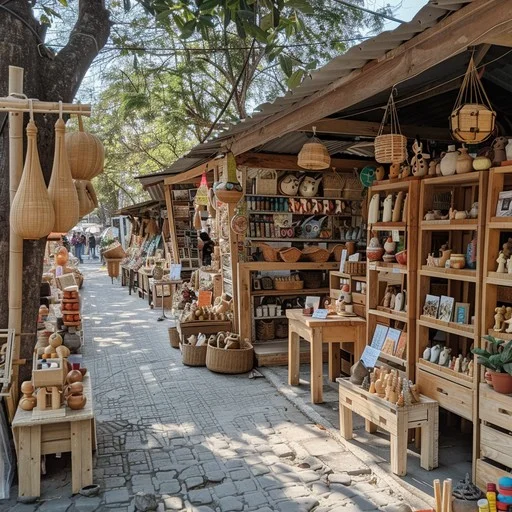
This design continued in other programs as well. The ‘JJF Lounge,’ featuring local small business owners, hosted a market selling various food items and specialties centered on Gyeongnam Province’s sixth industry (industries combining agriculture with manufacturing, tourism, and services). On December 2 at 2 PM, the ‘JJF Conference’ was held at ‘Yeonharu Coffee,’ where citizens, artists, and stakeholders gathered to discuss the festival’s vision and direction 1.
A masterclass was also held, led by Joe Kayat Quartet, mentoring the ‘Brillante Youth Philharmonic Orchestra’ and the ‘Aibitnam Sujeong Elementary School Children’s Orchestra.’ This took the form of foreign artists participating in local arts education, going beyond one-off appearances 1. While the Main Stage was an event centered on ‘spectating,’ the programs in local spaces encouraged ‘participation’ and ‘stays,’ fundamentally changing the nature of the festival itself.
The 9th Edition in 2026: Confirmed Dates and Stages Yet to be Revealed
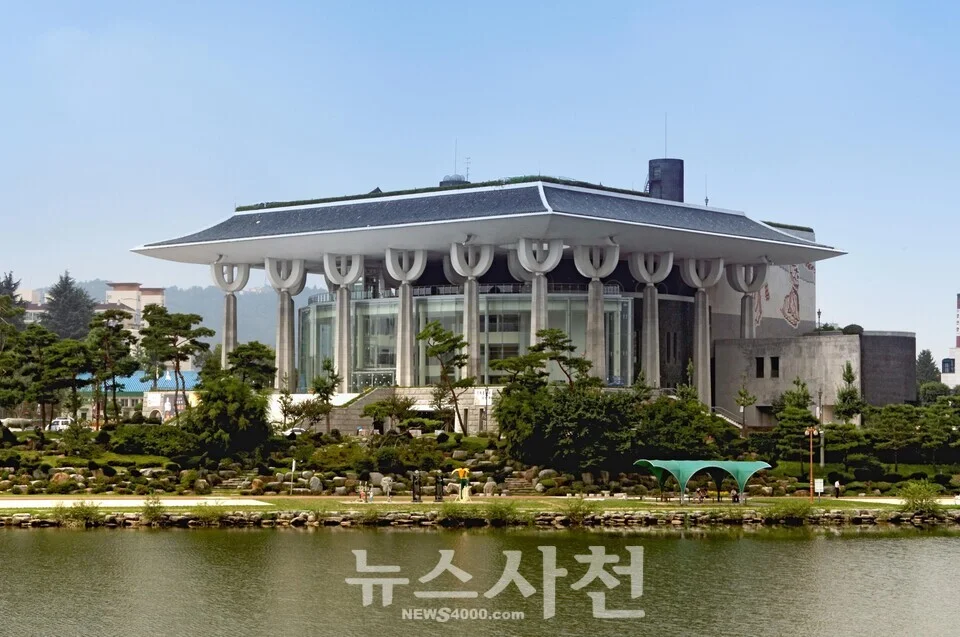
Whether this regional stay-type expansion of 2025 will continue in 2026 remains difficult to determine at this time. According to reporting by Choi Yeo-uk from Parth, the 9th Jinju International Jazz Festival in 2026 will be held over two days, December 4 and 5, at the Main Hall of the Gyeongnam Culture and Arts Center. The December 4 session will run for a total of 180 minutes including a 15-minute intermission, with R seats priced at 65,000 KRW and S seats at 55,000 KRW 2.
However, as of October 22, neither the Gyeongnam Culture and Arts Center’s official page nor the body text of the ticketing provider (NOL Tickets) had registered detailed programs or a full list of performers. Although the external event aggregation site ‘Koreagenda’ listed ‘Sunoo Jeong-a et al.’ for the December 4 session, it has not been confirmed whether this was finalized through announcements by the center or the ticketing provider 2.
Whether a project similar to the ‘Winter Jazz Festa’ of 2025, where small ensembles roam distinctive spaces and make eye contact with audiences, will also be held in December 2026 will become known upon checking future detailed announcements posted on the Gyeongnam Culture and Arts Center and ticketing provider sites. What is confirmed at present is the two-day performance at the main venue; the existence of a separate track utilizing local spaces remains unknown.
The Return of Choosing ‘Stage and Distance’ to Audiences
Constructing the ‘Winter Jazz Festa’ as a separate track in the 8th festival of 2025 was an instance that allowed audiences to choose for themselves between the grand international stage and the dense melodies of local distinctive spaces. During the festival period in December, Jinju proposed a culture of staying in the neighborhood for several days, where audiences could listen to the majestic ensembles of the Main Stage, then leave the performance hall to join an art tour of Namsa Yedam Village, or relax in a lounge filled with local brands.
Beyond a two-day concert series in a large performance hall, this festival’s change lies in creating a structure that weaves together local spaces and art. Whether the 9th festival in 2026 will reopen this experience of the ‘small room’ has not yet been disclosed, but the 2025 case clearly demonstrated that a festival can become ‘urban travel’ beyond just ‘watching performances.’ Audiences have now become agents who consume the city through their preferred distance and experience, going beyond simply listening to music.
References
- 재즈로 물드는 진주의 겨울밤…김윤아·이무진·이현우, 진주국제재즈페스티벌 헤드라이너 · v.daum.net↩
- 제9회 진주국제재즈페스티벌, 12월 4일 진주서 개막 - 파르트 · pa-art.kr↩