
Acoustic guitar playing that evokes autumnal emotions is completed not merely by pressing chords accurately, but by delicately controlling the flow of rhythm and the texture of each stroke. This demand for a lyrical tone is demonstrated by domestic classics such as Lee Moon-se's "If You're Standing Under the Shadows of the Trees" and Kim Kwang-seok's "Writing a Letter in the Cloudy Autumn Sky," as well as international pop songs like Sting's "Shape of My Heart."
To realize this atmospheric accompaniment, it is essential to precisely understand the character of the sound produced by the right hand. In emotional ballads, the key lies in leaving a lingering resonance with a soft touch or creating a calm flow with seamless sixteenth-note stroking. Below, we analyze the mechanics of stroking and fingerpicking patterns that suit the autumn mood and provide detailed step-by-step practice methods to incorporate them into actual playing.
The Role of Finger Touch and Wrist in Determining Emotional Tone
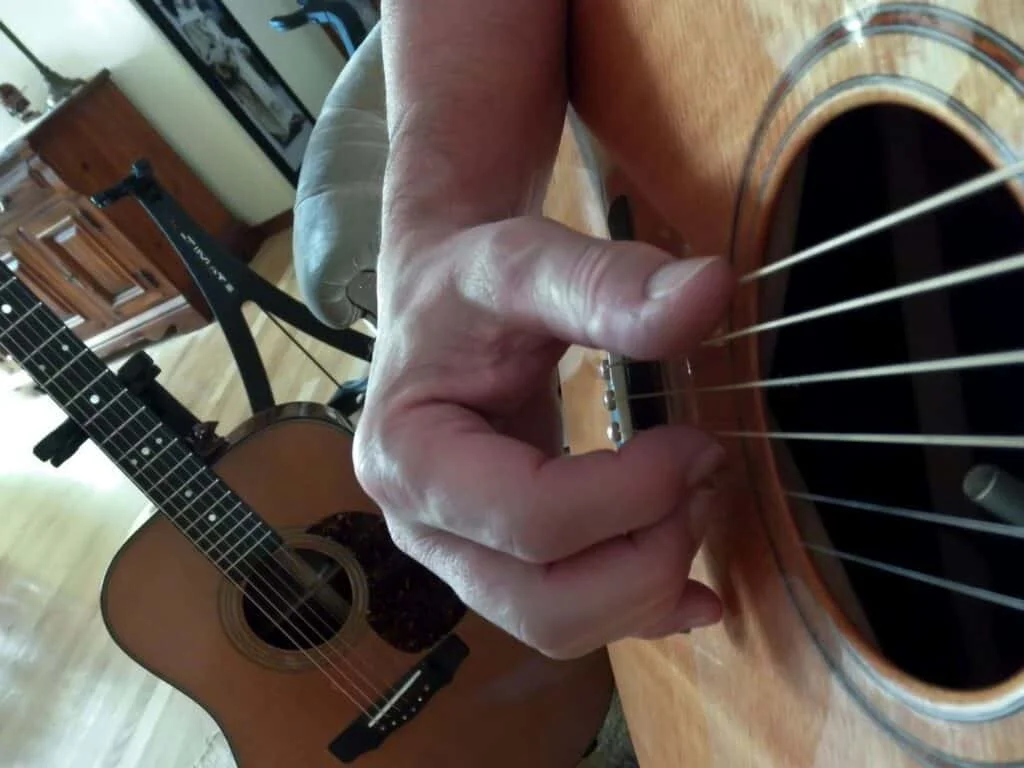
The most fundamental technique for extracting a lyrical tone in autumn ballads lies in the method of finger touch. The acoustic guitar's sound characteristics vary dramatically depending on the angle and force with which the right hand contacts the strings, with apoyando (leaning technique) and tirando (free technique) being representative examples. Apoyando involves leaning the finger against the next string after sounding a note. This technique produces a strong percussive feel, a focused sound, and a clear attack. In contrast, tirando involves the finger moving freely into the air after plucking the string, without touching the next string. The tirando technique produces a soft, lightly spreading sound, making it effective for processing harmonies in quiet, lonely autumn songs with a thin, lingering quality.
Along with tone control, wrist condition is directly linked to injury prevention and prolonged playing. Playing with the wrist excessively bent or stiffened due to force causes the sound to become rigid and restricts independent finger movement. Ideally, the wrist should remain parallel to the strings while maintaining a slight arch. Developing the habit of plucking the strings softly with the fingertips enables comfortable playing and reduced fatigue. Only by securing a smooth wrist motion can one seamlessly handle fast-tempo strumming or complex arpeggio patterns without strain.
The Three-Step Structure for Inferring Emotion into Strumming Rhythms
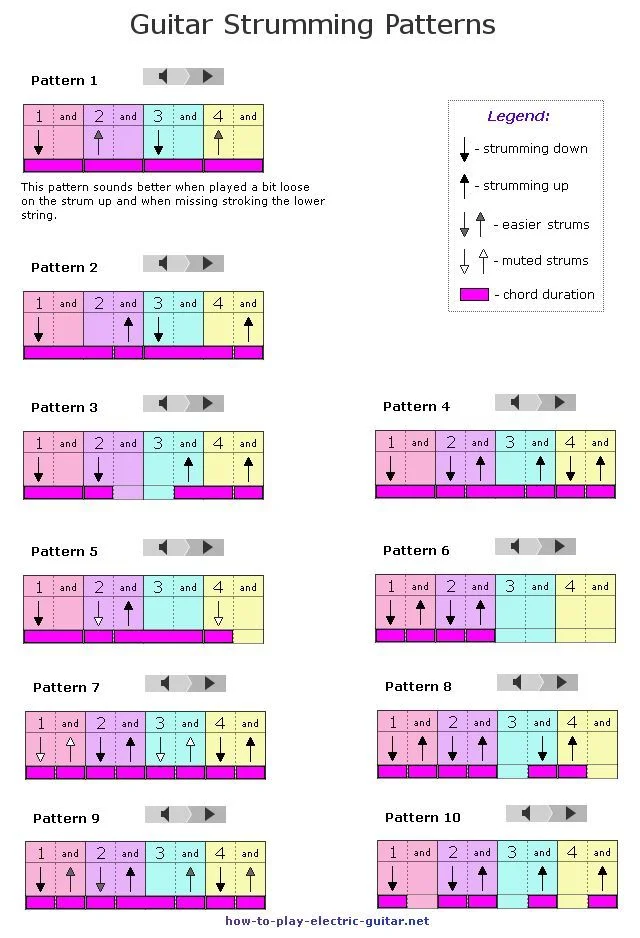
Even if chord changes are perfect, emotions do not come alive if the texture of the rhythm is rough. The first step in strumming practice is to repeat down-up motions in sixteenth-note units without interruption. Many beginners stop the right-hand movement during rhythmic gaps, which is a significant error. The hand must be kept moving up and down continuously even during gaps to form a solid sense of rhythm. Start with basic eighth notes using a metronome and gradually train your body to maintain an uninterrupted up-and-down motion up to sixteenth notes.
Once a basic sense of rhythm is formed, patterns must be applied to actual chord progressions. The crucial aspect here is controlling dynamics rather than playing the rhythm mechanically. While intense styles like punk or metal utilize sixteenth notes to generate rougher energy than rock focused on eighth notes, in acoustic ballads, you must control the song's pacing by adjusting the dynamics of the downstroke that sweeps across all strings from the chord's bass note downward.
Afterward, add ghost picking (muting) to add vitality to the rhythm. Ghost picking is a technique that creates rhythmic spaces by moving the fingers without producing sound. Utilizing this enriches and complexifies the rhythm, greatly assisting in chord fingering and transitions. Prioritizing sound accuracy and rhythmic uniformity over increasing speed is the shortcut to natural emotional expression.
Fingerpicking Patterns and Code Response Methods to Maximize Lyricism
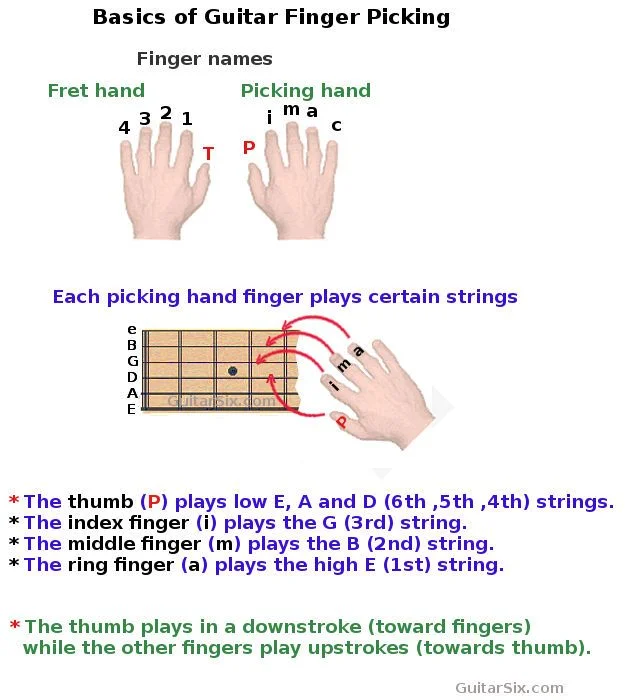
Expressing polyphony beyond simple rhythmic sequences is the essence of fingerpicking. The standard finger assignment has the thumb (p) handling the low strings (6, 5, and 4), while the index (i), middle (m), and ring (a) fingers play the high strings respectively. In 4/4 time, playing 'p-i-m-a' sequentially or in 6/4 time, repeating a descending and ascending arpeggio as 'p-i-m-a-m-i' creates a feeling of calm ripples. In waltz-based 3/4 time songs, triplet arpeggios can be used to create a lyrical flow.
How these patterns are applied to chords determines the completeness of the performance. Specifically, the thumb's bass notes must follow the root notes of the chords. For instance, the A and Am chords involve playing the root note on the A string, while E and Em chords involve the root note on the E string. For the G chord, since the left hand plays the root note on the low E string, the right-hand thumb plucks the E string; for the C chord, the thumb plucks the A string. The thumb must accurately designate the string according to the chord to maintain harmonic integrity.
Furthermore, James Taylor's style differs from mechanically repeating a fixed arpeggio pattern. He uses his fingers and thumb independently as if playing a keyboard, with the thumb leading the bass line. This bass-line emphasis technique, stemming from his early experience with the cello, lowers the density of the chords and clarifies the bass range. By combining frequent chord changes and extended harmonies like 7ths and 9ths with frequent bossa nova rhythms, he creates lyrical yet sophisticated accompaniments.
Travis Picking: Secrets to Layering Melodies over Automated Rhythms
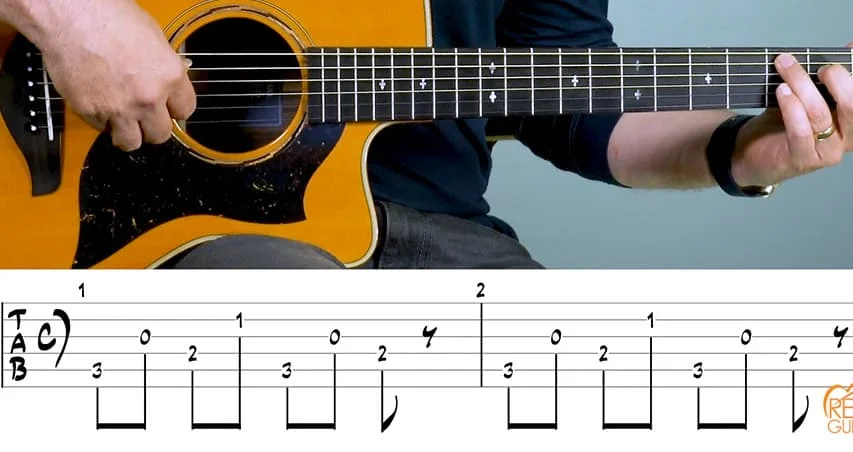
Travis Picking, which has its roots in folk and country music, is a technique that pushes thumb independence to its limits. Named after Merle Travis, this method's core is consistently maintaining an 'Alternating Bass' where the thumb alternately plays the low strings. While the thumb provides a stable rhythmic backbone by alternating between the 6th and 5th strings, the index and middle fingers layer melodies over the high strings.
To learn Travis Picking, it is essential to practice automating the thumb's bass line independently at a slow tempo of around BPM 80. Only when the thumb walks in a consistent rhythm precisely aligned with the metronome's beat can the other fingers focus on melodies and embellishments. Inconsistency in thumb timing is one of the most common errors in all fingerpicking practice, so sufficient time must be dedicated to thumb-only exercises.
Stem Separation Learning Strategy to Unravel Complex Rhythms
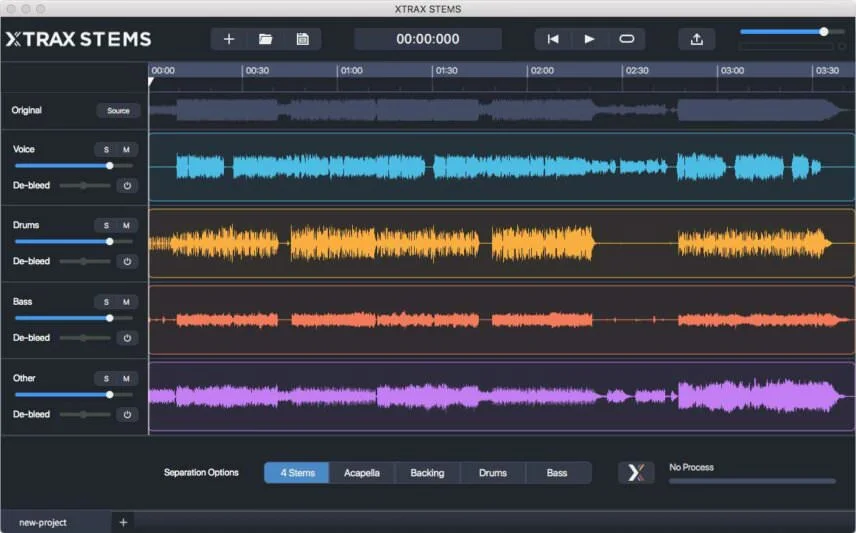
It is very difficult to identify the timing of subtle ghost picking or complex fingerpicking in autumn classics by ear alone. In the original track with mixed drums, bass, and vocals, unique muted strums and ornamental notes of the guitar part are easily obscured. To solve this problem, it is recommended to use stem separation tools to extract and listen to only the guitar track from the original song.
When the guitar sound is isolated from the mix, hidden ghost strokes and precise fingerpicking timings become clearly audible. According to tips provided by services offering stem separation tools, learning time can be significantly reduced by slowing the original song to 60% speed to identify stroke positions and then playing along with the separated backing track to correct timing. This is a particularly useful tool for intensively training difficult chord change sections or patterns where the thumb and index finger intertwine.
Recommended Practice Routines and Song Lists to Awaken Sensibility

Systematically distributing guitar practice is also crucial for improving skills. As an example, a 60-minute practice routine should consist of checking basic posture and touch (10 minutes), repeating basic patterns at 60 BPM with a metronome (10 minutes), alternating bass training (10 minutes), practical Travis picking exercises (10 minutes), finger independence training via chromatic scales (10 minutes), and applying what was learned to actual songs for the final 10 minutes. Consistently repeating the process of fixing specific roles for each finger prevents the middle and ring fingers from sticking together.
When applying these techniques to actual songs, adding the following representative autumn songs to your practice repertoire is recommended.
| Song Title | Recommended Playing Technique and Learning Points |
|---|---|
| Lee Moon-se "If You're Standing Under the Shadows of the Trees" | Lyrical eighth-note strumming, dynamics control, and chord change practice |
| Kim Kwang-seok "Writing a Letter in the Cloudy Autumn Sky" | Application of the 6/4 time arpeggio pattern 'p-i-m-a-m-i' |
| Sting "Shape of My Heart" | Independent arpeggios with thumb and index finger, and grasping subtle rhythmic timing |
| General Folk/Ballad Application Songs | Basic Travis picking training via alternating bass (BPM 80) |
Guitar playing that brings autumn emotions to life is ultimately not a competition of mechanical speed. Relaxing wrist tension, gently caressing the strings with the tirando technique, and maintaining consistency by filling gaps so the sixteenth-note flow does not break—this is the true secret to emotional guitar playing that touches the audience's hearts.