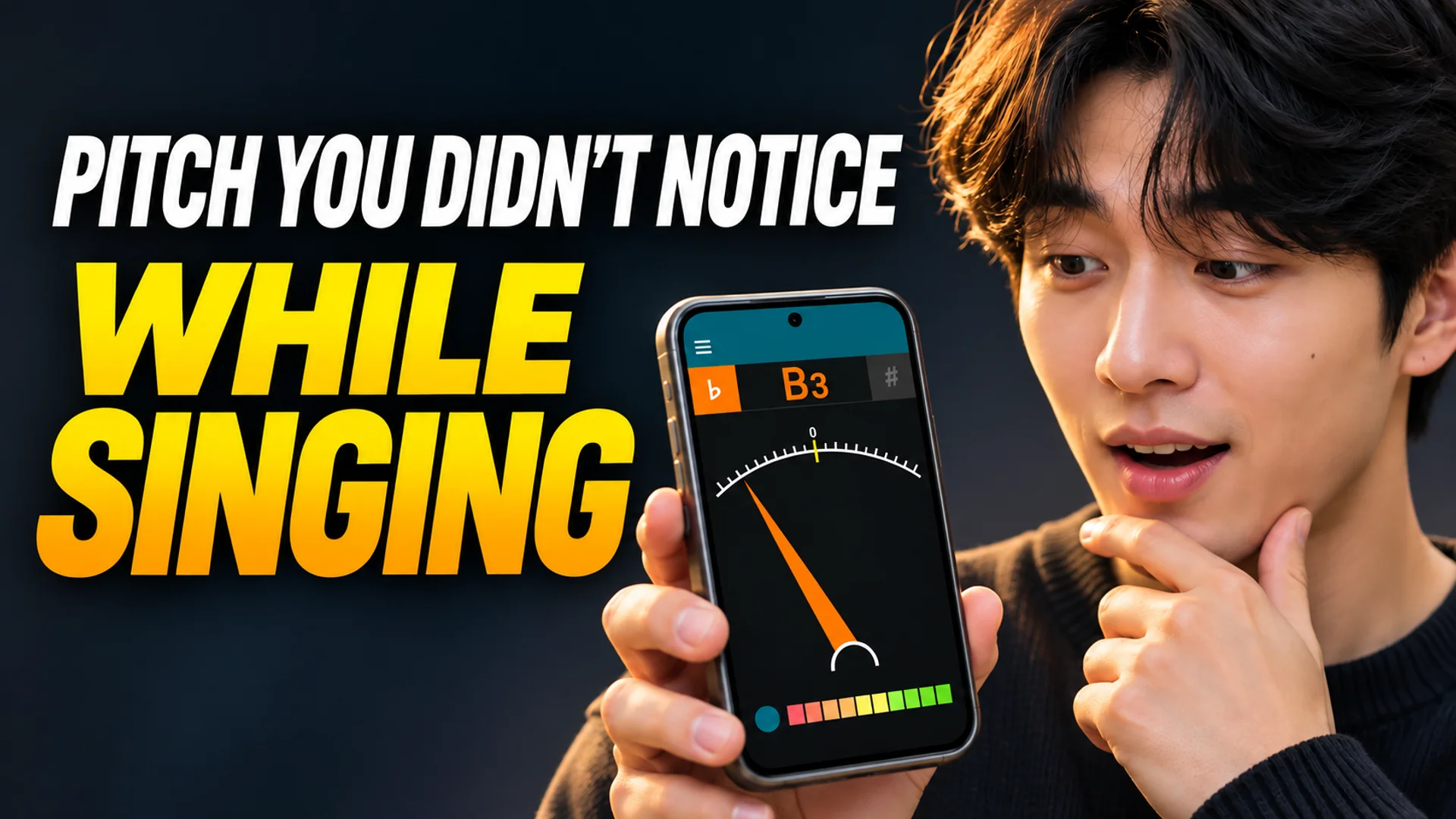
It is common to believe, “Is there something wrong with my ears?” when a voice that seemed fine while humming alone suddenly shows clear deviations at specific pitches in the recorded playback. In such cases, people may cover their ears with their hands or slightly change their direction of hearing, but the root cause lies not in the physical position of the ears but in the method of perceiving sound during vocalization. According to The Singer's Corner (2026), congenital amusia (tone deafness) is rare, affecting less than 4% of the population. Most issues stem from untrained listening skills, insufficient breath support, or tension. Therefore, rather than adjusting the position of the ears, one should supplement the “monitoring pathway” that evaluates one's own sound in real time with external references.
Limitations of Monitoring During Vocalization
When singing, vibrations from the vocal cords and resonance transmitted through the body blend together, making it difficult to assess pitch accuracy in real time. The Singer's Corner describes this as “the difficulty of monitoring one's own pitch in real time while singing.” They explain that singers may not realize they are off-pitch while performing, but the problems are immediately apparent when listening to the recording. Adjusting the direction of sound reception to modify the volume reaching the ears cannot completely eliminate the cognitive limitations inherent in real-time vocalization. Ultimately, the issue is not the position of the ears as an organ, but the accuracy of evaluating the sound one produces.
The Actual Meaning of 'Changing Ear Position': Moving Judgment Criteria Outward
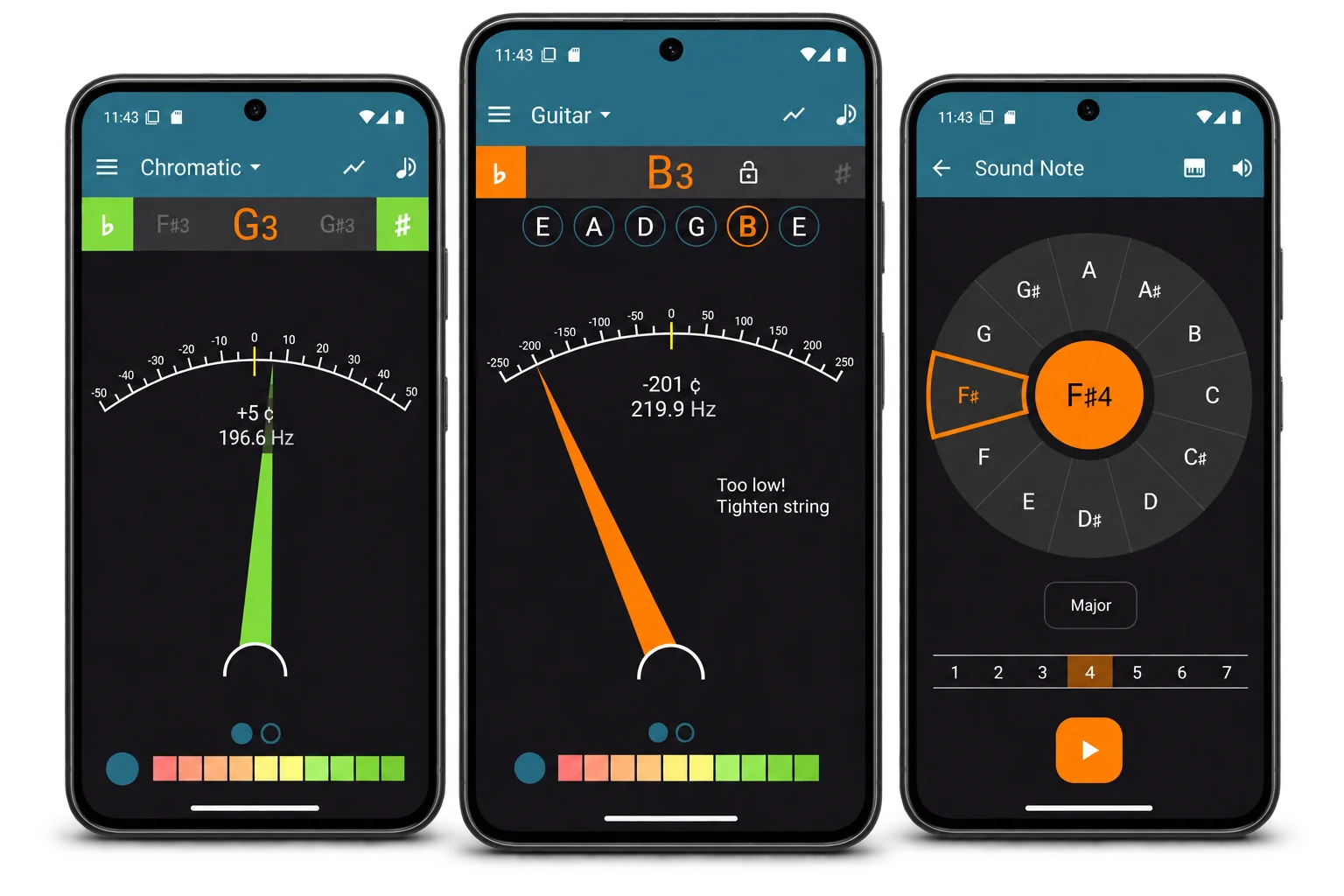
The phrase “changing ear position” does not mean moving a body part. It refers to shifting the evaluation criteria from oneself to an external reference. This is clearly demonstrated in the pitch matching exercises proposed by The Singer's Corner. The process involves sounding a note on a piano or app, listening intently for three to five seconds, singing it along using the syllable “ah,” and then checking the numerical reading on a tuner app.
The core of this procedure lies in separating the “singing ear” from the “evaluating ear.” A note that felt acceptable to one's own ear may appear as sharp (high) or flat (low) on the tuner app’s display, confirming that subjective judgment and objective data can differ. This effectively closes the feedback loop that was broken due to the interruption of real-time monitoring by introducing an external reference tone.
Tension and Breathing That Cause Pitch Deviations
Once the external criteria identify the issue, one must investigate the cause within the vocal mechanism. Among various factors, The Singer's Corner repeatedly points to volume overload and unstable breath support. Producing sound too loudly or pushing the voice excessively results in pitch rising (sharp). Conversely, as one moves to higher pitches, if airflow (breath support) becomes unstable, the pitch drops (flat). Specifically, decreased breath pressure at high pitches or tension in the jaw and neck interferes with vocal cord adjustment, resulting in flat pitches. For stable pitch production, consistent breath pressure centered on the lower abdomen and a relaxed state are crucial.

Practical Practice Method: Inserting External References

In actual practice, methods that separate the singing ear from the judging ear are effective.
- Using a Tuner App: Sustain a single note for five to ten seconds and visually check how much the gauge on the app screen fluctuates.
- Recording and Comparing: Record a specific section and compare it with the original accompaniment. This helps identify flat or sharp tendencies on specific notes that were unnoticed during live singing.
- Singing Along to Accompaniment: Match pitches to a piano accompaniment without lyrics or to a sustained reference tone. The Singer's Corner advises avoiding singing without reference notes and actively utilizing practice accompaniments.
- Checking for Tension: Use a mirror to check for tension in the jaw or shoulders. Relaxing this tension allows the vocal cords to adjust pitch freely.
The Singer's Corner explains that maintaining such practice for 10 to 15 minutes daily can lead to clear improvements in adult learners within four to eight weeks.
In conclusion, pitch inaccuracies are not caused by the physical position of the ears, but by the open pathway for real-time self-assessment of one's sound during vocalization. By repeatedly inserting external reference tones, such as tuner apps or recordings, and practicing to keep one's ears outside the realm of immediate judgment, one can train the sensitivity to detect and correct deviations even while singing.