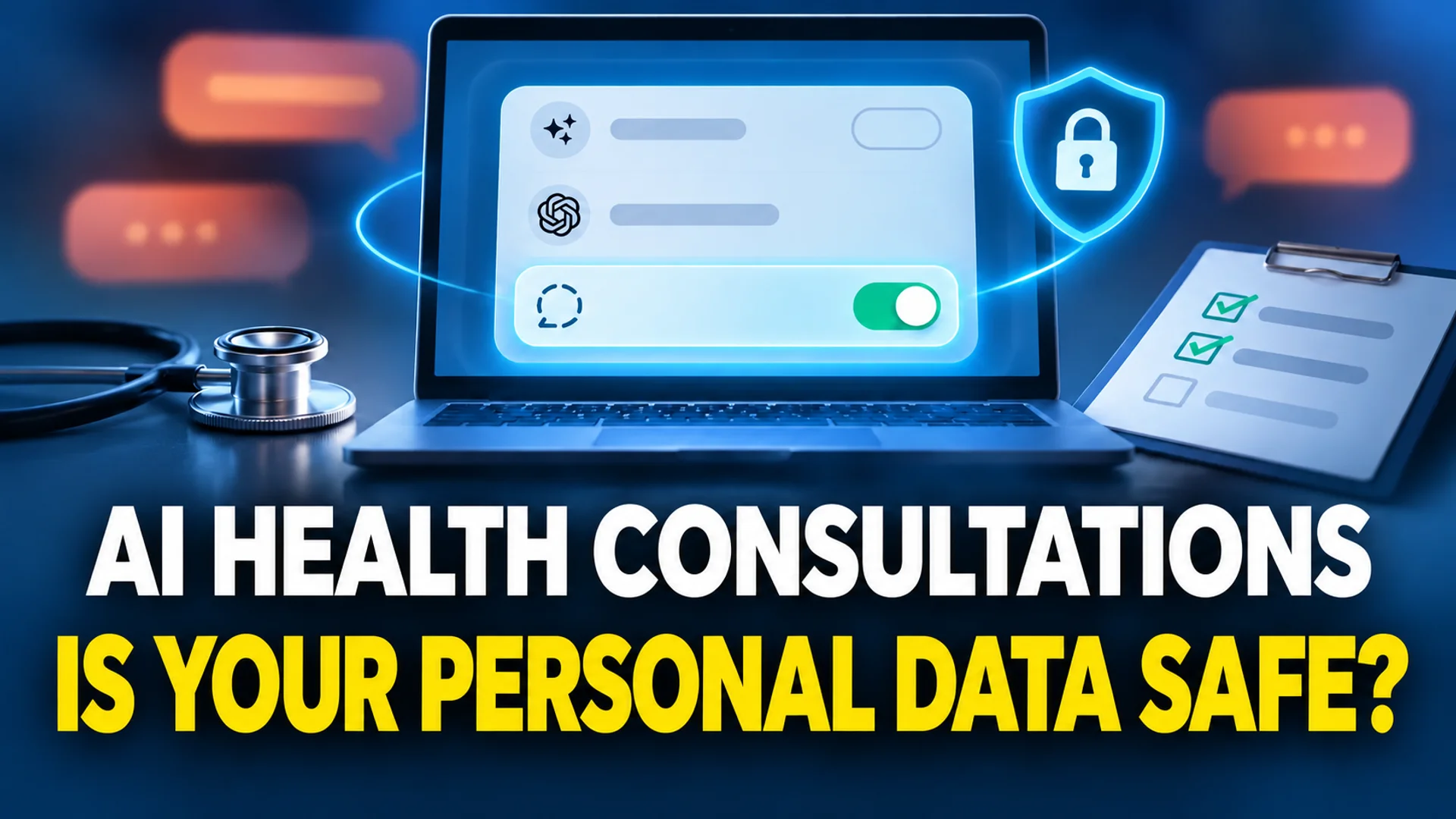
One night in August 2025, typing just the command 'site:chatgpt.com/share' into the Google search bar revealed other people's ChatGPT conversations appearing unfiltered in search results. Although these links were created to show conversations to specific individuals, carelessly clicking the 'Allow search engine indexing' option turned private stories about health conditions, sexual life, and medication use into publicly accessible documents worldwide. According to reports on the original incident by the Scoopy Blog, OpenAI announced at the time, through Co-Chief Information Security Officer Dane Stucky, that they would completely remove this feature; however, the sensitive information already spread across Google could not be retrieved. 1
This incident raises fundamental questions about where the questions we ask AI go and whether the answers we receive are actually fact. To give the conclusion upfront, properly configuring settings can prevent our conversation contents from leaking externally. However, the act of AI diagnosing 'poisoning' or a specific disease in a plausible manner based on reported symptoms is not the result of fact verification, so caution is required. While where our conversations go can be controlled through settings, whether those answers are true requires a separate verification process.
Private Conversations Appearing on Google: Where Are They Leaking?
The ChatGPT conversation exposure incident that occurred on August 3, 2025, did not start with a hack, but with a trap in the settings. When users generated links to share their conversations with others and agreed to 'Allow search engine indexing', Google registered those links in a searchable state. This incident highlights the basic way AI services handle data. Conversation contents entered into ChatGPT are saved on servers by default, and if the 'Improve the model for everyone' toggle is on, they are used as training data for future AI development.
This means that data can be saved and exposed externally at moments unintended by the user. Fortunately, settings have been established to block such external exposure and the use of data for training. The two most certain lines of defense that can be changed immediately are as follows.
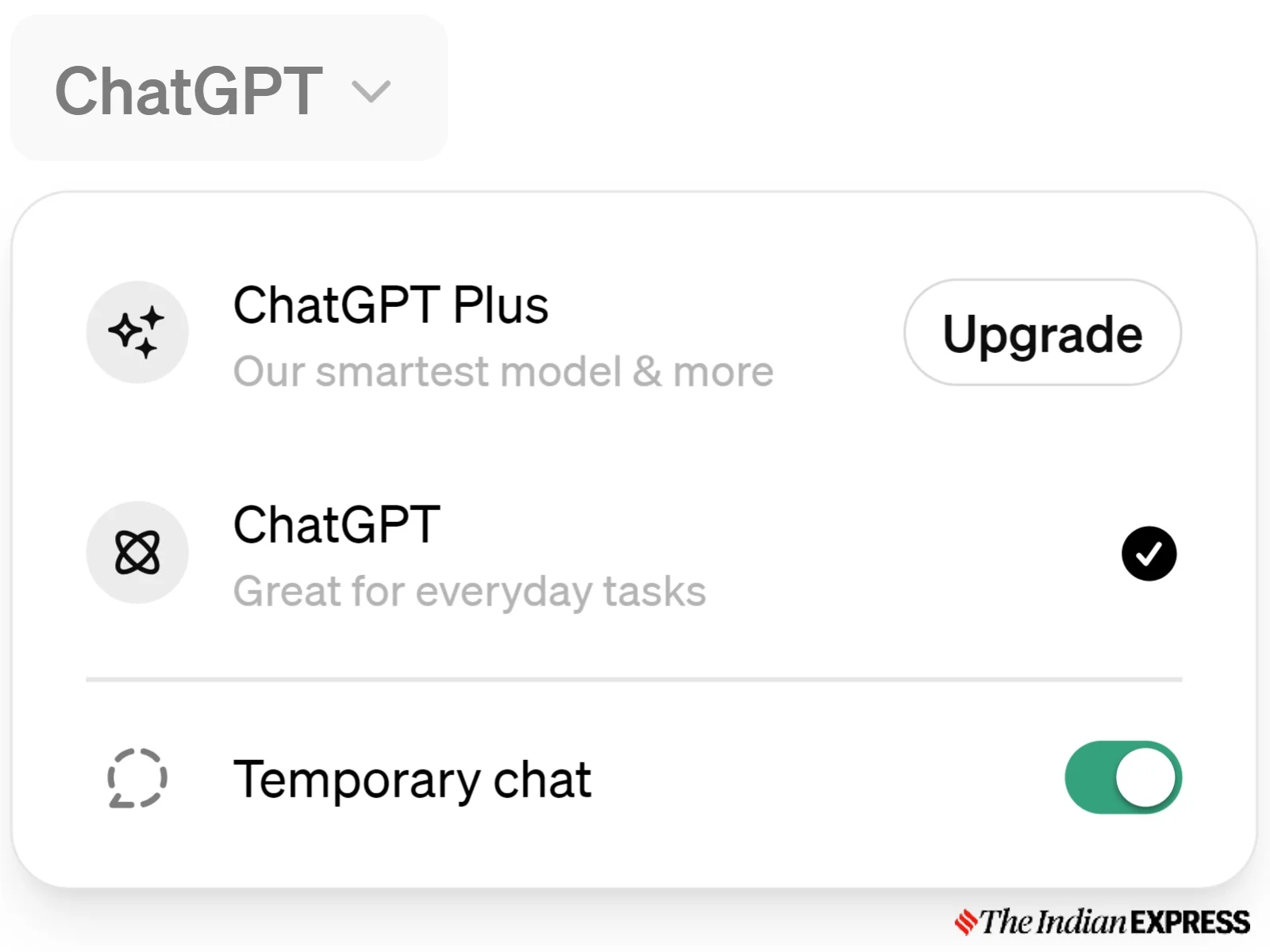
First, turn off 'Improve the model for everyone' in the 'Data Controls' menu in the settings. This prevents your conversations from being used for AI training. However, turning off this toggle entails the trade-off that the AI cannot reference previous conversation histories, nor will they be saved. Second, utilize the 'Temporary Chat' feature. In Temporary Chat mode, conversations are not saved on the server at all and are not used as training data. It is wise to enable Temporary Chat mode when having sensitive personal conversations, such as those about one's physical condition. 1
Why Does AI Fabricate Non-Existent Case Precedents and Diseases?
Just because you have finished setting up your configurations to ensure your conversation content does not remain safely on the server does not mean you can take AI answers at face value. If you have a stomachache and nausea and ask, "Could I have been poisoned?", and the AI confidently claims the possibility of 'poisoning' while utilizing professional medical terminology, can this be trusted? Here, one must understand the phenomenon of 'Hallucination'. Hallucination is the phenomenon where AI generates plausible but non-existent facts as if they were true.
According to the explanation from the Kalus company blog, generative AI does not learn 'facts' but is a model that 'probabilistically predicts language patterns'. In other words, it creates sentences that are statistically most naturally followed by the words inputted. Therefore, AI has the characteristic of filling in blanks it does not know with plausible guesses to achieve perfect grammar and logical coherence. Since AI only 'generates' sentences without 'verifying' them, it outputs fabricated answers about poisoning or other diseases with a confident tone as if it knows. 2
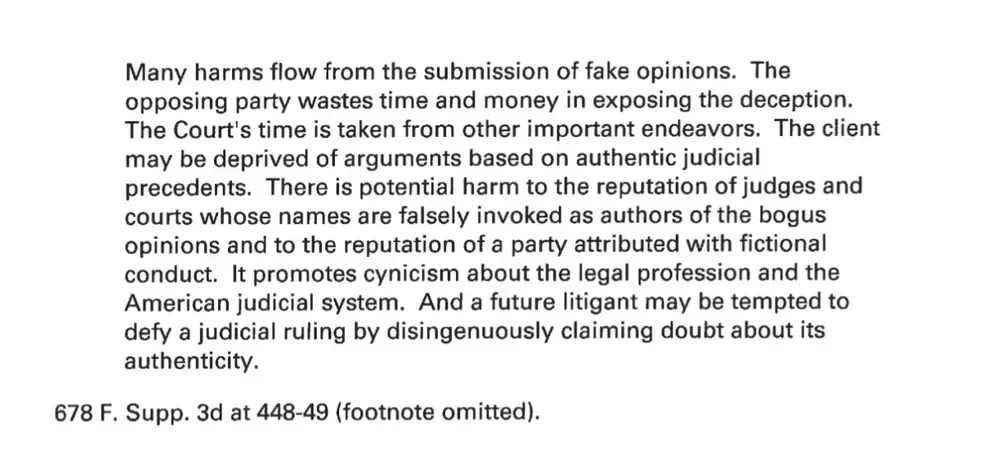
The fact that a confident tone is separate from actual facts can lead to significant real-world consequences. A representative case is the 'Avianca incident' in New York, USA, in 2023, mentioned by Gyeonggi Province AI digital citizen instructor Hong Hye-jin in a YouTube lecture in December 2025. At the time, lawyers entrusted legal research to ChatGPT and submitted six case precedents generated by the AI directly to the court. However, all six of these were fictional case precedents that did not exist. Ultimately, these lawyers received a $5,000 fine and a suspension of their licenses. 3
Risks due to hallucination are also being reported in the medical and research fields. According to instructor Hong Hye-jin, there are cases in the medical field where AI provided incorrect diagnostic information, leading to delayed patient treatment. She also stated that after she herself organized dozens of research paper files into Markdown and requested sources, she confirmed that the AI included and listed non-existent papers. This means that non-existent diseases or prescriptions can emerge in the form of plausible medical diagnoses. 3
Four Principles for Interacting Safely with AI and Using Information
Should we avoid confessing our symptoms and private lives to AI because it is risky? Not necessarily. If you control your environment so that conversations do not leak, and treat the answers created by AI not as accepted facts but as 'starting points for verification', it can be used as a useful tool.
First, principles must be established when inputting personal information. Security guidelines recommend avoiding the direct input of identifying information such as real names, specific card numbers, or internal project names into the chat window. Rather than writing "My name is Hong Gil-dong and I am in charge of the ABC project", it is necessary to develop the habit of pseudonymizing and changing the question to a general situation, such as "the health condition of a person" or "a certain company". For sensitive symptoms or personal secrets, it is the safest preventive measure to switch to Temporary Chat mode and remove identifying information or names from the question content itself. 1
The second principle is to apply a checklist to the specific 'factual claims' presented by AI. Check whether ▲ the cited source is clear ▲ the original content matches ▲ specific figures or evidence are provided ▲ it matches with other sources or AI models. Once this process is complete, a procedure for cross-review with experts in that field (doctors, lawyers, etc.) is required. 3
The third is to learn a 'multi-verification routine' that requires AI itself to provide counterarguments or confidence levels. Instead of simply asking "Diagnose my symptoms", try asking back, "Are you confident that the diagnosis you just made is true?" or "Are there any opposing opinions or alternatives to this diagnosis?". Experts point out that asking AI about its confidence level or requesting opposing opinions is effective in catching hallucinations. 3
The fourth is to understand the concept of RAG (Retrieval-Augmented Generation). RAG is a technical structure where AI first searches verified databases or internal company documents and answers based on that content, rather than filling in blanks with probabilistic guesses alone. While this concept is primarily used in corporate environments, general users can think of it in the same vein as the habit of 'directly searching and confirming AI answers in reliable original texts on the web or medical paper sites'.
As realized by seeing someone else's private life appear in Google search results in August 2025, the carefulness of turning settings on and off to know where my conversation flows is within the area I can protect. On the other hand, whether the plausible diagnosis uttered by AI is actually what is happening to my body is an area that requires verification by me personally going to a hospital or finding an expert, rather than relying on AI. If we do not let down our final safety net by being reassured by the confident answers spat out by AI, generative AI will serve as a useful advisor while properly safeguarding my personal information.
References
- ↩
- 할루시네이션(Hallucination)이란? 개념부터 발생 원인, 주의사항까지 · calluscompany.com↩
- [인공지능_도민강사]홍혜진_ 생성형 AI 할루시네이션 이해와 대응전략 · youtube.com↩