
What if you increased your advertising budget but new customers continued to stagnate? This is where the survey results released by Taboola on October 5, 2026, begin. The survey targeted more than 300 executives at companies with over 1,000 employees and monthly marketing budgets exceeding USD 300,000, and 92% of respondents indicated they would shift budgets to the open web if specific conditions were met 1.
This 92% does not represent those who have already completed the budget shift. It is a conditional expression of intent to reallocate budgets within the open web ecosystem once the issues of 'identity identification' and 'measurement' are resolved 1. Let us examine the real reasons why advertisers are hesitant to move despite turning their attention to the open web, and the technical bottlenecks preventing this transition.
Why Is the Same Person Counted as a New Customer?
The direct cause driving advertisers' desire to reallocate budgets is 'identity fragmentation' 1. Identity fragmentation refers to the phenomenon where advertising systems fail to recognize a person as the same individual as they move between news sites, search engines, price comparison sites, and AI services (LLMs) 1.
According to the Taboola report, 75% of respondents found it difficult to identify whether the same customer, who had not converted through actions such as a purchase, was navigating across multiple touchpoints 1. Identity fragmentation at pre-conversion touchpoints is pushing advertisers back into isolated pools known as 'recycled audiences,' where they repeatedly expose ads to audiences they have already reached 1. In other words, because advertisers cannot connect a single customer across various touchpoints, they fall into a vicious cycle of repeatedly serving ads to customers they have already seen 1.
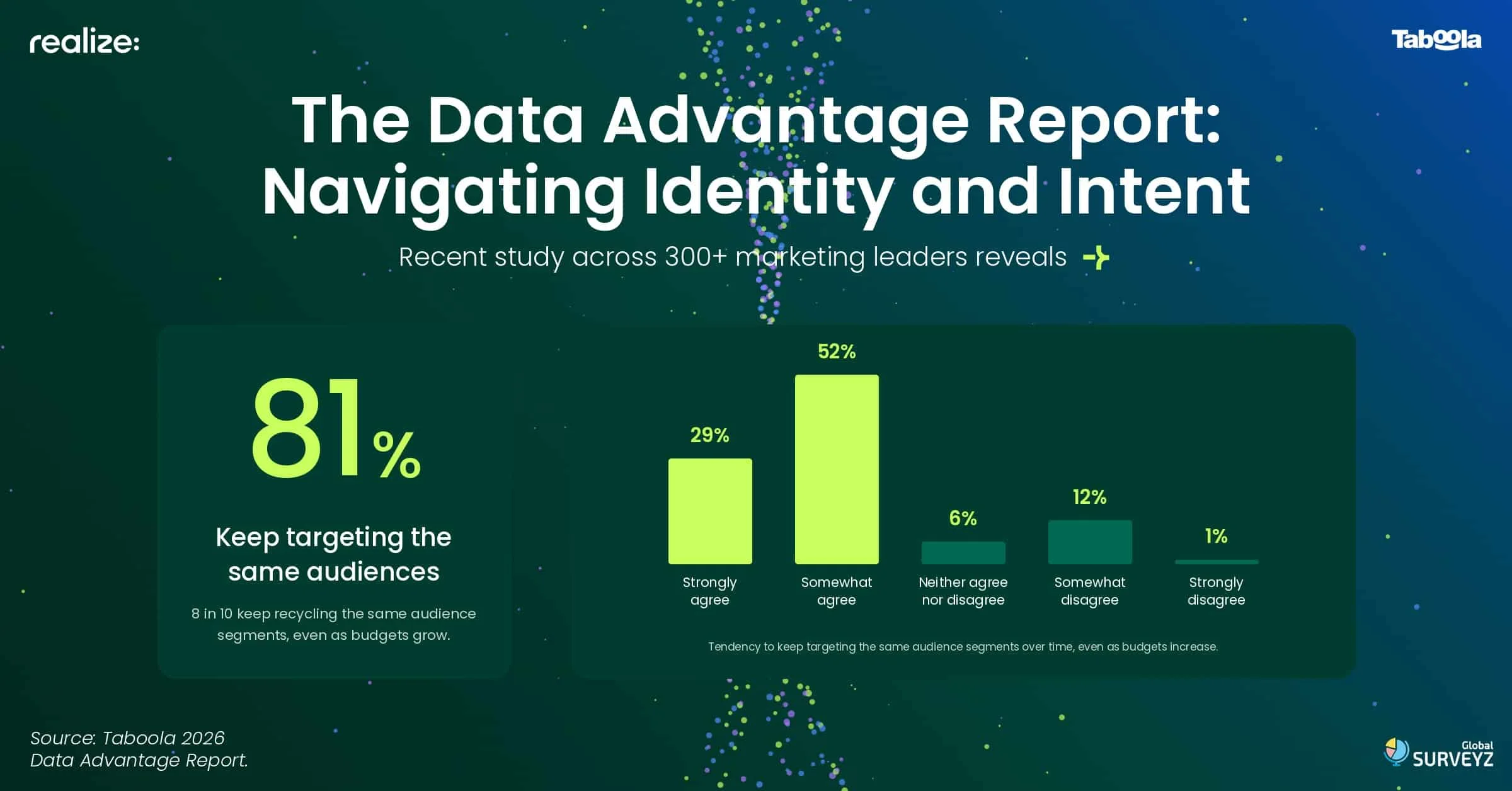
This limitation in perception creates a paradoxical situation. Although advertising budgets were increased by approximately 10% to reach new customers, 81% of respondents stated that they ultimately failed to reach new customers 1. Consequently, resources are being consumed solely by repeated contact with existing targets rather than new inflows 1.
Where Do Ads Go When the Purchase Journey Is Fragmented?
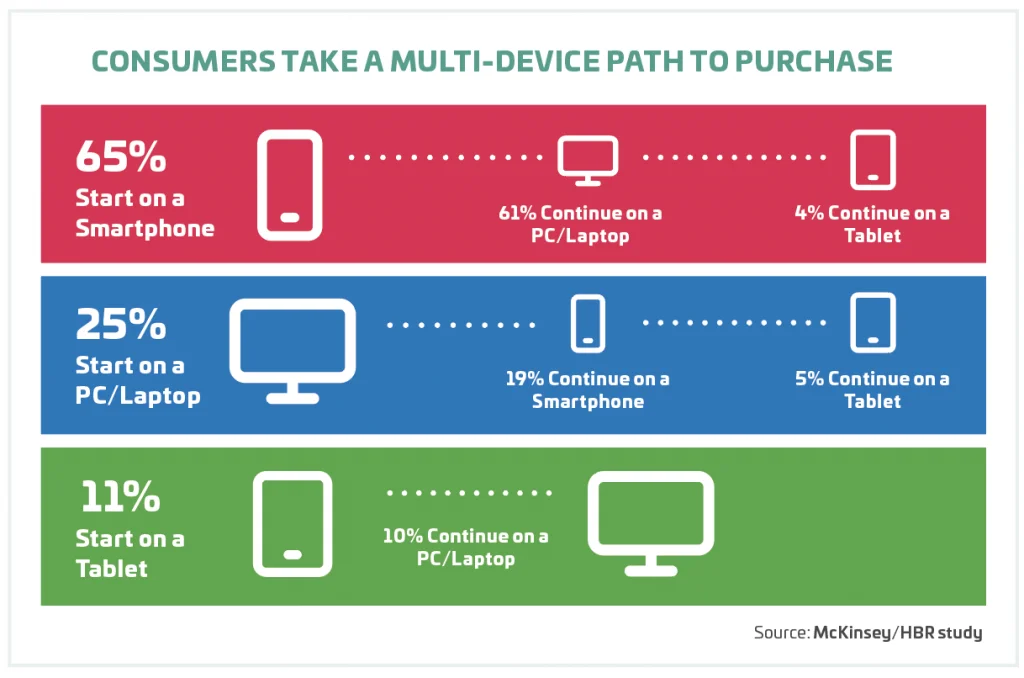
Case studies in the report show that U.S. adults often spend approximately 13 hours a day reading news, searching, comparing prices, and seeking advice from large language models (LLMs) before making a purchase decision 1. This reflects the reality that individuals pass through diverse touchpoints, including email, news, search, and price aggregation sites, before finalizing a purchase 1.
When the purchase journey is scattered across multiple platforms and devices, as described above, advertisers find it difficult to track whether the same customer is being re-exposed to ads at each touchpoint 1. This fragmentation of the purchase journey serves as a primary foundation for the aforementioned 'identification failures' 1. Even if it appears as a single, continuous journey in the consumer's eyes, the advertising system perceives it only as disconnected individual events.
What Conditions Will Mobilize the 92%?
The Taboola report explains that 81% of respondents stated they are open to increasing ad spending on open web channels, such as publishers and news sites, if identity identification issues are resolved 1. The meaning of resolving 'identity and measurement problems' is clear 1: it means connecting the same customer across multiple touchpoints into a single person, and making it measurable whether additional exposure on new touchpoints actually reaches 'new customers' 1.
Adam Singolda, CEO of Taboola, points out that repeated exposure within closed platforms misses many opportunities, and that resolving identity and measurement issues on the open web is necessary to connect with new customers 1. However, it is worth noting that this diagnosis includes the corporate perspective of Taboola, as it is a platform operator connecting advertisers and publishers 1.
Is the 92% a Completed Move, or the Size of the Bottleneck?
The figure of 92% does not mean that the return to the open web has already been completed 1. This figure is closer to a conditional willingness to shift budgets to the open web once the tasks of 'identifying the same customer across multiple touchpoints' and 'measuring new reach' are resolved 1. The actual obstacle for advertisers today is not the technology itself, but the specific challenge of tracking 'one person' across platform boundaries. The report suggests that open web budget allocations could change significantly as this bottleneck is resolved 1.