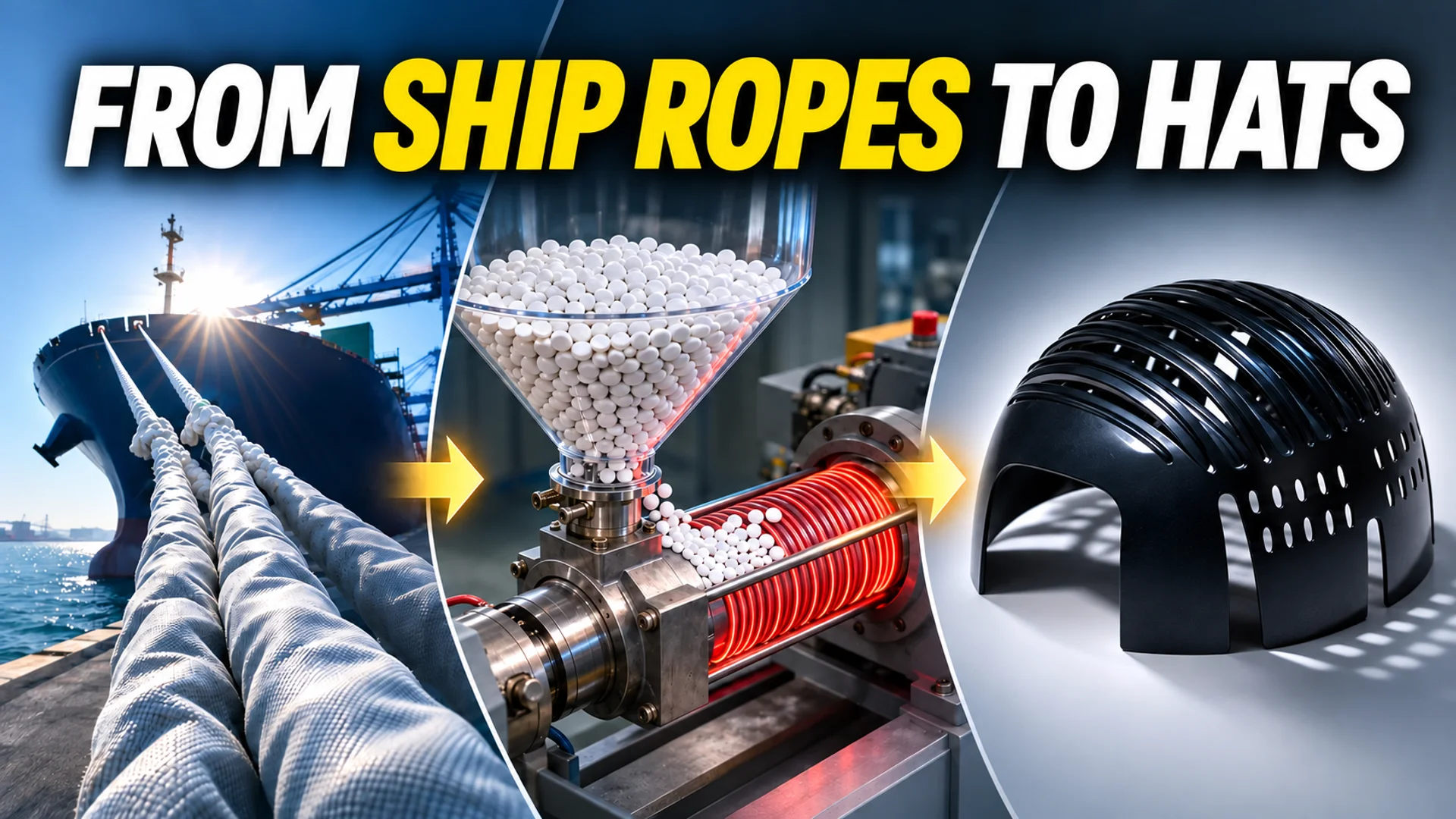
The process of a thick rope, once used to moor massive ships at port, transforming into a lightweight hat worn on one's head may feel unfamiliar. This is because a thick rope cannot be placed directly into a hat mold. First, the rope must be broken down into small pieces to create plastic pellets of a size that can be melted, known as "recycled chips." Only when these pellets are melted and injected into the hat mold does the final form of the hat we know emerge. The fact that recycled rope from ports becomes a hat through a process similar to injection molding machines used to manufacture everyday plastic products like PET bottle caps or car parts demonstrates that upcycling is integrated into actual production processes. This article examines the steps by which discarded ship ropes are reborn as a lightweight work cap called "RECAP," and the process built by USAN from collection to productization.
A Lightweight Work Cap Completed Through Recycled Chips and Injection Molding
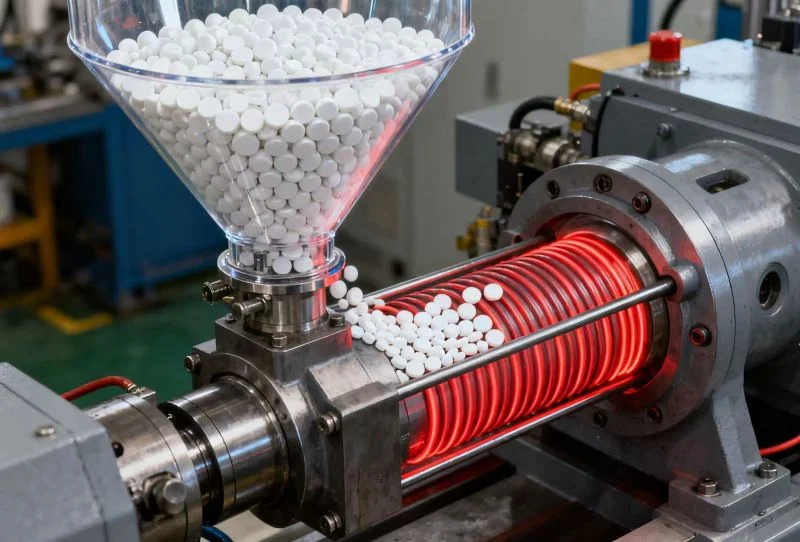
The most critical stage in the process of turning discarded ship ropes into a hat is the creation of "recycled chips." Recycled chips refer to plastic pellets finely crushed to a fine size that can be melted at high temperatures. USAN’s "RECAP" lightweight work cap uses these recycled chips, extracted from reprocessed discarded ship ropes, as its raw material 1.
The reason for making recycled chips is that it is an essential preparation step for reusing plastic. In the form of bulky ropes, the material cannot be melted and poured into a mold of the desired shape. It must be processed to the size of recycled chips to enter the "injection molding" process. Injection molding is a manufacturing method where plastic pellets are melted in a machine, forcibly injected into a metal mold shaped like a hat, and cooled to fix the shape.
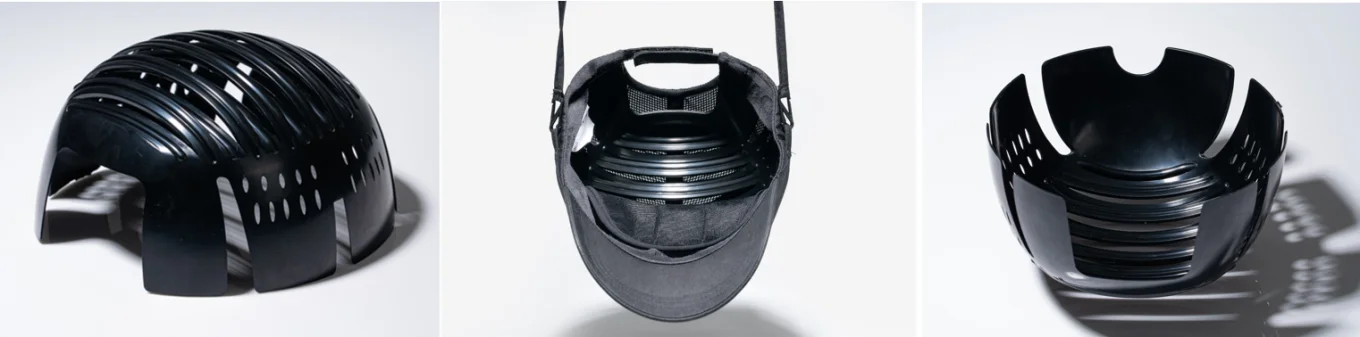
Through this method, RECAP overcomes the disadvantages of the weight and thickness of discarded ropes. USAN introduces RECAP, which has undergone this process, as "a lightweight work cap that protects daily safety" 1. The principle behind transforming heavy ropes into light, sturdy hats lies in completely breaking down the form of the rope and remolding it from the starting point of plastic pellets.
The Movement Path of Discarded Ropes from the Sea to the Factory
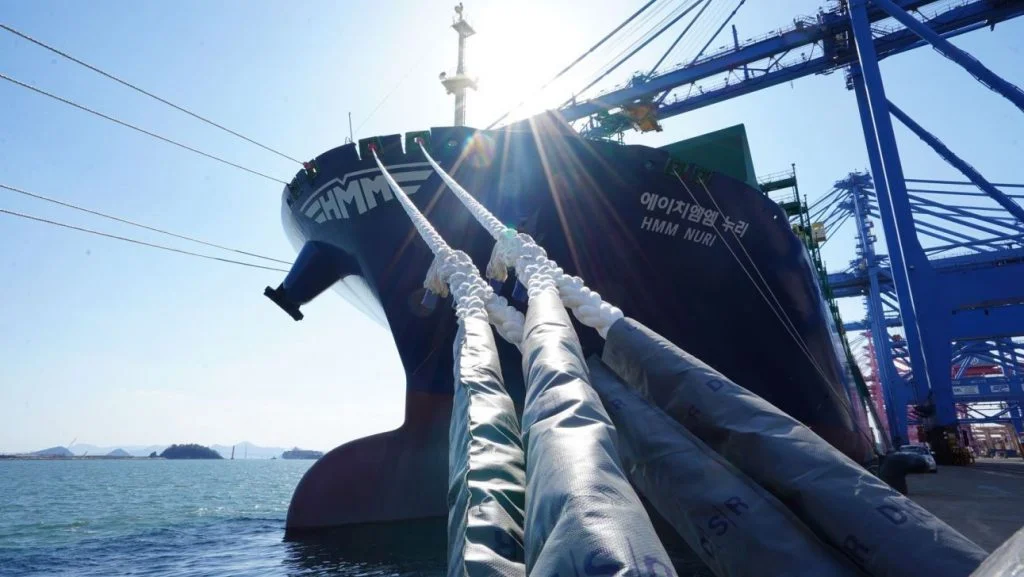
Where is the rope that serves as the material for lightweight hats secured? USAN is a company that develops and distributes upcycled safety and daily-use items using recycled materials derived from marine waste such as fishing nets, PET, and discarded ship ropes 1. The path from when waste resources are retrieved from the sea until they arrive at the factory operates as a structured system.
When recycling waste resources, companies face the variable of "unstable raw material supply." If discarded ropes scattered across various ports are not secured in time, production may halt. To address this, USAN has signed memoranda of understanding (MOUs) for resource circulation cooperation with over 20 institutions, including the Korea Maritime Environment Agency, the Korea Environment Corporation, and the Ulsan and Busan Port Authorities 1. Through this, they have established a collection system for stable acquisition of waste resources and a pre-processing system to refine them for easy inclusion in the production process.
This business continues as part of the "Marine Waste Upcycling Project," launched in 2022 in cooperation with the Ministry of Oceans and Fisheries and the Korea Maritime Environment Agency 1. The technology to transform thick ship ropes into hat materials is not an experiment by a single company alone, but has been refined through cooperation with multiple public institutions.
A Process That Has Moved Beyond Concept to Actual Delivery
The way to verify whether a recycling factory is truly operational is to examine actual delivery cases. Among products completed using the same raw materials and injection molding process as RECAP, there are cases that have already reached the field.
USAN collected discarded ropes from the Yeosu Gwangyang Port Authority, converted them into recycled materials to develop "safety cones," and completed their delivery 1. Thick ropes were collected from the site, underwent the entire process of being crushed into recycled chips, and were transformed back into facilities that protect safety at the site.
This case serves as evidence that the stage of making recycled chips from discarded ropes and injection molding has not remained at the prototype stage but has led to actual production and delivery. The "RECAP" lightweight work cap is also manufactured along the extension of this same production process. However, current public data only shows the change in material and actual delivery results, and does not include figures for sun blocking rates or durability tests for specific user groups such as farmers. What can currently be confirmed is that discarded ropes are produced into consumer-ready lightweight work caps through the injection molding process.
The Path from Rope to Hat Is Already Open
For a thick ship rope to become a lightweight hat, a transformation stage where it is crushed into "recycled chips" is necessarily required. The case where USAN, in cooperation with over 20 institutions, collected discarded ropes from the sea and ports, processed them through recycled chips and injection molding, and delivered safety cones to the Yeosu Gwangyang Port Authority shows that this path is reality 1. From the moment they are crushed into pellets, ropes discarded in the sea are being reborn as new protective equipment, such as RECAP, "a lightweight work cap that protects daily safety."
References
- 연 8%ㅣ안전모와 해양 폐기물의 두 번째 쓰임, 우시산 · ohmycompany.com↩