
The Exact Applicable Year and Schedule for the 2026 Year-End Tax Settlement
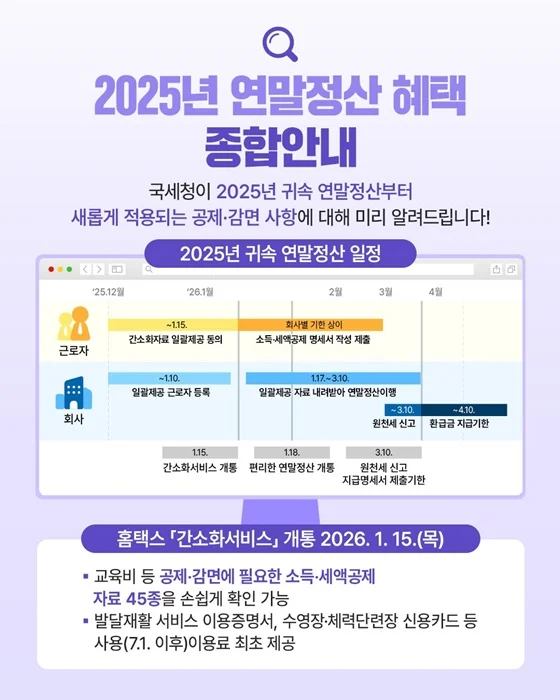
The first fact that office workers must understand is the actual scope of application implied by the term '2026 year-end tax settlement.' The 2026 year-end tax settlement refers to the process of settling income and expenses incurred from January 1 to December 31, 2026, in January and February 2027 1. In contrast, what office workers currently facing in November 2026 need to prepare for immediately is the '2025 year-end tax settlement,' which settles 2025 income (expenses incurred from January 1 to December 31, 2025) 2. The actual refund outcome for the 2025 year-end tax settlement depends on actions taken by December 31, 2025 2.
Meanwhile, amendments to the tax law that will apply to the 2026 year-end settlement (for 2026 income) have already passed the National Assembly and been finalized. Since the amended tax laws passed by the National Assembly in December 2025 apply to income earned from 2026 onward, it is advantageous to understand the changes from previous years in advance 1. The National Tax Service's HomeTax simplified service for the 2026 year-end settlement is scheduled to open on January 15, 2027. At that time, workers should focus on checking for missing items such as medical expenses and donations 1.
Critical Differences Between Finalized 2026 Tax Amendments and the 2027 Reform Proposal
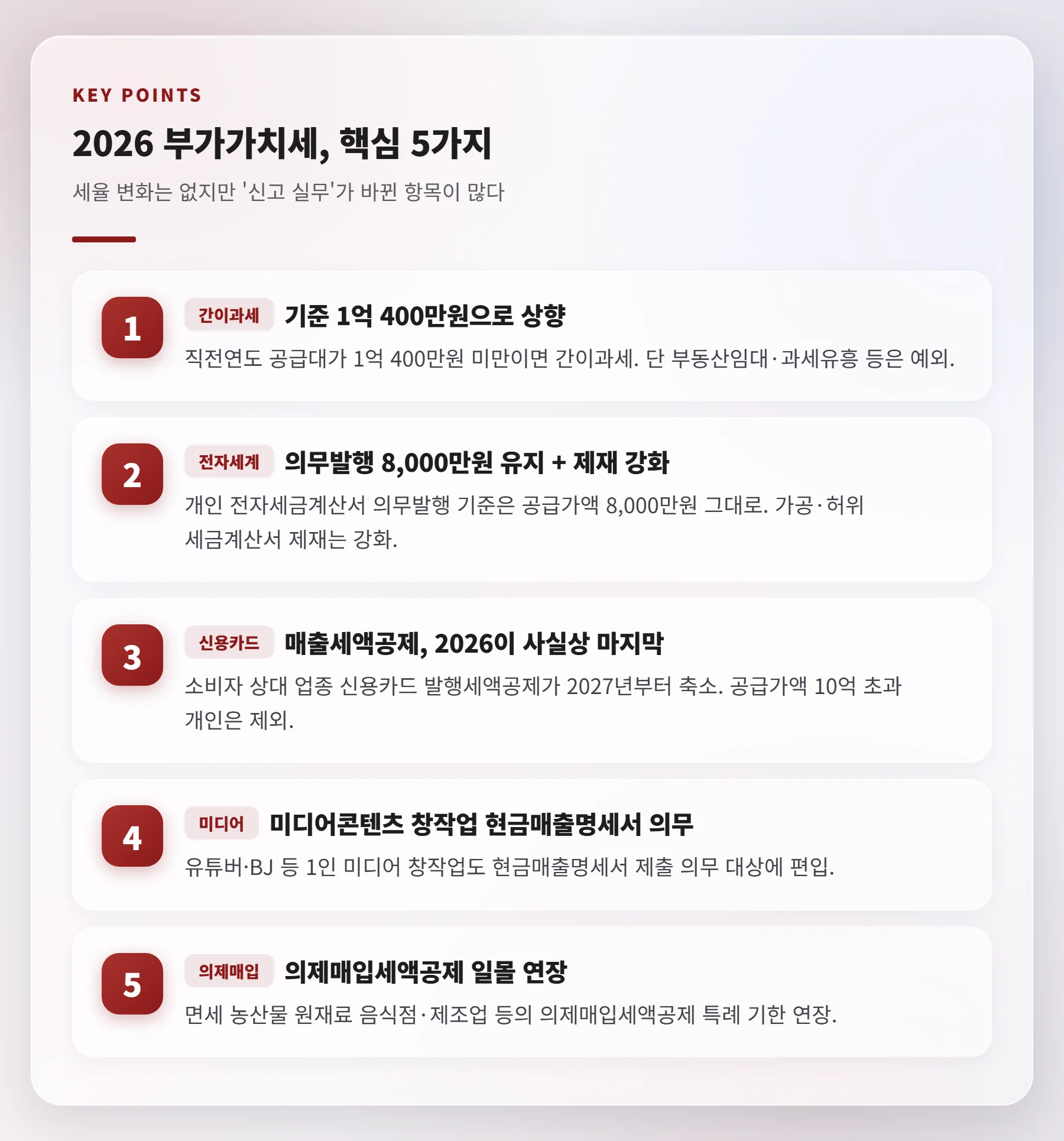
The most common mistake when devising tax-saving strategies is confusing the 'government's tax reform proposal,' which has not yet passed the National Assembly, with finalized amendments applicable this year. One must strictly distinguish between items finalized to apply to the 2026 settlement and government proposals scheduled for implementation from 2027 onward.
First, among the major items finalized to apply to the 2026 settlement is the expansion of the credit card income deduction limit. For families with children under the age of 18, the basic limit increases by 500,000 KRW per child. If there is one child, the limit is 3.5 million KRW; if there are two or more children, the limit is 4 million KRW 1. Additionally, the scope of the education expense tax credit has expanded. Starting from expenses incurred in 2026, tuition fees for art, physical education, and music academies for children under the age of 9 or in second grade or lower of elementary school are included as deductible items, and education expense deductions for college students are now allowed regardless of the child's income 1. Regarding donations to hometowns (Hometown Love Donations), the tax credit rate for the bracket exceeding 100,000 KRW and up to 200,000 KRW has significantly increased from the existing 15% to 40% (including local income tax, 44%), applying to expenses incurred in 2026 1.
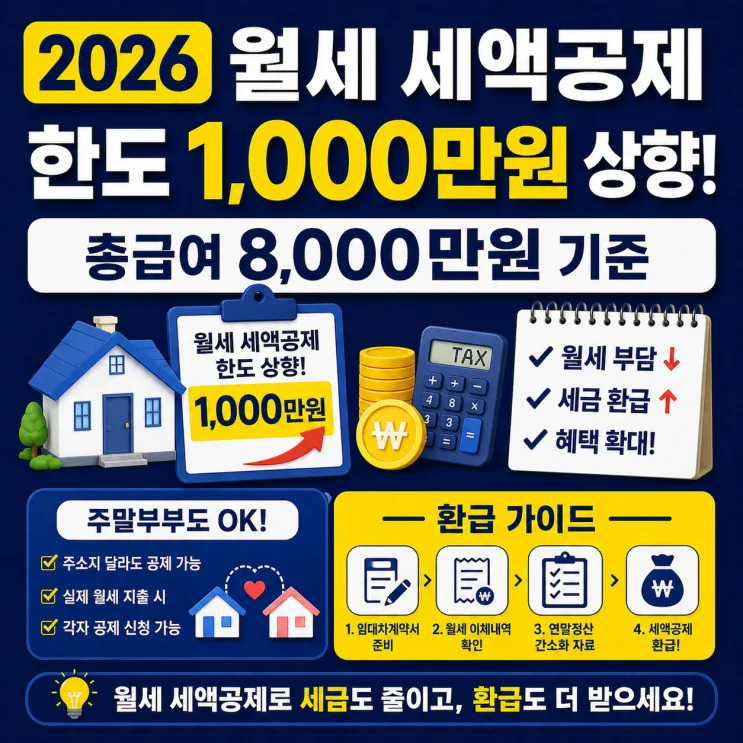
On the other hand, the contents included in the '2026 Tax Reform Proposal' announced by the government in September 2026 have not yet been finalized, and their application dates vary 3, 4. This amendment includes raising the monthly rent tax credit limit to 12 million KRW, relaxing the dependent's income requirement from 1 million KRW to 3 million KRW (or total salary of 7.5 million KRW or less if only employment income exists), reducing the additional credit card deduction limit, establishing a preferential 15% tax credit rate for young people aged 15-34 for Youth IRP accounts, and abolishing childbirth and marriage tax credits in favor of direct fiscal support 3, 4. However, since many items in the tax reform proposal, excluding the expansion of the monthly rent tax credit to 12 million KRW, are scheduled to apply to tax periods beginning on or after January 1, 2027, they are not reflected in the 2026 year-end tax settlement 3, 1.
| Category | 2026 Settlement (Settled Jan-Feb 2027, Finalized) | 2027 Settlement (Gov't Reform Proposal, Before National Assembly Review) |
|---|---|---|
| Credit Card Deduction Limit | Basic limit increases by 500,000 KRW per child under 18 (4 million KRW for 2+ children) 1 | Additional deduction limit for total salaries up to 70 million KRW scheduled to decrease from 3 million KRW to 2 million KRW 3 |
| Education Expense Tax Credit | New deduction for art/PE/music academy fees for children under 9/2nd grade or lower 1 | Pre-school entrance/exam preparation academy fees scheduled to be excluded from deductions 4 |
| Monthly Rent Tax Credit | 10 million KRW annually (raised from existing 7.5 million KRW) 3, 1 | Scheduled to expand to 12 million KRW annually (New 17% preferential rate for youth aged 15-34) 3, 4 |
| Marriage Tax Credit | Applies to marriage registrations up to December 31, 2026 (Final year) 1 | Scheduled to be abolished after 2027 and shifted to direct fiscal support 4 |
| Childbirth/Adoption Credit | Expanded child tax credit applied; additional credits for childbirth/adoption (300,000 KRW for 1st, 500,000 KRW for 2nd, 700,000 KRW for 3rd+) 1, 2 | Scheduled to be abolished and shifted to direct fiscal support 4 |
(The table above compares the finalized tax laws and government proposal contents stated in the provided sources 3, 4, 1, 2.)
Structural Changes to Child, Childbirth, and Marriage Deduction Benefits
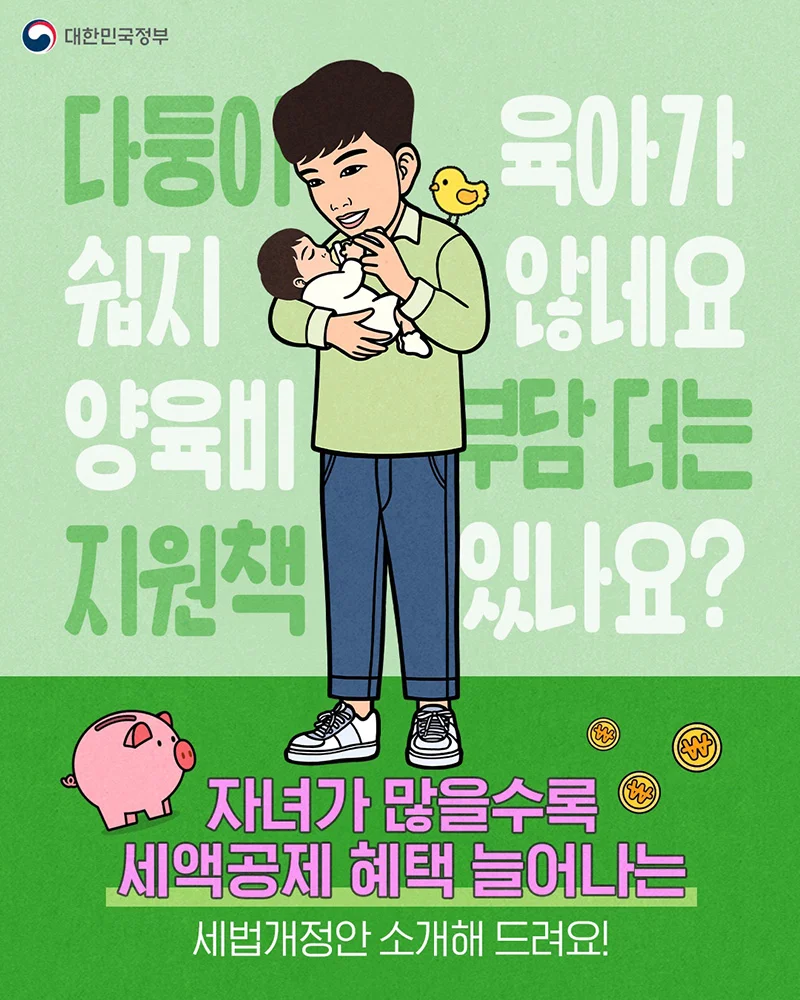
Significant changes have occurred in deduction items related to children, childbirth, and marriage to address low birth rates. The child tax credit, which began applying to the 2025 settlement, has seen a substantial expansion in its scope. For one dependent child aged 8 or older, the credit amount increased from the existing 150,000 KRW to 250,000 KRW; for two children, from 350,000 KRW to 550,000 KRW; and for three or more children, the per-person credit from the third child onward increased from 300,000 KRW to 400,000 KRW 2. In the case of childbirth or adoption, an additional childbirth/adoption credit is applied: 300,000 KRW for the first child, 500,000 KRW for the second, and 700,000 KRW for the third or subsequent children 2. Regarding corporate childbirth support funds, a special exemption was newly established whereby support funds paid by a company upon the childbirth of an employee or their spouse are fully tax-exempt 2. However, childbirth involving related parties is excluded, and the tax exemption is recognized only if the payment is made in accordance with common provisions within two years from the birth date 2.
Starting from the 2026 settlement, drastic changes apply to education expense tax credits as well. As mentioned earlier, tuition fees for art, physical education, and music academies for children under 9 or in second grade or lower of elementary school are included as deductible items, and education expenses for college-age children can now be deducted regardless of the child's income 1. This improvement significantly alleviates the burden on couples who had previously been excluded from deductions due to failing to meet income requirements.
Note that 2026 is the last year for the marriage tax credit application. A tax credit of 500,000 KRW per spouse (once in a lifetime) is provided for marriage registrations between January 1, 2024, and December 31, 2026. To qualify for the benefit, the marriage registration must be completed before December 31, 2026 1. Filing within the deadline is essential 1.
Detailed Analysis of Medical Expenses, Monthly Rent, and Pension Account Deduction Requirements and Limits
For medical expenses and monthly rent, which are closely related to daily life, and pension account deductions for asset formation, many measures relaxing income requirements for eligible subjects and raising limits are being implemented.
Under the medical expense tax credit items, there is no income limit for dependents, and a 15% tax credit is applied to medical expense expenditures exceeding 3% of the total salary 2, 5. In particular, starting from the 2025 settlement, income requirements for postpartum care center costs have been completely abolished. Now, all workers can deduct postpartum care center costs up to 2 million KRW per childbirth, regardless of income 1, 5. Additionally, starting from expenditures incurred on or after January 1, 2024, the self-pay portion of disability activity support benefits was newly added to deductible items. The existing limit (7 million KRW) for medical expenses of children aged 6 or under has been abolished, making the full amount deductible 1, 5. A preferential tax credit rate of 20% applies to medical expenses for premature infants and babies with congenital defects, and 30% for infertility treatment expenses 5. Reimbursements from indemnity insurance, nursing costs, and cosmetic/plastic surgery costs are excluded from deductions 5.
For the monthly rent tax credit, starting from the 2025 settlement, the annual deduction limit for home-owning employees with a total salary of 80 million KRW or less has been raised from 7.5 million KRW to 10 million KRW 2. A deduction rate of 17% applies to workers with a total salary of 55 million KRW or less, and 15% applies to those with a total salary over 55 million KRW and up to 80 million KRW 2. Starting from the 2026 settlement, home-owning commuting couples living separately will also receive monthly rent tax credits independently within a combined couple limit of 10 million KRW 1.
Tax credits for pension savings and IRP (Individual Retirement Pension) are key tools that allow you to secure retirement preparation and immediate tax refunds simultaneously. Pension savings are deductible up to 6 million KRW, and if combined with IRP, up to 9 million KRW 2. A deduction rate of 15% (including local income tax, 16.5%) applies to those with a total salary of 55 million KRW or less, and 12% (including local income tax, 13.2%) applies to those exceeding that amount 2. If the full 9 million KRW is contributed, those with a total salary of 55 million KRW or less can expect a tax credit benefit of approximately 1.48 million KRW 2. However, to receive all refund benefits, contributions must be completed by December 31 2.
The scope of the housing subscription savings account deduction has also expanded. Starting from the 2025 settlement, for home-owning household heads with a total salary of 70 million KRW or less, contributions made by the spouse are also included in deductible items, not just the household head's own contributions. The annual limit is 3 million KRW 2.
Practical Tax-Saving Strategies and Simulations to Maximize Refunds
The actual amount of tax refunded varies depending on strategic expenditure allocation. Based on the provided data, we examine the strategies for Hometown Love Donations, pension accounts, and card payments, which offer the highest perceived refund impact.
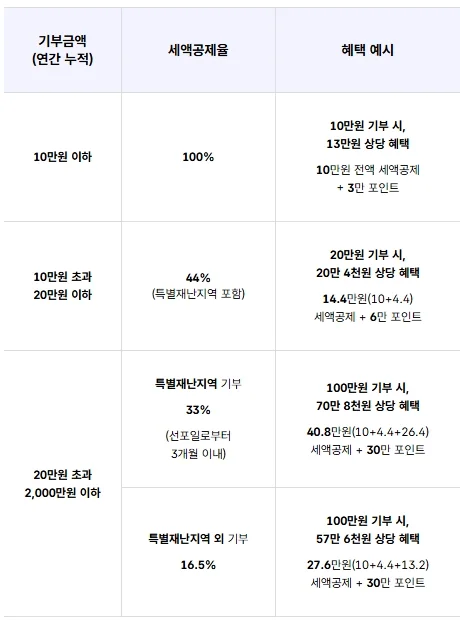
Hometown Love Donations boast the highest perceived benefit rate. The deduction limit for tax credits has been raised from the existing 5 million KRW to 20 million KRW 2. For donations of 100,000 KRW or less, a 100% tax credit is provided. Simultaneously, donors receive return gifts worth 30% of the donation amount (30,000 KRW), resulting in an actual economic benefit of 130,000 KRW 2. With the significant increase in the tax credit rate for the bracket exceeding 100,000 KRW and up to 200,000 KRW (including local income tax, 44%), donating 200,000 KRW results in a structure where one receives approximately 144,000 KRW in tax savings and return gift benefits 1, 5. This deduction benefit is only available if the donation is completed by December 31 2.
To maximize the income deduction for credit card and other usage, the key lies in how one fills the amount exceeding 25% of the total salary 2. It is advantageous to use credit cards until the baseline is exceeded, and then use debit cards or cash receipt vouchers, which have a deduction rate double that of credit cards (30%), for the amount exceeding 25% 1. If 25% of the total salary has already been exceeded, it is effective to increase the proportion of payments to public transportation or traditional markets. Public transportation and traditional market usage apply an additional high deduction rate of 40% 2.
For dual-income couples, deciding 'whose name to consolidate deductions under' is crucial. Dependent deductions (such as for children or parents) should be concentrated on the spouse with the higher 'tax rate,' as they benefit more from larger deductions 2. Also, for card income deductions, rather than splitting usage amounts between spouses, one should adopt a strategy of concentrating usage on one person to clearly exceed 25% of their total salary and exhaust the deduction limit 2. For new entrants to the workforce or new hires who have few receipts and a total deduction amount of less than 130,000 KRW, it is advisable to verify whether the 'Standard Tax Credit of 130,000 KRW' is automatically applied, even if they do not separately receive tax credits 1.
Utilizing the HomeTax Simplified Service and Frequently Occurring Practical Checkpoints
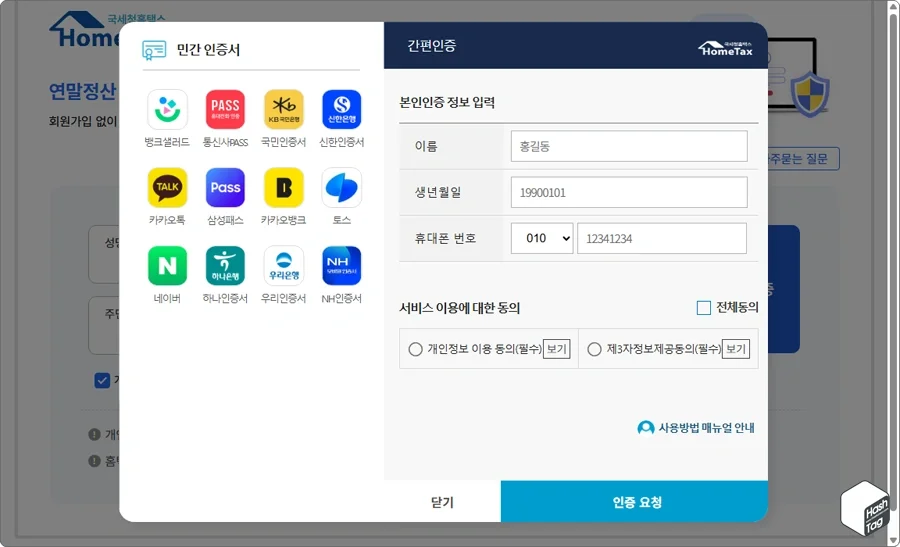
To avoid procedural mistakes in year-end tax settlement, one must be familiar with practical checkpoints based on National Tax Service guidelines.
First, the practical processing method for mid-year retirees has changed. Starting from August 25, 2023, the submission method for payment statements for mid-year retirees was changed, allowing retirees to submit documents anytime via HomeTax 6. For mid-year hires or retirees, only costs incurred during the period of employment provision are eligible for deduction. Among special tax credit items, donations are exceptionally allowed to be aggregated 5.
Second, regarding the handling of family members excluded from basic deduction eligibility due to marriage, employment, etc. If a dependent (spouse) is excluded from basic deduction eligibility before the end of the taxable period due to marriage, employment, etc., a special provision applies whereby insurance premiums, medical expenses, education expenses, etc., already paid can be deducted from the calculated tax amount only up to the amount paid until the date the cause occurred (date of marriage or employment) 5.
Third, precise verification aligned with the schedule of the year-end tax settlement simplified service opening is required. When the simplified service opens around January 15, 2026, rather than blindly trusting that National Tax Service data is 100% accurate, one must manually search for items that may be missed by automatic collection, such as medical expenses and donations 2. In particular, the process of separately securing receipts is essential, for instance, if hospitals neglect to register their data in the simplified system 2.
The accurate refund amount must be calculated directly by the worker based on the National Tax Service's HomeTax simplified service data. The safest method is to prepare by cross-verifying the contents of the amended tax laws with the filing guidebooks and form collections provided by the National Tax Service 6, 1.
References
- 2025년 귀속 연말정산 완벽 가이드 — 공제·세율·환급액 계산법 | TaxCut · taxcut.kr↩
- 2026 연말정산 핵심 개정세법과 절세 전략 5가지 - 디지털 인사인트... · digit2sight.com↩
- 2026 세제개편안 정부안, 근로장려금·월세공제 변경 · incomeflow.co.kr↩
- 2026년 세액공제 개정 및 소득공제 주요 변경 항목 가이드 | robo-advisor.kr · robo-advisor.kr↩
- 근로소득 · nts.go.kr↩
- 국세청>국세신고안내>개인신고안내>연말정산>연말정산 종합 안내 · nts.go.kr↩