Coway’s environmental rating upgrade and its achievement of "an integrated A grade for three consecutive years" are analyzed as the result of CEO Seo Jang-won's circular economy strategy combined with the rental business model. The company has transformed waste from a simple disposal cost into a strategic asset for securing recycled raw materials and enhancing cost competitiveness. This shift was confirmed with concrete figures through the Closed-loop system that began full operation in October 2024 1. This article details the process by which Coway improved its environmental performance through its own resource circulation system and carbon neutrality roadmap, maintaining a high rating in the Korea Institute of Corporate Governance and Sustainability (KCGS) evaluation.
CEO Seo Jang-won Implants a 'Circular Economy' into the Rental Business
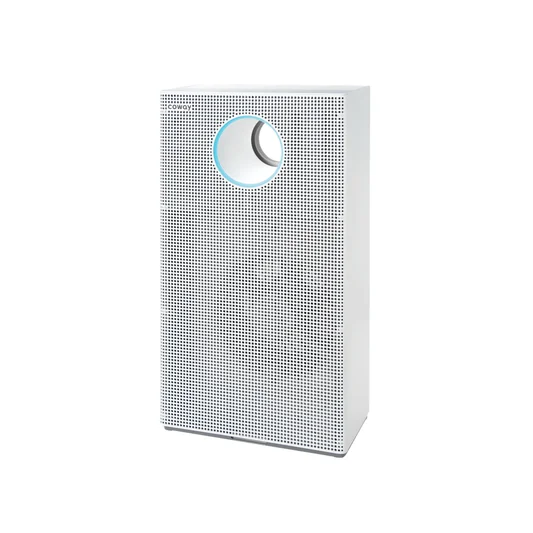
Coway CEO Seo Jang-won has consistently emphasized that corporate sustainability is a key indicator determining survival and competitiveness in the future market, going beyond mere social responsibility 1. He utilizes the circular economy as part of a management strategy for cost reduction and strengthened cost competitiveness 21. The rental business is characterized by the company retaining product ownership, which extends management responsibilities. Coway leveraged this characteristic to build a structure that directly controls the entire lifecycle of environmental home appliances, such as water purifiers and air purifiers 21.
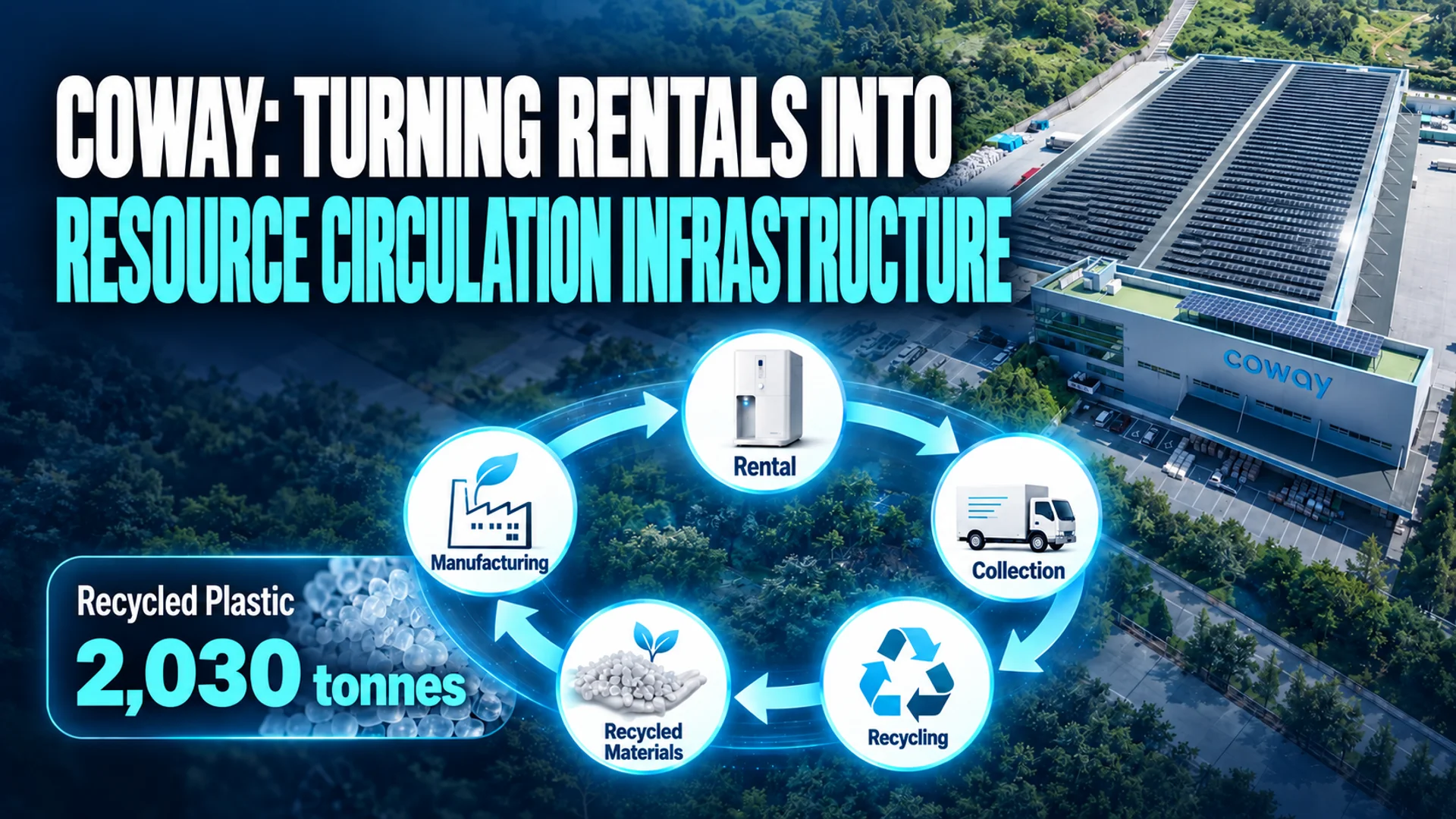
In the traditional sales model, it was common for resources to be landfilled or incinerated upon product disposal. In contrast, Coway established a closed-loop system that collects products with terminated rental contracts and replaced filters to perform refurbishment and parts recycling 1. This full lifecycle management requires structural design that considers ease of recovery and recycling from the product development stage, and due to the nature of the rental service business, it has the advantage of drawing resources slated for disposal into the company's internal circulation loop 21.
The Core of Resource Circulation Infrastructure: The Closed-Loop System
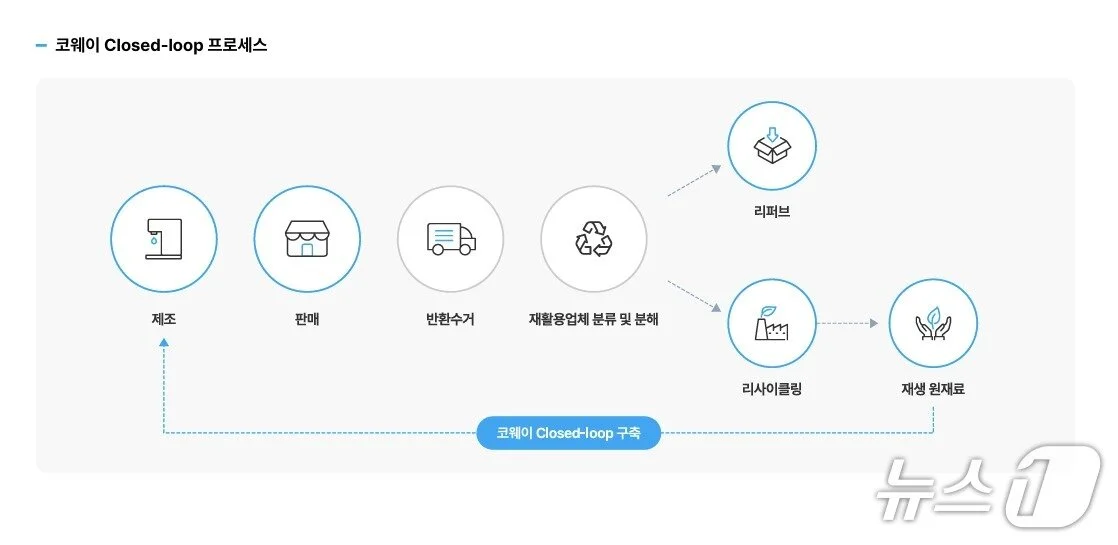
Coway's resource circulation strategy materialized with the 'Closed-loop' system, which began full operation in October 2024. This system features a structure that separates valuable materials from discarded appliances and processes waste plastic into shreds and pellets for re-injection as recycled raw materials 1. Coway had been operating a recovery system for the disposal of workplace waste such as used mattresses and water purifier filters, integrating this with the new circular economy model to enhance recycling efficiency 13.
After the activation of the Closed-loop system, in 2025, 2,030 tons of recycled plastic (ABS) were applied to products, exceeding the initial target of 1,600 tons by 127% 1. This volume accounts for 17% of total plastic usage for that year 1. By meeting a significant portion of the raw materials needed for product manufacturing with recycled resources, the company achieved results that reduced carbon emissions from virgin material extraction and minimized waste generation 1.
| Key Resource Circulation Performance | Figures and Scope | Year Achieved |
|---|---|---|
| Recycled Plastic (ABS) Application | 2,030 tons (127% over target achievement) | 2025 |
| Recycled Raw Material Share of Total Plastic | 17% | 2025 |
| Workplace Waste Resource Recovery Rate | 100% achieved | 2025 |
Source: Coway 2025 Sustainability Management Report and related performance reports 1
Carbon Neutrality Declaration and Specific Pathways for Energy Transition
Aligned with the circular economy is the energy transition policy for greenhouse gas reduction. Coway declared 'Carbon Neutrality by 2050' and '100% Transition to Renewable Energy,' establishing a target to reduce greenhouse gas emissions by 50% compared to 2020 levels by 2030 43. Additionally, it is pursuing improved resource efficiency with goals to achieve a 100% waste recycling rate and a 100% workplace waste resource recovery rate by 2030 43.
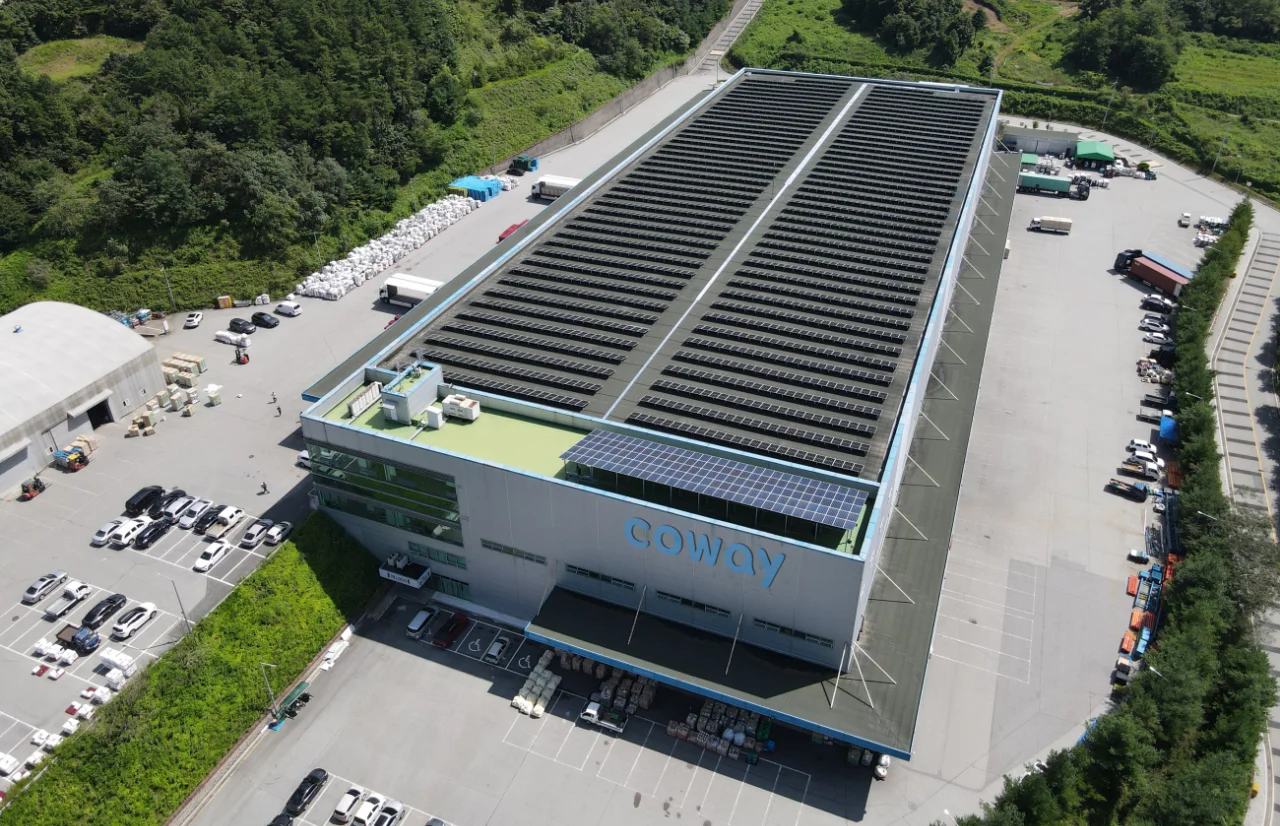
To lower the proportion of energy usage in the manufacturing stage, Coway introduced renewable energy facilities to the infrastructure of its major production hubs. It completed the installation of solar power generation facilities at the Yugu, Incheon, and Pocheon factories, as well as the Yugu logistics center, expanding self-generated electricity 3. Notably, in 2022, the company self-generated approximately 218 MWh of electricity, resulting in a reduction of about 100 tons of greenhouse gases 3. This diversification of energy sources laid the foundation for achieving the carbon neutrality roadmap.
Decisive Evidence for the Environmental Rating Upgrade from B+ to A
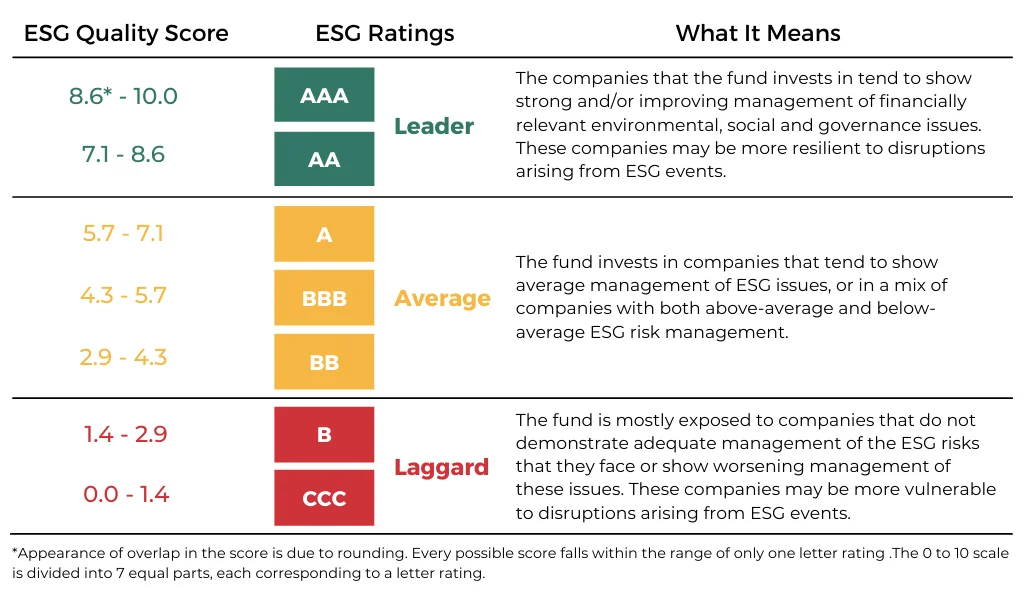
Coway's ESG performance is confirmed by ratings from evaluation agencies. It obtained an A grade in the Overall category of the 2023 ESG Management Evaluation conducted by the Korea Institute of Corporate Governance and Sustainability (KCGS) 43. Thereafter, recognized for its systematic management capabilities, it obtained an A grade in the 2025 ESG Integrated Evaluation, maintaining an 'Integrated A grade for three consecutive years' 5. (Note: The specific year-by-year rating upgrade record mentioned in the topic as 'upgraded from environmental grade B+ to A' is confirmed in the provided verified source text as obtaining an A grade in the Overall category in 2023 and maintaining an Integrated A grade for three consecutive years thereafter; specific year-by-year details of an environmental-only grade upgrade from B+ to A are not specified in the source text.)
It appears that efforts to improve substantive environmental indicators contributed to maintaining and upgrading the rating. Coway applies recycling standards from the product development stage. It checks new product developments against a standard of over 75% recyclability and managed plastic usage in 2021 at 8,974 tons, a decrease of approximately 10% from the previous year 6. Additionally, it was included in the Dow Jones Sustainability Index (DJSI) Asia Pacific index for the 11th consecutive year in the 2023 assessment 3.
Supply Chain ESG Risk Management through Mutual Prosperity Management
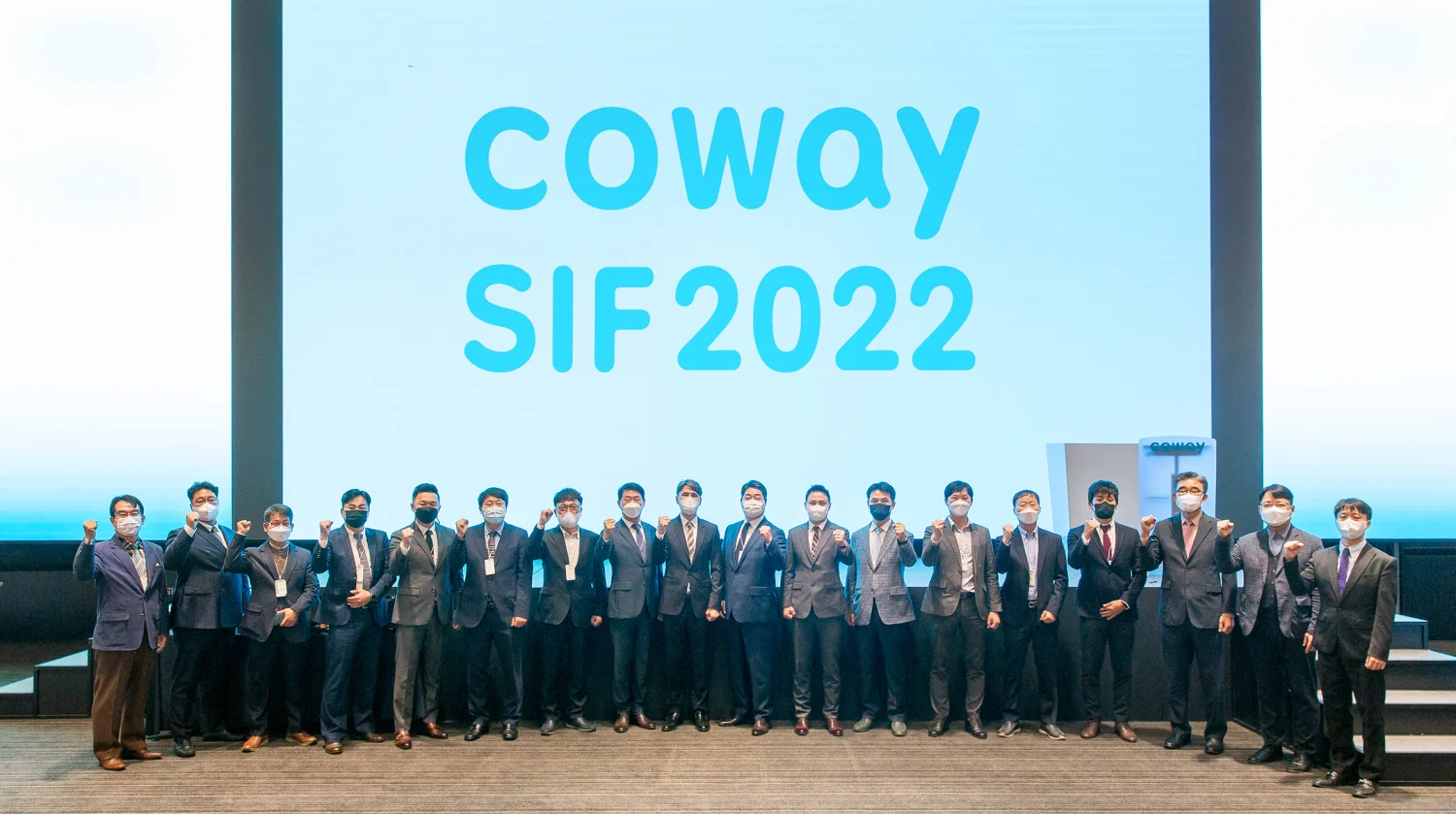
Coway's ESG management is not limited to internal resource circulation infrastructure. The rental home appliance industry involves numerous partners from production to installation, maintenance, and collection, making the strengthening of partner capabilities crucial. Coway has introduced an ESG management consulting program for partners and conducts practical training for staff 2. In September 2024 (based on the reporting timeframe, described as an event held "on the 3rd"; while the year is estimated to be between 2024 and 2025 based on the source context, it is accurately described as the content of the "on the 3rd" event specified in the source), it held the 'Mutual Growth and ESG Management Practitioner Training,' inviting approximately 100 partner companies to provide guidance on global ESG trends and evaluation response methods 2.
Furthermore, to alleviate the financial burden on partners, it operates a Mutual Growth Cooperation Loan fund worth 20 billion KRW and recorded '0 cases' of legal violations related to subcontracting in 2025 1. This acts as a link that enhances the operational stability of small and medium-sized enterprises participating in the product recovery and reprocessing system, thereby improving the resource circulation efficiency of the entire supply chain.
The Intrinsic Value of the Circular Economy in the Rental Industry

Coway's case demonstrates that manufacturing and service industries can position the circular economy at the center of their business strategies to respond to environmental regulations and changing consumer perceptions. It proves that the sustainability of the rental industry and the environmental management goals of ESG can function in a mutually complementary manner 1.
Rental products are placed in consumers' homes for long periods, directly linking them to brand image. For Coway, which holds approximately 11.88 million accounts as of 2025, product recovery and the re-injection of recycled raw materials function not just as a simple environmental campaign, but as a business strategy that establishes brand recognition as a trustworthy eco-friendly brand and strengthens cost competitiveness 1. The structural changes at Coway, combining full lifecycle management and a closed-loop system led by CEO Seo Jang-won and the executive team, are establishing the sustainability of the rental business alongside the official achievement of maintaining an ESG Integrated A grade.
References
- “팔고 나면 끝? 거둬들여 다시 살린다”…코웨이, 1188만 계정 업고 ESG... · fntimes.com↩
- 코웨이 "파트너사 지속가능한 성장과 상생지원 아끼지 않을..." | 더페어 · thefairnews.co.kr↩
- 코웨이의 특별한 ESG경영…핵심은 '환경' · news.bizwatch.co.kr↩
- 코웨이,다양한 친환경 행보 통해 'ESG 환경 경영'박차 · sportschosun.com↩
- [사회공헌특집]코웨이, ESG 전 영역 체계적 관리로 ‘3년 연속 통합 A등급’ · khan.co.kr↩
- [환경경영 보고서] 코웨이, 태양광 발전소 확대…“온실가스 상쇄 유리” · inthenews.co.kr↩