Historical empathy is not born from memorizing the dates, names, and events listed in textbooks. It sprouts only when we realize, “Ah, in those days, too, people rejoiced and feared, and looked up at the sky,” upon seeing the dance steps, the gaze of prey, and the lines of stars and clouds that someone painted on a tomb wall 1,500 years ago. The Goguryeo tomb murals are precisely the records that bring that realization here and now. In this article, we will examine, based on grounded facts, why these murals shake us so profoundly as “painted history,” how the early depictions of earthly life connect with the later cosmological worldview, and how modern people are encountering these paintings.
A Painting That Records the Present, Holding Wishes for the Afterlife
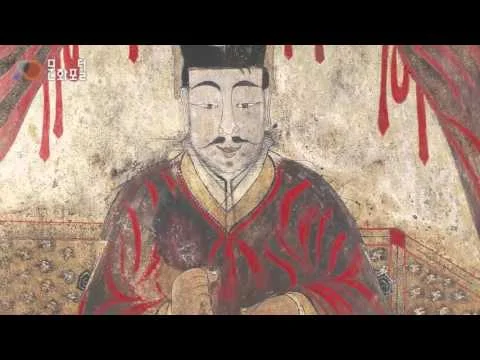
The dominant interpretation is that tomb murals are fundamentally works expressing thoughts and wishes regarding the world after death 1. Interestingly, however, the fact remains that early Goguryeo murals, rather than fancifully embellishing the afterlife, attempted to reproduce earthly life as faithfully as possible 1. The interior of the tomb was decorated like a home, capturing vivid, colorful scenes of feasts where the tomb owner and their spouse danced, sang, and played while being attended by servants, large-scale processions, and hunting scenes on horseback 2, 1. Thanks to the brilliant and vivid coloring, today we encounter the lively, vibrant daily life of Goguryeo people of that era as if looking at a photograph 2, 1.
The fact that these early murals reflected an earth-centric, optimistic worldview is clearly evident in the depictions of the first period (350–450 AD) 2. They reproduced the residential structures of life and painted scenes of entertainment, processions, and hunting on the walls using a technique of coloring over a white plaster coat 2. The murals of Tomb No. 3 in Anak are valued as precious materials showing the state of early Goguryeo murals and well illustrate this tradition of depicting earthly life 1.
Why did they paint earthly life for the dead? Here, an important connecting link is ‘wish.’ The desire to continue laughing, dancing, and hunting in the afterlife just as in this world manifested in the form of precisely transposing the scenery of the living world. Therefore, the empathy we feel through early murals goes beyond simply thinking, “People of the past lived like that, too,” and allows us to read how the universal human desire for a better life determined the style and themes of the paintings. At this point, Goguryeo murals become both historical sources and mirrors.
Visual Language That Narrows the Gap of Time: Why Paintings Resonate First
Cultural portal materials introducing Goguryeo murals through video content emphasize that paintings can intuitively convey emotions and underlying stories more effectively than text 1. This statement well explains what constitutes the ‘real’ empathy provided by murals. While sentences require an understanding of context to elicit a response, paintings immediately touch upon attitudes, movements, and gazes. Thus, tomb murals function as a medium enabling modern people to travel through time back to that era 1.
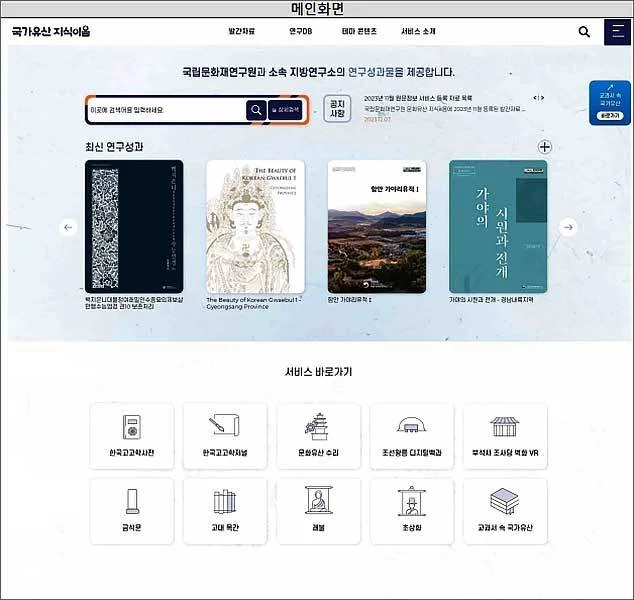
This characteristic aligns with the very reason for the existence of today’s digital restoration archives. The ‘Heritage Knowledge ium’ (K-Heritage), under the Korea Heritage Service, is releasing a vast digital database on Goguryeo tomb mural patterns to the public 3. The total number of registered Goguryeo tomb mural pattern data entries currently stands at 225 3. Beyond simply providing original photographs, it utilizes AI illustration and image technology to aid visual understanding and is organized to allow searches by detailed categories such as pattern material and type 3. Motifs such as the Celestial World patterns, the Sun and Three-Legged Crow, the Moon and Toad, constellations, and complex patterns combining lotuses with the Sun and Moon are recorded in detail 3.
In other words, this means that even those unable to visit physically can follow the structure and meaning of the mural iconography step-by-step to achieve understanding. Why is this important? Because when we accurately grasp the context of visual materials, we begin to read the murals not merely as decorations or relics, but through the logic of thought, faith, and daily life. Once we understand which parts of a worldview each pattern represents, we can comprehend why the figures and animals in the paintings were placed as they were, and why they were expressed so vividly. This is the moment when understanding becomes the foundation of empathy.
A Three-Stage Evolution: From Feasting Halls to a Sea of Stars
The themes of tomb murals changed distinctly over the eras. The entire production period spans roughly from the late 3rd century to the 7th century, with approximately 100 discovered painted tomb chambers, most distributed in the Jian region of China and the Pyongyang and South Pyongan Province areas of North Korea 2. They are divided into three periods based on construction methods and themes 2.
- First Period (350–450 AD): Centered on outer-corridor and multi-chamber tombs; reflected an earth-centric, optimistic worldview; depicted recreations of residential life from the living world as well as feasts, processions, and hunting scenes 2
- Second Period (450–550 AD): Alongside figures and scenes of daily life customs, the Four Guardian Deities (Sasin-do) and Buddhist decorative patterns (such as lotus and king’s ornament patterns) appeared; the lotus patterns contained prayers for rebirth in the Pure Land 2
- Third Period (550–650 AD): Tomb structures became simplified; outer-corridor tombs became dominant; murals consisted predominantly of the Four Guardian Deities; backgrounds featured numerous Taoist elements such as the Sun, Moon, constellations, and immortals; Goguryeo’s distinctive strength, tension, and brilliance became prominent 2
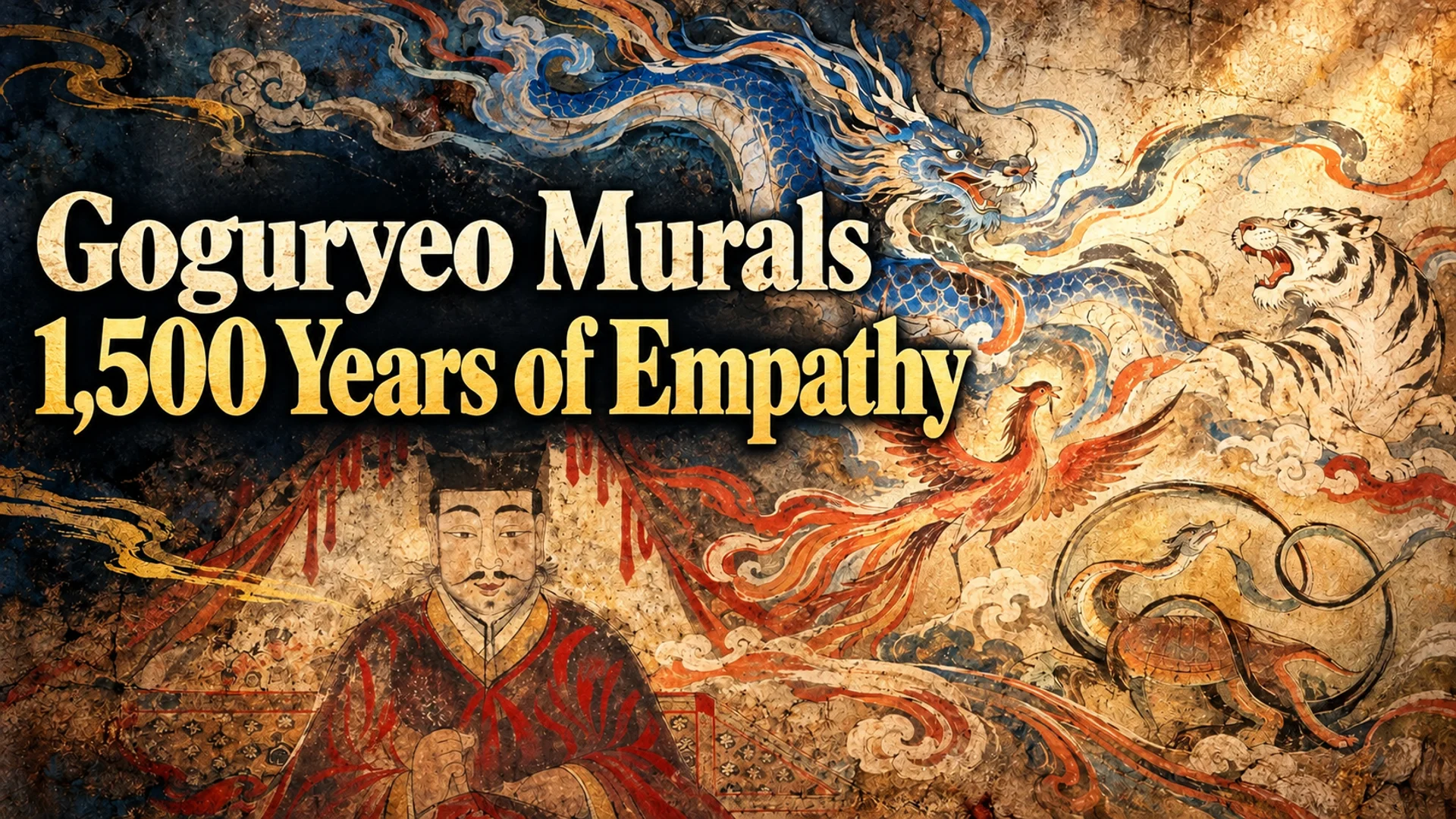
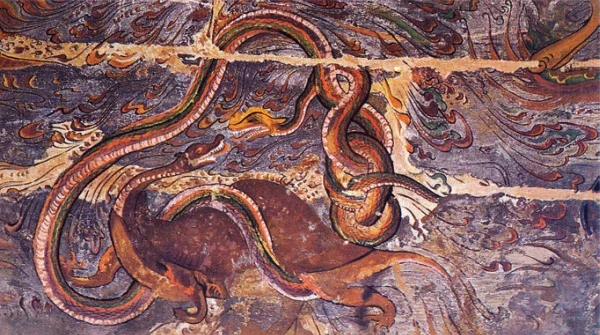
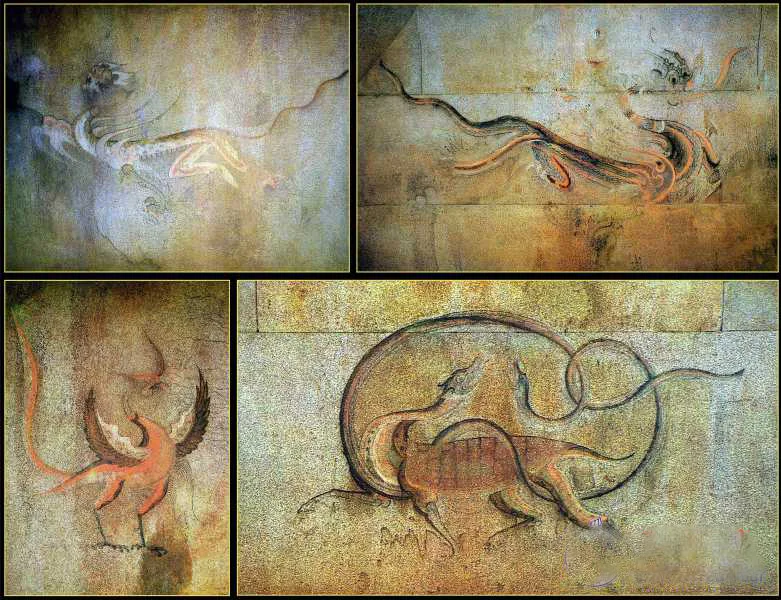
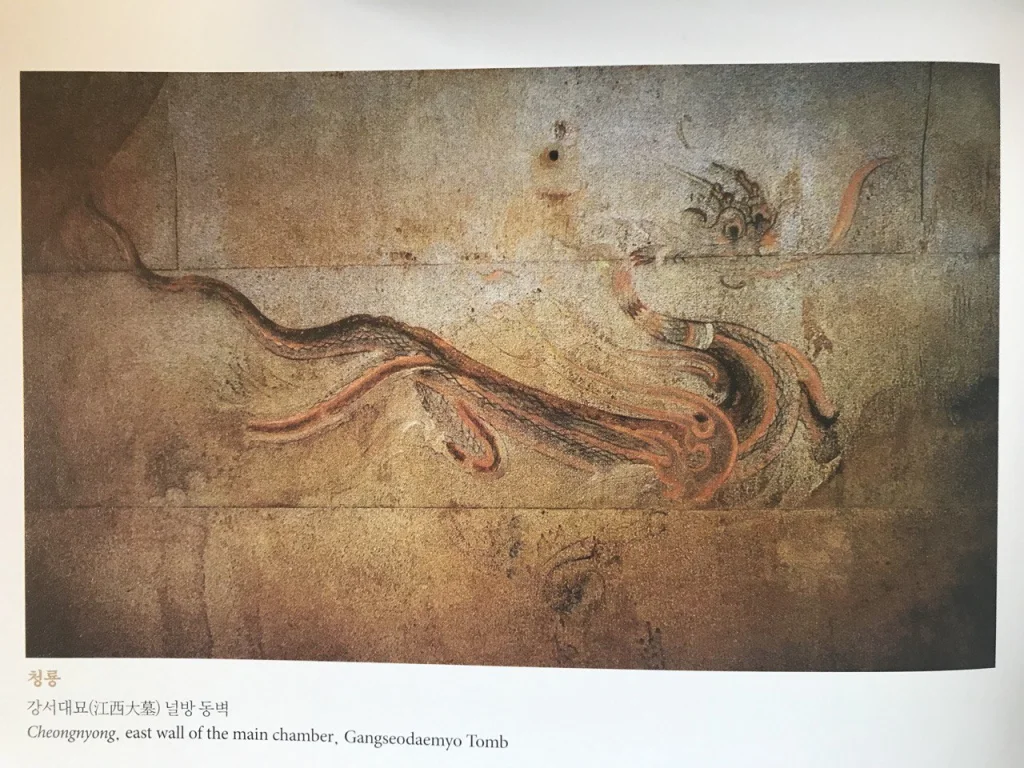
Looking further at the concentration on the Four Guardian Deities in the Third Period, the Sasin-do (Blue Dragon, White Tiger, Vermilion Bird, Black Tortoise) became the mainstream, with constellations such as the Big Dipper and Taoist immortals added to the backgrounds. This is read as an expression of Goguryeo’s unique strength, tension, and ideals regarding the celestial world 2, 4, 3. The Sasin-do represents the four cardinal directions and are symbols protecting the cosmic order, combined with the concept of Five Elements philosophy 4. In Korea, they began to appear in earnest through Goguryeo tomb murals of the Three Kingdoms period, confirmed in numerous murals from the 4th to the 7th centuries, such as the Yodongseong Tombs, Kangseo Grand Tomb, and Jinpari Tomb No. 1 4. In particular, the late-period Sasin-do of the Kangseo Grand Tomb and the Tonggu Four Guardian Deities Tomb are evaluated as exemplary cases demonstrating the essence of Goguryeo painting due to their dynamic artistic completion 4.
The shift of gaze from the early feasting halls to the late sea of stars is not merely a change in fashion. It can be interpreted as the trajectory of intellectual history, where the focus of interest expanded from earthly optimism to the cosmic order and ideals of the celestial world. The vivid depiction of figures in early murals and the cosmic tension in later murals are not disconnected; rather, they may be two faces of an age-old question: “How should we live well, and where shall we find rest?”
A Record of Unrecorded Emotions: Feasts, Hunts, and the Expressions of the Guardian Deities
To date, approximately 100 Goguryeo painted tombs have been discovered, highly valued by historians and cultural arts experts as a source of historical imagination and inspiration 1, 2. What we gain from these paintings is not merely a list of facts. Non-verbal information such as the rhythm of movement, the direction of gazes, and the tension created by the relationship between animals and humans accumulates to restore the sensitivity of the era.
In the Sasin-do, the Blue Dragon and White Tiger are depicted as mythical creatures flying through the void. The Blue Dragon is portrayed with scales, horns, and flames spewing forth, while the White Tiger is expressed with fur patterns and an intimidating expression 4. The Vermilion Bird, resembling a phoenix, is usually depicted in pairs, and the Black Tortoise is distinguished from the other three as a composite of a turtle and snake intertwined 4. The way these four beings’ forms are arranged in space itself visualizes the cosmic directions, circulation, protection, and control of order 4.
There is a point here that modern readers should note. The ‘vitality’ of the murals is not merely an issue of artistic style, but is the product of a will to understand the world. The dancing figures of the early period and the Guardian Deities suspended in mid-air in the late period are both attempts to “make the invisible order visible.” Therefore, true historical empathy does not stop at emotional identification but deepens through an interpretive attitude that traces what that era valued and how it sought to explain things.
Value Recognized by the World, and the Constraints and Efforts of Access
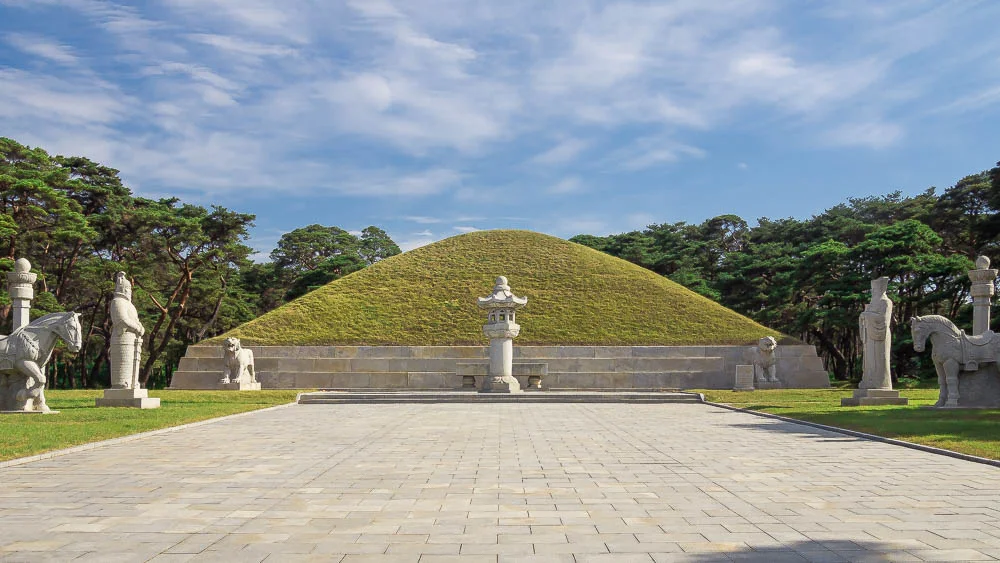
The value of Goguryeo tomb murals has been internationally acknowledged. The Complex of Goguryeo Tombs was inscribed on the UNESCO World Heritage List, recognized for its outstanding value 5, 2. In the inscription process, the Complex of Goguryeo Tombs was referred for review in 2003 and finally inscribed in 2004; during this process, the South Korean delegation requested support from the international community 5.
Substantive preservation and research cooperation continued even after inscription. Since 2000, the Cultural Heritage Administration has annually supported a trust fund of $100,000 through UNESCO with the aim of restoring ethnic identity and contributing to world peace 5. This fund is being used for the restoration of the Yaksuri Tomb and the modernization of the North Korean cultural heritage preservation system 5.
Of course, there are clear constraints on accessibility. Since most of the murals are located in China and North Korea, there are limitations to direct viewing 2. Therefore, alternatives such as digital archives and pattern databases based on research take on significant meaning 3. These materials serve as an open knowledge platform that is easily accessible not only to Korean archaeological and art history researchers but also to the general public 3. In other words, although the distance is great, the door to understanding is widening.
Specific Methods for Modern People to Gain Understanding Through Goguryeo Murals
To elevate mural empathy from ‘appreciation’ to ‘understanding,’ it is effective to examine three layers together. The order below connects evidence-based iconography, changes over time, and the context of interpretation in sequence.
- Scene Confirmation: First, observe scenes depicting earthly life, such as feasts of the tomb owner and spouse, processions, and hunting 2, 1.
- Composition and Color Analysis: Focus on the distinguishing features of Goguryeo murals: meticulous composition, brilliant coloring, and vibrant expression 2.
- Symbolic Iconography Interpretation: Trace the meaning of Taoist elements such as the Sasin-do, constellations, and immortals in later murals, as well as Buddhist decorations like lotus patterns 2, 4, 3.
For example, searching for patterns such as ‘constellations,’ ‘Sun (Three-Legged Crow),’ or ‘Moon (Toad motif)’ in the pattern database of the Heritage Knowledge ium allows for a visual grasp of why the mural backgrounds face toward the sky 3. Subsequently, understanding the principles of directional and Five Elements combination in the Sasin-do leads to the conviction that the Blue Dragon, White Tiger, Vermilion Bird, and Black Tortoise are not merely animals but guardian figures of the universe 4. Through this process, the murals cease to be “pretty old paintings” and appear as systematic paintings combining thought and daily life. Only then does empathy thicken.
Conclusion: The Ability to Read the Past Becomes the Gaze of the Present
Goguryeo tomb murals are records that translated wishes for the world after death into the scenery of the living world and symbols of the cosmos 1. While the vivid depiction of figures and events in early murals draws us today into the past 2, 1, the Sasin-do and starry backgrounds of later murals clearly display the ideals and tension toward the celestial world 2, 4, 3. Institutional and technological measures such as UNESCO inscription, trust funds, and digital archives make access to and understanding of paintings from 1,500 years ago possible 5, 3. Ultimately, ‘true’ historical empathy is completed by moving beyond appreciation to explicable understanding. The training to read Goguryeo murals becomes a way of respecting the past and an intellectual mirror that prompts us to look more deeply into our own daily lives and values.
References
- [한국문화100] 고구려 고분벽화를 통해 본 고구려인의 삶 · youtube.com↩
- 전통문화포털 · kculture.or.kr↩
- 고구려 고분벽화 문양 - 국가유산 지식이음 · portal.nrich.go.kr↩
- 사신도 - 한국민족문화대백과사전 · encykorea.aks.ac.kr↩
- [남과 북 이렇게 달라요] 고구려 고분군·개성역사지 등 두 곳, 관광 수입... · newsteacher.chosun.com↩