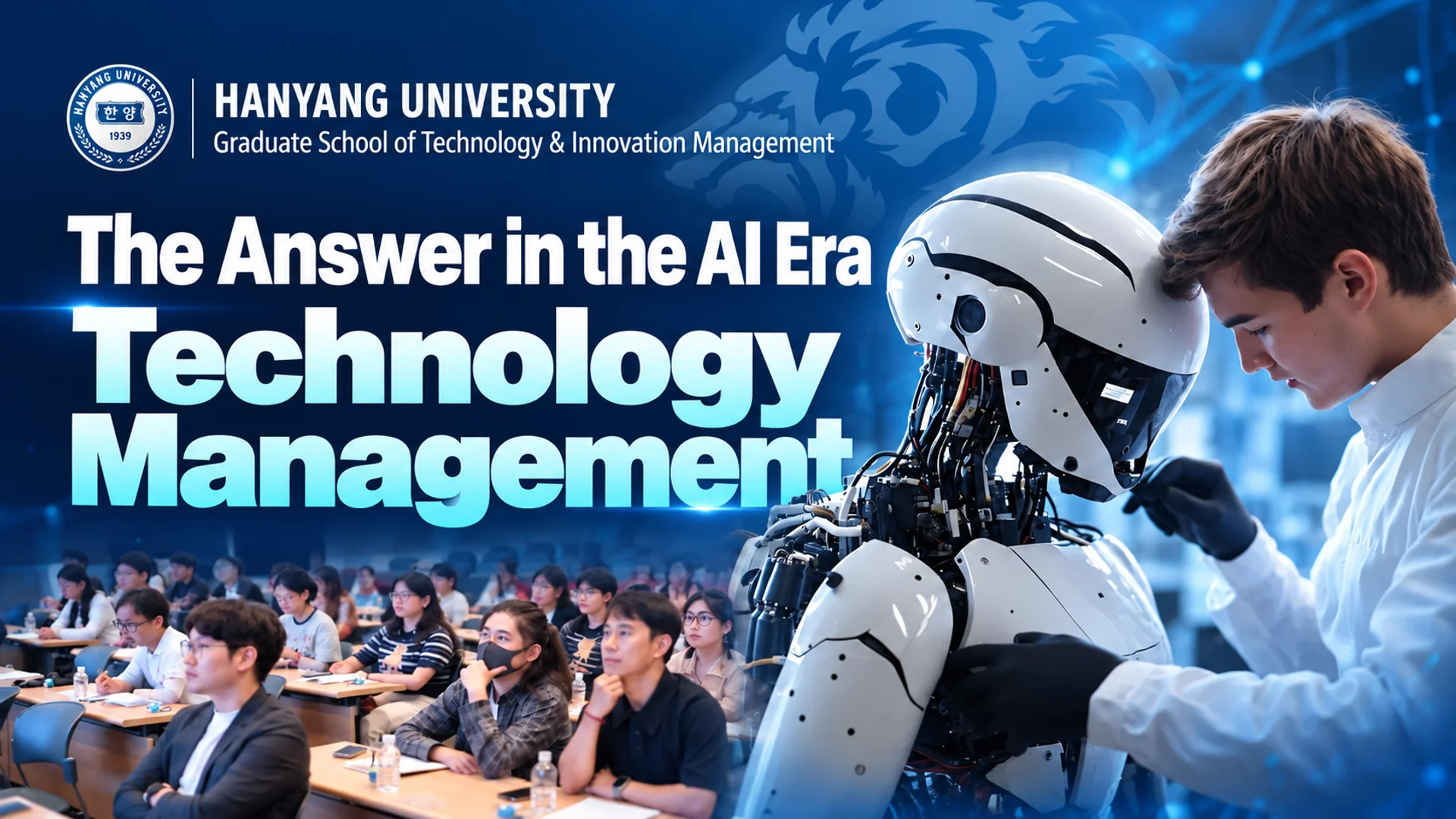
The growth of artificial intelligence (AI) technology delivers the fruits of improved productivity and new opportunities to businesses, but simultaneously casts a shadow of uncertainty that is difficult to predict with existing experience and plans. As the pace of change in the business environment accelerates, how can companies overcome these challenges? Kwon Kyu-hyun, Dean of the Graduate School of Technology Management (MOT) at Hanyang University, emphasizes "technology management" as a core strategy for breaking through this era of uncertainty.
To leverage technology not merely as a cost expenditure but as a strategic asset that determines future competitiveness, deep interpretation by management and organizational learning capabilities are essential. Dean Kwon proposes leadership for the era of uncertainty through the "sensemaking" ability to contextualize complex internal and external information, and the principles of a "High-Reliability Organization (HRO)" that does not collapse under unpredictable threats, concretizing these concepts through education and industry collaboration. This article examines the necessity of technology management and the educational and research activities at Hanyang University MOT, based on Dean Kwon Kyu-hyun’s diagnosis.
The Limits of Planning-Centered Management and the Redefinition of Leadership
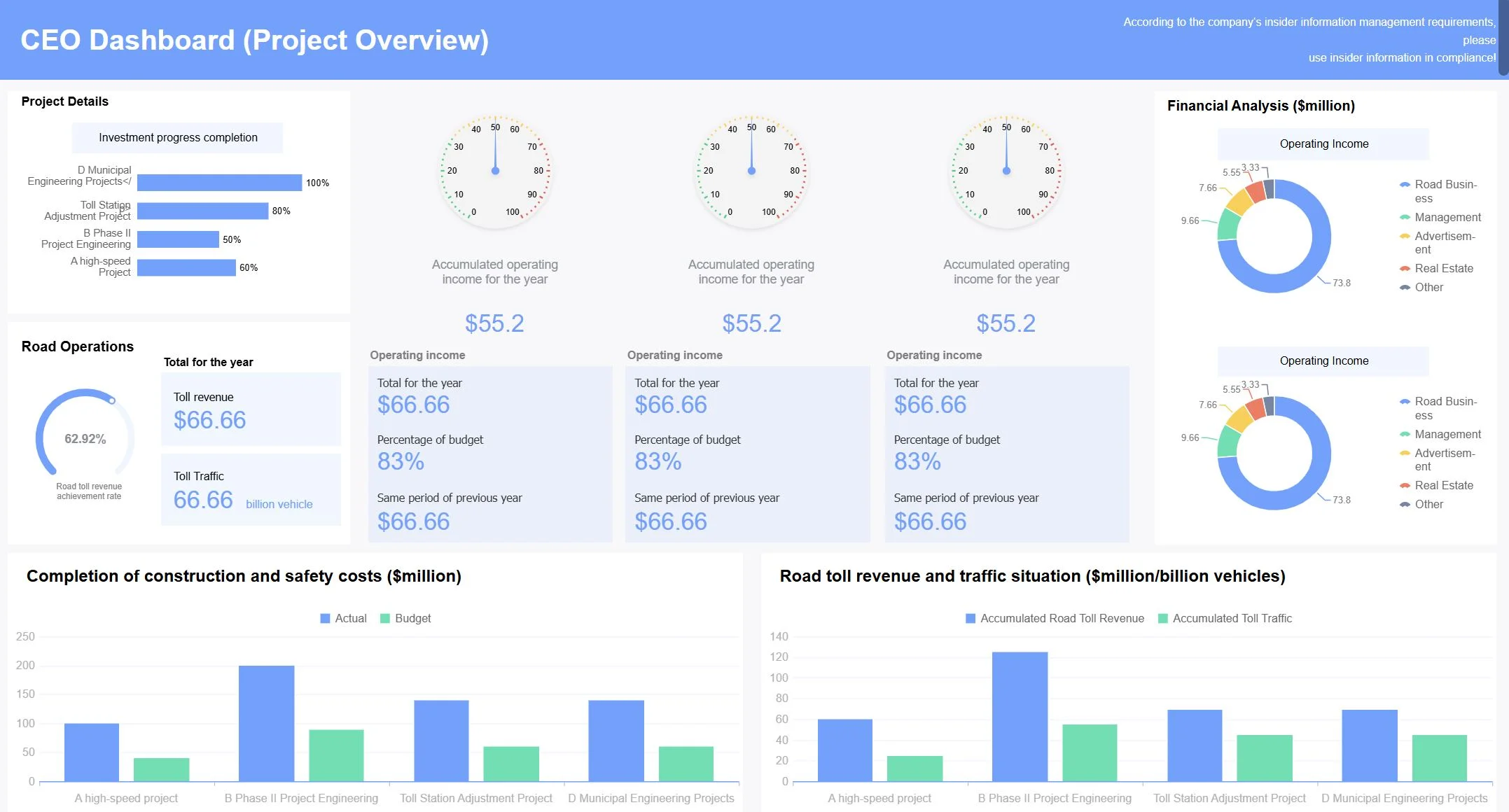
On January 7, 2026, at the World Class CEO Breakfast Lecture hosted by the World Class CEO Association at The Plaza Hotel in Jung-gu, Seoul, Dean Kwon Kyu-hyun clearly diagnosed the reality of the uncertainty brought about by AI. He pointed out that the speed of change created by artificial intelligence generates a level of uncertainty that is difficult to cope with using existing experience or planning-centered management methods1.
This is because technology has a dual nature: while it enhances productivity and opens new markets, it simultaneously narrows the realm of what companies can predict. In such an environment, a leader's "sensemaking" ability to appropriately interpret "what is important" becomes more critical than ever1. To prevent the organization from losing its direction amidst vague anxiety, management must deeply understand the essence of technology and the context of the market, and provide a strategic interpretation that can be shared with members.
As an organizational operating principle to support this, the concept of a "High-Reliability Organization (HRO)" was introduced. An HRO refers to an organization designed to function stably even in environments with high risk and significant change1. In markets where uncertainty is a constant, companies should not try to eliminate unpredictable threats in advance, but rather build a flexible and robust operating system that performs effectively even when threats occur.
Creating Business Value through "Exploratory Incremental Management"
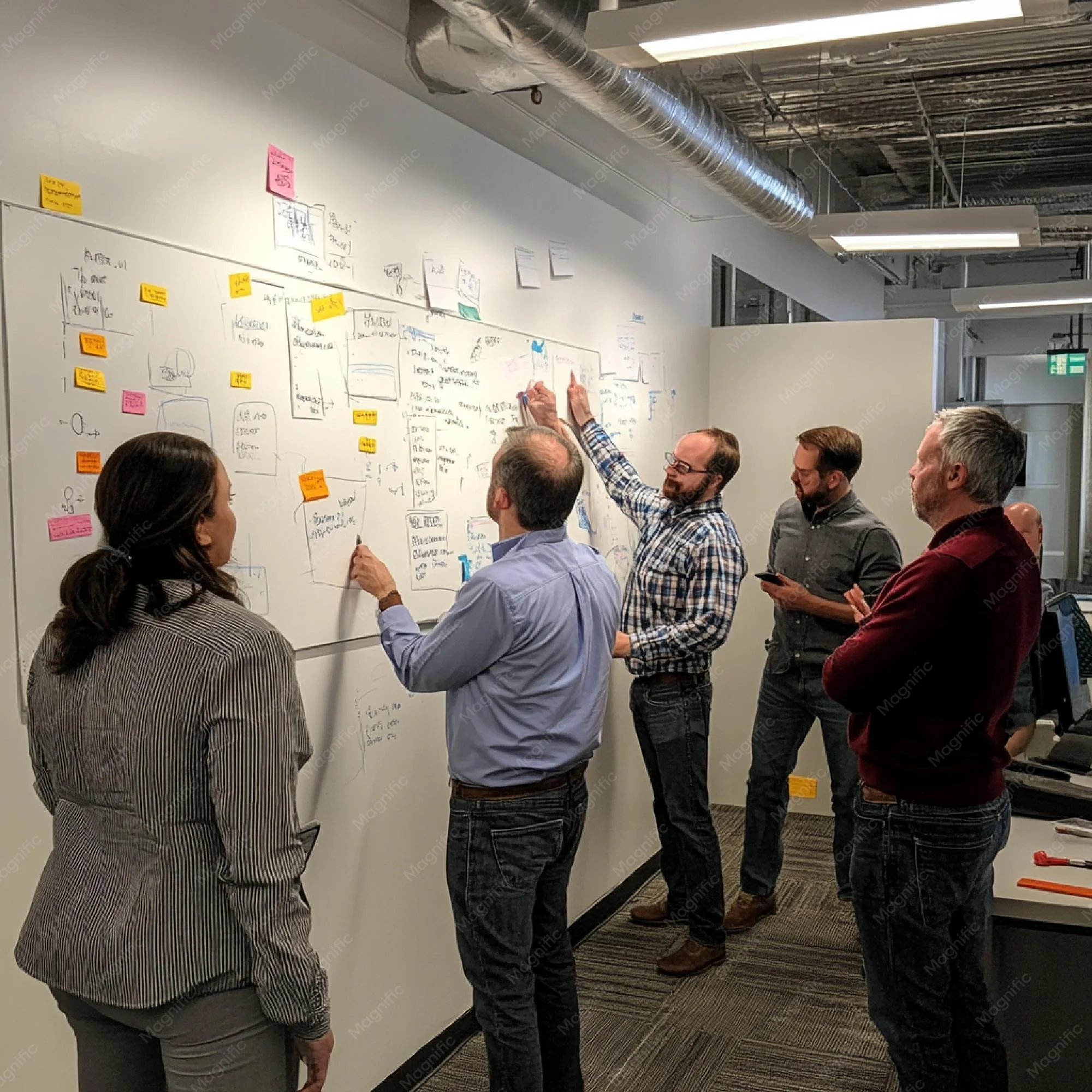
It was also emphasized that when the business environment changes rapidly, "Management by Groping Along"—repeatedly learning through small experiments rather than grand long-term plans—is necessary. Dean Kwon explained that when the principles of an HRO and exploratory incremental management are combined, companies can secure stable operations, interpretation, and learning capabilities even amidst uncertainty1.
This perspective offers key insights into corporate digital transformation (DX) and AI adoption (AX). Physically installing new software and AI systems is a technical task that does not, in itself, guarantee the expansion of business value. Dean Kwon argued for the need for a "technology management" perspective that manages the entire process of how introduced technology undergoes innovation to ultimately connect to business value, rather than stopping at mere adoption1.
Without technology management capabilities, DX and AX can degenerate into one-off projects that merely consume budgets. Conversely, if technology can be designed and managed as a strategic asset for future corporate competitiveness, digital transformation can become a core driver of sustainable growth. Ultimately, technology management in an uncertain era depends not on the decision to adopt specific technologies, but on the managerial capability to align the way technology is utilized with business strategy1.
Practical Knowledge Realized through Action-Oriented Education and Global Collaboration
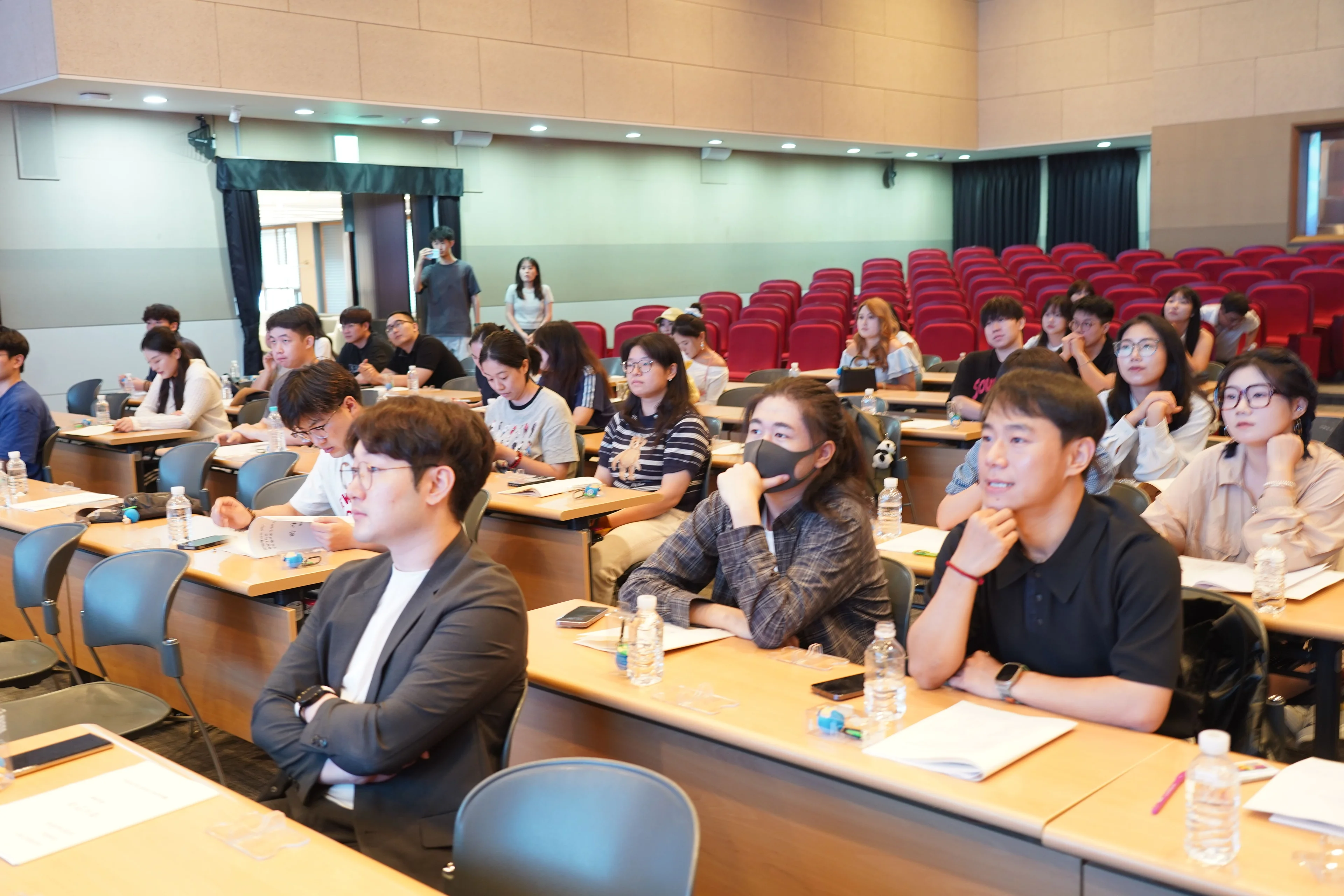
The value of technology management emphasized by Dean Kwon is consistently applied in the university's educational field. Since its establishment in 2011, Hanyang University MOT has produced approximately 600 alumni, nurturing specialized talent centered on advanced strategic industries such as artificial intelligence, big data, robotics, and mobility2.
A particularly noteworthy educational approach is the action-oriented curriculum that directly solves problems from industrial fields. Through "IC-PBL (Industry-Coupled Problem-Based Learning)," which utilizes real problems that occurred in companies as class assignments, and "Practicum," which deepens in four stages, students deal with real-world technology management issues such as technology valuation and high-tech marketing2. This represents a structural effort to narrow the gap between knowing technology and connecting it to business value.
This educational infrastructure is based on a strong faculty network. It has secured a total of 40 professors, including full-time professors, cross-appointed professors from within the university, and adjunct professors from the industry, which is the largest scale among technology management graduate schools nationwide2. The faculty, including Dean Kwon Kyu-hyun and Vice Dean Chung Tae-hyun, who specializes in science and technology innovation policy and management, contributes to fostering convergent talent by handling diverse specialized fields such as value-based system design, robotics, new industry consulting, and technology valuation3.
Hanyang University MOT is also striving to broaden global horizons beyond action-oriented education. From August 17 to 21, 2026, it jointly operated the "Global Innovation Leadership Program" with the Science Policy Research Unit (SPRU) at the University of Sussex in the UK, conducting training that analyzed AI and quantum technology by applying them to actual policy and industrial cases4. Additionally, it is expanding its global network by signing joint degree programs and memorandums of understanding (MOUs) with Université de Nantes in France and the School of Management at Fudan University in China4. Dean Kwon's definition of technology management as a discipline that looks beyond understanding new technologies themselves to examining the policy and industrial environments in which they are utilized is woven throughout these educational activities4.
On-Site Collaboration in the Technology Startup Ecosystem and Robotics Sector
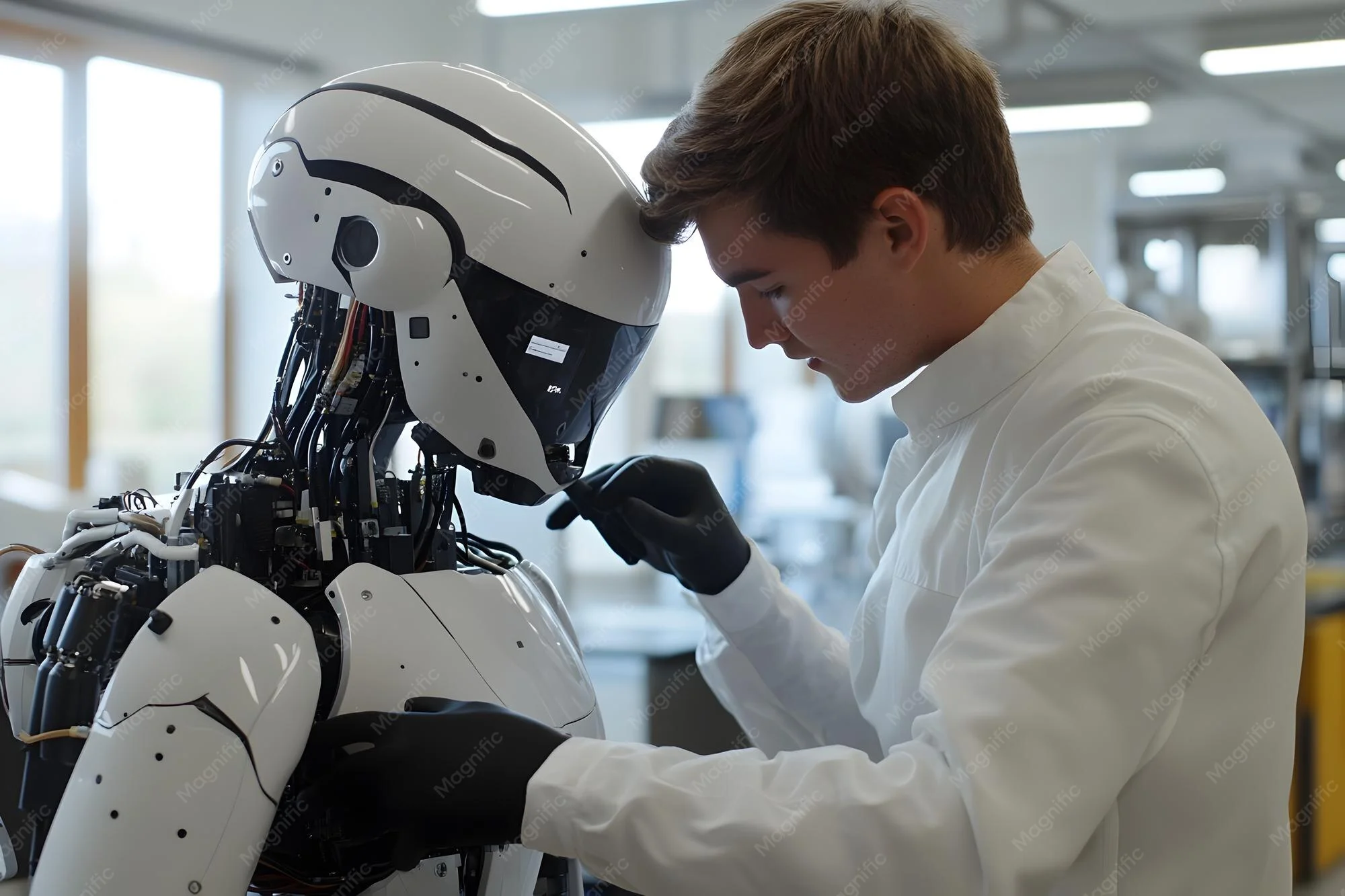
Dean Kwon Kyu-hyun's philosophy of technology management is being directly realized in concrete and cutting-edge research fields such as robotics and the technology startup ecosystem. In April 2026, Hanyang University MOT signed an MOU with XYZ, a service robot startup based on physical AI, to establish a Human-Robot Interaction (HRI) center5.
The center goes beyond merely verifying technical specifications; it collects task-unit data and user interaction data based on real environments and jointly researches humanoids' user experience (UX) design5. Regarding this collaboration, which uses XYZ's dual-arm robot "DEUX" to verify the stability and reproducibility of robot movements, Dean Kwon expressed his ambition to realize "people-centric robot innovation," stating it would become "a platform that creates actual change in users' lives and industrial sites, beyond knowledge within the laboratory"5.
On August 5, 2026, there was also collaboration to strengthen the foundation of the technology startup ecosystem. Hanyang University MOT signed an MOU with the Korea Business Angel Association for research and education cooperation in technology startups and angel investment6. The core of this agreement lies in human exchange and the combination of expertise. Dean Kwon Kyu-hyun and Vice Dean Chung Tae-hyun directly participate as research directors of "RISE (Research Institute for Startup Investment and Entrepreneurship)," the association's affiliate research institute, conducting ecosystem research based on field data6. This is an attempt to provide implications for startup policies and practices by comprehensively analyzing the commercialization potential of technology and the market/investment environment6. "Exploratory incremental management" and "sensemaking," which are required in the process of technology combining with the actual market, are supported through such empirical research.
Corporate Demand for Talent and Expansion of Educational Infrastructure
The university's educational and research efforts in technology management are directly linked to the actual talent demand of industry. According to Hanyang University MOT, major corporations such as Hyundai Motor Company and Naver include recruitment items for technology management talent in their job postings2. As companies begin to perceive DX and AX not as simple cost consumption but as the utilization of strategic assets, the role of technology management experts who can lead the "high-reliability" transformation of organizations is becoming increasingly important.
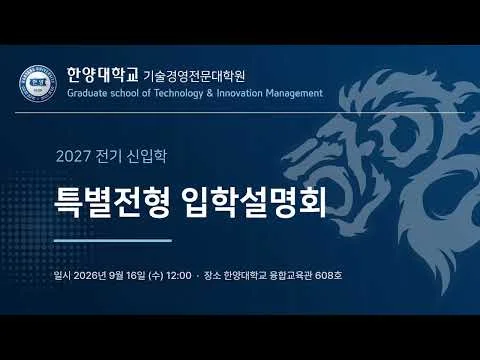
To respond to this demand, Hanyang University MOT is operating the "GAP (Global value creation, Advanced industry, Practice-oriented) Program"2. In the special admission process for the 2027 academic year, a track for full-time applicants was newly established, providing benefits such as dedicated research labs for researchers and operation as a designated graduate school for military service exemption2. With the slogan "Moments of Ascent," the program aims to foster leaders who move ahead even in moments of crisis7. Currently, approximately 90% of enrolled students are scholarship recipients, and full-time students receive more than 50% support for tuition2.
As uncertainty in the industry increases, the necessity for technology management capabilities becomes clear for both organizations and individuals. The process of designing the adoption and utilization of technology in an unpredictable business environment, improving services based on data from user sites, and analyzing the context of the startup ecosystem constitutes the essential value of technology management. The concepts of "sensemaking," "High-Reliability Organization," and "exploratory management" emphasized by Dean Kwon Kyu-hyun are being proven through specific actions such as Hanyang University MOT's industry-academia collaboration and global network expansion. Understanding the direction of what strategic judgments and preparations companies and personnel must have in the face of the massive wave triggered by technology will be practically helpful for current business leaders and aspiring technology management talents.
References
- 월드클래스기업협회, '디지털 혁신전략' 주제로 CEO 조찬강연회 개최 : 로코모티브 · locomotive.co.kr↩
- 2027학년도 한양대 MOT 특별전형 입학설명회 현장 영상 · youtube.com↩
- 教师名录 - 漢陽大學校全球技术经营 - 한양대 글로벌 기술경영학과 · cn-mot.hanyang.ac.kr↩
- AI·양자기술부터 해상풍력까지… 한양대 MOT, 영국서 기술경영 시야... · newshyu.com↩
- "사람 중심 로봇혁신 실현"…엑스와이지, 한양대와 산학협력... · unicornfactory.co.kr↩
- 한양대 기술경영전문대학원-한국엔젤투자협회, 데이터 기반... | 뉴스H · newshyu.com↩
- 한양대 MOT, 2026 전기 전일제 석사 특별전형 < 보도자료 < 일반... · straightnews.co.kr↩