
Have you ever felt a sense of overwhelming dread every time you read a new World Model paper, thinking, "How many days will it take me to rewrite this code for my own environment?"
The core of research lies in designing innovative model architectures or new objective functions, not in the "grunt work" of writing the same data collection scripts and environment configuration code every single time. Yet, even in 2026, many researchers are wasting precious time due to fragmented code and irreproducible experimental environments.
To solve this problem, Stable World Model (SWM) has emerged. Today, we will dive deep into this powerful tool that integrates the entire process of world model research—from data collection to training and evaluation through Model Predictive Control (MPC)—into a single standardized platform.
The 'Reproducibility Crisis' Stealing Researchers' Time and the Emergence of SWM
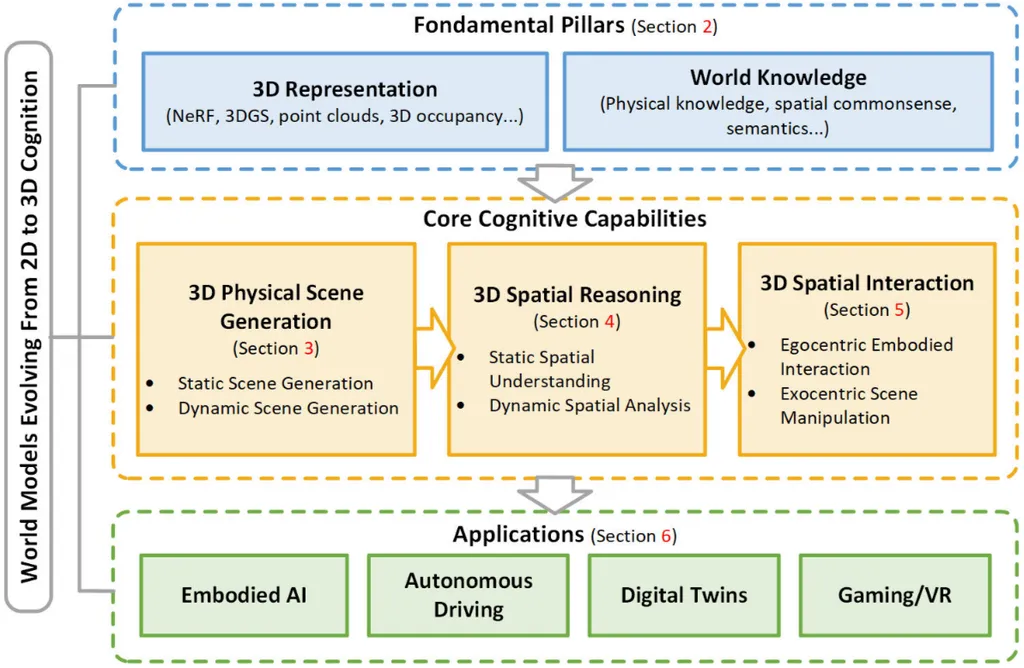
Recently, world models have emerged as a key paradigm in the AI field, enabling agents to 'imagine' and plan for the future. However, the atmosphere in the field is not entirely bright.
Every time a new paper is released, researchers must reimplement the same baselines, the same evaluation protocols, and the same data processing logic from scratch. It is like having to manufacture a new stove, knife, and cutting board every single time, rather than just following a new recipe. This reproducibility crisis hinders fair comparison between studies and generates errors due to code bugs.
The stable-worldmodel released by the GalilAI Group targets this exact pain point. This library is not just a collection of code; it is a modular research ecosystem equipped with a verified environment suite, a standardized data layer, and reliable planning solvers. Researchers can now escape from repetitive boilerplate code and focus on the true core research: improving model performance.
An Integrated Workflow Beyond a Simple Tool: Collection, Training, and Evaluation
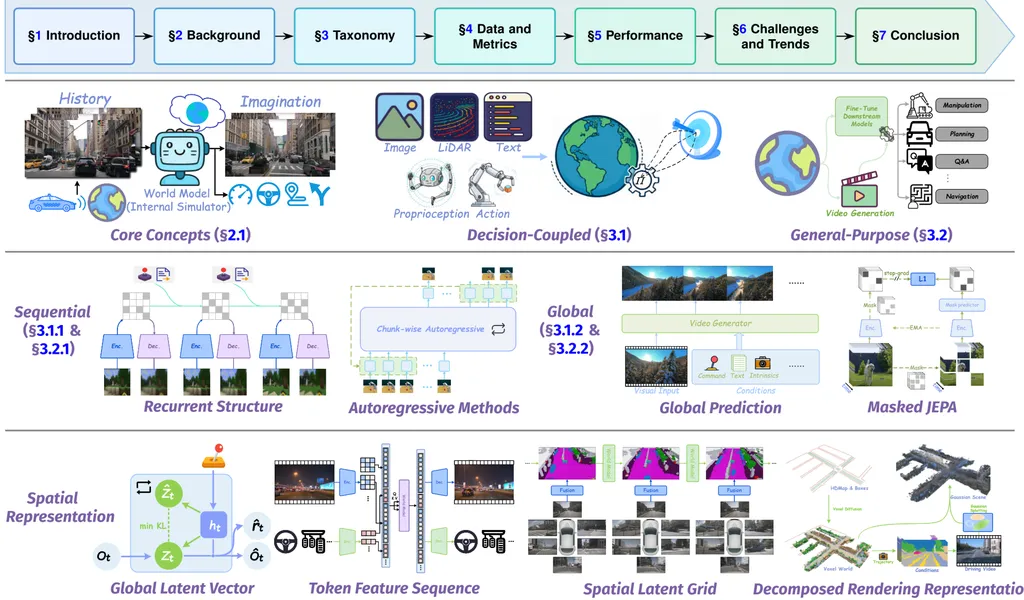
The greatest appeal of SWM lies in its integrated pipeline that connects data collection to model evaluation. This process is smoothly linked, much like a well-organized automated factory line.
The first step is data collection. By creating a swm.World object and setting an Expert Policy, you can rapidly collect episode data across multiple parallel environments.
The second step is training. You load the collected data, instantiate your desired world model architecture, and proceed with training. Since SWM provides various state-of-the-art models as baselines, comparison with existing research is extremely easy.
The final step is evaluation. SWM does not stop at simply seeing if a trained model predicts well. Using planning solvers such as CEMSolver (based on the Cross-Entropy Method), it measures how good the actual control performance (Success Rate) is based on the future predicted by the model. In other words, it proves how well the model 'understands' the environment through action.
Thanks to this organic flow, researchers can experience the entire process from data collection to final success rate calculation with just a few lines of code in environments like swm/PushT-v1.
'Lance's' Overwhelming Performance: Solving the Data Bottleneck

As data scales up, what holds research back is not the model architecture, but the I/O (Input/Output) speed. The widely used HDF5 format is convenient for managing a single file, but it has a chronic problem where speed drops drastically when continuously adding data or reading large-scale multimodal data.
To solve this, SWM has adopted a next-generation data format called Lance as its default. The benchmark results are truly surprising.
- Speed Revolution: In a local environment, Lance processes approximately 4,814 samples per second. This is overwhelmingly faster than HDF5.
- Efficient Capacity: While HDF5 occupies 43.12GB, Lance uses only 13.31GB. This is a result of maximized data compression and storage efficiency.
- Cloud Scalability: Even when using remote storage like Amazon S3, Lance processes over 3,100 samples per second through caching, minimizing bottlenecks regardless of where the data is located.
Of course, Lance is not the answer for every situation. If you want to easily distribute a dataset as a single file, HDF5 may still be useful, and video formats might be advantageous when storing very long episodes. However, in the modern research trend aimed at large-scale training, Lance is the clear winner.
How to Verify a Model's True Ability: Controlling Factors of Variation (FoV)
If a model only works well in an environment identical to its training data, can we truly say it 'understands the world'? The real world is a dynamic place where light changes, object colors change, and friction varies.
SWM provides functionality to control Factors of Variation (FoV) to test a model's generalization ability. This feature, which allows free adjustment of lighting, texture, physical properties, etc., is key to verifying whether a model operates robustly even in Out-of-Distribution (OOD) scenarios it has never seen before.
In fact, when researchers used SWM to test the zero-shot robustness of DINO-WM, they confirmed that many existing models suffer significant performance drops even with minor environmental changes like color or size variations. SWM acts as a rigorous testbed that systematically identifies these 'vulnerabilities' and helps develop stronger models to overcome them.
Installation and Getting Started: A Guide to Setting Up Your Research Environment

SWM makes the installation process very intuitive so that researchers can be deployed to the field immediately.
1. Basic Installation If you only need the most basic features, you can install it simply via PyPI.
pip install stable-worldmodel2. Full Installation
To include simulation environments and various training dependencies, it is recommended to add the [all] option.
pip install stable-worldmodel[all]3. Developer Mode and Special Datasets
To utilize datasets like LeRobot, a Python 3.12 or higher environment is required, and it can be installed via a separate option ([lerabit]). If you wish to contribute directly to the library, it is recommended to clone the Git repository and configure a virtual environment using uv.
If you wonder where data and model checkpoints are stored, check the environment variable $STABLEWM_HOME. By default, they are stored in a hidden folder in your user home directory for easy management.
Summary and Conclusion
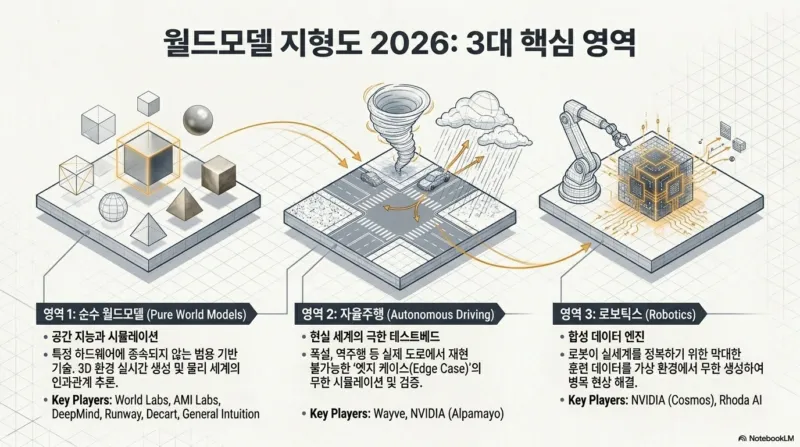
Stable World Model is a powerful standardized platform that unifies fragmented world model research. Through its high-performance Lance-based data layer, sophisticated generalization evaluation via Factors of Variation (FoV), and an integrated workflow from data collection to evaluation, it captures both research reproducibility and efficiency.
Instead of spending your energy on repetitive coding, focus on the fundamental questions of how models can better understand the world. SWM will be a reliable partner in your research journey.
What is the biggest bottleneck in your research environment? Is it data loading speed, or the reproducibility crisis? Please share your concerns in the comments!
References
- galilai-group/stable-worldmodel - GitHub · github.com
- Stable World-Model - GalilAI Group · galilai-group.github.io
- stable-worldmodel-v1: Reproducible World Modeling Research and ... · huggingface.co
- [논문 리뷰] stable-worldmodel: A Platform for Reproducible World ... · themoonlight.io