
"They say interest rates are going down. Should I buy stocks now? Or should I hold onto cash and wait longer?"
This is the most frequent question I receive in investment communities and my inbox lately. With news of a massive wave of interest rate cuts approaching, feelings of urgency arise, but looking at the market, an overwhelming sense of anxiety kicks in: "Hasn't it already risen too much?"
To get straight to the point, the answer lies not in 'what to buy,' but in 'how to allocate.' If you read this article to the end, you will gain your own portfolio blueprint that allows you to move with confidence even when others are wavering.
Current Dilemma: Investors Standing Before the Inflection Point of Interest Rate Cuts
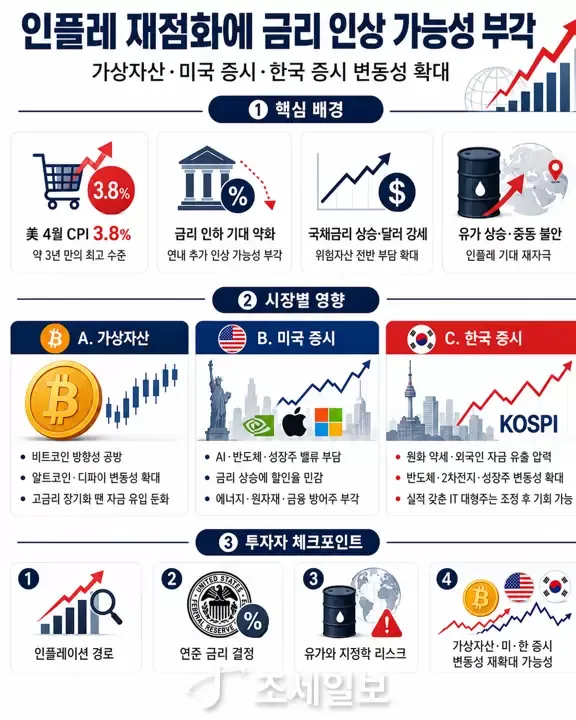
We are currently standing in a very interesting yet tricky phase. This is because central banks have finally entered, or are on the verge of entering, an interest rate cutting cycle.
During this period, investors usually struggle between two paths. One is the aggressive stance: "Since asset prices rise when interest rates fall, let's run toward stocks," and the other is the defensive stance: "Volatility is scary, so let's secure cash first and wait and see."
However, there is a crucial fact we often overlook: "the nature of the interest rate cut." The fate of stocks and bonds changes completely depending on whether rates are being cut because the economy is in a recession or because inflation has been contained and normalization is occurring.
Furthermore, hints can be found in the movements of massive funds like the National Pension Service (NPS). Looking at the NPS's recent US stock portfolio, the weight of AI and large-cap tech stocks, such as NVIDIA (6.92%) and Apple (6.08%), is very high. This suggests that despite interest rate volatility, massive capital is still betting strongly on the huge trend of 'technological innovation.'
So, what choice should we make riding on the shoulders of this giant? Let's compare three major strategies.
Strategy 1: Aggressive Stock Inclusion (High Risk, High Return)

The first strategy is to bet on the liquidity supply and corporate profit growth caused by interest rate cuts. As seen in the NPS portfolio, the AI and semiconductor sectors are in a structural growth phase that transcends the interest rate cycle.
Pros: When interest rates fall, the cost of financing for companies decreases. This leads to an increase in corporate net profits, acting as a powerful engine to drive up stock prices. In particular, tech leaders like NVIDIA or Microsoft can maximize their appeal as 'growth stocks' during a rate-cutting phase.
Cons and Risks: The biggest enemy is 'volatility.' If the interest rate cut is delayed longer than expected or if the cut is accompanied by a recession, the stock market could actually crash. This is exactly where the doubt, "Hasn't it already risen too much?" arises.
One-line summary: Aim for high returns by riding the growing tech stocks, but your mental state may crumble due to market fluctuations.
Strategy 2: Stable Bond Investment (Medium Risk, Steady Return)

The second is a strategy focusing on bonds, the protagonists of the interest rate cutting cycle. This utilizes the basic economic principle that "when interest rates fall, bond prices rise."
Pros: During a period of falling interest rates, bonds can be a much more attractive alternative than stocks. As rates drop, the value of previously issued high-interest bonds increases, allowing you to aim for both interest income (Coupon) and capital gains from the rise in bond prices simultaneously. Mid-to-long-term bonds, in particular, maximize returns when rates fall.
Cons and Risks: It is difficult to expect explosive returns from bonds as one might from stocks. Additionally, if inflation rises again and causes interest rates to go up (a rate hike re-entry), bond prices will face downward pressure.
One-line summary: Suitable for directly enjoying the benefits of falling interest rates and drawing a steady return curve.
Strategy 3: Holding Cash and Watching (Low Risk, Low Return)

The last is the "let's just watch for now" strategy. This involves holding cash and looking for opportunities until market uncertainty is resolved.
Pros: It offers the highest psychological stability. It is the only defensive tool capable of protecting your assets when the market plunges. Furthermore, it serves as powerful 'ammunition' to deploy when the market eventually becomes truly cheap.
Cons and Risks: The most terrifying enemy is 'opportunity cost.' If the market continues to rise contrary to expectations, or if bond prices have already risen to reflect the rate cuts, you will miss all the profits while holding cash. If inflation persists, the real value of your cash is effectively being eroded a little every day.
One-line summary: You can protect your money, but you might end up just watching from the sidelines while others make money.
Conclusion: Recommended Optimal Portfolio for You
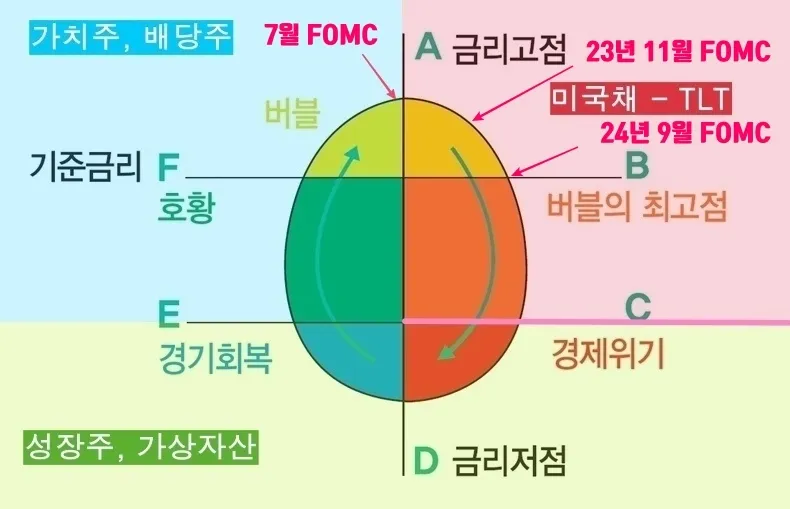
Now that the comparison is complete, shall we summarize what you should choose? Instead of an extreme choice of going "all-in" on one side, I recommend a hybrid strategy based on 'Goal-Based Investment (GBI)'.
Rather than simply chasing "a few percent of return," you must first set a goal such as "how will I manage my retirement funds?" Based on this, my recommended roadmap is as follows:
-
Aggressive Profile (Maximizing Returns): Stocks 70% : Bonds 30% Hold AI and tech-centered ETFs as your core (similar to the NPS), but mix in some mid-to-long-term bonds that can benefit from interest rate cuts to defend against volatility.
-
Stable Profile (Asset Defense): Stocks 30% : Bonds 70% Increase the proportion of bonds, which are direct beneficiaries of the interest rate cutting cycle. In this case, the key is 'diversification of maturity structure'—securing liquidity with short-term bonds while aiming for capital gains with mid-to-long-term bonds.
-
For Beginner Investors?: Utilize TDF (Target Date Funds) and ETFs If it is difficult to pick individual stocks, it is good to use TDFs, which automatically manage asset allocation according to your retirement date, or follow the basics of diversified investment through S&P 500 ETFs that track the entire market.
Ultimately, what matters is 'timely buying' and 'continuous rebalancing. Pouring all your money in at once just because rates are falling is gambling. You need the flexibility to manage your average purchase price through dollar-cost averaging (regular investment) and to check the probability of achieving your goals according to market conditions.
Now is the time to move away from the binary thinking of 'cash vs. stocks' and instead consider what kind of clothes (asset allocation) to wear to match the weather of an interest rate cut.
What kind of clothes is your portfolio wearing right now? Are you perhaps wearing clothes that are too thin and shivering in the cold wind (volatility)?
Please share your current investment proportions in the comments! Let's think about it together.
References
- [2025년 4분기 국민연금 미국주식 포트폴리오 공개] - Instagram · instagram.com
- 금리 많이 내려왔다는데 언제 투자해야 해요? - 채권 투자 시기는? · m.kbam.co.kr
- 초보자도 따라하는 2026년 실전 퇴직연금 채권투자전략 - 글로벌에픽 · globalepic.co.kr
- 연금경제ㅣ수익률 경쟁은 그만, '목표'로 투자하라 - 글로벌에픽 · globalepic.co.kr