On a shaky high bridge, men who received a phone number from a female researcher following the same procedure called more often and included more sexual content in their stories about images than men on a stable bridge. Even though the same researcher asked the same questions, the type of bridge changed their behavior and creative outputs. This illustrates the psychological mechanism by which the brain interprets bodily responses based on nearby cues in the moment.
A shaky bridge and a stable bridge, the same woman and different outcomes
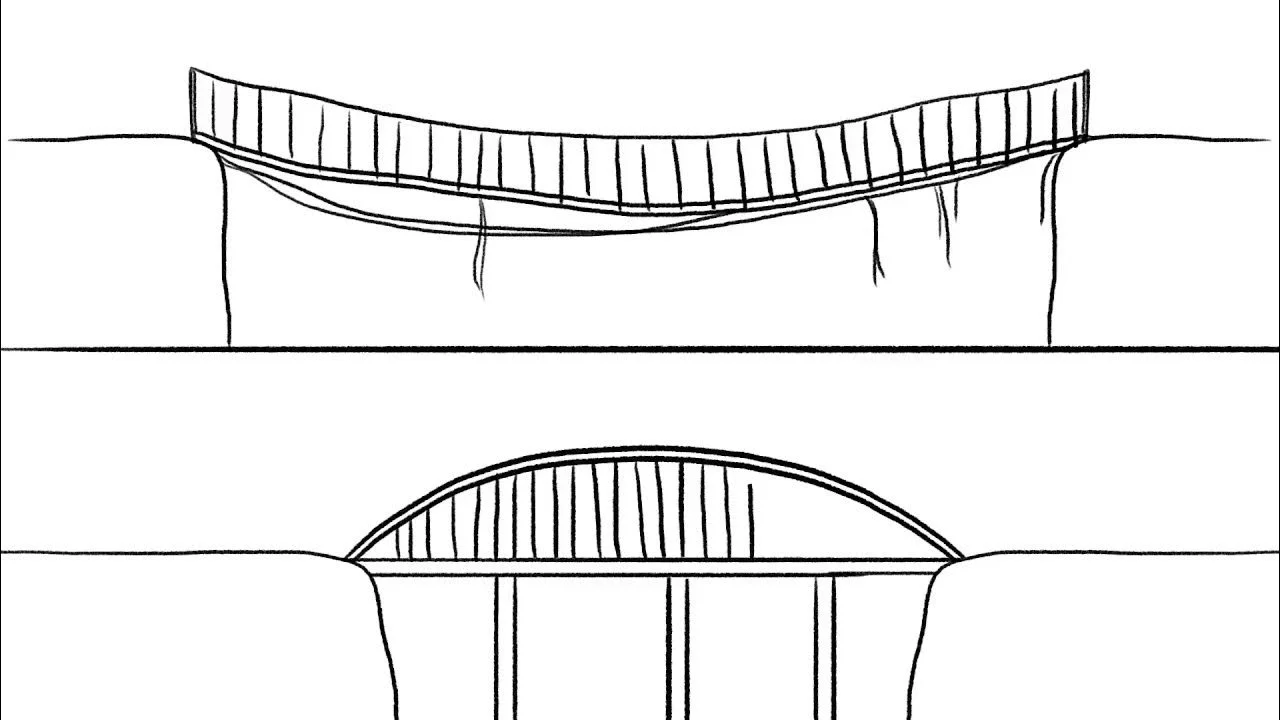
In 1974, psychologists Donald Dutton and Arthur Aron placed male participants in two conditions. One group crossed a shaky, high suspension bridge, while the other crossed a stable, low bridge. In both cases, the same female researcher approached to request a survey and offered her phone number, encouraging contact 1.
The observed outcomes were clear. Men who crossed the shaky bridge called the female researcher more often than those who crossed the stable bridge 1. Furthermore, an analysis of stories written about images shown to the men revealed that participants from the shaky bridge condition included more sexual content in their stories 1. The bridge environment influenced both whether men called and how they interpreted the images.
The researchers explained that these differences stemmed not from the individual attractiveness of the female researcher, but from the physiological arousal generated during the bridge crossing 1. In other words, participants did not accurately attribute the cause of their psychological tension to the danger of the bridge.
How does the brain 'interpret' bodily responses?

To understand this phenomenon, one must first define the scope of 'arousal' in psychology. Here, arousal refers to the body's general state of response to stimuli, extending beyond psychological tension to include increased heart rate, elevated blood pressure, skin flushing, and pupil dilation 21. The changes occurring in the body when people commonly feel "adrenaline" correspond to this state.
According to Professor David Sadr, during strong emotions such as fear or anger, the signals the body produces are not completely identical but share a largely overlapping set of common signals 2. The brain notices these ambiguous bodily responses but cannot immediately determine their cause. Instead, it uses the surrounding environment as a cue to label the response. Professor Sadr illustrated this with the example of encountering a bear. The body reacts first, and the brain then connects the reason to the bear, defining it as 'fear.' If, at that moment, a person of the opposite sex is nearby while the body is reacting, the brain may interpret the same increase in heart rate as 'attraction to the person.' In psychology, this principle is called 'misattribution of arousal,' the phenomenon of incorrectly attributing the cause of arousal 21.
Reactions extending beyond the horror movie theater
Horror films effectively utilize this principle of arousal labeling. Jump scares, eerie imagery, and sudden noises increase the audience's heart rate. Even though audiences know the monsters are not real, their bodies still respond, and according to Professor Sadr, the arousal induced in such moments can unconsciously be 'relabeled' as attraction toward the companion 2.
When leaving the theater, the arousal response created by the film may not disappear completely. The brain seeks to reattribute the cause of the lingering increase in heart rate, and after the theatrical context is gone, attributing it to the date companion nearby can seem the most logical explanation to the brain 2. However, the cause of arousal is not necessarily labeled as 'attraction.' If the brain connects the response to other cues, such as interpreting it simply as discomfort or fatigue, it may not lead to the expected level of excitement.
Dr. Benjamin Le applies this principle to dating choices, suggesting a strategy of selecting 'safe but scary activities,' such as watching horror films or experiencing thrill rides in safe amusement parks 1. This is merely one strategy utilizing the brain's tendency to label arousal, not a universal prescription applicable to all relationships.
The common ground pointed out by Dutton and Aron's bridge experiment and Professor Sadr's explanation is clear. When the body reacts first, the brain uses the target or scene present at that moment as a cue to rewrite 'what this response is about.' Whether on a shaky bridge or in a horror movie theater, the palpitations are actual physiological responses, so there are moments when the brain rewrites the cause from 'danger' to 'attraction to the person nearby.' The psychological pathway that makes horror dates feel particularly thrilling is created through this process of misattribution of arousal.