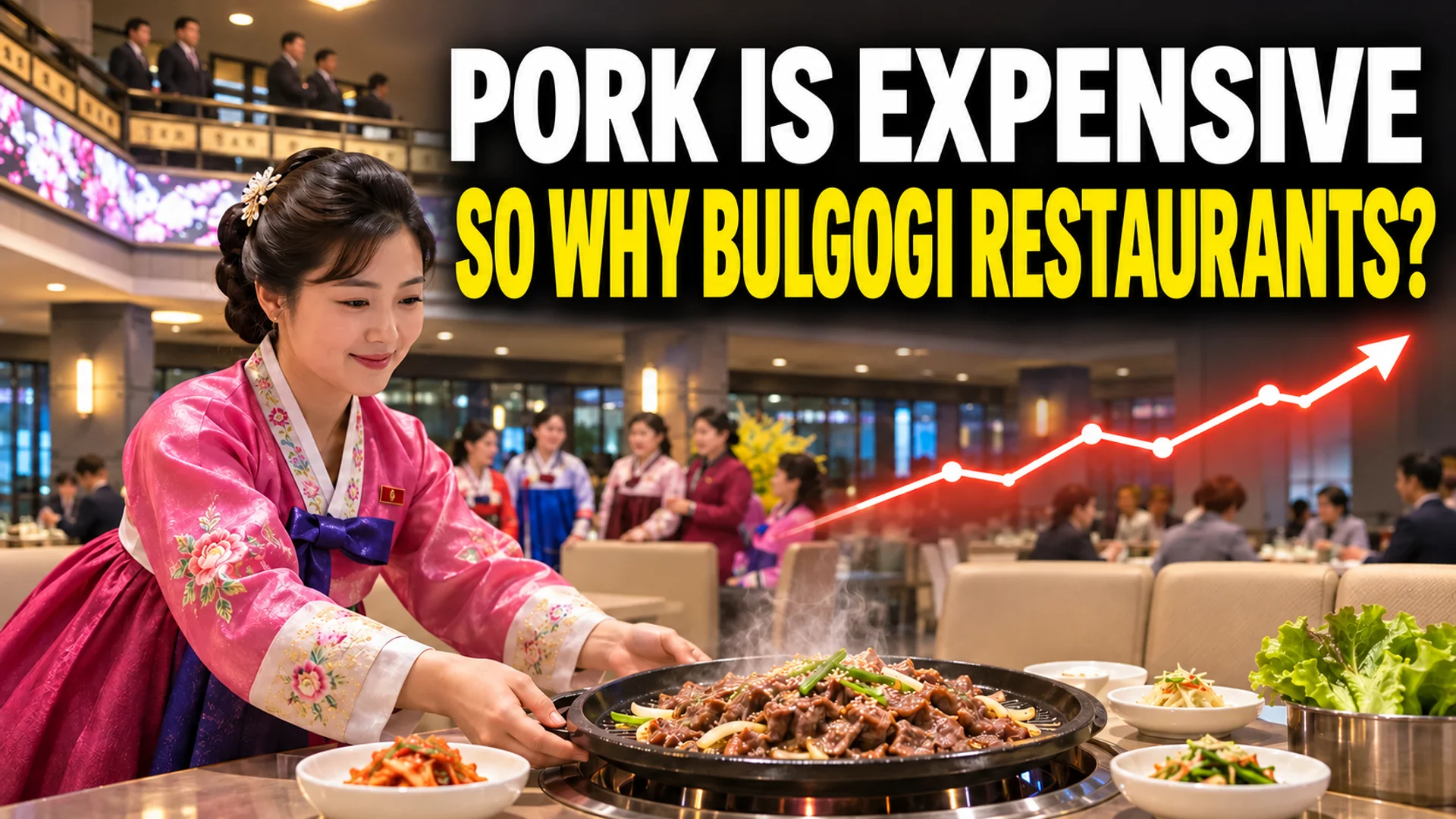
In just 26 days from September 7 to October 2, 2026, modern bulgogi specialty restaurants opened in eight major cities across North Korea, from Kanggye in Chagang Province to Haeju in South Hwanghae Province. The restaurants, as depicted in photographs reported by Rodong Sinmun, featured clean interiors and bright lighting. Their menus included beef brisket barbecue, lamb ribs, and pork jowl, as well as salmon belly sashimi and foie gras burgers 1.
However, during the same period, pork became virtually out of reach for ordinary residents frequenting local markets due to soaring prices. According to Daily NK’s market price survey, the price of 1 kg of pork in Pyongyang reached 159,000 North Korean won as of August 30, 2026. This is approximately 12 times the annual average price in 2018 and represents the highest price recorded since the surveys began 2. The same amount of money could alternatively purchase 3.5 kg of rice or 9 kg of corn instead of 1 kg of meat 2. What makes the proliferation of large-scale bulgogi restaurants viable in an environment where meat is scarce? The answer lies in imported meat replacing domestic slaughter and a procurement structure centered on specific livestock.
Production Foundation Collapsed by African Swine Fever and Feed Shortages
The decisive causes of soaring pork prices are the spread of disease and feed shortages. The outbreak of African swine fever (ASF) in Usi County, Chagang Province, in May 2019 severely destabilized the domestic pig-raising foundation. At the outbreak farm, 77 out of 99 pigs died and 22 were culled; ASF subsequently spread nationwide, affecting household pig raising as well 2. Currently, household pig raising is scarcely found in rural areas 2.
Cho Chung-hee, Director of the Good Farmers Institute, diagnoses that the number of pigs plummeted after the ASF outbreak, and the scale of raising has not recovered, with the risk of ASF becoming endemic and recurring anywhere, anytime 2. Here, ‘endemic’ refers to a state where pathogens remain in the environment and can cause outbreaks repeatedly. This is not an issue resolved by a single quarantine measure, but has become a structural constraint requiring ongoing management of outbreak risks 2.
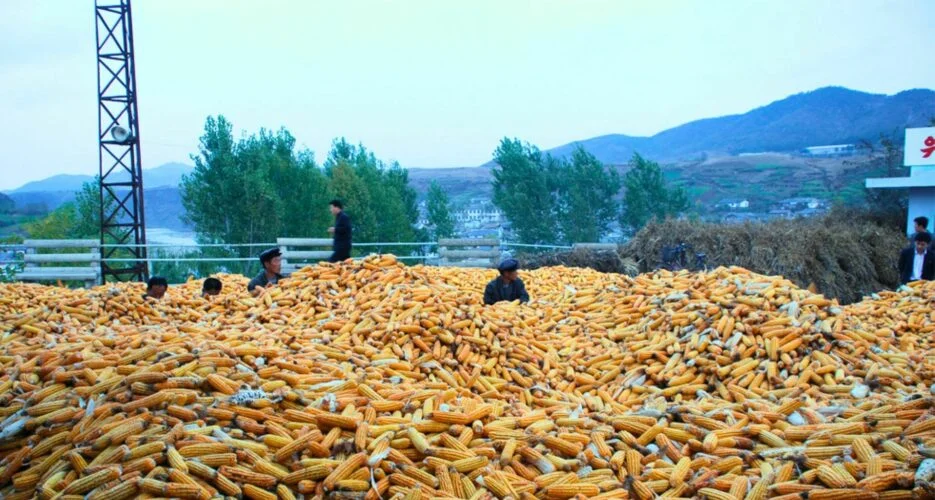
Another reason for delayed production recovery is the shortage of feed grains. As corn, a staple food for residents, is in short supply, it is difficult to provide livestock with sufficient compound feed, and importing feed corn separately is not easy given the current economic conditions, according to Director Cho 2. The foundation for meat production itself remains unrecovered.
The Reality of 'Bulgogi' Impossible Through Domestic Slaughter Alone
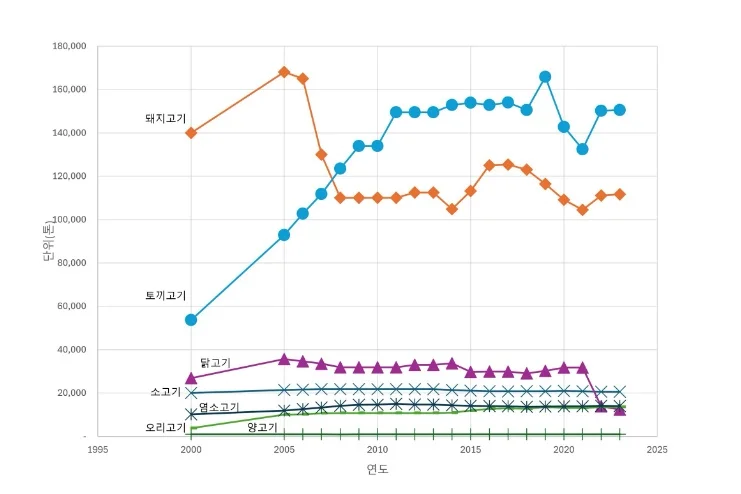
According to statistics cited by researcher Kim Kwan-ho, North Korea’s pork production decreased from approximately 170,000 tons in 2005 to about 110,000 tons in 2023 1. The situation for cattle is even stricter. Under North Korean law, cattle are classified as ‘farm machinery’ and arbitrary slaughter is prohibited, meaning only cattle that are aged out or died due to accidents are distributed in a limited manner 1. Therefore, it is realistically difficult to consistently secure cuts such as ‘beef shoulder’ or ‘beef tongue’ listed on the menus whenever needed 1.
In statistics cited by researcher Kim Kwan-ho, based on total meat production (approximately 320,000–360,000 tons) and North Korea’s population (approximately 26 million), the annual meat consumption per capita is stated to be around 1.28 kg 1. However, dividing 320,000–360,000 tons by 26 million people yields approximately 12–14 kg per person annually, showing a significant discrepancy with the 1.28 kg figure stated in the column 1.
Regardless of which figures are applied, it is clear that domestic slaughter alone cannot adequately meet the demand of the large bulgogi restaurants newly established in eight cities. Researcher Kim Kwan-ho notes that because grain for human consumption is also in short supply in North Korea, livestock cannot be fed sufficient compound feed, leading to poor growth, and predicts that “high-quality meat suitable for bulgogi or barbecue will be very rare” 1. In other words, the interpretation emerges that it is physically difficult to supply the bulgogi meat listed on the menus solely through domestic slaughter.
The Gap Filled by Imported Byproducts and Alternative Livestock
Meat demand that cannot be met by domestic slaughter is being substituted by imports and livestock with low feed dependency.
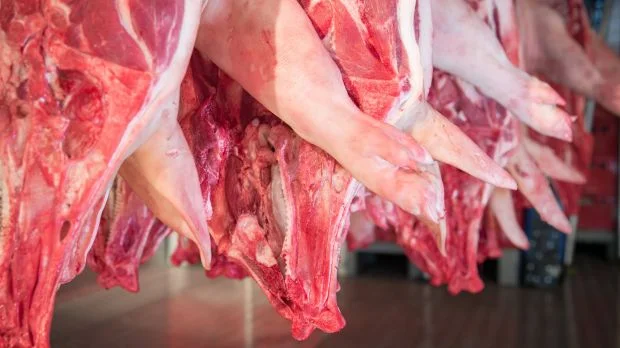
First, imported meat serves as a major procurement channel. According to the Russian agricultural trade agency Agroexport, as of January 2026, North Korea imported over 760 tons of pork byproducts, including trotters, offal, and frozen meat, from Russia 1. Additionally, according to China’s General Administration of Customs, North Korea’s official meat imports from China amount to approximately 2–5 million USD annually, primarily consisting of processed meat products such as frozen chicken, frozen pork, sausages, and canned goods 1.
It appears that rabbits, as herbivores, can be raised without additional feed, and rabbit meat production in North Korea has steadily increased since the 2000s, reaching approximately 150,000 tons in 2023 1.
These alternative livestock and processed foods have already taken root as tangible alternatives driving changes in residents’ diets. A source in Ryanggang Province reported that residents often opt for relatively cheaper chicken or duck meat instead of expensive pork even on special occasions like holidays or birthdays, and vulnerable groups with limited economic capacity sometimes substitute with ‘artificial meat’ made from beans 2. The kitchens of the glamorous bulgogi restaurants are similarly situated within the same supply structure constrained by domestic raising limitations, and likely maintain their menus by adopting methods involving alternative livestock and imported frozen items.
The Gap Between Menu and Kitchen
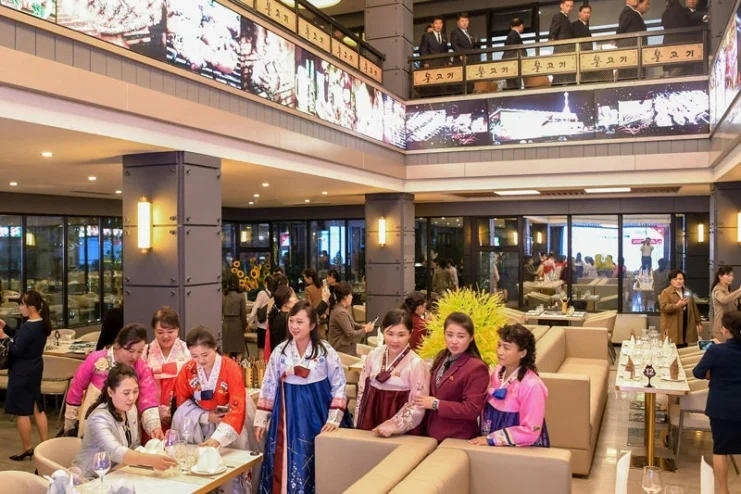
Consequently, the meat served at bulgogi restaurants in eight provincial cities relies heavily on alternative proteins rather than being abundantly supplied by domestic pig and cattle slaughter. This structure depends on Russian pork byproducts, Chinese frozen poultry and processed meats, and domestic alternatives such as rabbit meat, which can be raised without separate feed, and chicken and duck meat, whose production levels have been consistently maintained 1.
Even if a menu offering over 40 types of bulgogi exists, it is unlikely that domestic production recovery will stabilize pork prices—which have risen 12 times compared to 2018—in the short term as long as the endemic nature of ASF and feed shortages continue. Researcher Kim Kwan-ho points out that under harsh anti-North Korea sanctions and closed economic policies that are extremely difficult for North Korea to resolve alone, meat production levels are unlikely to recover unless standardized feed and quarantine infrastructure are secured not just in specific regions but across all regions 1.
Similar to the trend where ordinary residents without sufficient spending power unrelated to restaurant operations substitute meat with chicken and duck during holidays, the large bulgogi restaurants may also be preparing dishes using a mix of imported frozen meat or alternative meats rather than premium meat strictly matching the names on their menus. While it is difficult to definitively state the actual operational practices and meat quality of the restaurants, as specific cooking process information from within the kitchens has not been disclosed, the physical limitations of supply indicated by national statistics and market surveys are clear.
References
- [남북 농업협력] 북한은 왜 불고기 전문식당을 여는가? - DailyNK · dailynk.com↩
- 돼지고기 1㎏에 16만원 육박…北 주민 밥상서 보기 힘들어져 > 북한소식 | 북한민주화위원회 · cdnk.co.kr↩