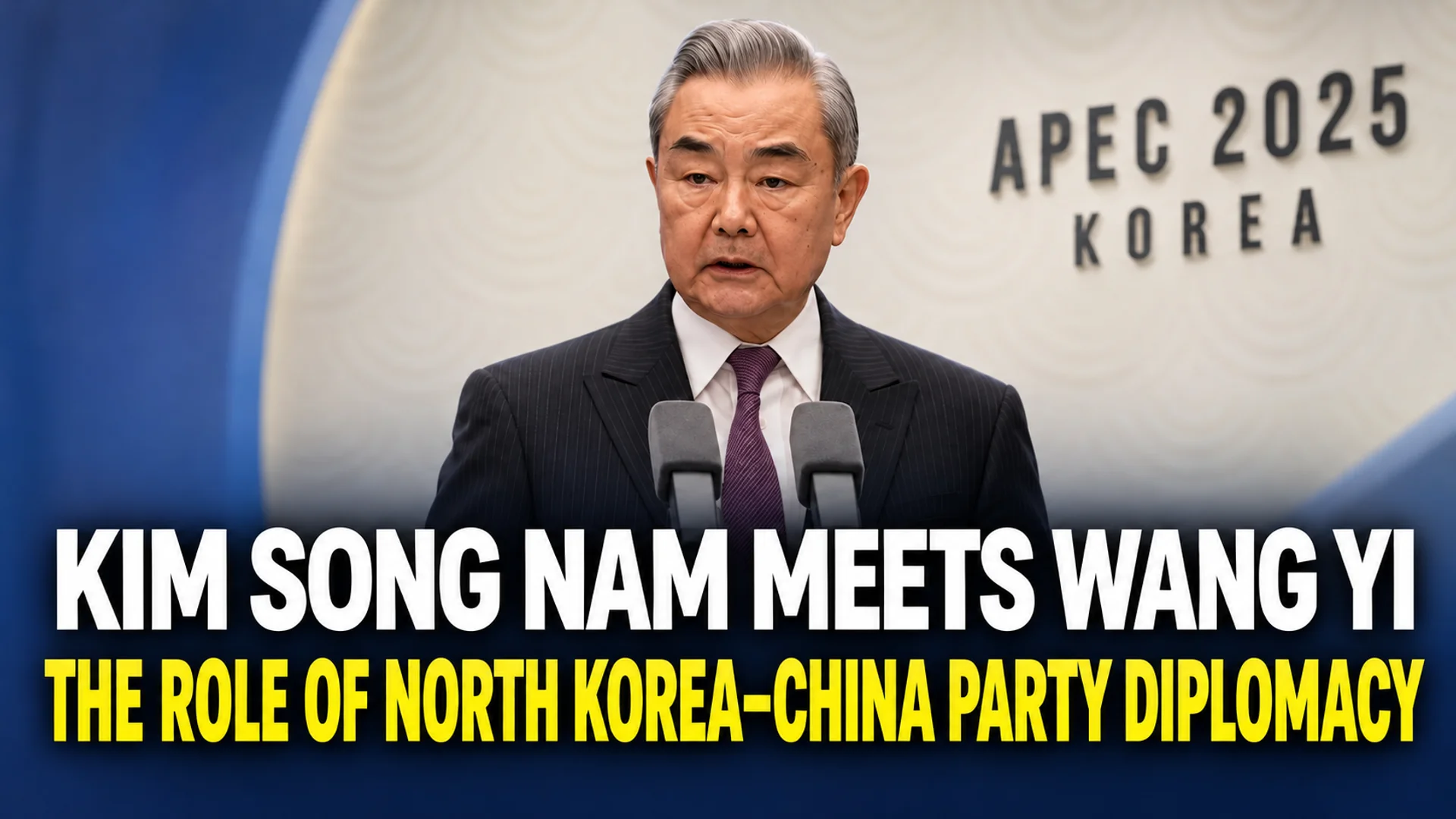
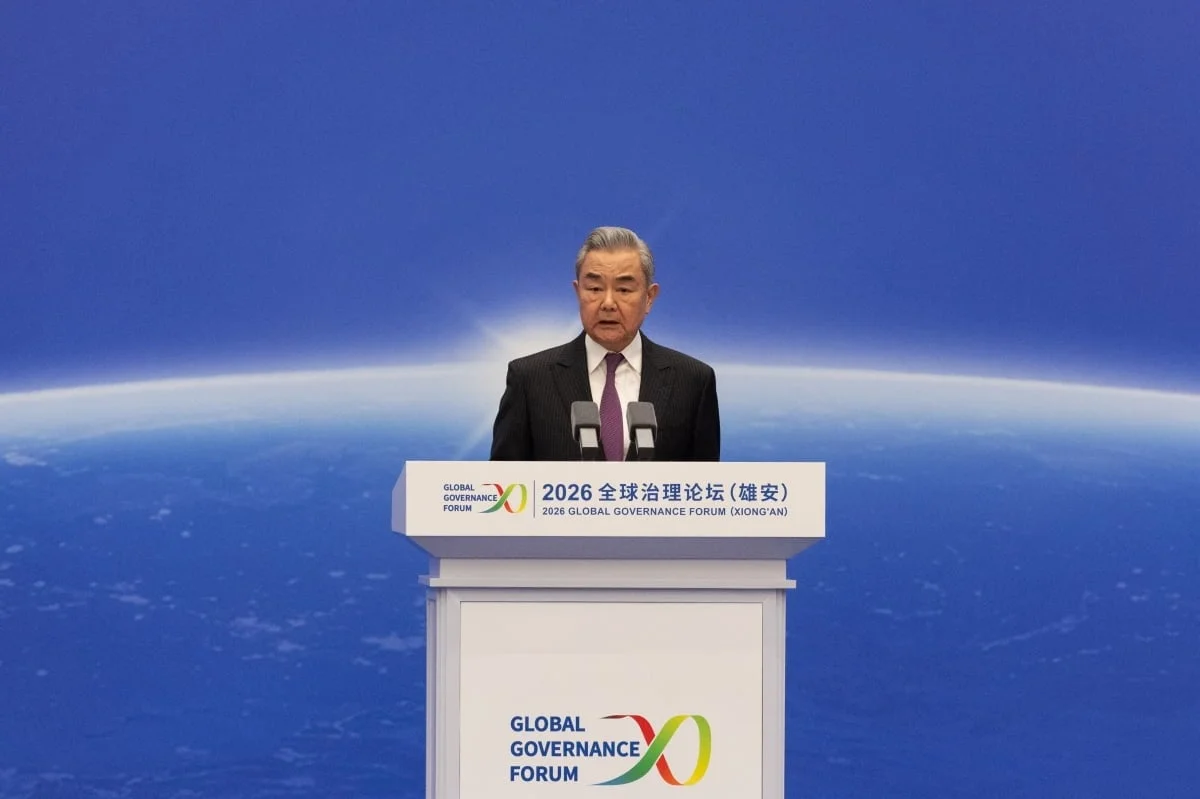
Having departed on November 3, 2026, and arriving the same day, he sat face-to-face two days later, on November 5, with Wang Yi, a member of the Political Bureau of the Central Committee of the Communist Party of China and Foreign Minister 1.
A notable point is that this visit was announced and handled through an internal organ of the ruling party rather than through the Ministry of Foreign Affairs. The possibility of resumed North Korea–U.S. dialogue is merely an observation raised within diplomatic circles, tied to the schedule of the Asia-Pacific Economic Cooperation (APEC) leaders' meeting scheduled before and after the meeting; the Wang Yi–Kim Song Nam meeting itself did not officially address U.S.-North Korea contact as an agenda item 2.
A Repeated China Diplomatic Channel Led by a Former Interpreter
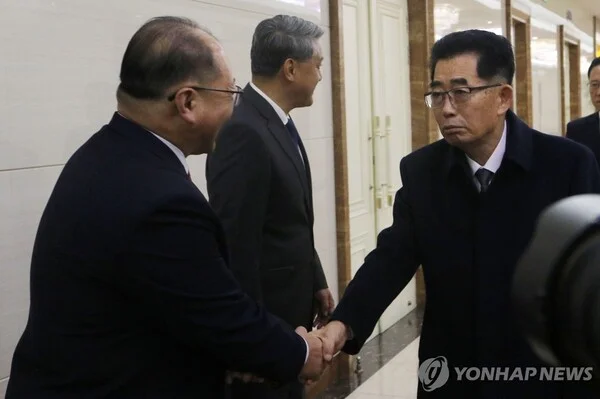
Secretary Kim Song Nam's lead role in this visit stems from his unique background. He previously served as the dedicated Chinese-language interpreter for former North Korean leaders Kim Il-sung and Kim Jong-il, and is regarded within North Korea as an expert in diplomacy with China 1. Following his appointment as head of the International Department of the Workers' Party of Korea in January 2021, he was elected as a secretary of the party at the 9th Party Congress in February 2026, where he now holds a central role in foreign diplomacy 1.
His role was also clearly evident in Chairman Kim Jong Un's recent visit to China. When Chairman Kim crossed the New Yalu River Bridge to visit Dandong, Liaoning Province, on October 24, Secretary Kim Song Nam accompanied him alongside Party General Affairs Department Head Kim Yo Jong and Foreign Minister Choe Son Hui 1. This close coordination structure, in which the operational chief personally visits the site immediately after the top leader's on-site inspection, demonstrates that Secretary Kim Song Nam is not a one-off envoy. He also visited China in March 2024 to engage in strategic discussions with Wang Yi, then head of the Central Foreign Affairs Commission of the CPC and Foreign Minister, and visited China again in September 2025 to attend the military parade marking the 80th anniversary of Victory Day 3.
The International Department Instead of the Ministry of Foreign Affairs: Practical Diplomacy Between Party and Party
A prominent feature of this visit is the channel through which the matter was handled and disclosed. Rather than going through the Ministry of Foreign Affairs, the official diplomatic channel between nations, the approach was framed from the perspective of strengthening internal bonds between the ruling parties: the Communist Party of China and the Workers' Party of Korea. On November 3, Chinese Foreign Ministry spokesperson Mao Ning, at a regular briefing, stated that there was "no information available" regarding Secretary Kim Song Nam's visit to China or meetings with Chinese leadership, and recommended directing inquiries to the relevant department (the International Department of the CPC Central Committee) 1.
Indeed, the meeting between the two on November 5 was also disclosed to the public not via an official Foreign Ministry announcement, but through the International Department's official WeChat account 4. The rationale for the visit was aligned with sharing the outcomes of the recent Fifth Plenary Session of the 20th Central Committee of the Communist Party of China (the 20th Fifth Plenum) held in Beijing with the North Korean side. Foreign Minister Wang Yi highlighted the decision on "comprehensive strict party governance (cong yanzhi dang)" deliberated and adopted at this session as the greatest achievement, conveying the intent to share experiences in party operations and national governance with North Korea 43. Secretary Kim Song Nam similarly responded by proposing to expand exchanges on party-building experience and develop friendly relations 4.
Reaffirmation of the 'Three Invariant Principles' and Declaration of Ideological Solidarity
In his November 5 meeting in Beijing, Foreign Minister Wang Yi reaffirmed the 'Three Invariant Principles' emphasized by President Xi Jinping during his June visit to North Korea. These principles represent a commitment from both sides not to waver despite complex international developments and are as follows: ▲The stance of valuing the traditional friendly relationship between North Korea and China ▲The stance of supporting the Kim Jong Un system and socialist construction ▲The stance of safeguarding mutual interests and the strategic environment between the two countries 42.
Secretary Kim Song Nam supported this strategic solidarity with historical ties from the past. He specifically mentioned the "Memorial Hall to Resist U.S. Aggression and Aid Korea," which Chairman Kim Jong Un visited during his October trip to Dandong, claiming that the visit "once again proved the strategic character of the DPRK-China friendly relations, forged in blood and further strengthened through historical processes" 4. He also defined socialism as a 'shared ideology and common banner' for both sides, clarifying that deepening North Korea-China relations is North Korea's firm stance 4.
Limitations in Interpreting North Korea-U.S. Dialogue Possibilities Overlapping with APEC Schedule
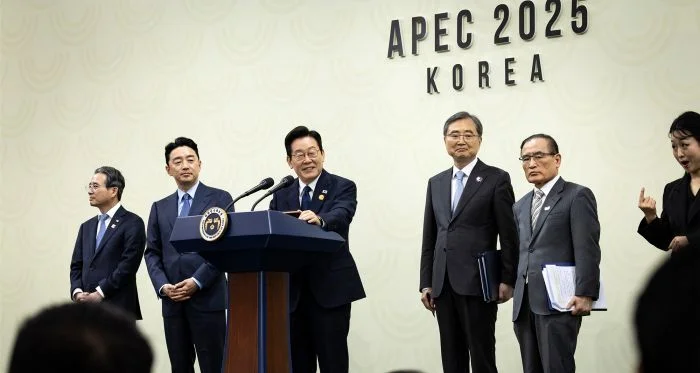
In fact, three days before the meeting, on November 2, Party General Affairs Department Head Kim Yo Jong issued a statement refuting theories regarding the hacking of Binance, noting that "while there are options for dialogue, they cannot be equated with national interests" (reported by the Korean Central News Agency on November 3), which may have influenced such interpretations 45.
During the meeting, Foreign Minister Wang Yi assessed the achievements of 'in-depth strategic communication' between the top leaders of the two countries and discussed expanding exchanges between the ruling parties 42.
Ultimately, the diplomatic value officially confirmed in this visit lies in the fact that the two sides 'shared the outcomes of the Fifth Plenum, exchanged experiences in party operations, and reaffirmed solidarity under the Three Invariant Principles through practical party-to-party channels.' Whether North Korea-U.S. dialogue will resume depends on whether North Korea and China have actually conducted additional coordination, and on the follow-up moves by both sides around the APEC summit.
References
- North Korea sends party delegation to Beijing · en.asiatoday.co.kr↩
- Wang Yi meets visiting N. Korean party official · en.asiatoday.co.kr↩
- whytimes.kr/skin/news/basic/view_pop.php · whytimes.kr↩
- 왕이·김성남 베이징 회동…북중관계 심화 추진 · hankyung.com↩
- 결국 폭발한 김여정의 경고…북미 관계에 번진 '심상찮은 기류' [에디터픽] / YTN · youtube.com↩