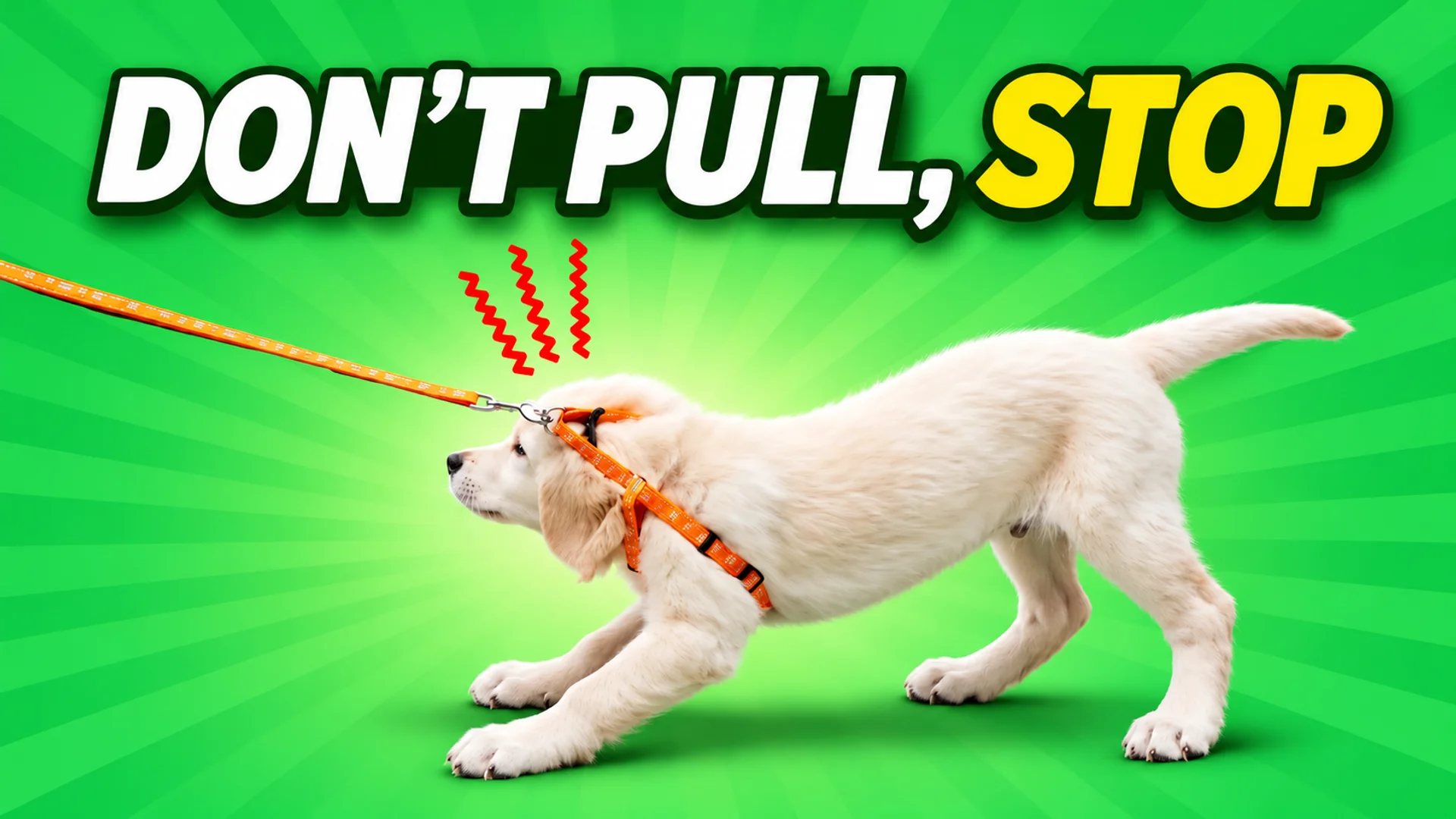
When a dog pulls hard on the leash during a walk, most owners reflexively pull back. However, in a video published in March 2024 by the YouTube channel ‘Banji (Pet Knowledge & Information),’ this issue was summarized in a single sentence: “Your dog pulls the leash because you are pulling first” 1. The owner pulls harder to control the pulling dog, and the dog responds by pulling harder against that resistance, creating a repeating cycle. To break this cycle, the owner’s reaction when pulling the leash should not be to pull back, but to immediately stop walking forward or to turn their body in the opposite direction. To prevent the pulling habit from becoming entrenched, it is essential to consistently maintain the immediate consequence that ‘movement ends when the leash becomes taut,’ without wavering.
Pulling is not a habit, but a reward created by movement
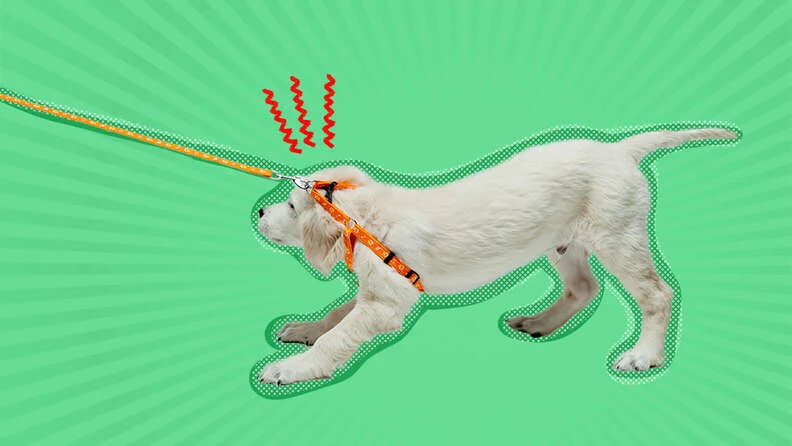
If leash pulling is viewed solely as a ‘disobedient habit,’ finding a solution becomes difficult. Pet behavior experts agree that the primary cause of pulling is not dominance, but the result of learned reinforcement. Russell Hartstein, founder of the Los Angeles-based pet care company Fun Paw Care and a certified dog behavior professional, diagnosed in an article for The Dodo that pulling is a behavior that has been rewarded. He explained that as a dog accumulates experiences of reaching desired destinations by pulling, the pulling becomes stronger 2. He added, “Dogs engage in behaviors that effectively yield reinforcement (rewards).”
Editor Chung, who authored a leash training guide for the Korean pet media outlet ‘Petzip,’ presents the same perspective. He explains that the outdoors is a space filled with smells and stimuli for a dog, and the process itself of receiving the reward of moving forward every time they pull has reinforced the pulling behavior 3. In other words, the problem lies not in the dog’s personality, but in the fact that we have repeatedly confirmed the causal relationship that ‘if I pull, I go.’
The rule for the moment of pulling: Stop or change direction
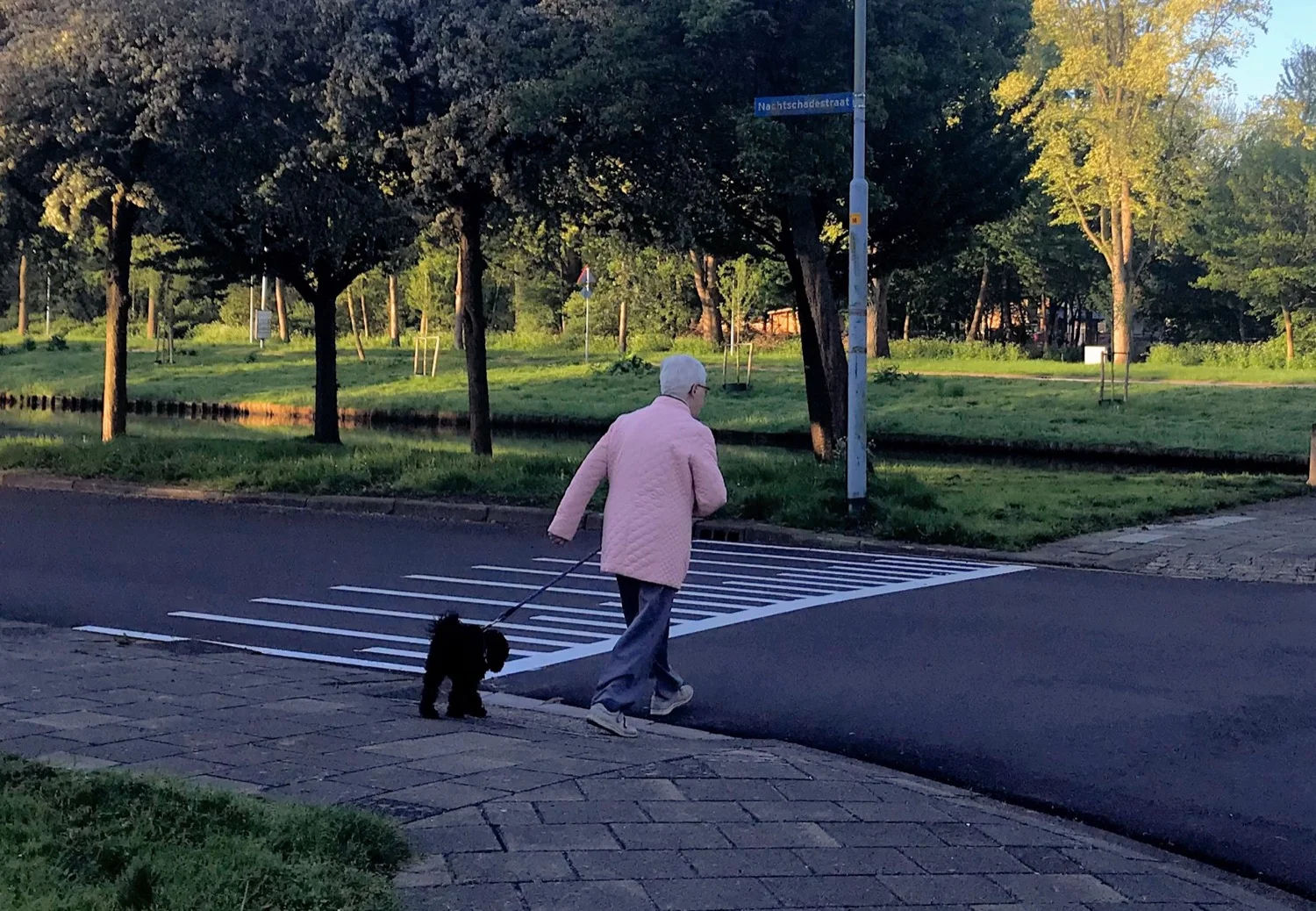
The core rule for breaking pulling can be summarized in one sentence. The editorial team of ‘Meokdaeng Dog Encyclopedia’ adopts ‘forward movement only when the leash is loose’ as a principle, guiding owners to stop or turn and walk in the opposite direction the moment the leash becomes taut 4. Hartstein also recommends stopping immediately when pulling occurs, calling the dog, having it sit to reset if necessary, and then rewarding it 2.
The ‘Petzip’ guide breaks down this procedure in more detail. If the leash is taut, stop movement immediately. When the dog turns to look at you or the leash becomes loose, walk again. At this time, reward with a treat if the dog comes to your side or makes eye contact 3. The key is not to pull the leash backward, but to interrupt the reward of moving forward. Since movement itself is already the reward for pulling, if the owner pulls the leash and inadvertently moves forward a few steps, the dog relearns that ‘pulling eventually works’ 2.
Refocusing attention with U-turns and hide-and-seek
If the dog pulls very hard or is in an excited state, simply standing still may not capture its attention. ‘Banji (Pet Knowledge & Information)’ suggests that in such situations, instead of pulling back with equal force, owners should perform an unexpected U-turn 1. While the dog moves forward expecting the owner’s resistance, if the owner’s body turns 180 degrees in the opposite direction, the dog pauses briefly and follows the owner, restoring focus in the process. The video explains that U-turns teach dogs that walks should be predictable and safe 1.
The hide-and-seek training introduced in the YouTube video is a subsequent step for dogs with more severe pulling. If the dog cannot maintain focus on the owner, secure it in a safe place, move away, and then approach again after a short while. The video explains that this method helps instill in the dog the awareness that it must coordinate with the owner during walks 1.
Choi Gwang-ho, a certified Grade 1 dog trainer (Naver blog ‘Happy Dog Partner’), also advises intervening when pulling and excitement appear together. However, he notes that if the leash is too short, it becomes taut after moving only a short distance, so using a leash of sufficient length is the first priority. While leading ahead itself is not a major issue, he guides owners to stop briefly or walk in the opposite direction if the dog pulls while excited, and to reward with a treat the moment the dog follows along 5.
Scenes where one exception and auto-retracting leashes revive pulling
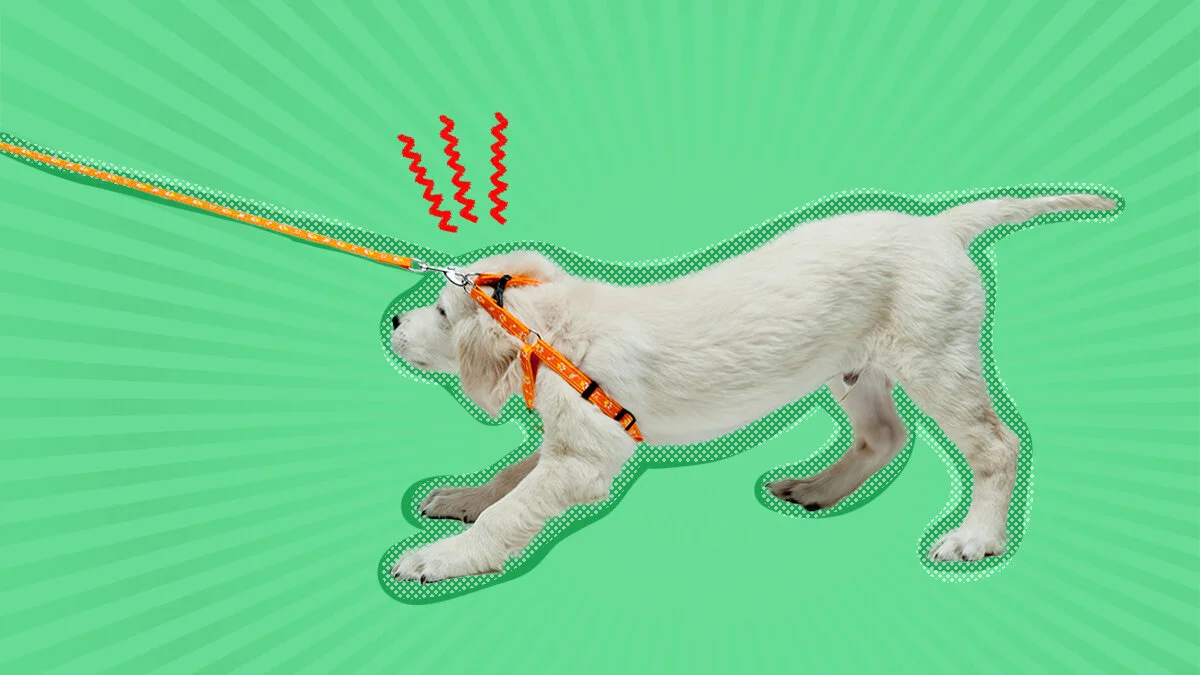
It is important that the rules do not waver. The editorial team of ‘Meokdaeng Dog Encyclopedia’ warns that if the dog reaches its destination even once during a walk while pulling the leash, learning occurs that ‘pulling works,’ which can solidify the habit 4. Editor Chung of ‘Petzip’ also emphasizes that training effects settle faster if all family members adhere to the same rules for the same reason 3.
The selection of training equipment must also align with this principle. Russell Hartstein opposes auto-retracting flexi leashes. This is because the leash stretches with every pull, continuously applying pressure at the connection point with the owner, and the dog relearns that ‘if I pull, I can go where I want’ 2. The ‘Petzip’ guide also recommends avoiding retractable flexi leashes during the training phase and practicing with a fixed-length leash 3.
In contrast, a front-clip harness, which has a ring at the front of the chest, provides structural braking that makes it difficult to move forward as the body turns sideways when pulling 4. While Hartstein acknowledges that this equipment helps manage pulling, he clearly stated that it does not eliminate pulling on its own 2. Equipment is merely an auxiliary tool; ultimately, the core of training is the repeated practice of walking only when the leash is loose 4.
Learn the leash indoors first, and allow sniffing separately
Indoor adaptation training should precede applying rules directly outdoors. Hartstein advises starting training in the most monotonous indoor environment with no stimuli, and gradually increasing stimuli in the order of the backyard, then the street, once the dog becomes accustomed to walking with a loose leash 2. ‘Meokdaeng Dog Encyclopedia’ also recommends connecting positive feelings with treats and play when putting on the harness or collar indoors, then walking around the house with the leash attached, and rewarding the dog when it comes to the owner 4.
Training should not flow only in a direction that suppresses the dog’s desire to explore. The editorial team of ‘Meokdaeng Dog Encyclopedia’ explains that sniffing is the essence of a walk and an emotional stabilization activity, and that stress increases if sniffing is constantly prevented 4. They guide owners to allow time for sniffing as a reward using a cue like ‘now you can sniff,’ balancing walking and scent exploration 4. For owners, walks become a bearable activity only when two rules are established together: walking when the leash is loose, and sniffing when the cue is heard.
Therefore, the reaction owners must show when the dog pulls hard on the leash is not the force of pulling back harder. The core of weakening the motivation for pulling lies in immediately interrupting the reward of movement to teach that pulling does not work, and maintaining the rule that a loose leash and eye contact lead to walking and rewards without a single exception.
References
- 강아지 산책 훈련. 줄 당기는 강아지 교육 방법 · youtube.com↩
- How To Stop Your Dog From Pulling On The Leash So Much · thedodo.com↩
- 리드줄 산책 훈련(당김 교정) · petjip.com↩
- 강아지 산책줄 교육법 (당기지 않고 걷기) · 먹댕 반려견 대백과 · mukdaeng.com↩
- 강아지 산책 훈련 시기,시간까지 완벽정리 · m.blog.naver.com↩