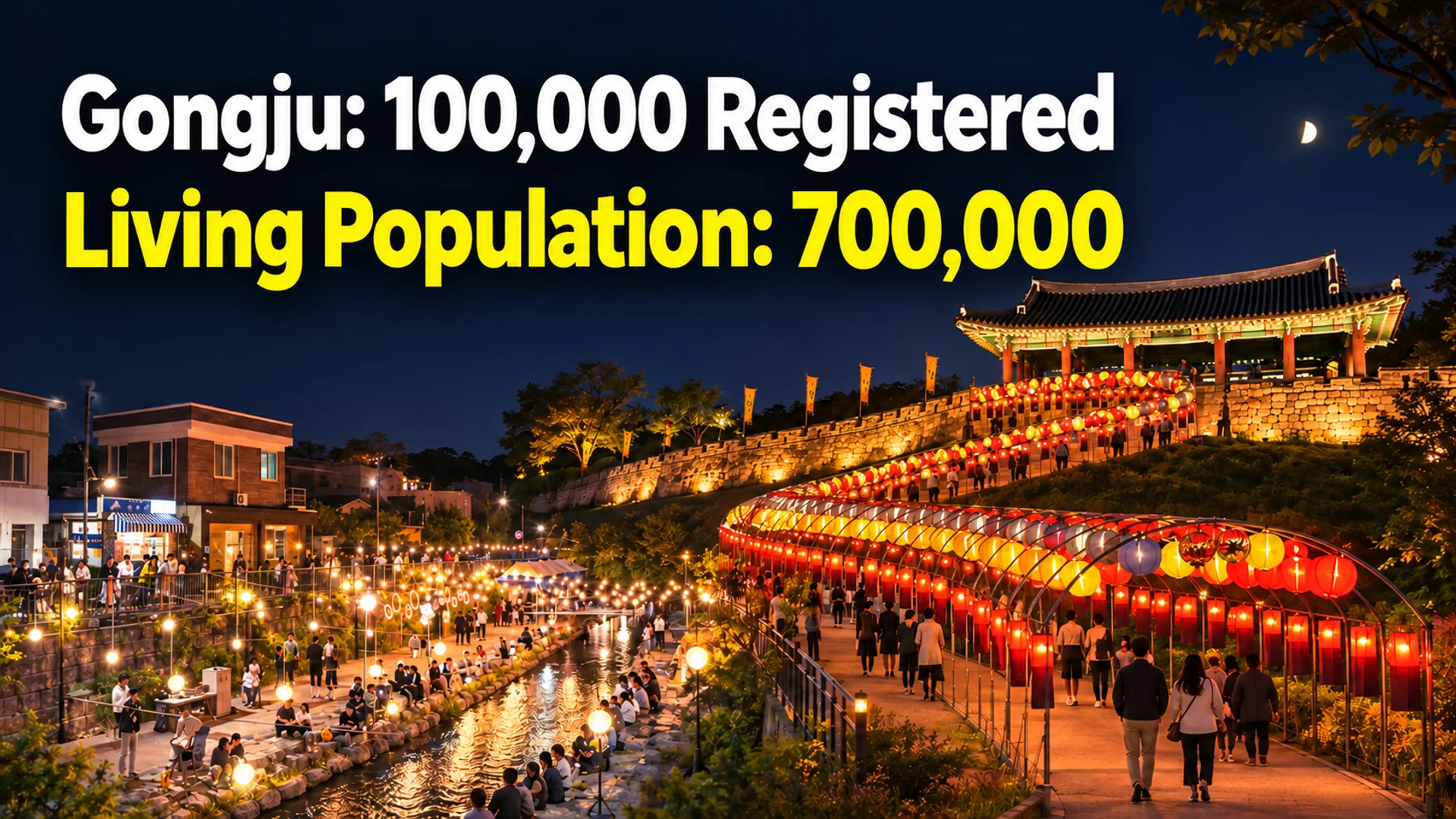
Residents with registered addresses in Gongju City, Chungcheongnam-do, averaged 101,939 per month as of the first quarter of 2024 1. However, according to data released by Gongju City on the 15th, based on the second-quarter 2025 statistics announced by the Ministry of the Interior and Safety and the National Data Office on December 9, 2025, the city’s monthly average “living population” for that quarter was 702,738 234. This means that approximately seven times the number of people registered in the first quarter of 2024 stayed in Gongju for one month during the second quarter of 2025. This figure is possible because it aggregates all individuals who ate, spent, and spent time in Gongju, regardless of whether their registered address is in the city. In this metric, Gongju City ranked second among the 89 nationally designated areas with declining populations.
To state the conclusion first, the “living population” is not merely a count of residents, but a metric that measures the “actual footprint” of participation in local economic activity. Gongju City has developed structures that encourage visitors to stay and spend by combining the securing of stay durations through festivals with visitor discount programs. As a result, the city’s own analysis suggests that this approach has enabled the quantification of the scale of local commercial districts, which was previously invisible when relying solely on address-based statistics. However, it should be noted that this statistic is not yet a finalized national approved statistic, but an experimental statistic subject to future revisions.
Criteria Based on ‘Stay Duration’ Rather Than Address
The number we typically refer to as population is the “registered population,” which is the sum of residents listed in the residence registry and registered foreigners. In contrast, the “living population” is a metric that adds the “staying population” to the registered population. The staying population refers to individuals who visit the area for at least one day per month and at least three hours per day, regardless of their place of residence or purpose of visit 5617.
In other words, both individuals passing through Gongju for daily commutes and those visiting for weekend tourism are included in the living population if they meet the stay duration criteria. This metric focuses on “where one spends time and pays” rather than “where one’s registered address is located.” To assess the actual vitality of areas with declining populations, the Ministry of the Interior and Safety and the National Data Office calculate such data quarterly for all 89 national areas 67.
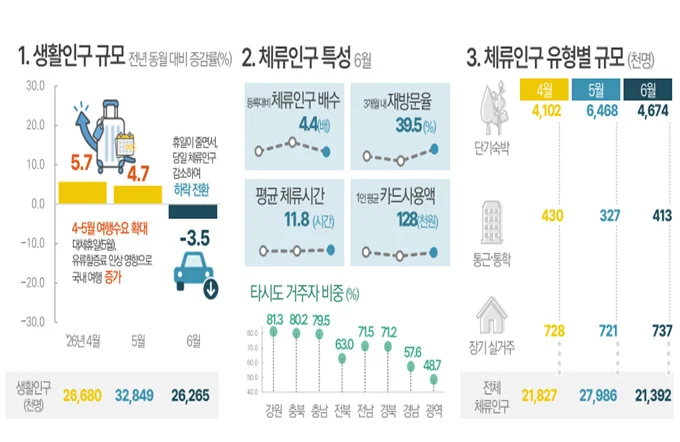
The nature of this metric is clear even in nationwide trends. In the second-quarter 2026 statistics, the May living population in national areas with declining populations was 32.85 million, exceeding six times the registered population (approximately 4.86 million) 67. This indicates that the majority of the living population consists of “non-resident visitors.” In the second-quarter 2025 statistics released in December 2025, the May living population across the 89 national areas was 31.37 million, with the staying population reaching 5.5 times the registered population 8. Gongju City’s figure of 700,000 is also the result calculated within this structure.
600,000 Stayers and 110,000 Won in Card Spending
Of Gongju City’s living population of 702,738 in the second quarter of 2025, the staying population was 598,778 234. Visitors accounted for approximately 85% of the total living population, a scale that ranks first in Chungcheongnam-do and third nationally. The city analyzed that these visitors spent an average of 110,000 won per person via card 234. Compared to the average per-person card spending of 125,000 won for the staying population in national declining-population areas in the second quarter of 2026 67, per-person spending by Gongju visitors is slightly below the national average; however, the ripple effect on the city’s local commercial districts is assessed as significant.
The size of the staying population is increasing gradually. While Gongju City’s staying population was 451,060 in the first quarter of 2024, it increased by nearly 150,000 by the second quarter of 2025, approximately one year and three months (five quarters) later 1. The gender and age groups of visitors are also noteworthy. The high proportion of visitors aged 30 to 50 suggests that this demographic, which has tourism and spending capacity, constitutes the primary staying population 234.
Regarding the background behind the increase in visitor stay volumes, the city’s own analysis attributes it primarily to living population expansion policies and strategies for cultivating large-scale cultural events 24. The city has promoted policies centered around two axes: “securing stay time” and “conversion to consumption.” However, much of the causal relationship between festivals/policies and increased consumption relies on the city’s own analysis, indicating a need for additional research to precisely identify the causes 4.
| Comparison Item | Q1 2024 | Q2 2025 | Reference |
|---|---|---|---|
| Monthly Avg. Living Population | 555,376 | 702,738 | Ranked 2nd nationally in Q2 2025 |
| Monthly Avg. Staying Population | 451,060 | 598,778 | Ranked 1st in Chungcheongnam-do in Q2 2025 |
Mechanisms to Become a ‘Local Resident’ Without an Address
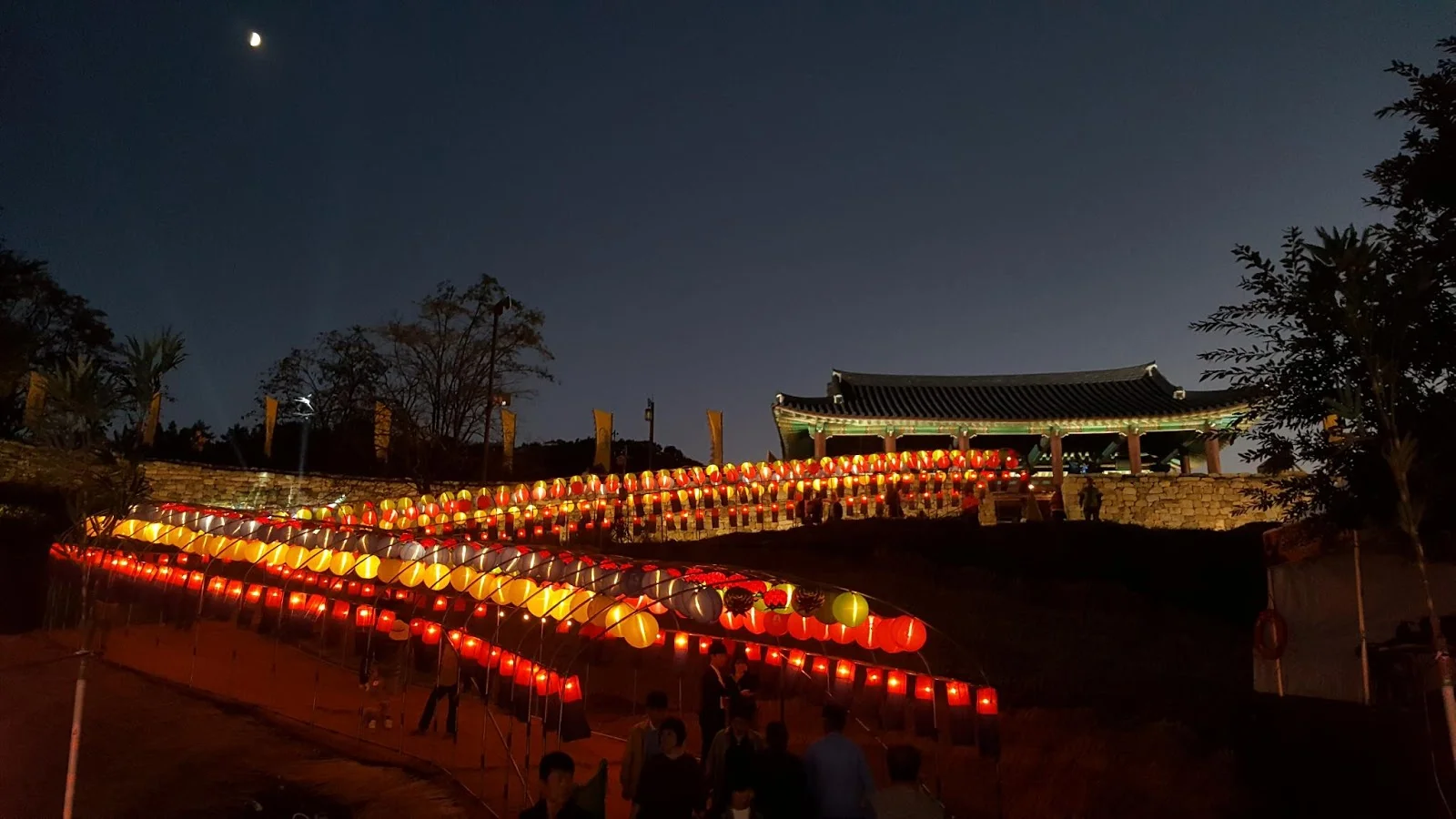
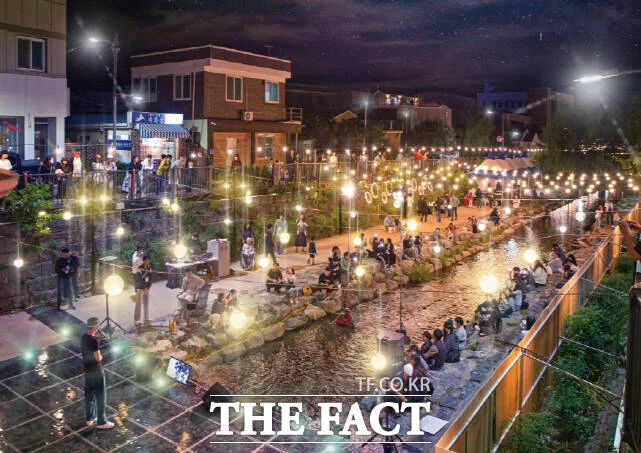
The first strategy is the arrangement of year-round festivals to increase “time spent.” Gongju City evaluates that fostering representative cultural events such as the Baekje Cultural Festival, Seokjangri Paleolithic Festival, Winter Gongju Roasted Chestnut Festival, Gongju Cultural Heritage Night Tour, Yugu Sae-dong Hydrangea Garden Flower Festival, and Gongju Night Beer Festival as key factors in strengthening its status as a stay-oriented city by inducing “stay tourism” 24. The city has operated projects to create year-round stay-oriented tourist destinations and night tourism content linked to historical culture 1. By definition, the staying population includes individuals who stay for at least one day per month and at least three hours per day 8. In particular, during the Baekje Cultural Festival in October 2024, the monthly living population exceeded 780,000, hitting a record high. The city analyzes this as the result of living population expansion policies and the cultivation of large-scale cultural events 234.
The second is the “Onnuri Gongju Citizen Program.” Even without a registered address in Gongju, individuals can receive discounts at historical sites within the city and at affiliated restaurants and cafes through this program 2. Actions such as non-residents visiting Gongju for discounts, having lunch, or touring historical sites are all recorded as “stay” and “consumption” in the statistics. This program serves as a link that connects visitors’ steps not just to passive observation, but to actual expenditure.
This system has targeted demand from nearby metropolitan areas from the outset. In 2024, the city promoted the ‘New 5 Days, 2 Villages’ project with the goal of attracting the approximately 4 million population within the living spheres of Daejeon, Sejong, Cheonan, and Cheongju 1. Using the Local Abatement Response Fund to conduct night tourism content like ‘Let’s Play at Night, Gongju’ and stay-oriented farm projects like ‘Gongju, U’ aligns with this context 1. It can be said to be the result of a combination of accessibility, stay content, and consumption benefits.
Vitality Shown by Statistics and Its Limitations
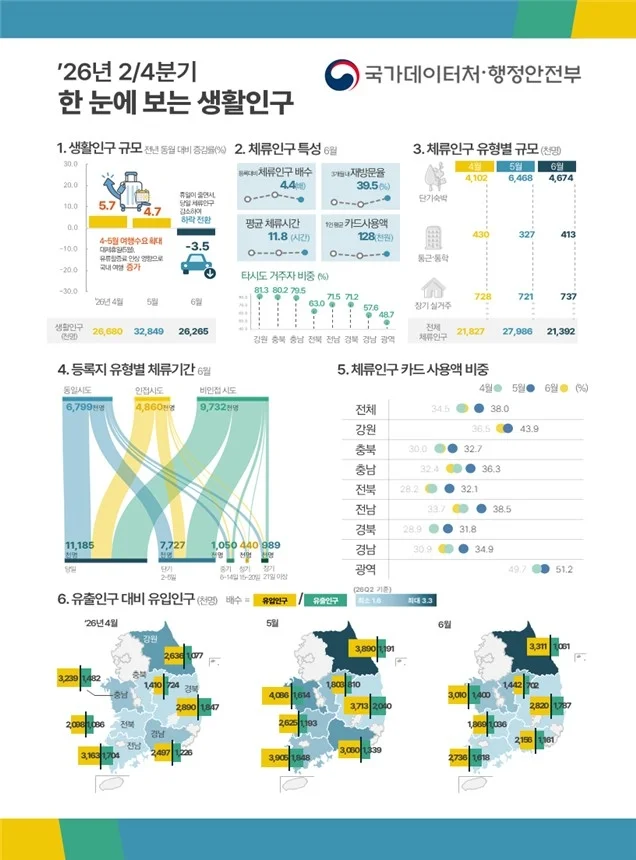
In the second-quarter 2026 announcement, the Ministry of the Interior and Safety stated, “We confirmed that visitors are finding areas with declining populations, staying there, and injecting vitality into those regions” 6. Indeed, 14 areas with declining populations were identified as having a re-visit rate of over 50% in the past three months 7. This serves as evidence that having attractive content that encourages visitors to return can create a continuous consumption flow that goes beyond temporary trends.
Of course, this metric has limitations. First, since this is an ‘experimental statistic’ rather than a national approved statistic, it must be noted that figures may be revised depending on the calculation method 58. Additionally, the causal relationship between ‘festival hosting’ and ‘increased consumption’ remains at the level of analysis in Gongju City’s own press releases, and separate verification for precise cause identification has not been confirmed 4.
However, it is clear that the living population metric quantifies the region’s “economic feel,” which was previously uncaptured by existing registered population statistics. If people who find it difficult to move their registered addresses visit the region to consume content and spend money, the city’s commercial value and vitality may be much higher than the registered population count suggests. The National Data Office publishes these detailed data on the Big Data Statistics Service (data.mods.go.kr/nowcast) 67. This provides grounds for referencing flexible indicators like ‘stay and consumption’ rather than rigid frameworks like ‘registered population’ when diagnosing local commercial districts or designing policies in the future.
References
- 공주시 1분기 생활인구 55만 5천여명… '신5도2촌' 효과 · jbnews.com↩
- 공주시, 올해 2분기 생활인구 수 '전국 2위·충남 1위 · goodmorningcc.com↩
- 공주시, 올해 2분기 생활인구 '전국 2위·충남 1위' - 전국 | 기사 - 더팩트 · news.tf.co.kr↩
- 공주시, 올해 2분기 생활인구 ‘전국 2위, 충남 1위’ - 공주시청 · m.gongju.go.kr↩
- 주민 486만명인데 2800만명 드나들었다…인구감소지역 체류인구 5.8배 · newspim.com↩
- 5월 인구감소지역 생활인구 3285만명 '상반기 최대'…등록인구의 5.8배 방문 · newspim.com↩
- 5월 인구감소지역 생활인구 3천285만명…상반기 최대 | 연합뉴스 · yna.co.kr↩
- 2분기 인구감소지역 생활인구 3137만명…체류인구는 5.5배 · v.daum.net↩