In October 2023, Hollywood released four major horror films in theaters. “Pet Sematary: Bloodline,” “The Exorcist: The Believer,” “Five Nights at Freddy’s,” and “The Nun 2” were the key releases that defined that October. If you combine and average their scores on the review aggregator site Rotten Tomatoes, you get 31%. For a typical commercial film, such a score would be enough to embarrass the production team, but this figure has not cast doubt on the profitability of the horror genre. According to Stat Significant, a statistical essay platform, the overall average return on investment for the horror genre reaches 173% 1.
The reader’s question begins here: “With scores this low, why are they made every October?” Horror films sell especially well each October. Around Halloween, the industry as a whole pushes the horror genre for a full month. However, there is no underlying phenomenon of audiences suddenly changing their tastes in that month. First, a genre structure exists where critical scores and audience spending operate on different criteria. Then, socially, a season in which it is acceptable to enjoy horror emerges every year, drawing out and utilizing this structure.
A genre where criticism cannot prevent profit
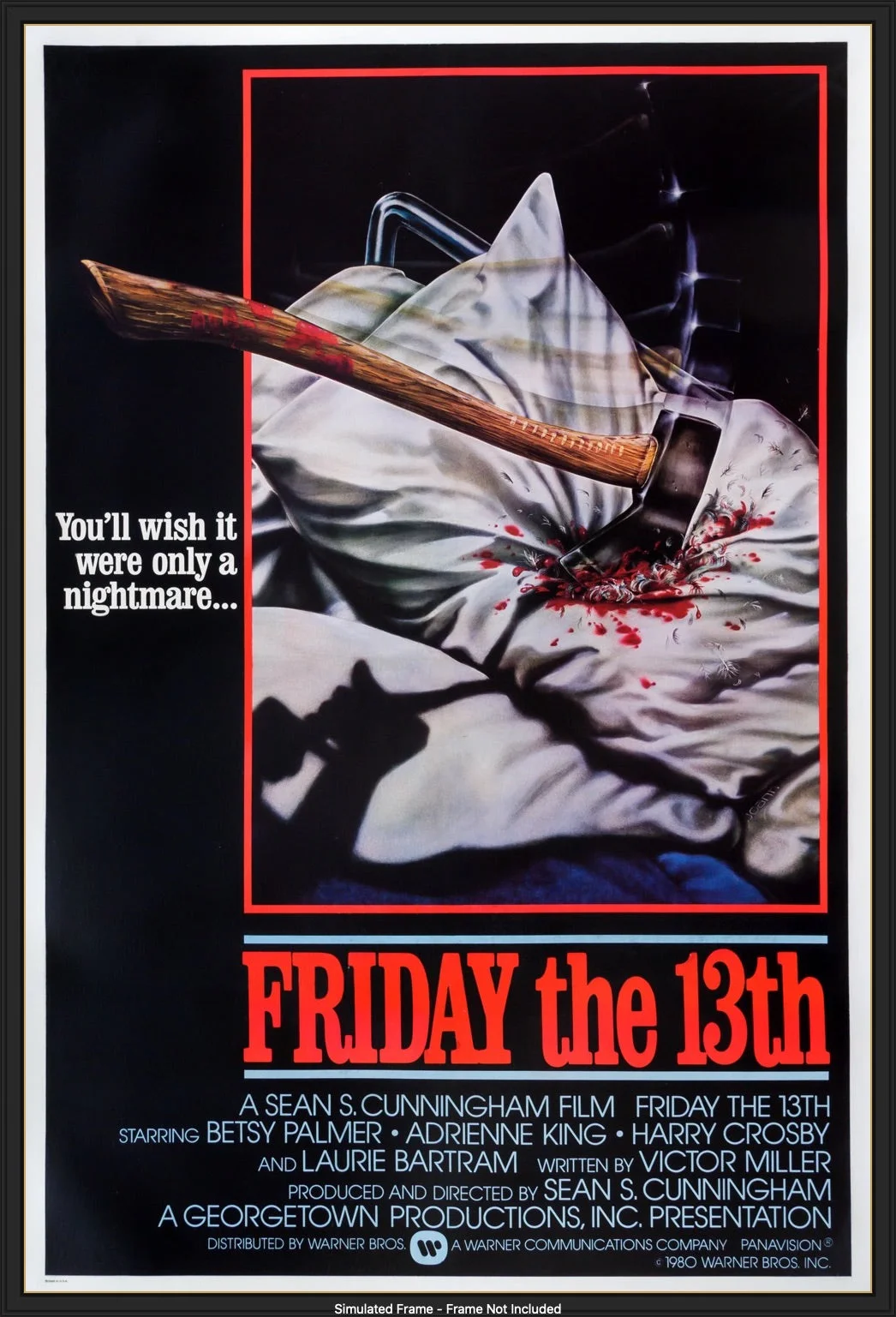
This figure does not mean that “horror films made in October are always profitable.” What Paris focused on was not the scale of production budgets themselves, but rather the trend in which low ratings do not automatically lead to a decline in sales. His case study of “Friday the 13th” illustrates this clearly. In 1980, critic Gene Siskel called the film “a truly awful movie,” starting his review with a spoiler of the ending in an attempt to remove any reason for audiences to buy tickets. At the end of his review, he included the contact information for the producers and actors, suggesting that disgruntled viewers convey their complaints directly to them. Roger Ebert similarly wrote in 1981 about “Friday the 13th Part 2” that “about two dozen films featuring a madman on a killing spree are released each year, and they are all just as bad as this one” 1.
Contrary to the judgments of these two critics, audiences bought tickets. According to Paris’s analysis, “Friday the 13th” earned 60 million dollars on a production budget of 500,000 dollars and spawned 12 sequels that critics disliked. Paris offered an interpretation that horror film audiences are a group that consumes the genre itself without heavily considering the opinions of critics, researchers, or star-raters. He wrote that the appeal of the genre is “primal, not intellectual.” While this statement represents his interpretation and is not a measured result applicable to all audiences, it is an observation necessary to understand why the Rotten Tomatoes score does not function as a proxy for box office revenue, a discrepancy that stands out particularly in the horror genre 1.
The mind that consumes horror has old circuits

To explain where the demand that defies criticism comes from, Mathias Clasen, who leads the Recreational Fear Lab at Aarhus University, stated in a Psychology Today article that horror films provide an “imaginary context in which to play with fear.” His argument is that our fear responses were formed through evolution.
According to Clasen, figures such as snakes, spiders, and zombies in horror films do not strictly align with today’s list of dangers. However, even zombies carry cues related to predation and infection, allowing them to directly tap into human fear circuits. The explanation is that humans are designed to react to beings that seek to devour them or transmit disease, and such reactions have been refined over millions of years into vigilance against threats 2.
Clasen likened this process to children’s chasing games. The act of children chasing and catching each other is a form of play that repeats the predator-prey relationship. Horror films also serve as a similar practice arena by allowing immersion in threats from the safety of one’s seat. Clasen’s argument is that it is possible to repeatedly experience the sensation of fear and learn to regulate one’s own reactions to it. Centered on the concept of threat simulation, this interpretation reads fear not as a negative emotion in itself, but as a learning opportunity for emotion regulation 2.
In a 2021 study led by Coltan Scrivner from the same research team, the unique environment of lockdowns was utilized. According to this study, people who watched many horror films reported less psychological distress during the COVID-19 lockdown period than those who did not. Clasen interpreted this result as stemming from the fact that horror films provide a context for emotion regulation practice, suggesting the possibility that prior experience in enjoying the horror genre may have aided psychological resilience during the crisis. However, this is the team’s interpretation based on correlation. The question of whether the quantity of horror film viewing directly lowered psychological distress, or whether people with better emotion regulation skills were more likely to seek out the genre in the first place, is left for future research to address 2.
How October draws out and utilizes the horror genre structure
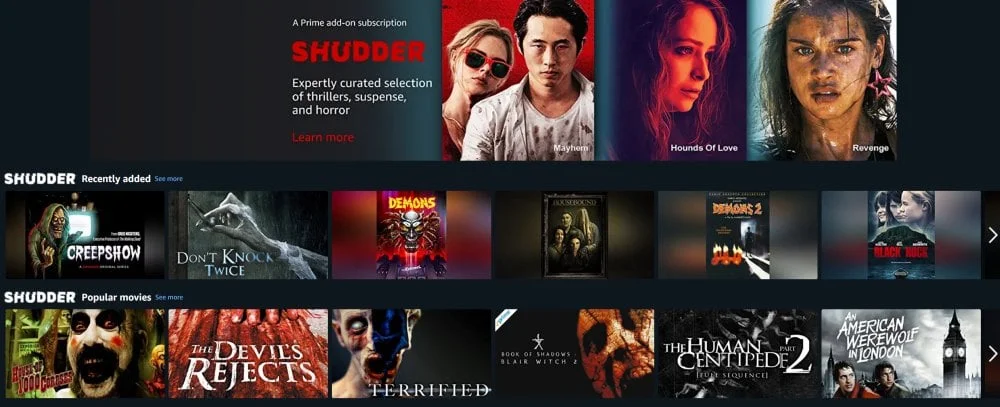
Combining the economic structure and psychological mechanisms makes the October landscape clearer. Horror films possess a market structure where ratings and profits do not stand in a direct proportion. To this, a social window that naturally draws out the accumulated desire for horror throughout the year opens every October. Paris wrote that October is a period not only for Halloween itself but also for the preceding 30 days, during which Hollywood, cable broadcasts, and streaming services all go all-out to drive horror film consumption.
The operational mechanism of October described by Paris is specific. Major horror releases are concentrated in theaters, and cable viewers can watch horror movie marathons on channels like TCM, Syfy, and AMC without even changing the channel. For those who find theatrical screenings burdensome, dedicated horror streaming services like Shudder and Screambox serve as an always-available content source. The monthly subscription fee for such dedicated channels is in the range of 6.99 dollars 1.
Here, one must distinguish between the scale of the industry as a whole and the profitability of the genre. Paris noted that since 2019, horror films have accounted for only about 6% of the total U.S. box office. This figure informs us that while the horror genre is a winner in terms of return on investment, it is not a mainstream format that also overwhelms the total revenue scale. However, the reason October’s concentration functions without problems lies not in overall market share, but in the profitability of individual works achieved through low-budget production and a fan base that is less sensitive to criticism. Paris showed the example of Blumhouse Productions, which proved the profitability of independent studios with a horror-centric lineup, explaining that even if this approach differs from the blockbuster successes of Marvel or Disney, it functions as an independent model 1.
Why a 31% rating is no problem
Horror films sell especially well every October. In 2023, when the average score of October releases was 31%, the industry operated in the same manner. The 173% average ROI for the genre, compiled by Paris, is not a figure that guarantees the quality of individual works. Rather, it is a statistic supporting the fact that audiences tend to consume the horror genre by separating the process of checking ratings from the act of spending. Regarding the psychological basis of this consumption, Clasen and the Recreational Fear Lab have offered interpretations centering on threat simulation and emotion regulation practice.
References
- Why Horror Films are Hollywood's Best Investment: A Statistical Analysis · statsignificant.com↩
- On the Psychology of Horror Movies · psychologytoday.com↩