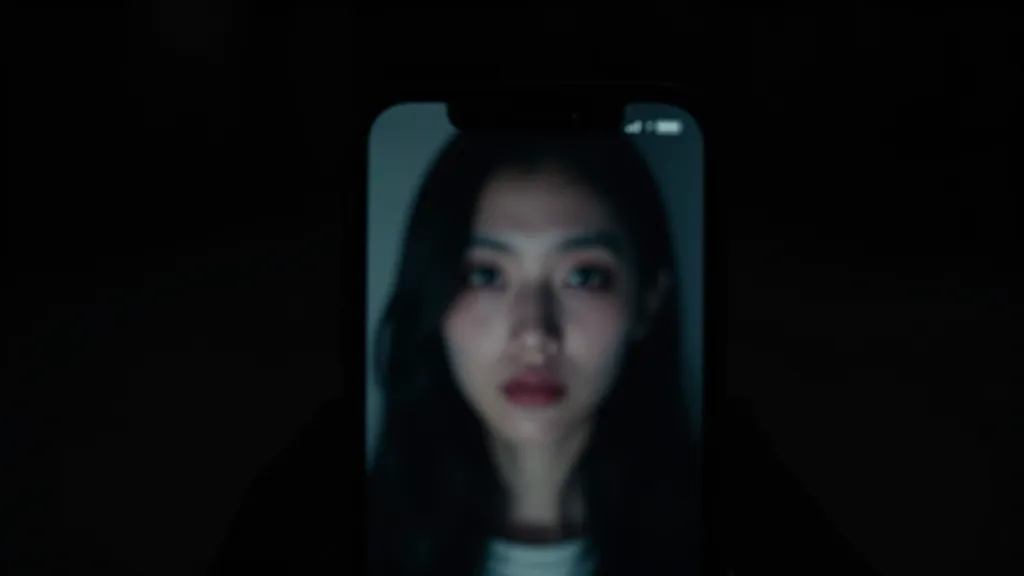
Last night, just before falling asleep, I habitually opened my SNS and applied a mirror selfie filter. I turned on a filter with cute animal ears as I usually do, but in a fleeting moment, an unrecognizable black shadow flickered past my shoulder in the corner of the screen.
My heart dropped instantly, and goosebumps erupted all over my body. But I soon realized: this wasn't a mere glitch or a hallucination, but the sophisticated design of the Real-time ARG currently dominating social media.
To dismiss this as a simple prank would be a mistake; the technological evolution we are facing is far too similar to reality.
The Moment Daily Life Becomes a Stage for Horror

Only a few years ago, hearing the term "Alternate Reality Game (ARG)" would evoke thoughts of intellectual play—sitting in front of a computer, solving codes, or hunting for clues hidden on websites. However, in 2026, the stage for this game has moved beyond the monitor and directly into your smartphone camera viewfinder.
We are no longer passive audiences watching videos. We have become "participatory players" standing at the center of the narrative, using our own daily spaces as the backdrop. The core of this technology lies in the combination of SNS AR (Augmented Reality) filters and personalized AI algorithms.
The terrifying aspect of this technology is its "personalization." It doesn't just show you a scary face. AI analyzes the user's location, usual movement patterns, and even real-time changes in heart rate or facial expressions. The alleyway in front of your house that you walk every day, or the bathroom where you look in the mirror every morning, become the settings for the game.
For example, what if there were a filter that only activates when you pass a specific location at a specific time? The moment a "virtual monster" or a "bizarre signal" seeps into your usual daily routine, the boundary between reality and virtuality becomes as thin as a sheet of paper. This provides a level of physical and psychological pressure that is on a completely different dimension from the tension provided by traditional horror movies.
Digital Survival: A Game, or a New Culture?
This trend has established itself as a massive cultural phenomenon, centered around the younger generation. As SNS hashtag challenges combine with User-Generated Content (UGC), real-time ARGs have transformed into a kind of "digital survival game."
Users share the bizarre experiences they encounter along with filter videos and hunt for clues together with others. Digital clues that can only be obtained by visiting specific areas even draw people out into the offline world. Through this, a new form of "Object Game" has been born.
For content creators, it is a dream stage, as they can design "location-based mysteries" tailored to user locations. However, behind this brilliant technological festival, a dark shadow looms that we must inevitably address.
Technology Crossing the Line, Psychological Defenses Collapsing
Every innovation comes with a cost. But the cost being paid by today's real-time ARGs might be too harsh. The biggest issue is the "inseparability of reality and virtuality."
Experts warn that when exposed to extremely vivid horror narratives while one's sense of boundaries is weakened, users may confuse reality with hallucinations. In fact, cases of "Real-time ARG Stress Syndrome"—where individuals perceive virtual entities in filters as real threats and exhibit aggression, or feel extreme anxiety in daily life—have recently been reported.
This is particularly fatal for adolescents, a period when self-identity is being formed. This is because unfiltered, extreme horror content can cause serious trauma beyond mere entertainment.
Taking it a step further, we face the issue of privacy infringement. Is the location, routine, and biometric data collected by AI to create customized horror scenarios truly safe? Algorithms that analyze our psychological vulnerabilities to pick the "most terrifying moment" to attack can hardly avoid criticism for being "cognitive exploitation" rather than mere entertainment.
Between Technological Freedom and Safety: Where Do We Stand?

Currently, perspectives on this phenomenon are sharply divided.
On one side, voices call for platform companies and governments to establish strong ethical guidelines. The logic is that since the speed of technological advancement is faster than human psychological defense mechanisms, the platform's own inspection functions and user protection measures are essential.
On the other hand, creators offer an optimistic view. They believe this technology is not just a tool to stimulate fear, but can evolve into a new form of storytelling that alleviates "digital fatigue" and "social isolation"—chronic issues of modern humans. They suggest it can create narratives that paradoxically connect people through fear and help them realize the preciousness of reality through virtual experiences.
Ultimately, the key lies not in the technology itself, but in how we handle it. Real-time ARG in 2026 serves as a milestone showing the direction of future entertainment, where the metaverse and analog life are completely fused. Whether this technology can evolve beyond horror through simple "manipulation" into a tool for "empathy" and cooperation that touches human emotions depends on our collective responsibility.
Closing: Is Your Screen Safe?

As we have explored today, real-time ARG has turned our daily lives into the most thrilling yet dangerous stage. We must remember that while technology can be the wings of our imagination, it can also sometimes become the bars that confine our minds.
While we enjoy the incredible immersion provided by technology, we must practice maintaining an appropriate psychological distance so that the shadows on the screen do not invade our actual reality.
Have you recently had any strange or mysterious experiences through SNS filters? Or how do you think such immersive technology will change our lives?
Please share your thoughts in the comments.