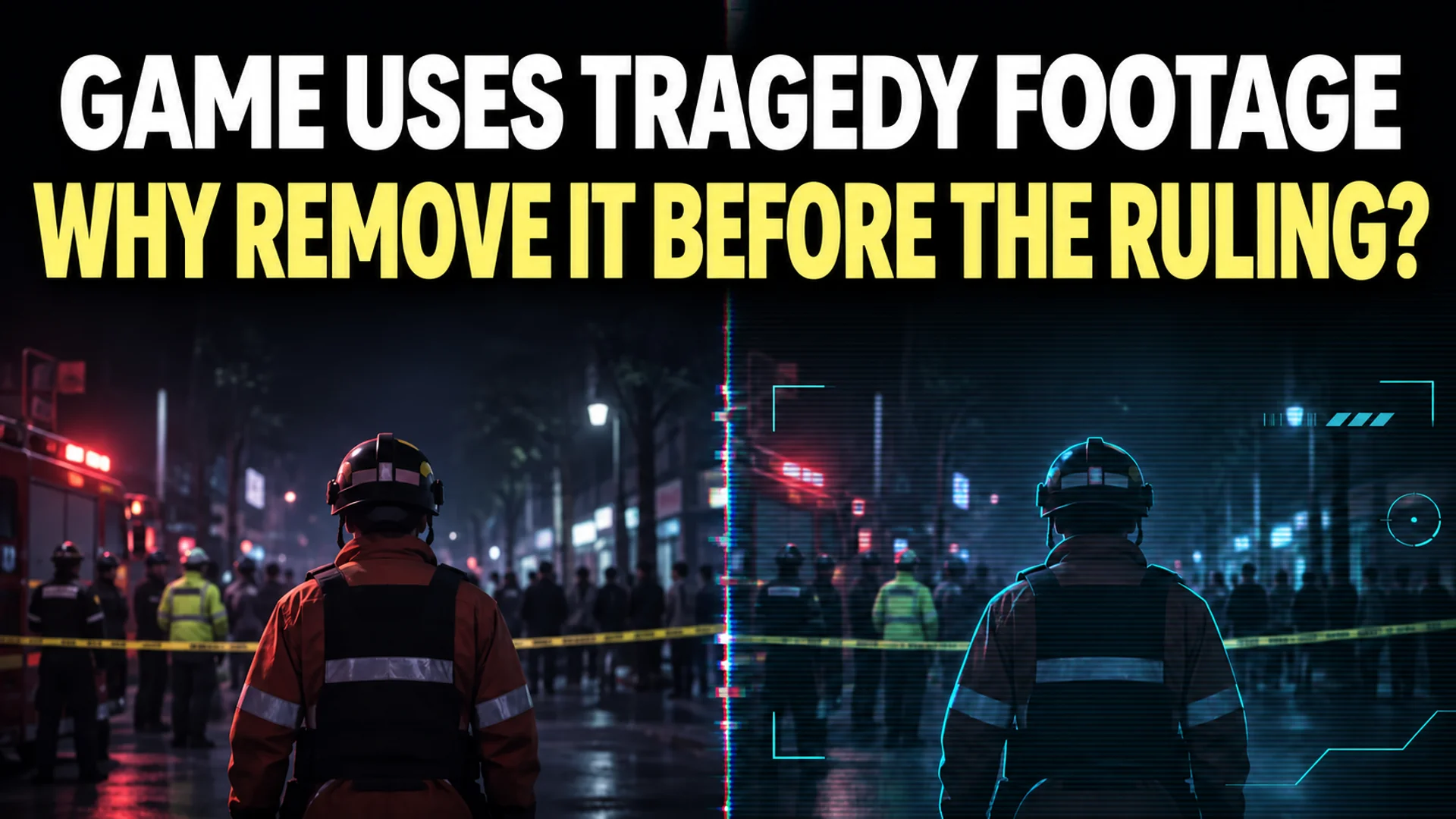
Is It Okay to Play Actual News Footage As-Is in a Virtual News Scene on a Game Screen? At the end of last October, 'Call of Duty: Modern Warfare 4' sparked controversy for using footage from the Itaewon disaster as an in-game background. Following an MBC report revealing that the composition, props, and arrangements in the in-game screen nearly matched the actual footage, public backlash and protests from victim advocacy groups flooded in. Although no court ruling has been issued, distributor Activision apologized four days after the report and announced the complete removal of the footage. This case clearly demonstrates that news footage cannot be freely used under the guise of 'factual reporting,' and that commercial content requires prior review of copyright and ethical context.
The Level of 'Direct Use' Verified by MBC
Call of Duty: Modern Warfare 4 depicts a fictional war on the Korean Peninsula set against a backdrop of a surprise North Korean invasion. However, on TV screens placed within the game, actual news footage from the Itaewon disaster four years prior was being played without change. MBC reporter Jung Hae-in placed the in-game screen and the original footage side by side for comparison 1.
The position and composition of the person performing CPR, the location of the police cordon line visible next, the rows of people lying on the street, the batons used by police, and even the clothing of the firefighter on the right all matched the original 1. This was not merely creating a 'similar atmosphere'; it involved embedding the original screen directly into the game engine as a digital asset. Essentially, actual disaster scenes were brought into the background screens of a virtual war.
Immediately following MBC's report, the Itaewon Disaster Bereaved Families Council, the Citizens' Solidarity Conference, the Korea Game Users Association, and others demanded immediate footage removal and an apology. Activision announced, "We bow our heads in condolences and apology to the bereaved families and victims," and promised to completely remove the problematic footage through an update scheduled for November 12. By using actual disaster footage without prior permission, the company faced pressure from public opinion and victim advocacy groups, retreating quickly before the issue escalated into a legal lawsuit.
The 'Heart' of News Footage Is Protected by Copyright
The common belief that news can be freely used by anyone because it is the transmission of facts is only half true. While the facts themselves are not subject to copyright protection, the video works containing those facts can generate copyright. U.S. appellate court rulings show that this boundary is strict.
In LA News Service v. Tullo, the appellate court ruled that unedited, raw videotape is also subject to copyright protection. The court rejected the fair use defense because the portion used by the defendant in their news clipping service constituted the 'heart' of the work—the part carrying the most significant value. Even if the amount was small, if that moment represented the essential value of the footage, it is protected 2.
The same applies to LA News Service v. KCAL-TV. While the scene of Rodney King being beaten at the Los Angeles Riots site was considered a factual work, favoring fair use under the second factor (nature of the copyrighted work), the court did not grant fair use despite the news purpose, citing the economic effort involved in filming and the commercial use. Notably, considering that 'news works have almost no secondary markets,' the unauthorized use was judged as market infringement because the plaintiff was licensing the footage to other media 2.
Thus, even for news footage, copyright infringement can be established if users in the same industry or for commercial purposes appropriate key scenes, thereby infringing on the potential market. Because the news screens in the game functioned as 'key visual assets' creating the worldview and atmosphere beyond mere fact transmission, the direct replication of MBC's key scenes significantly raises the potential for legal disputes.
Fair Use Is 'Post-Hoc Defense,' Not 'Prior Permission'
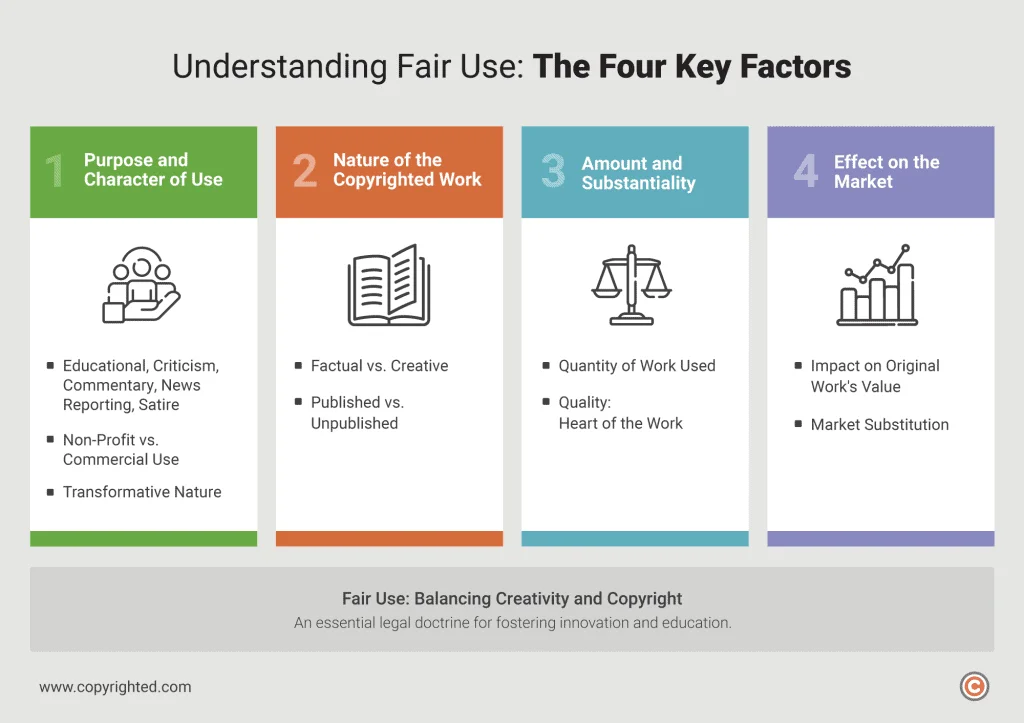
The safety net developers most often consider is Fair Use. South Korea's Copyright Act Article 35-5 also stipulates determining fair use by comprehensively evaluating four factors (purpose and character of use, nature and purpose of the work, proportion and importance of the used portion, and impact on the market).
However, fair use is not a 'right to use as I see fit after judging it myself.' It is merely a post-hoc defensive argument claiming 'this use meets the requirements of fair use' when sued for copyright infringement, rather than a 'permit' obtained in advance 3. While commercial purposes are unfavorable, transformative uses such as criticism or commentary may be recognized. Because news footage serves the purpose of factual reporting, fair use is more easily recognized compared to creative works, but separate copyrights may exist in editing compositions or anchor commentary 3.
This case does not align with fair use requirements in several respects. Call of Duty is clearly a commercial product, and the footage was used as decoration in the game, lacking a critical or commentative context. The most impressive part of MBC's footage (the key scenes) was taken directly, and rather than substituting demand for the original, the emotional impact of the footage was transplanted into a commercial game. Unlike reaction streams, where streamers add their own commentary while watching the original, the game absorbed the news footage as part of its worldview 3.
A Matter of Review and Consent, Not 'Prohibition'
Ultimately, inserting news footage into a game is not 'absolutely prohibited.' Had the producers concluded prior permission and licensing agreements with the broadcaster as the filming entity, similar to MBC, or had they reconstructed the footage with a production significantly different from the original screen, the controversy might have been reduced.
What this case demonstrates is that 'securing usage permission and ethical costs' operate practically before reaching a conclusion of 'legal prohibition.' The background to the removal decision, despite no court ruling having been issued, is that public opinion formed rapidly while victim advocacy groups were considering legal action, and the distributor chose to respond immediately rather than tolerate the situation.
The incident of inserting Itaewon disaster footage answers the question, 'Should actual footage not be used?' with: 'It can be used, but a prior process of permission, transformative reconstruction, and consent based on the ethical context of the event must precede it.' This case confirms that the free use of news footage is predicated on practical review that respects the filming entity's effort and the weight of the event, rather than merely relying on legal exemptions.
References
- ↩
- 저작권, 합법적으로 침해하자! ‘공정이용’ · m.blog.naver.com↩
- 리액션 방송의 법적 범위 - 저작물 공정 이용 가이드 · psdetector.co.kr↩