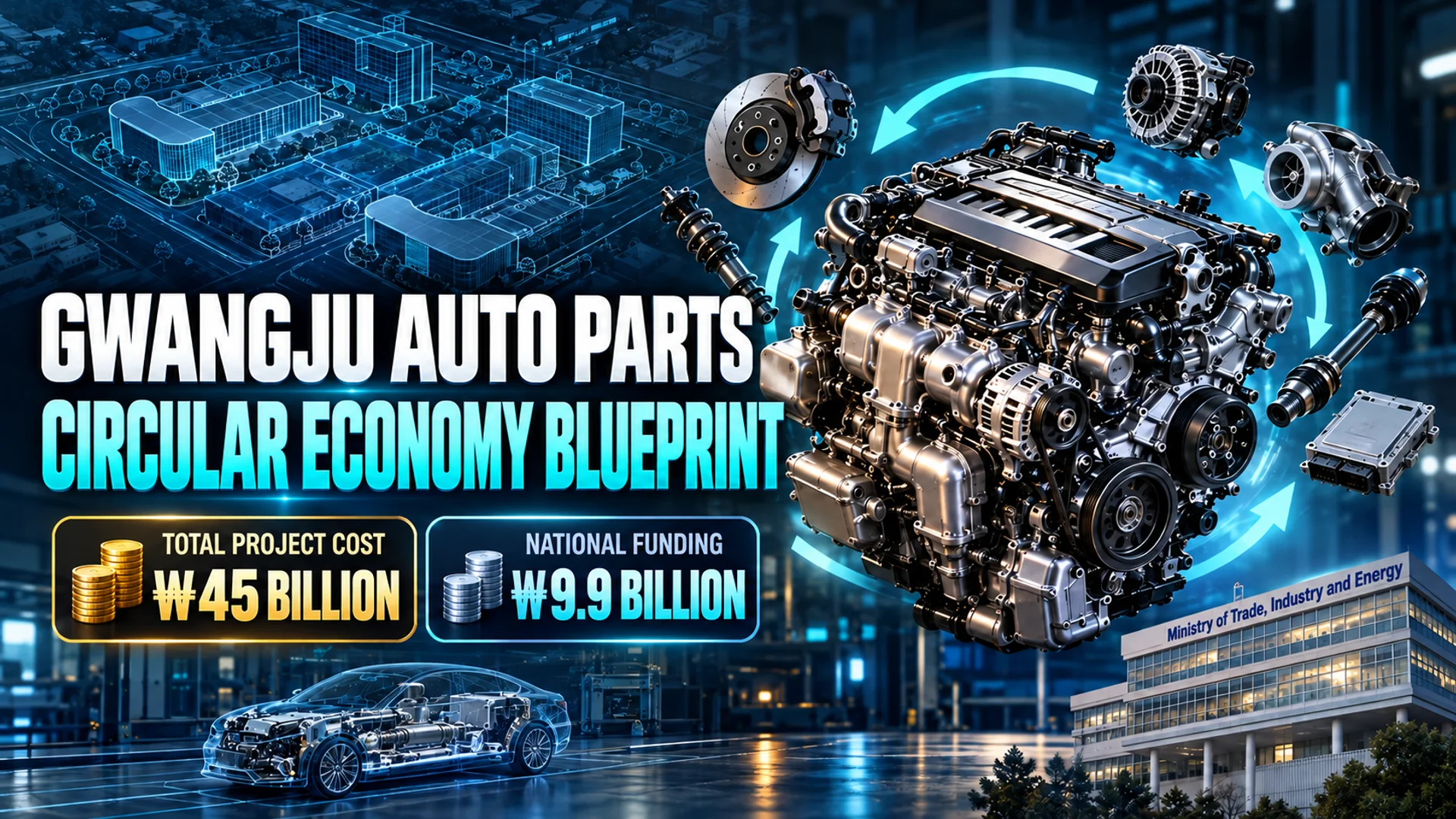
As the transition to eco-friendly mobility accelerates, the circular economy industry—transforming scrapped vehicle parts and aging internal combustion engine components into 'resources'—is gaining attention. Amid this trend, Gwangju Metropolitan City is deploying substantial budgets to establish regional hubs, and the Ministry of Trade, Industry and Energy (hereinafter "MOTIE") has announced the implementation plan for a national funding support project to back this initiative, bringing the project's outline into focus.
To state the conclusion first, the establishment of a circular economy for automotive parts in the Gwangju region is progressing through the interplay of an infrastructure project worth a total of 45 billion won (announced in 2024) and a technology innovation infrastructure project investing 9.9 billion won in national funds (announced in 2026). This article will concretely examine the blueprint for the circular economy hub envisioned by Gwangju City, the substantive support content provided by the government project, and the expected regional economic effects, based on verified data.
Policy Blueprint: Where the 45 Billion Won Is Heading
The establishment of Gwangju City's 'Automotive Parts Remanufacturing Circular Economy Hub' is rooted in a blueprint announced on September 3, 2024. The city designated two core industrial complexes as specialized zones with a budget of approximately 45 billion won. The core objective is not merely to build factories, but to create an ecosystem responsible for the 'Whole Life Cycle' of parts being recovered and reborn 1.
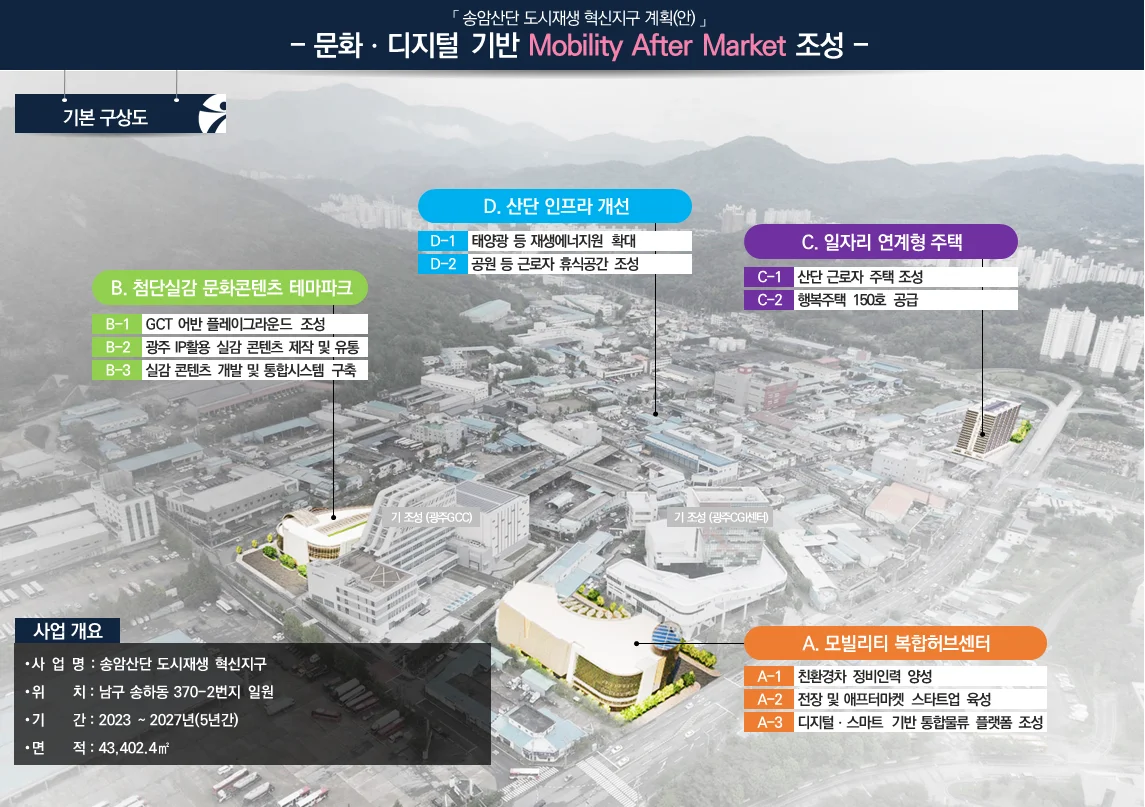
According to the plan, the physical hubs of the project will be divided as follows.
-
Songam Industrial Complex (Production and Infrastructure Hub): A specialized cluster for automotive parts remanufacturing will be established here. A platform for collecting scrapped parts, performing precise disassembly, and sorting components by type will be installed, functioning as a complex where actual remanufactured parts are produced. Gwangju City has set specific targets of launching 35 startups and creating 170 direct jobs through this complex 1.
-
Energy Valley Industrial Complex (R&D and Certification Hub): Since remanufactured parts produced must be guaranteed to have 'usable quality,' a research and development support complex equipped with performance evaluation and certification equipment will be created. Its main role is to encourage participation from finished vehicle manufacturers to enhance the reliability of the resource-circulating system 1.
In particular, regarding the Songam Industrial Complex, the city aims to have approximately 500 existing internal combustion engine maintenance shops, which primarily focus on minor repairs, gradually convert to 'remanufacturing'-related businesses, foreshadowing a transformation of the existing industrial ecosystem 1.
The Reality of Government Support: National Fund Project Starting in 2026
While the existing 45 billion won scale project placed emphasis on 'physical infrastructure establishment,' the project recently announced by the Ministry of Trade, Industry and Energy (operated by the Korea Institute for Advancement of Technology, KIAT) handles 'technology and system innovation.' Through the implementation plan for the '2026 Automotive Parts Circular Economy Innovation Infrastructure Establishment Project', MOTIE announced the investment of a total of 9.9 billion won (9,900 million won or less) in national funds 2.
The relevant project will proceed for approximately 4 years and 3 months, from October 1, 2026, to December 31, 2030 2. A noteworthy aspect is the project execution method.
- Designated Open Competition and Mandatory Consortium: Rather than participation being limited to specific companies, non-profit institutions such as universities and research institutes, along with private companies, must form a consortium. In particular, application eligibility is granted only after obtaining a pledge of cash or in-kind contribution from the participating local government (such as Gwangju) 2.
- Support Content: Beyond simple financial support, the project comprehensively supports the establishment of core equipment for remanufacturing centers, consulting for companies, and activities to explore overseas new markets 2.
- Annual Support Scale: Out of the total 9.9 billion won in national funds, 200 million won has been prioritized and allocated for the first year of the project in 2026. The final institutions will be selected through application and evaluation processes conducted from August 28 to September 28, 2026 2.
Market Status and Goals: Is 'Reuse' Profitable?
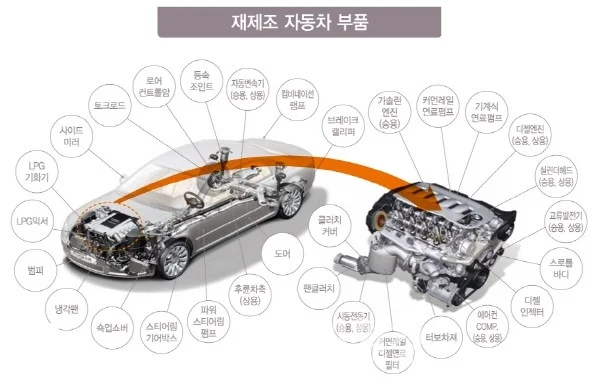
Why are local governments and the central government now investing a massive budget of 45 billion won to attempt 'parts recycling'? The answer lies in securing marketability.
According to Gwangju City's announcement, the domestic remanufacturing market size is approximately 10 trillion won, with automotive parts accounting for the largest share at 80.8% 1. This signifies that automotive parts are not mere waste, but high-value resources. Global market examples clearly confirm this potential.
- Overseas Market Size: The US (51.7 trillion won) and European (46.8 trillion won) markets are valued at approximately 50 times the size of the domestic market 1.
- Global Corporate Cases: Mercedes-Benz contributes to carbon neutrality by selling remanufactured parts at approximately 30% lower prices compared to new products 1.
- Price Competitiveness: According to Gwangju City's plan, remanufactured parts are scheduled to be sold directly to consumers at 50% of the price of new products, providing tangible benefits that reduce the burden on consumers in an era of high prices 1.
Additionally, Gwangju City has presented specific target figures to transform into a 'resource-circulating city' that reduces resource consumption by 90% and increases employment by 2.7 times once this ecosystem is completed 1.
Industry-Academia-Research-Government Cooperation Governance: The Meaning of Local Government Contributions
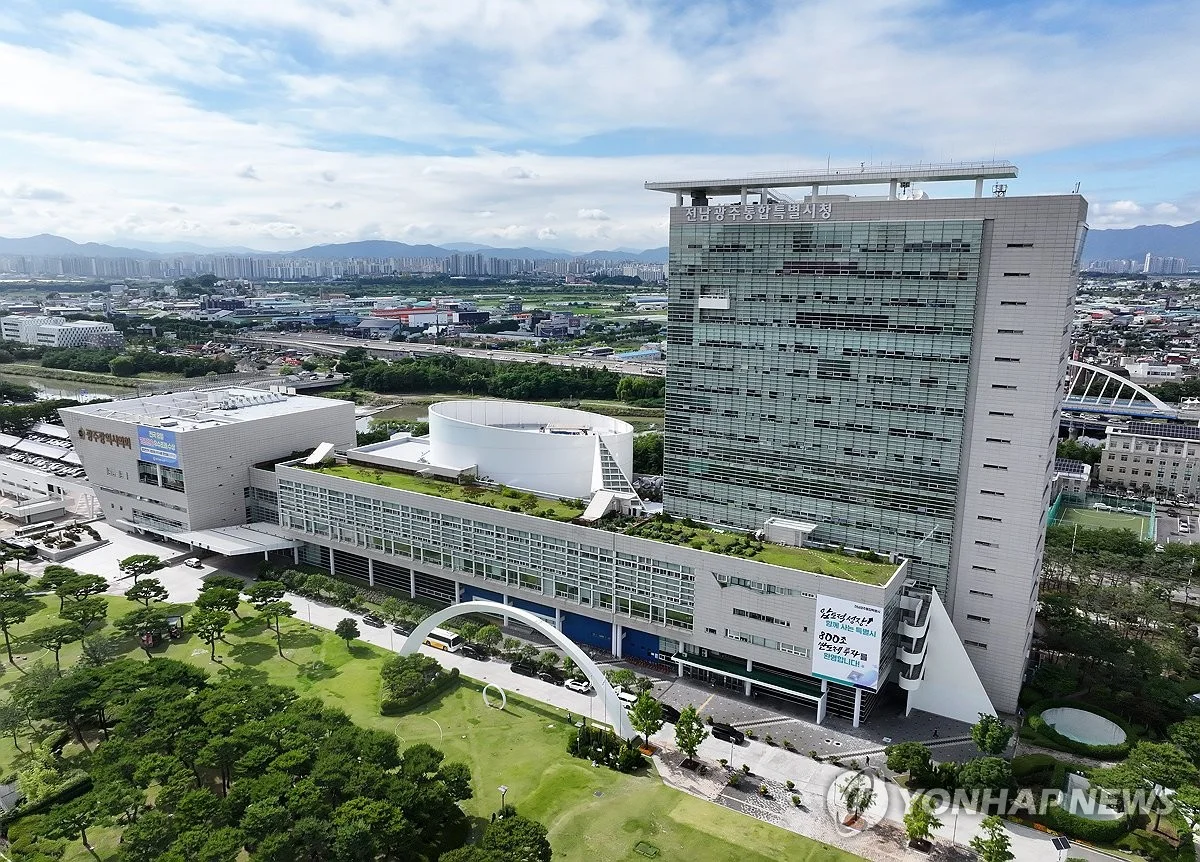
One of the most notable features of this project is the 'division of roles' by local governments. The MOTIE national fund project, 'Automotive Parts Circular Economy Innovation Infrastructure Establishment Project,' explicitly mandates local government cash and in-kind contributions as a prerequisite 2.
This implies a policy intention that the 9.9 billion won in national funds will not operate solely on government budget; rather, local governments such as Gwangju City must directly contribute a portion of the budget from the 45 billion won scale project and lead by forming consortia with regional institutions to secure the national funds. In other words, securing national funds can be interpreted as the process by which Gwangju City concretizes its 45 billion won scale investment plan and gains recognition from the government for being ready to execute it.
Remaining Tasks and Outlook: Institutional Foundation and Carbon Neutrality
Policy is a blueprint, but institutional backing is essential to turn it into reality. Among the global cases referenced by Gwangju City, Stellantis's remanufacturing facility in Turin, Italy, has invested approximately 60 billion won to achieve its 2038 carbon neutrality goal, planning 3 trillion won in sales by 2030 1.
For the project promoted by Gwangju City and MOTIE to transcend merely 'reducing waste' and elevate into industrial value, several prerequisite tasks exist.
- Public Procurement and Insurance Riders: Experts in the domestic remanufacturing market have pointed out the need to expand public procurement and introduce insurance riders for the use of 'quality-certified remanufactured parts' during accident vehicle repairs to revitalize the market 1.
- Securing Technical Reliability: The extent to which performance evaluation equipment to be built in the Energy Valley Industrial Complex conducts certification with rigorous and officially recognized standards will determine the market entry of remanufactured parts.
Ultimately, the 'Automotive Parts Circular Economy' project promoted by Gwangju City is a complex project that goes beyond a simple waste disposal policy, simultaneously pursuing the restructuring of the industrial structure of internal combustion engine parts clusters and the achievement of carbon neutrality goals. This project, combining 45 billion won in local investment with 9.9 billion won in national fund support, draws attention to whether it can establish itself as a new growth engine for the regional economy through the process of technology innovation and infrastructure establishment over the next 4 years and 3 months.
References
- 광주시, 송암산단에 자동차부품 재제조 기반 구축…450억 투자... · etnews.com↩
- ↩