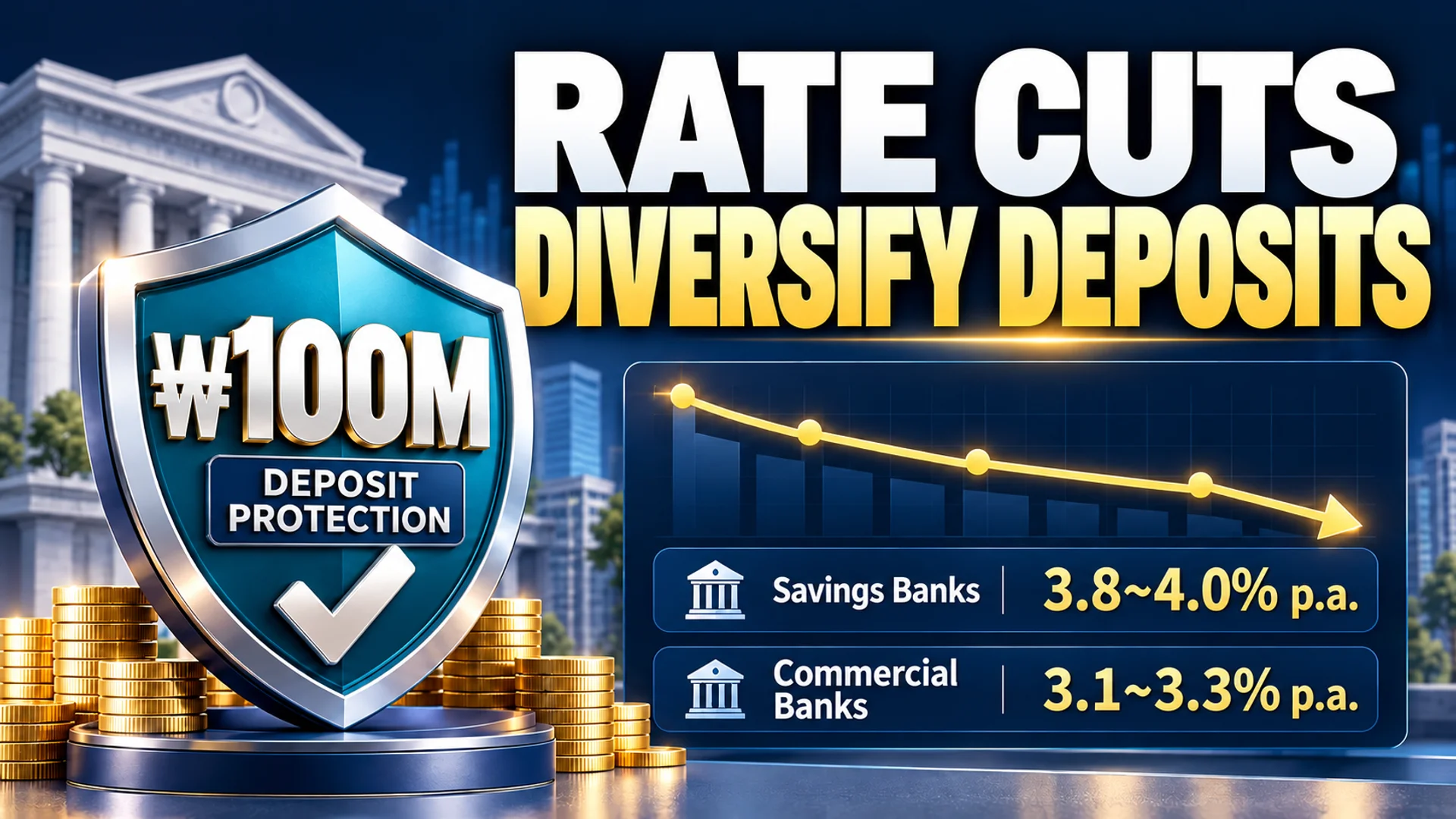
The two structural changes at the heart of the 2026 interest rate environment are the benchmark rate cut and the increase in the deposit insurance coverage limit. The Bank of Korea has maintained the benchmark interest rate at 2.5% per annum since cutting it in May 2025, and 12-month fixed deposits at savings banks are retaining their competitiveness at annualized levels of approximately 3.8~4.0%, about 0.5~0.7%p higher than those at commercial banks. At the same time, as the deposit insurance coverage limit was raised to KRW 100 million starting in September 2025, the fundamental criteria for safely managing lump sums have changed.
The conventional approach of "finding the highest interest rate and placing all funds in a single product" has lost its persuasive power. Even if preferential conditions are met, comparisons must be made based on after-tax net receipts, and strategically dispersing amounts exceeding principal and interest protection limits in order to leverage the raised coverage limit is the smart deposit strategy for 2026. Below are specific design guidelines for asset allocation during the interest rate downcycle.
The Current Position of Savings Bank Interest Rate Competition During the 2026 Interest Rate Downcycle
During an interest rate downcycle, deposit interest rates do not fall uniformly across all financial institutions. As of June 2026, pre-tax interest rates for one-year fixed-term deposits across the financial sector exhibit distinct differences by tier.
| Financial Sector Category | Base Rate | Maximum Rate (Including Preferential Conditions) |
|---|---|---|
| 4 Major Commercial Banks | 2.5~3.0% per annum | 3.1~3.3% per annum |
| Internet-only Banks | 3.1~3.3% per annum | 3.4~3.5% per annum |
| Savings Banks (Second-Tier Financial Sector) | 3.4~3.6% per annum | 3.8~4.0% per annum |
Savings banks sometimes offer rates of 4.0% per annum or higher during special promotions, but this is not the base rate; it applies only when all additional conditions are met, including non-face-to-face account opening, marketing consent, and automatic transfers 1. Compared to past periods of rising interest rates, the interest rate spread between savings banks and commercial banks has narrowed somewhat to approximately 0.5%p 2.
Therefore, when choosing savings bank products, you must calculate the "interest rate you can actually receive" rather than the "advertised rate." If you strain to meet preferential conditions such as salary transfers or card usage, leading to unnecessary additional financial product subscriptions, your actual rate of return may fall short of expectations 1, 2.
Practical Calculation: Converting Nominal Interest Rates to After-Tax Rates of Return
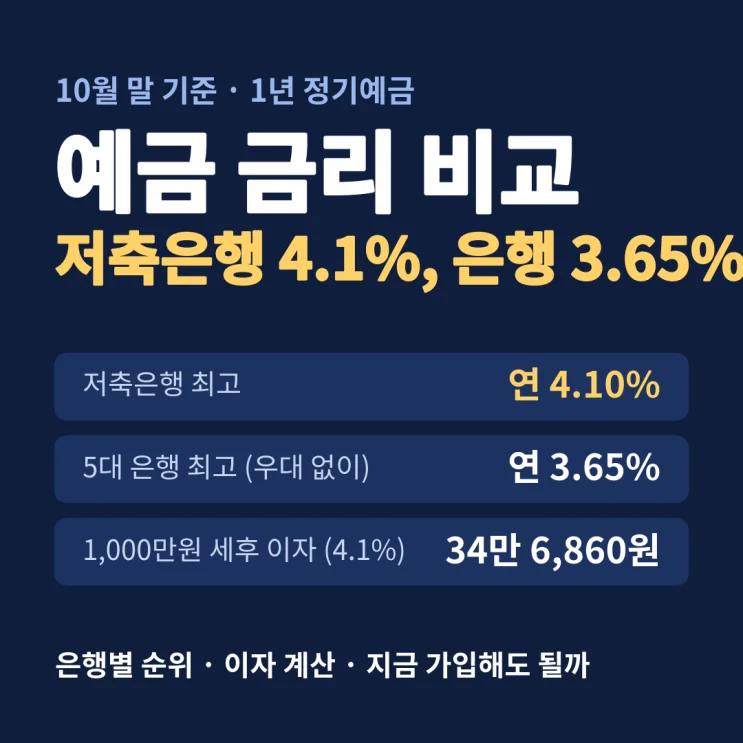
Interest income is subject to a 15.4% withholding tax, including local income tax. Even if preferential rates raise the nominal interest rate by 0.1~0.3%p, the difference may be smaller than expected when converted to an after-tax basis 1.
For example, assume you deposit KRW 100 million for one year in a deposit paying 4.0% per annum. The pre-tax interest is KRW 4 million, but the after-tax net receipt after deducting the 15.4% tax is KRW 3,384,000. Conversely, a simple-type product paying 3.9% per annum that can be easily subscribed to via non-face-to-face account opening may be more advantageous in practice than a product paying 4.1% per annum with complex conditions to meet 1, 3.
From a tax-saving perspective, leveraging the product structure itself becomes a variable that outweighs interest rate differentials.
- Tax-Exempt Composite Savings: Individuals aged 65 or older, persons with disabilities, veterans, and others are eligible for tax exemptions or reductions on interest income tax (1.4%) for amounts up to a maximum of KRW 50 million 2.
- Deposits by Credit Union and Nonghyup Members: Amounts within KRW 30 million are subject to a preferential tax rate of 1.4%, which can boost the effective rate of return compared to commercial bank deposits 1.
- Criteria for Comprehensive Taxation on Financial Income: If annual financial income exceeds KRW 20 million, it may become subject to comprehensive taxation. Therefore, when dispersing high-interest deposits at savings banks, the combined interest scale must be calculated in advance 1.
Deposit Insurance Coverage Limit Raised to KRW 100 Million: Designing for Dispersion of Principal and Interest Exceeding the Limit
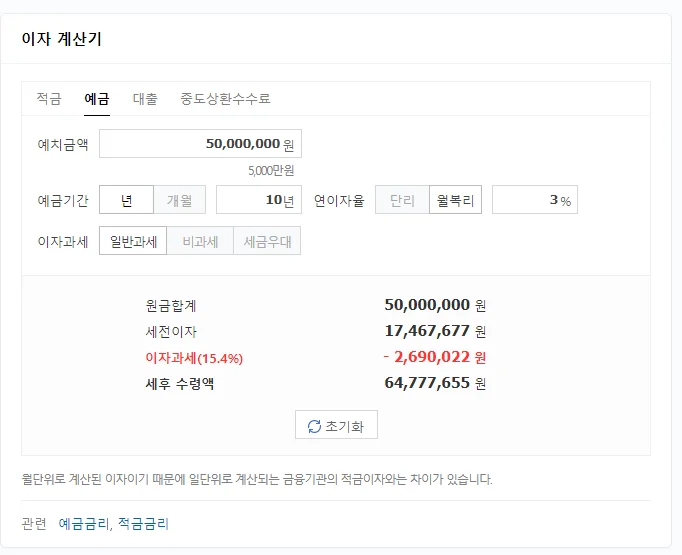
Starting September 1, 2025, the deposit insurance coverage limit was raised from KRW 50 million to KRW 100 million per person per financial institution 2, 4. This is a change that fundamentally resets the baseline for savings bank deposit strategies.
However, caution is required because the coverage limit applies to the sum of "principal + interest" rather than just "principal." If exactly KRW 100 million is deposited in a product paying 4% per annum, the principal and interest at maturity will total KRW 104 million, leaving the KRW 4 million excess outside the scope of protection 4. The following are safe deposit rules for addressing this.
- Reverse-Calculating the Coverage Limit: Calculate the interest in advance and adjust the principal so that the total principal and interest at maturity slightly exceeds KRW 100 million. For example, with a 4% per annum deposit, aligning the principal at approximately KRW 98.81 million allows full protection for both principal and interest 4.
- Principle of Dispersed Deposits: Disperse deposits across multiple financial institutions, such as KRW 95 million + KRW 95 million, to ensure that both principal and interest fully fall within the coverage limit 2.
- Verifying Exclusions from Protection: Foreign currency deposits, CDs (Negotiable Certificates of Deposit), and RPs (Repurchase Agreements) are not covered by deposit insurance. Therefore, even if recommended at a savings bank counter, separate verification is required 1.

Using Parking Accounts to Simultaneously Capture Liquidity and Interest
If all of a lump sum is locked into fixed deposits, interest rates may be high, but it becomes difficult to respond to sudden demands for emergency funds. To address these liquidity needs in 2026, savings banks are operating various parking account products.
| Product Type | Interest Rate Level | Purpose and Features |
|---|---|---|
| Parking Account | 2.0~3.5% per annum | For managing short-term idle funds; free deposits and withdrawals 1 |
| Free Deposit/Withdrawal Deposit | 0.1~2.5% per annum | For holding funds and covering living expenses 1 |
| Fixed Installment Savings | 3.0~8.0% per annum | Monthly payments; high yields when including preferential interest rates 1 |
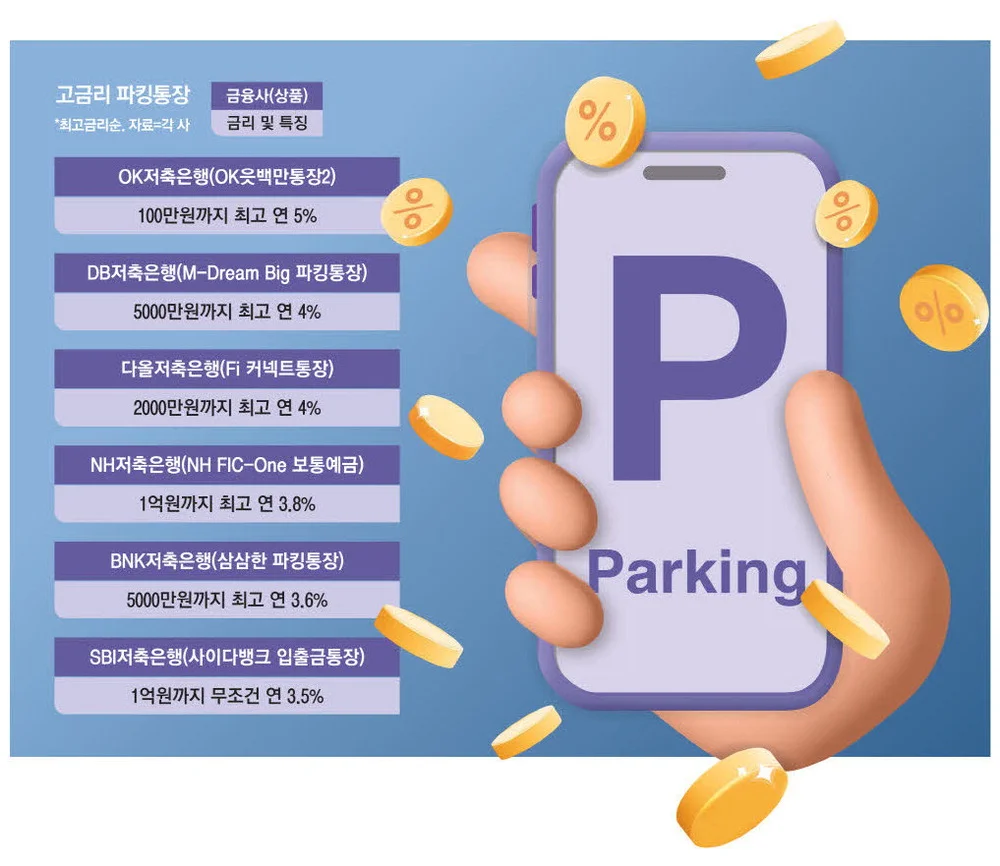
Products such as Smart Savings Bank's Free Savings Deposit (effective interest rate of 1.20% per annum) are examples of "simple-type" products that apply a fixed interest rate regardless of deposit amount, without deposit limits or preferential conditions. With a KRW 10 million deposit, the after-tax interest amounts to approximately KRW 278 per day and approximately KRW 101,520 per year, characterized by clear interest calculations and minimal interest rate fluctuations 4.
Conversely, simple comparisons with products offering conditionally high interest rates, such as SBI Savings Bank's Living Parking Account (7.70% per annum), must consider both the actual rate of return and the difficulty of maintaining conditions. Parking accounts enable deposits and withdrawals at any time, functioning as a buffer that lowers the liquidity hurdles of fixed deposits and serving as the lower tier of a portfolio for separating emergency and standby funds from fixed deposits 1.
Balancing Liquidity and Profitability During the Interest Rate Downcycle: The Windmill Strategy
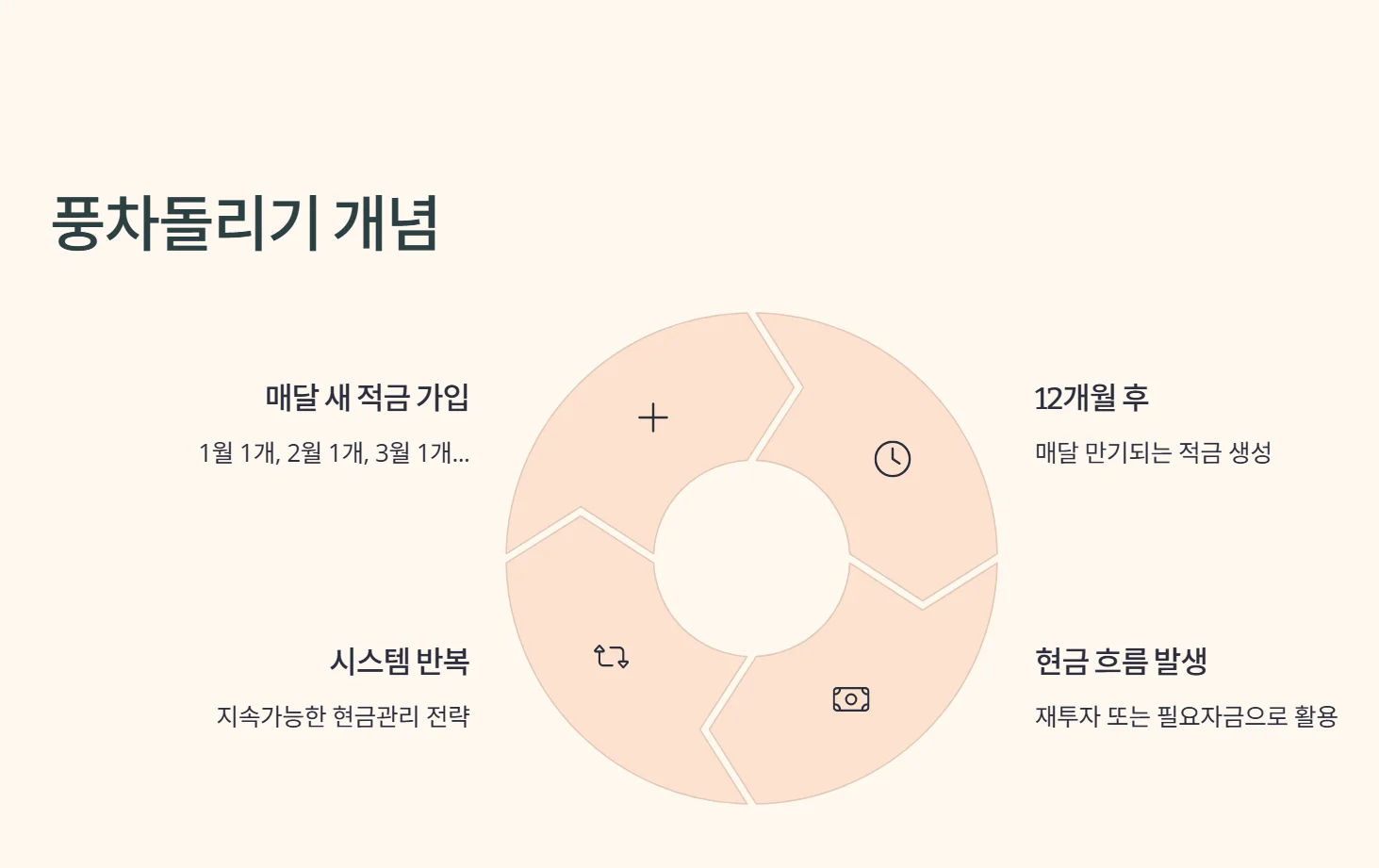
During a trend of falling interest rates, the core challenge becomes "how long to secure today's high interest rates." In this context, the "windmill strategy" is useful for dispersing high-interest periods without sacrificing liquidity.
The windmill strategy is a structure that involves opening a new installment savings account for a fixed amount each month so that matured funds begin returning every month after 12 months. The two core advantages of this approach are as follows 2.
- Securing Liquidity: In the event of a sudden demand for funds, you can use the matured funds for that month without the interest losses caused by breaking the entire deposit.
- Dispersing Reinvestment Timing: By reinvesting the funds that return each month based on the interest rate environment at that time, or switching them to short-term products, you can lower the average risk related to interest rate fluctuations.
Instead of unconditionally enabling automatic reinvestment functions, it may be more advantageous to directly recover funds on the maturity date, check the interest rate environment at that time, and re-enroll. This is because, during an interest rate downcycle, the base interest rate at the time of maturity is likely to be set lower than the base interest rate at the time of reinvestment 2.
Technical Verification of Non-Face-to-Face Financial Services and Interest Calculation Methods
When opening savings bank deposits without visiting a branch via a non-face-to-face mobile app, additional interest rate benefits of 0.1~0.3%p are generally provided 1. This allows you to easily compare interest rates across multiple financial institutions and explore favorable products without time and location constraints 3.
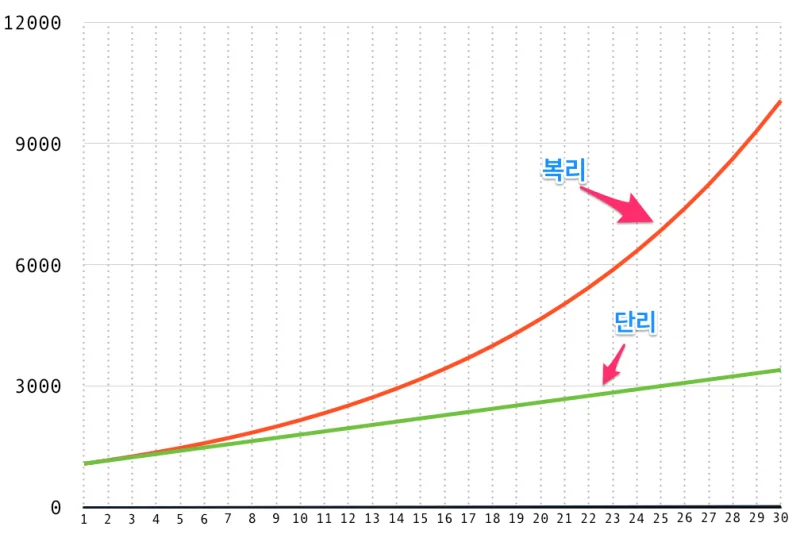
However, when subscribing via non-face-to-face channels, you must carefully examine the "interest calculation method" rather than just the nominal interest rate. While deposits typically adopt a simple interest method, some products apply compound interest to generate the effect of interest on interest. When managing long-term funds for 12 months or longer, the compound interest method has a substantive impact on the final rate of return, so the calculation method in the product description must be confirmed 3.
In addition, the interest penalty structure for early termination of savings bank deposits varies by product. The feature of easy subscription via non-face-to-face channels does not necessarily mean there are no interest disadvantages for early termination, but it is essential to check the terms and conditions in advance to understand the scope of losses based on the fund recovery timing 1.
The Position of Savings Bank Deposits from an Asset Allocation Perspective
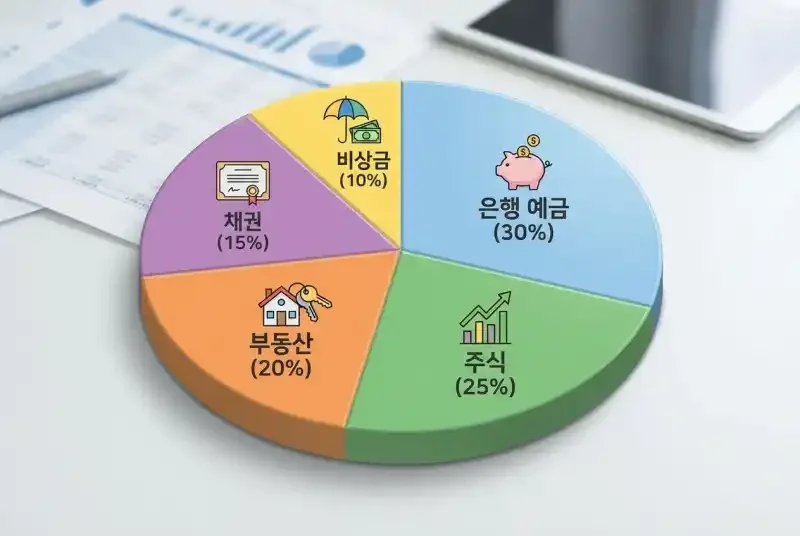
Smart savings bank deposits in 2026 are closer to portfolio design combining tax benefits, deposit insurance coverage limits, and liquidity management rather than simple "pursuit of high interest." It is recommended to adopt a track portfolio strategy where, after securing savings bank fixed deposits and parking accounts that serve as safety nets, the effective rate of return is complemented by IRP tax credits (13.2~16.5% deduction on maximum annual contributions of KRW 9 million) or stock investments 1.
If the benchmark rate is cut further from 2.5% per annum, savings bank deposit rates may also decline in chain reaction; however, as of now, they are maintaining a premium of 0.5~0.7%p compared to the first-tier financial sector. Through sophisticated dispersed deposits considering the KRW 100 million deposit insurance limit and criteria for comprehensive taxation on financial income, simultaneously securing both the effective rate of return and principal and interest safety even during the interest rate downcycle is the core of 2026 savings bank deposits.
References
- 저축 예금 완전 정리 2026: 금리·비교·절세 전략 · money.trendcube.co.kr↩
- 예적금 금리 비교·풍차돌리기 — 2026년 최신 금리와 1억 보호 한도 활용법 - 정보 허브 · tip.plusfieldzone.com↩
- 고금리 예적금, 비대면 가입 똑똑하게 하는 법 — 재테크 — 머니인포 · infolabm.com↩
- 스마트저축은행 자유저축예금 금리 연 1.20% — 하루 이자 계산 | 이자계산기 · ijacalc.com↩