Retirement planning in the era of centenarians is not simply a question of "where to put your money." As of 2026, pension savings and personal IRPs (Individual Retirement Pensions) are core vehicles for growing retirement assets, but a simple comparison makes it difficult to determine a clear winner. Pension savings allow unlimited investment in risk assets, facilitating aggressive management, whereas IRPs feature a legal cap of 70%, providing protection against volatility. However, the most decisive battleground, more critical than account structure, lies in the often-overlooked "fees" and the "tax" structure altered by the 2026 tax law revisions. The true winners of the yield war are not those who simply maximize contribution limits, but those who eliminate factors that erode compound interest.

Tax Credits: The 'Starting Line' of a 9-Million-Won Limit and Tax Benefits During the Withdrawal Phase
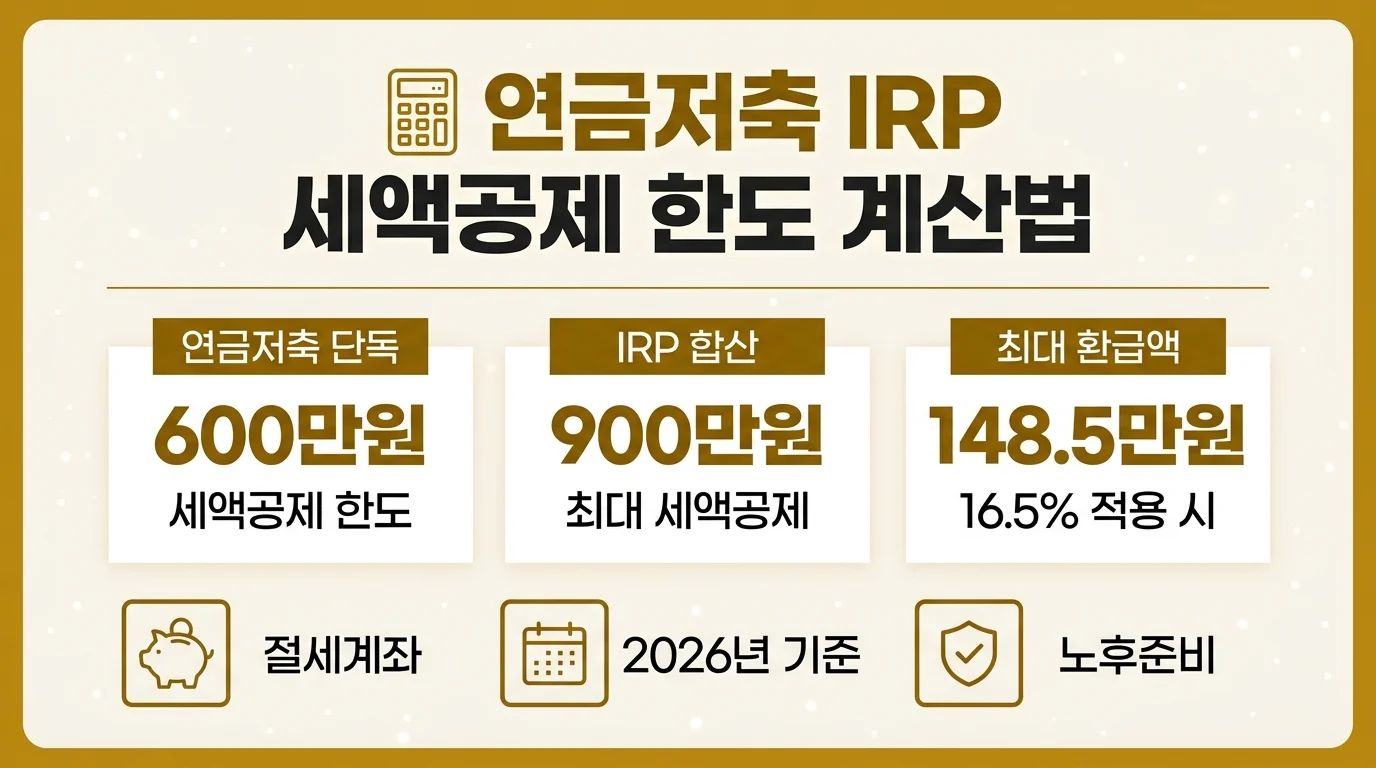
The starting line for retirement planning is tax benefits. As of 2026, the standalone tax credit limit for pension savings is 6 million won per year, and when combined with a personal IRP, the maximum tax deduction reaches 9 million won123. For individuals with a total salary of 55 million won or less, including local income tax, the maximum refund rate is 16.5%. Consequently, contributing the full 9 million won can yield a refund of up to 1.485 million won415. Conversely, high-income earners are subject to a 13.2% rate, resulting in a refund of 1.188 million won45.
However, formulating a strategy based solely on contribution-phase deduction rates may cause you to overlook new variables in 2026. Starting with withdrawals from January 1, 2026, the pension income tax rate applicable to lifetime withdrawals has been uniformly reduced to 3.3%, regardless of age5. Additionally, a three-tier reduction system has been established such that when receiving severance pay for long-term employment exceeding 20 years into an IRP, the reduction rate in severance income tax shifts from the previous 60% taxation to 50%5. In other words, while contribution-phase benefits are identical for both pension savings and IRPs, how effectively you defend against taxes during the withdrawal phase has emerged as a critical determinant of real yield.
Yield Variables: The 70% Limit on Risk Assets vs. Unlimited Investment Freedom
Account structure determines the ceiling for yields. For personal IRPs, the investment ratio between principal-guaranteed assets and risk assets is legally regulated, with the proportion of risk assets such as equity funds strictly limited to 70%56. This serves as a structural safety net, mitigating downside pressure for investors prone to significant volatility or subscribers nearing retirement. In contrast, pension savings funds have no restrictions on the proportion of risk assets56.
These structural differences result in completely divergent advantages depending on market conditions and investment preferences. When global stock market bull runs persist, it may be advantageous to use pension savings funds, which have no proportion limits, to aggressively increase growth assets4. However, as seen in the domestic stock market correction case in the third quarter of 2026, the impact of short-term volatility is concentrated in portfolios with high risk-asset proportions7. Therefore, rather than relying on the simple formula that "stocks go in pension savings, bonds in IRP," you should design the asset allocation ratio between the two accounts according to your own risk tolerance46.

The Thief of Compound Interest: Fee Gaps and Yield Erosion
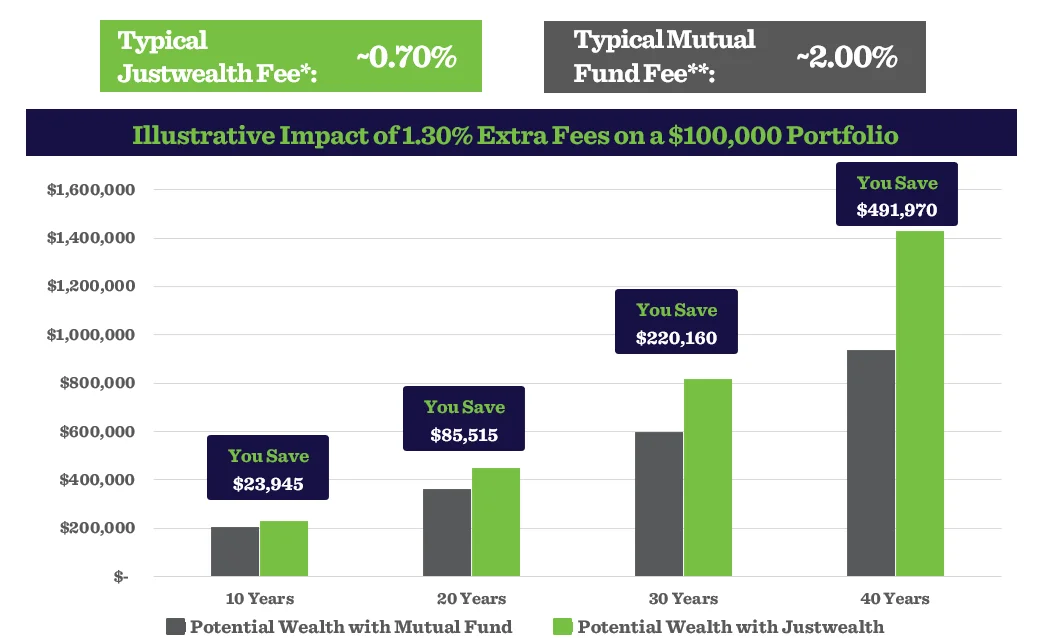
The most underrated battleground in the yield war is "fees." According to Financial Supervisory Service disclosures as of the fourth quarter of 2025, the total expense ratio of personal IRPs varies by up to approximately 50 times (0.007%~0.347%) among providers8. Even if management and asset management fees are covered by the company or advertised as 0%, the inherent expenses of funds and ETFs, along with transaction costs, remain the subscriber's burden8.
In long-term management, this gap acts as a fatal factor eroding compound interest. Analyses support that even a mere 0.2% annual fee difference results in a yield gap of approximately 4.14 million won when 50 million won is managed over 20 years8. In particular, utilizing the "in-kind transfer" system implemented in October 2024 allows subscribers to move their accounts to providers with more favorable fee conditions without selling assets and paying capital gains tax or breaking the compound interest structure8. Therefore, managing pension yields must begin with checking your total expense ratio via the Integrated Pension Portal to ensure it is competitive, taking into account deviations among providers, prior to product selection8.
The Trap of Eligible TDFs and Asset Allocation Controversies
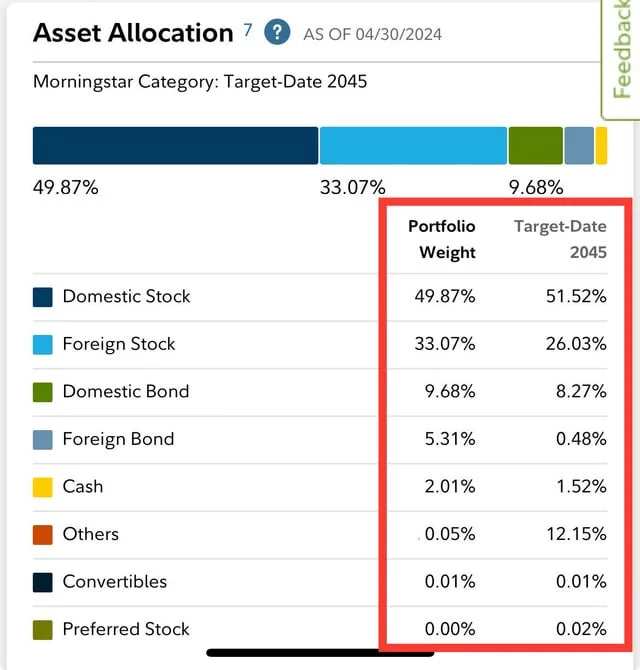
Strategies relying on TDFs (Target Date Funds) for yield defense also require re-evaluation as of 2026. To prevent portfolio concentration, financial authorities introduced 'Eligible TDF' guidelines, limiting investment in any specific overseas country to within 80%9. The problem is that the restriction applies only to "overseas" assets in the wording, allowing products concentrated in domestic assets (stocks and bonds) to also be classified as eligible TDFs9.
Exploiting this loophole, aggressive TDFs concentrating investment in key domestic industries have emerged one after another. However, due to the impact of market volatility in 2026, short-term yields plunged, with certain domestic equity-focused eligible TDFs recording a -4.8% return since inception9. Industry critics point out that the concentration in domestic assets in ultra-long-term products, such as the 2060 vintage (targeting retirement in 2060), may contradict the purpose of diversification9. Thus, even for eligible TDFs, it is essential in the yield war to verify detailed management strategies to confirm how well the internal asset proportions are diversified9.
Strategic Allocation: Practical Placement Considering Income and Liquidity
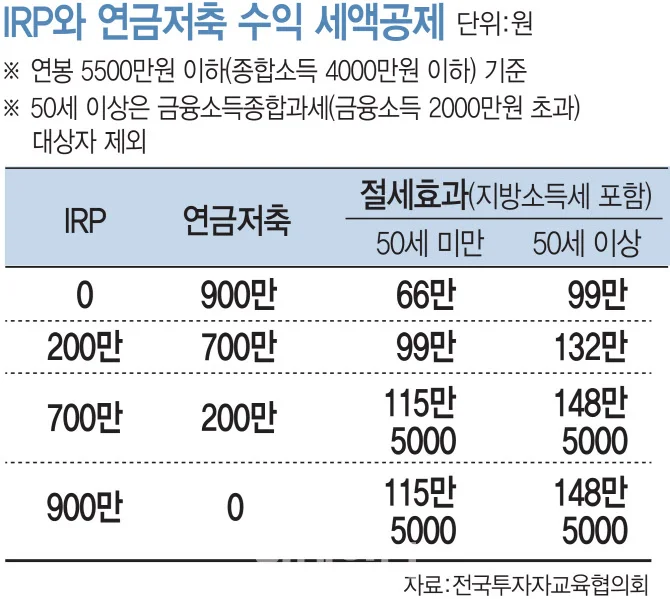
The final winner of the yield competition is the one who allocates assets accurately reflecting their financial environment. First, if accounts are terminated prematurely before age 55, a 16.5% other income tax is levied35. Given that IRPs have stricter liquidity constraints than pension savings, maxing out pension savings limits first is advantageous for securing liquidity13.
- Focus on Stability and Liquidity: IRP (stable assets such as bond funds and MMFs), Pension Savings (securing some liquidity)
- Focus on Aggression and Growth: Pension Savings (unlimited use of global equity ETFs, REITs, etc.)
Additionally, in 2026, when converting matured ISA (Individual Savings Account) funds into pension accounts, an additional tax credit benefit of up to 3 million won on 10% of the converted amount is provided25. This means that with the base 9 million won plus 3 million won, you can secure a tax credit limit of up to 12 million won for that year5. If a married couple maximizes the 9 million won limit in their respective accounts, they can enjoy a refund effect of approximately 2.97 million won3. Therefore, meticulously designing a portfolio, including joint tax savings for couples based on individual income and asset size, is the practical survival strategy for the era of centenarians.
References
- 연금저축계좌 세액공제 받으려면 어디서 가입할까 | 코스티 · mudidi.tistory.com↩
- 연금저축 세액공제 한도 2026년 기준, 600만원과 900만원 차이부터... · socialstory.kr↩
- 연금저축 세액공제 한도 2026 IRP 합산하면 얼마까지 돌려받나요 - 3분전 · 3min.co.kr↩
- 퇴직연금과 개인연금 병행 전략 - 반짝이는 생활 정보들 · twinklemooninfo.com↩
- 연금저축 세액공제 한도는 600만원, 환급은 148만원 (2026년) | 알짜랩 · alzzalab.com↩
- 은퇴 포트폴리오 자산배분 완전 정리 — 나이별 주식·채권·현금 비율 설계법 · haerangasset.com↩
- 공격적 실적배당의 역습... 금융감독원, 3분기 퇴직연금 성적표 공개 - 의사나라뉴스 · mdmorenews.com↩
- 퇴직연금 수수료, 사업자마다 3배 차이 - 어디서 확인할까? · kr.numbergap.com↩
- [Market Watch] '적격 가이드라인' 논란 지속…코리아 TDF, 마이너스 수익률 · thebell.co.kr↩