As the pace of innovation in the pharmaceutical and biotech industries accelerates, artificial intelligence (AI) is emerging as a key driver of new drug development. Against this backdrop, the Korea Pharmaceutical and Bio-Pharma Manufacturers Association and Canada’s province of Ontario met to discuss AI-driven drug development cooperation centered on the 'Self-Driving Lab (SDL).' This meeting is drawing attention for its focus on combining the technical strengths of both sides to generate tangible synergies in the global market.
Ontario Delegation Visits South Korea, Establishing a Forum for Cooperation Talks
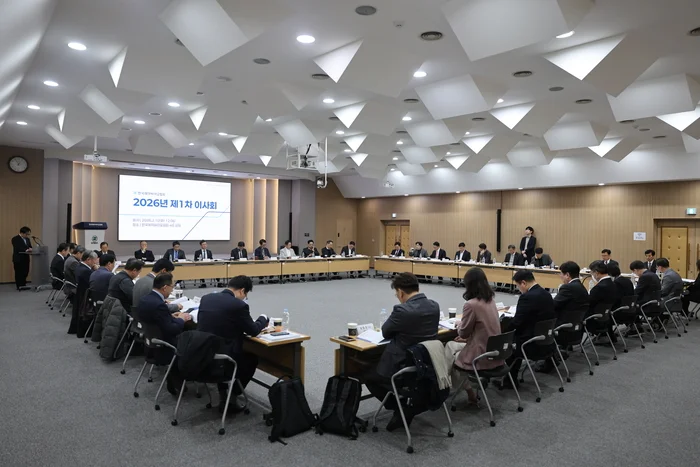
The Korea Pharmaceutical and Bio-Pharma Manufacturers Association (KPBA), chaired by Noh Yeon-hong, announced on July 2 that Victor Fedeli, Minister of Economic Development for the Canadian province of Ontario, visited the association on July 1, 2026, to discuss pharmaceutical and biotech industry cooperation between the two countries 123. The "Ontario Province-KPBA Industry Cooperation Meeting" was organized by the association and Ontario’s Acceleration Consortium (AC)—its industry-academia-research collaboration platform—to expand cooperation in AI-based pharmaceutical and biotech fields mediated by the SDL and to stimulate research and technology exchanges 12.
Prior to the meeting, Minister Victor Fedeli toured the association’s AI Drug Discovery Research Institute and the SDL, directly verifying the local AI drug development research environment 12. He reportedly showed particular interest in the construction and operation of the SDL, which uses AI to automate experimental design, execution, and data analysis 1. The Canadian side sought to reference Korea’s SDL operational experience in building its own research infrastructure, during which they also presented Ontario’s life sciences and healthcare investment strategy to the Korean delegation 123.
Background of Cooperation Centered on the Self-Driving Lab (SDL)
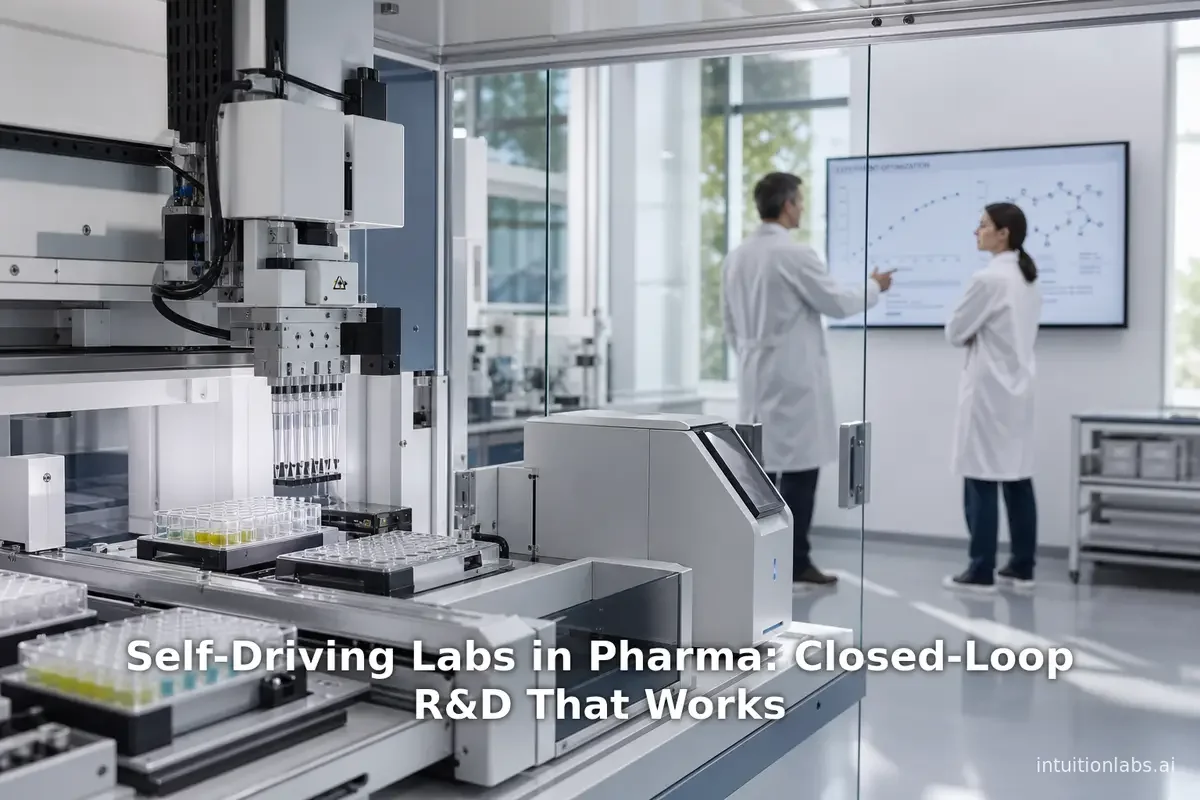
The concentration of discussions on the Self-Driving Lab (SDL) is closely related to improving efficiency in drug development. The SDL is a next-generation research environment where AI independently plans, executes, and analyzes experiments, and it is recognized for its potential to shorten the time required for discovering and validating drug candidates.
Minister Victor Fedeli emphasized that Ontario is home to more than 1,600 AI companies and over 2,000 life sciences companies, with support systems in place to ensure research outcomes are swiftly translated into industrial applications 123. In response, KPBA Chairman Noh Yeon-hong stated, "Korea possesses excellent research foundations and capabilities in future technologies, while Ontario is a leading hub for AI and life sciences innovation in North America," adding, "If we connect the strengths of both sides, we can create greater synergies in the global market" 123. He further added, "I look forward to active joint research, industry collaboration, and personnel exchanges that can develop into a sustainable partnership" 1.
Concrete Cooperation Plans: From Joint Research to Talent Development
Beyond grand declarations, the discussions covered a wide range of practical implementation plans. The main cooperation measures are categorized into four key areas 123.
First, identifying joint research projects in the fields of AI drug discovery and SDLs. Second, exchange programs for swapping research personnel and technology. Third, establishing partnerships in the manufacturing sector. Finally, sharing education and talent development programs for association member companies. Given the Canadian side’s interest in Korea’s SDL infrastructure operational model, it is highly likely that discussions on building similar infrastructure and technical cooperation will become more specific in the future 123.
Plan to Expand Global Open Innovation
Through these cooperation discussions, the KPBA plans to broaden the foundation for domestic companies to enter the global market. The association intends to significantly expand 'Global Open Innovation,' which links joint research and technology exchanges with investment and commercialization 123.
AI-driven drug development is a field requiring high levels of expertise and data, where relying solely on individual resources has limitations in ensuring competitiveness. Cooperation with Ontario is significant as it secures a channel for Korean pharmaceutical and biotech companies to connect closely with North America’s AI-bio innovation ecosystem 12. The Canadian side also hopes to strengthen partnerships in the life sciences and healthcare industries supported by Ontario together with Korea 12.
Conclusion

The recent meeting between the KPBA and the Canadian province of Ontario served to reaffirm that AI technology is a core factor determining the future competitiveness of the pharmaceutical industry. Based on the joint research projects and personnel exchange programs discussed in this meeting, the association plans to broaden its touchpoints with the North American market in the future. Industry attention is focused on whether the cooperation measures agreed upon by both sides will translate into tangible results.
References
- "AI 신약개발 협력 확대"...제약바이오협, 캐나다 온타리오주와 협력체계... · v.daum.net↩
- 한국제약바이오협회-캐나다 온타리오주, AI 신약개발·자율실험실 협력... · medipharmhealth.co.kr↩
- 제약바이오협회 찾은 캐나다 온타리오 경제개발부 장관, 산업협력 논의 · asiatoday.co.kr↩