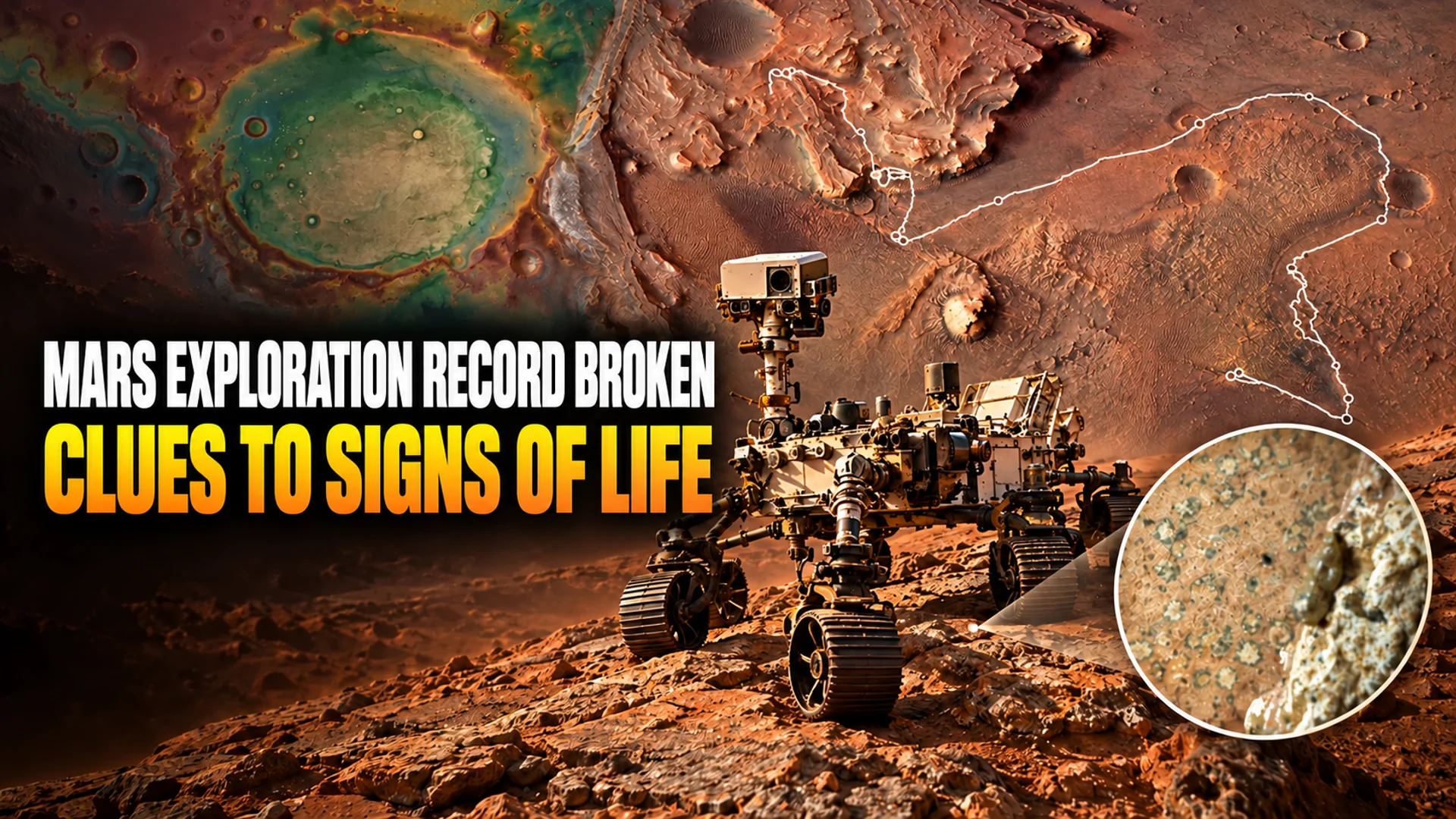
2026 Martian exploration has reached a turning point, demonstrating both concrete scientific discoveries in the search for traces of ancient life and the orbital insertion of next-generation missions, going beyond mere record-breaking. The most symbolic achievement is NASA’s Perseverance rover shattering the record for the longest drive on the Martian surface while exploring the oldest terrain in Jezero Crater and identifying mineral assemblages associated with potential biosignatures on the western rim of the Jezero basin 12.
The horizon of Mars exploration is expanding beyond Mars itself to its moons and deep subsurface. The Japan Aerospace Exploration Agency (JAXA) successfully launched the Martian Moons eXploration (MMX) mission, humanity's first Mars moon sample return mission, and the European Space Agency (ESA) completed verification of autonomous driving and remote control technologies for its rover ahead of the planned 2030 Mars landing 345. Currently, Mars exploration is embedded in a complex process where technological leaps to ensure rover mobility interlock with an international deep-space cooperation network.
Perseverance's Driving Record and Leap in Autonomous Driving Technology
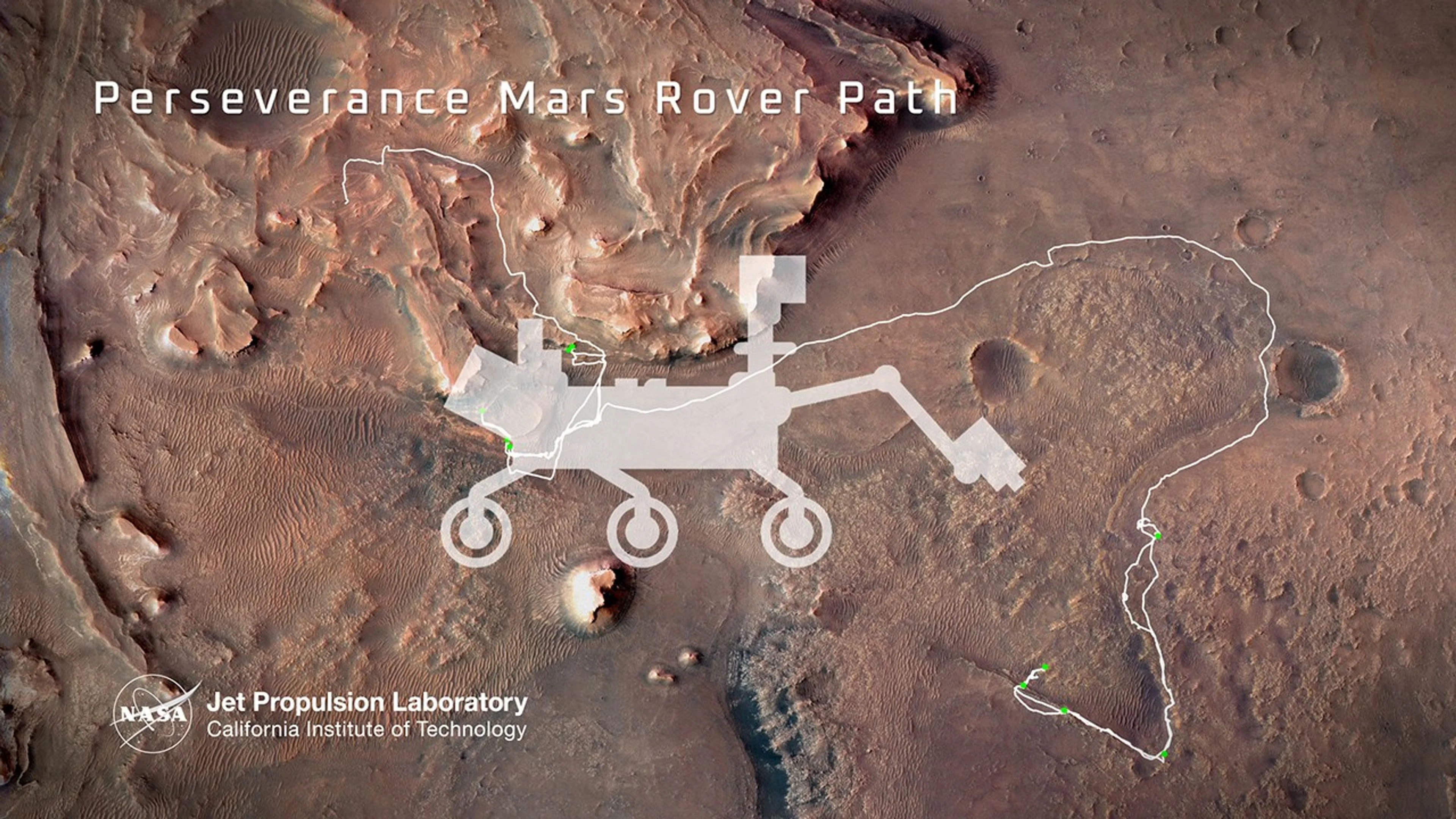
On October 11, 2026, NASA's Perseverance rover recorded a cumulative driving distance of 45.22 km (28.10 miles), breaking the record for the longest drive on an extraterrestrial body 12. This figure slightly exceeds the record of 45.16 km (28.06 miles) set by the Opportunity rover, which was active from 2004 to 2018 16.
A notable aspect is the time it took to achieve this record. Perseverance surpassed this distance in just five and a half years, as it reached its 2,006th Martian day (sol) on the Martian surface 16. Compared to Opportunity, which took approximately 15 years to cover the same distance, this represents a dramatic improvement in speed. Steven Lee, Project Manager at the Jet Propulsion Laboratory (JPL), confirmed that the mobility system remains fully operational even though it has already far exceeded the originally planned maximum driving distance of 12.4 miles (approx. 19.9 km) 16.
At the core of this significant mobility capability is an advanced autonomous driving system. Perseverance applies a 'thinking while driving' approach, navigating autonomously for over 90% of its total driving distance 1. This contrasts sharply with previous rovers, which had an autonomous driving ratio of only 5%. While driving, the rover captures terrain images, assesses hazards, and plans routes; during this process, the terrain point data measured has surged from an initial 20 points to currently 600,000 points per observation 16.
| Exploration Mission/Rover | Cumulative Driving Distance | Duration (Estimated/Recorded) | Key Features and Autonomous Driving Ratio |
|---|---|---|---|
| Perseverance | 45.22 km (28.10 mi) | Approx. 5.5 years (2,006 sols) | >90% autonomous driving, 600,000 measurement points 16 |
| Opportunity | 45.16 km (28.06 mi) | Approx. 15 years | Autonomous driving ratio approx. 5% (initial standard) 16 |
| Curiosity | 38.07 km (23.65 mi) | 2012~ | Ongoing, capable of moving up to 412 m/sol 6 |
4-Billion-Year-Old Terrain and Geological Insights on the Western Rim of Jezero Basin
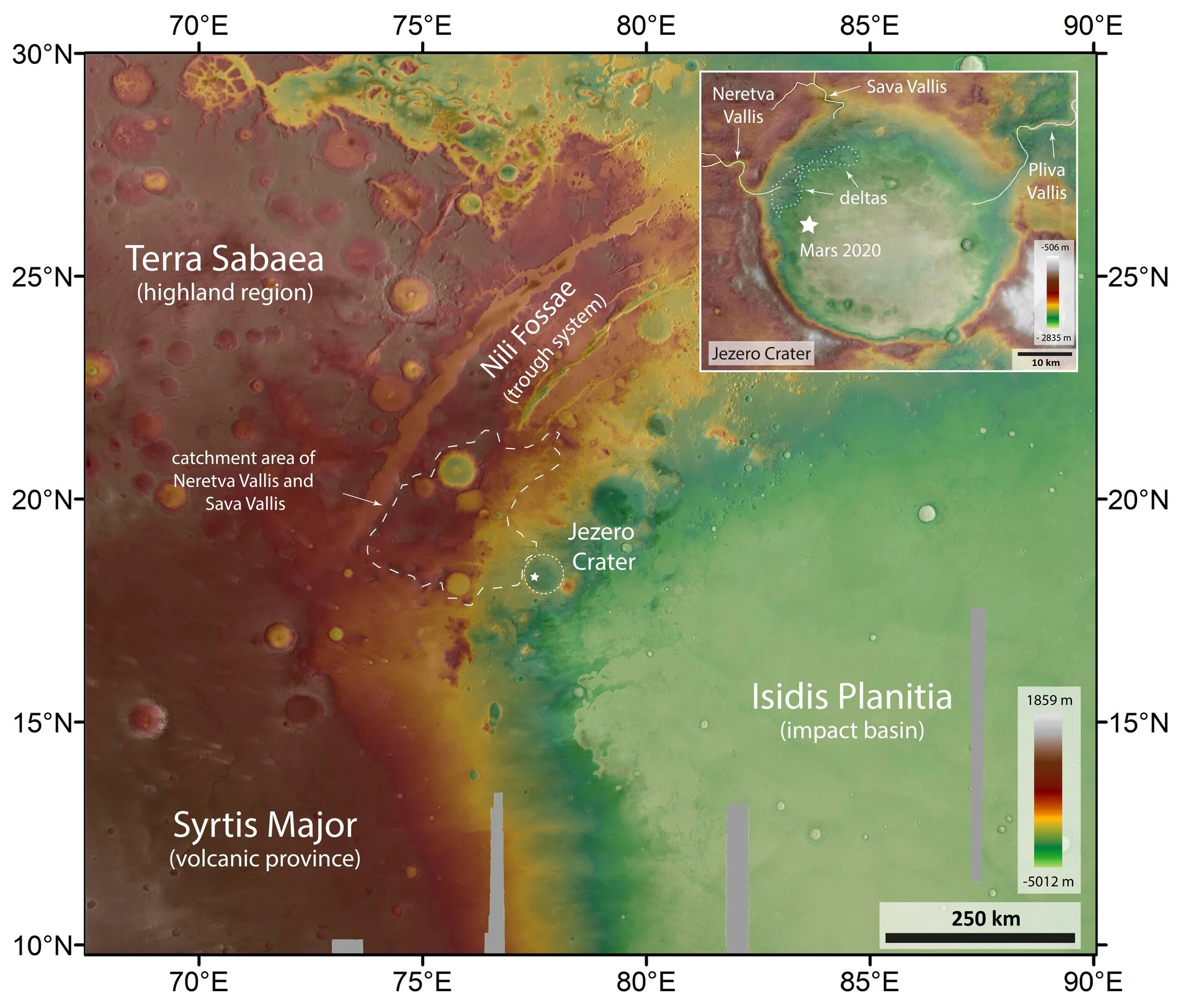
The reason the journey following the record-breaking event is gaining attention is that it is revealing geological information from the planet's early formation. Perseverance is traversing the 'Lac de Charmes' and 'Idubi' areas on the western edge of Jezero Crater's rim 16.
This region contains the oldest terrain, formed approximately 4 billion years ago, and holds crucial strata suggesting the existence of an ancient hydrothermal system 1. While Jezero Crater has long been known as a delta plain area where rivers once flowed in to form a lake, the crater rim currently being investigated by Perseverance is a place where primordial crustal blocks, uplifted by the massive impact event that formed the Jezero basin, are exposed 12.
The rocks flipped and uplifted by the impact likely preserve the primordial crustal state from when Mars was formed, along with minerals formed by the reaction of hot water with rock, preserved like fossils 1. While investigating these diverse and complex geological environments, the rover has successfully collected a total of 29 rock and soil samples, which are now sealed and stored 1.
Potential Biosignatures Discovered in Cheyava Falls Rock
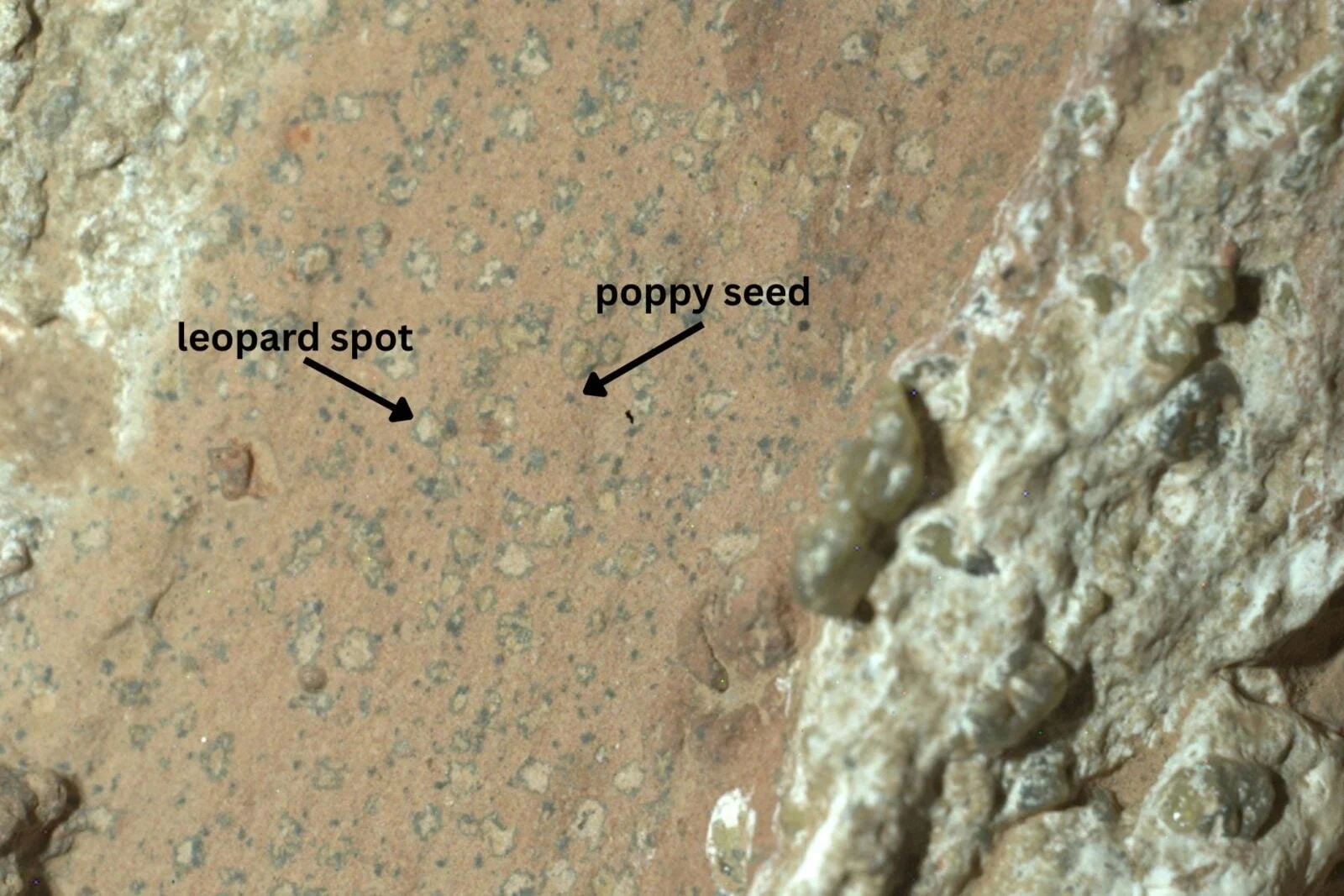
Meaningful progress has been reported in 'biosignature identification,' one of the scientific goals of the Perseverance mission. Project Scientist Katie Stack Morgan announced the discovery of evidence associated with potential biosignatures in the 'Cheyava Falls' rock, which corresponds to the river valley that formed the ancient lake within Jezero Crater 21.
The discovery consists of specific mineral assemblages that are highly likely to have been formed by microbial activity 1. On Earth, microbial activity alters the mineral composition of rocks through specific chemical reactions 2. Such chemical biases and mineralogical structures found on Mars provide clues linking the physical and chemical conditions of Mars's past environment with the existence of life 2.
However, what has been discovered so far is not 'evidence of extant life' but rather 'potential signatures,' which are chemical traces that could have been left when past life was active 12. Since these findings were confirmed using instruments onboard the rover, precise analysis on Earth is necessary to reach a final conclusion on whether these mineral assemblages were truly formed by biological reactions or by purely chemical and geological mechanisms 2.
Launch of the MMX Mission Toward Mars Moon Phobos
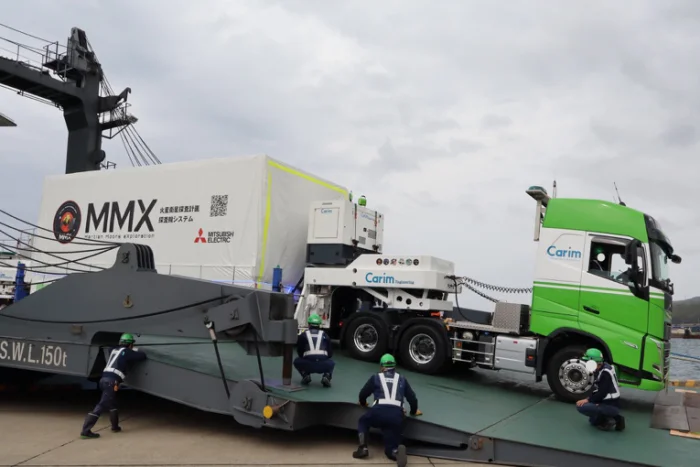
The front line of Mars exploration is not limited to the surface of Mars itself. At 4:41 AM JST on October 20, 2026, the Martian Moons eXploration (MMX) mission, aboard an H3 rocket launched from the Tanegashima Space Center in Kyushu, Japan, entered orbit 34.
The MMX mission is humanity's first round-trip Mars-system mission, aiming to land on Phobos, one of Mars's moons, collect at least 10 grams of samples, and return them to Earth 34. The spacecraft is scheduled to drop its return capsule in a restricted area in the Woomera region of Australia in 2031 34.
Unraveling the origin of Mars's moons is a key to understanding the evolutionary history of Mars itself. Phobos may be a re-aggregation of debris ejected from Mars during an ancient impact, or it could be an asteroid captured by the planet's gravity well from elsewhere 34. The answer to this question provides important clues for tracking the past of the Martian system as well as the movement pathways of materials such as elements of life and organics 4.
This MMX mission is a project that pushes JAXA's precision technology and know-how, which succeeded in returning asteroid samples in the past, to their limits. Although it faces the challenging difficulty of overcoming Phobos's subtle gravitational environment (applying teleoperation and touch-and-go methods), the success of the mission will be a giant leap in understanding the Martian system and the early formation of the solar system 34.
Training for Autonomous Driving and Deep Drilling of the ESA Rosalind Franklin Rover
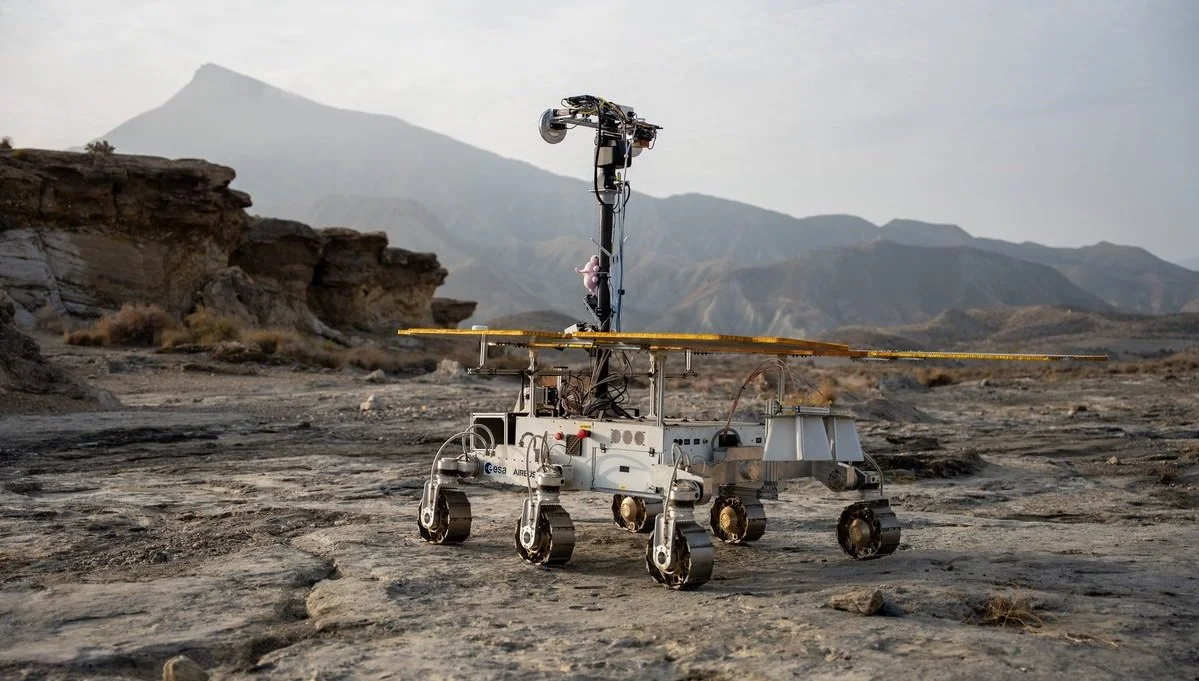
Preliminary rehearsals concluded successfully in the Tabernas Desert in Spain in early October 2026 57.
A prototype named 'Charlie,' equipped with wheels and undercarriage identical to the actual rover, was deployed for a 20-day training session 57. Charlie carried out the task of verifying technologies to be reflected in the actual rover's design, with a particular focus on securing autonomous navigation capabilities in communication-delay environments 7.
Remote commands were issued from a location approximately 1,200 to 1,645 km away from the Rover Operations Control Centre (ROCC) in Turin, Italy 75. During the training, Charlie achieved a milestone on day 6 by driving over 60 m in autonomous mode without immediate operator intervention, recording a navigation error of less than 1% 5.
Additionally, the rover is designed to drill samples to a depth of 2 meters underground, allowing it to avoid radiation falling on the surface 789. In the harsh environment of the desert, characterized by fine soil and salt crystals, Charlie demonstrated the ability to traverse unstable terrain stably using its six independent wheels, while utilizing actual geological conditions to test its decision-making process to the extreme 57.
Variations in Sample Return Mission Plans and New Planetary Protection Guidelines
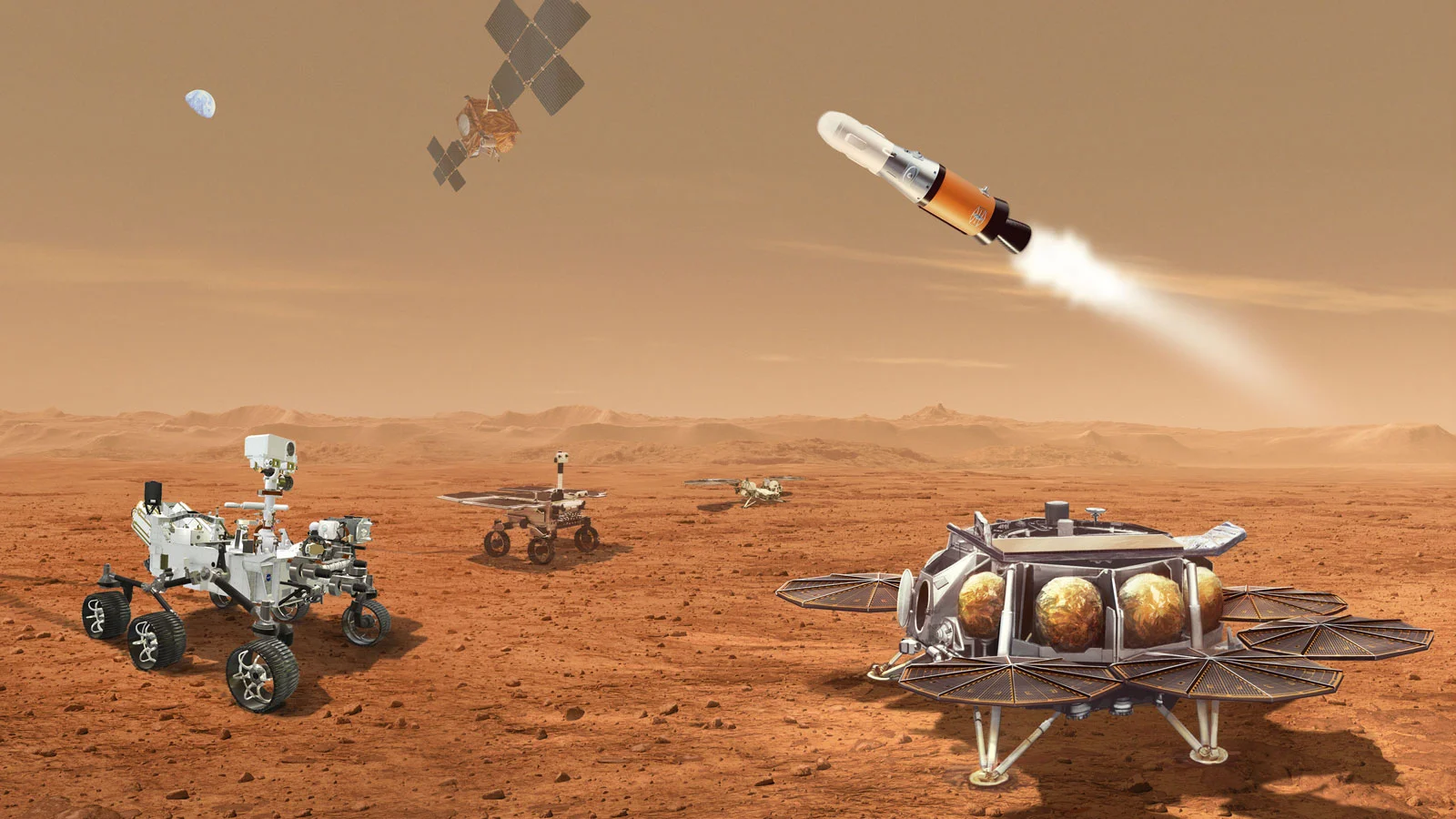
Attempts to bring samples collected by rovers back to Earth are facing immense hurdles. NASA's Mars Sample Return mission has been scaled back and delayed due to rising costs and other reasons 29.
While the U.S. plan is delayed, program restructuring and budget recovery status are expected to be discussed during various official briefings, including the National Academies of Sciences (NAS) Committee on Astrobiology and Planetary Science (CAPS) meeting scheduled for October 6–8, 2026 9. Although the 'Mars Sample Return Sample Receiving Project Measurement Definition Team Final Report' was released in October 2025, NASA has yet to publish a finalized, standalone execution plan. Experts such as Dr. Philip Christensen of Arizona State University have expressed deep frustration over the delay of what is arguably the most significant scientific achievement in Mars exploration 29.
Furthermore, new Planetary Protection Directives were released by NASA Administrator Issacman between late September and early October 2026 9. Planetary protection refers to rules that prevent Earth's microorganisms from being transferred to Mars or Martian samples from contaminating Earth's ecosystems 9. As the mission approaches its ultimate goal of sample return, these standards are becoming stricter, and an 'M-FORCE' task force for rewriting relevant protocols was already established in August 2026 9.
Realistic Coordinates of Mars Exploration in 2026
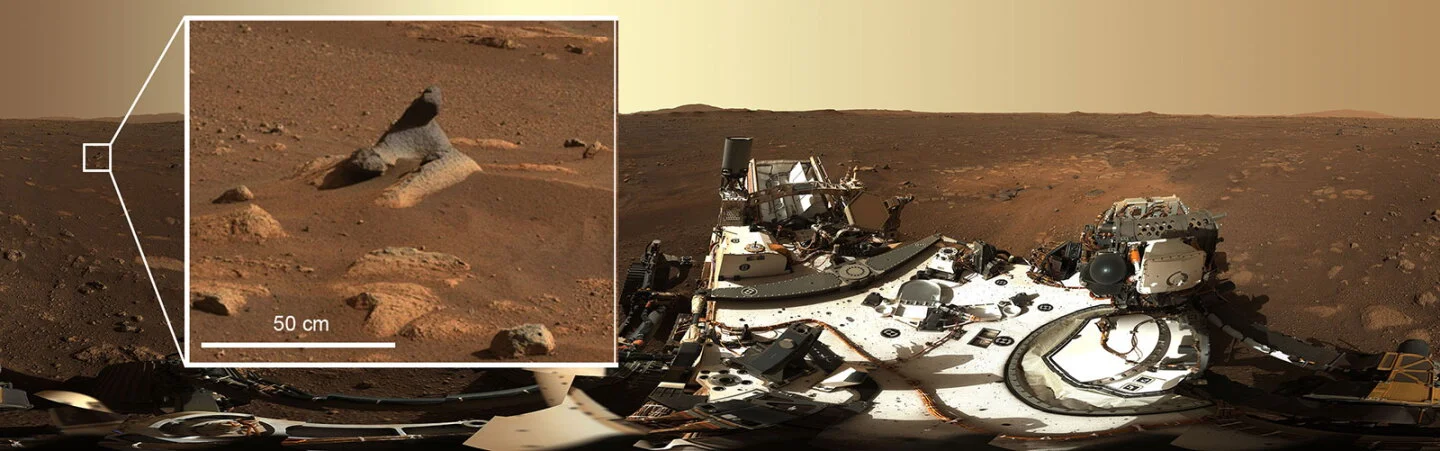
Mars exploration in 2026 stands at a stage combining the culmination of autonomous driving technology, which overcomes the physical limits of rovers, with sophisticated chemical analysis aimed at finding traces of life. The 45.22 km recorded by Perseverance and the 4-billion-year-old mineral assemblages discovered in the process are not merely a numbers game but an essential preparatory process for unlocking the secrets of the early planetary environment 12.
Although the journey to bring samples back to Earth still carries uncertainty amidst fluctuations in budget and policy, the full-scale advancement of next-generation international missions like MMX and ExoMars is making the human perspective on the Martian environment increasingly three-dimensional and precise 935.
References
- NASA’s Perseverance Sets Off-World Record for... - NASA Science · science.nasa.gov↩
- ↩
- JAXA Launches MMX Mission: 10g From Phobos by 2031 [2026] · shattered.io↩
- Asia Minute: Japan's Martian lunar mission is underway | Hawai'i Public Radio · hawaiipublicradio.org↩
- European Rover Trains For Mars In The Desert - Astrobiology · astrobiology.com↩
- Perseverance Smashes Distance Record On Mars; Outruns Opportunity Odometer [WATCH] · in.mashable.com↩
- The search for life on Mars begins with ‘Charlie’ in... | EL PAÍS English · english.elpais.com↩
- On this day in space! Oct. 19, 2016: Europe's ExoMars orbiter and Schiaparelli lander arrive at Mars | Space · space.com↩
- Possible News From The Committee on Astrobiology and Planetary Sciences Meeting - Astrobiology · astrobiology.com↩