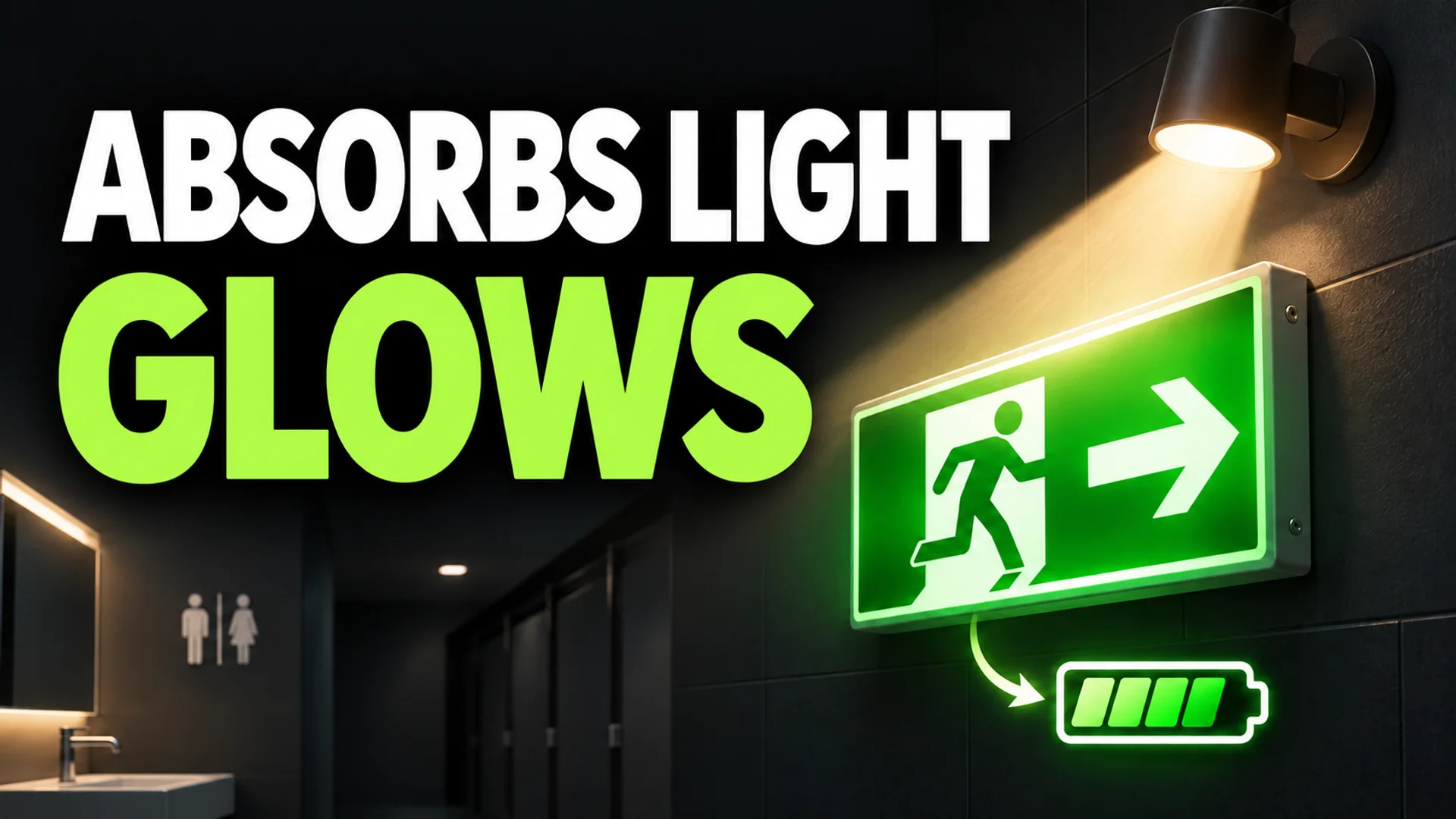
When you walk into a dark restroom in the middle of the night, you may have noticed a green emergency exit sign glowing faintly on the wall. If you look closer, you will often find a small wall light next to the sign or light leaking in from the corridor that helps maintain its glow. Why is a separate light source kept on next to a sign that is already emitting light?
The reason lies in the luminescent (the property of absorbing and re-emitting light) principle behind these signs. A luminescent material is not a generator that produces light on its own; it is a "light reservoir" that absorbs external light, stores it, and slowly releases it in the dark. Therefore, the lighting is not a decorative accessory for the sign but an essential energy source required for the sign to function.
The Vessel That Holds Light: How Luminescent Materials Work
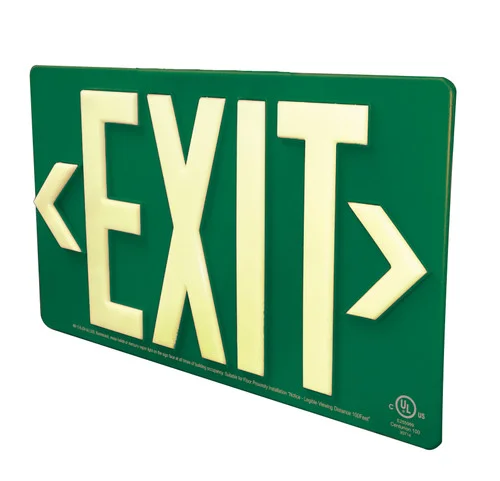
Among the green guidance signs installed in restrooms and corridors, many products glow in the dark without being connected to electrical wiring. The operating principle of the materials used to make these products is called "luminescence." Literally meaning "to accumulate (蓄) light," luminescence is a phenomenon where special substances inside the material absorb and store energy when exposed to light, then gradually emit it as light in darkness.
The Korea Fire Service Agency’s standard documents explicitly state the basis for this principle. Article 3, Item 10 of the "Fire Safety Performance Standards for Exit Signage and Guidance Signs" (hereafter NFPC 303, enforced on January 1, 2024) defines evacuation guidance lines and stipulates that conductors that "luminesce" due to sunlight or electric lights are regulated as the "luminescent type" 1. In other words, this material does not have a structure capable of emitting light on its own and must receive external light (from lighting or sunlight) to gain the power to shine.
During the day, fluorescent lights on the ceiling or sunlight coming through windows constantly charge the luminescent signs. However, when night falls and the main lights in the restroom are turned off, blocking all light sources, the luminescent signs begin to fade as they can only emit the stored light without replenishing it. Eventually, signs that have not received any light throughout the night become like "discharged batteries," failing to function until the lights are turned on in the morning.
Safety Standards Mandating Sign "Operating Conditions"
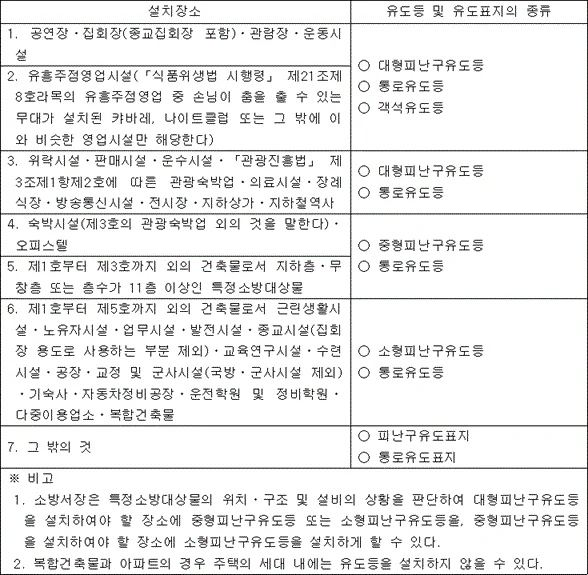
The fact that external light is essential for luminescent signs to emit light is also strictly required by actual fire safety standards. According to Article 8, Paragraph 1, Item 5 of NFPC 303, when installing luminescent-type guidance signs, it is mandated that "continuous illumination is provided by external light or lighting devices, or illumination is provided by emergency lighting fixtures" 1.
The law enforces that either continuous lighting or emergency lighting must provide light independently of the sign. This indicates a logical necessity: rather than lighting merely serving an auxiliary role to enhance the sign's visibility, the structural characteristics of luminescent materials require a light-supplying device for the sign to function at all.
This standard is particularly important in spaces like restrooms, where main lights are turned off every night. During the day, fluorescent lights charge the luminescent signs, but when main lights are turned off at night, the light available to charge the signs disappears entirely. Therefore, for guidance signs in dark restrooms to function properly throughout the night, separate small lights or light from the corridor must not be blocked but must be maintained as continuous lighting. If this lighting is turned off, the luminescent sign becomes a dysfunctional decoration unable to display anything in the dark.
The Roles of Two Lights in Ensuring Floor Visibility
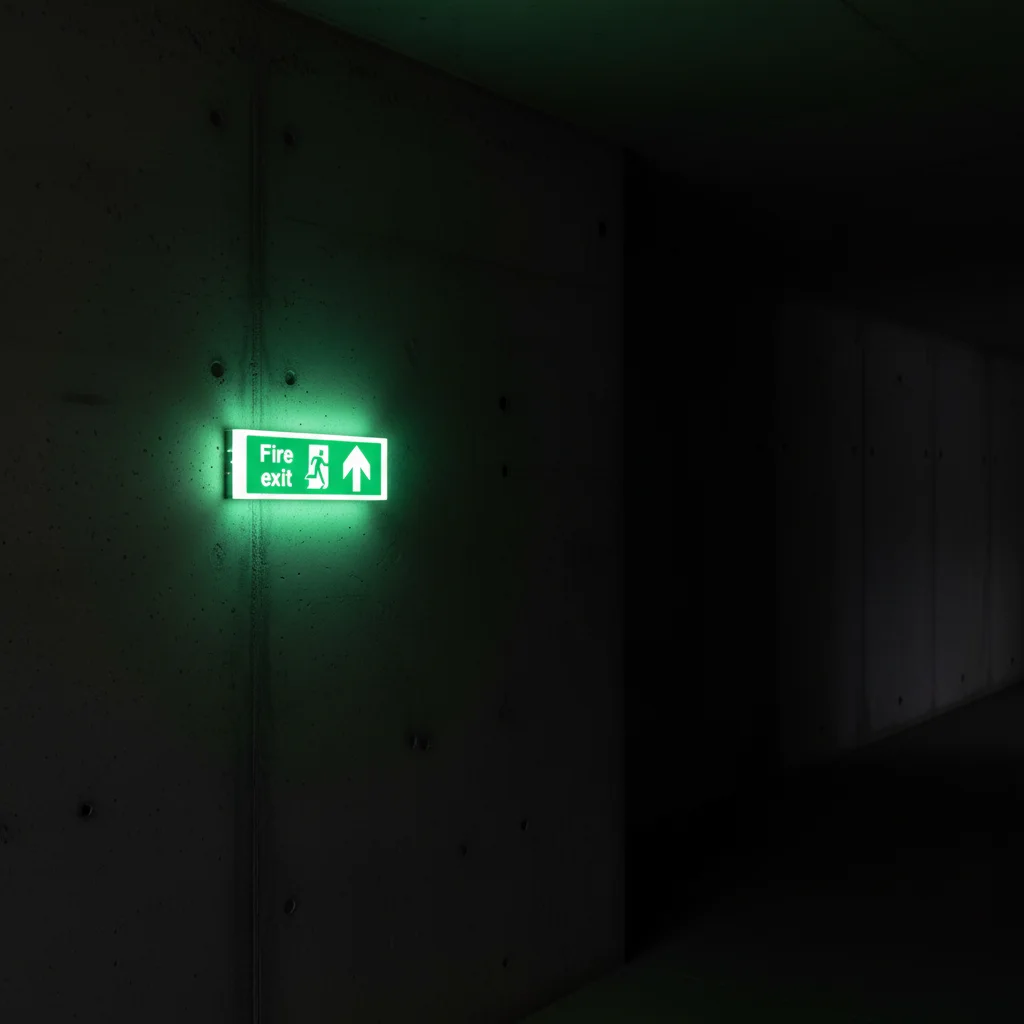
In a dark restroom with lights turned off, evacuation signs and lighting act as two layers of safety devices protecting human life in different ways. The reason lighting is needed for the sign and the reason lighting is needed to illuminate the floor operate according to separate standards.
Emergency lighting fixtures turn on automatically to protect safety on the floor during power outages caused by fires or other disruptions. According to practical manuals for electrical and disaster prevention design, emergency lighting devices must maintain an illuminance of at least 1 lx (lux, a unit of light brightness) on the horizontal floor level for more than 30 minutes when the commercial power supply is cut off 2. For people to evacuate safely from corridors or restrooms, a minimum level of brightness must reach the floor to allow them to identify obstacles or slipperiness underfoot.
Meanwhile, the display surface of the exit guidance sign itself must also remain visible in dark environments. Summary data from related blogs indicates that the illuminance of the display surface of exit signs should be at least 20 lux 3. Lighting that illuminates the floor ensures "footing safety," while lighting that supplies the sign aids in "recognizing the evacuation direction." Only when both elements are in place is an environment completed that allows users to find their direction and move safely during evacuation.
The lights that are on alongside luminescent guidance signs are not merely decorative to make the sign’s light appear brighter. That light serves as the fuel for the luminescent material. Since the sign cannot produce light on its own, if you expect the sign to illuminate the darkness in a restroom with the lights off, a small light used to charge the sign must always be kept on. This lighting is not wasteful energy; it is the only lifeline that enables luminescent signs to shine in the dark.
References
- 유도등 및 유도표지의 화재안전성능기준(NFPC303) · ublink.kr↩
- 유도등,유도표지 및 비상조명설비 일반사항 · eom.co.kr↩
- 건축물 피난구 유도등 설치 규정과 기준 총정리: 법적 요구사항부터 점검까지 · cjybiz.com↩