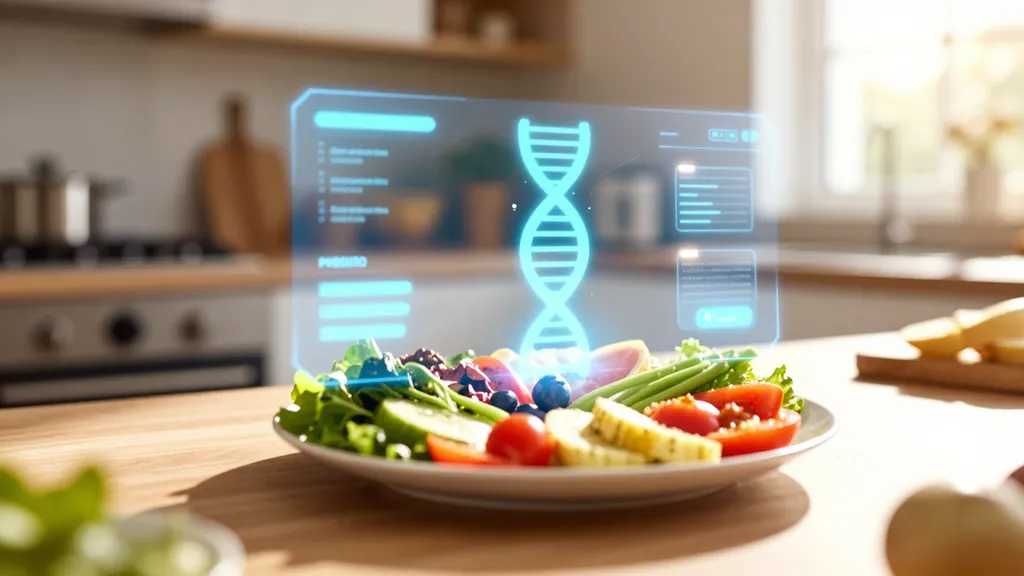
We have entered an era where we no longer eat "what others say is good," but rather "what our genes want us to eat." As of 2026, the convergence of AI and genomic analysis technology has completely transformed the dining tables we face every day. Moving beyond simply calculating calories, it has become a daily routine to receive "optimized recipes tailored just for me" in real-time by analyzing the disease vulnerabilities and metabolic patterns etched into my DNA.
Reading My Body's Blueprint: The Encounter Between Genomic Analysis and AI
Until now, we have relied on vague statements like "this food is good for you." However, the reason why one person's blood sugar spikes sharply after eating an apple while another experiences no issues can be found in our genetic differences. The healthcare trend of 2026 is focused precisely on this point: genomic analysis-based precision medicine.
Recent Google Trends data shows an explosion in search volume for genomic analysis and AI healthcare. This is not merely a reaction to a novel technology, but a reflection of the public's desperate desire to predict the future of their health. The process of identifying one's disease vulnerabilities through genomic analysis and having AI learn this to reflect it in one's diet has now become an essential course for health management rather than an option.
However, there is a point of caution here. Genetic information is extremely private and sensitive data. Ethical and legal concerns exist that my genetic vulnerabilities could lead to insurance restrictions or social discrimination. Therefore, rather than simply believing "it's correct because the AI recommended it," a wise attitude is required to thoroughly examine the reliability of the technology and data security.
The Smart Partner Ending Decision Fatigue: AI Meal Planner
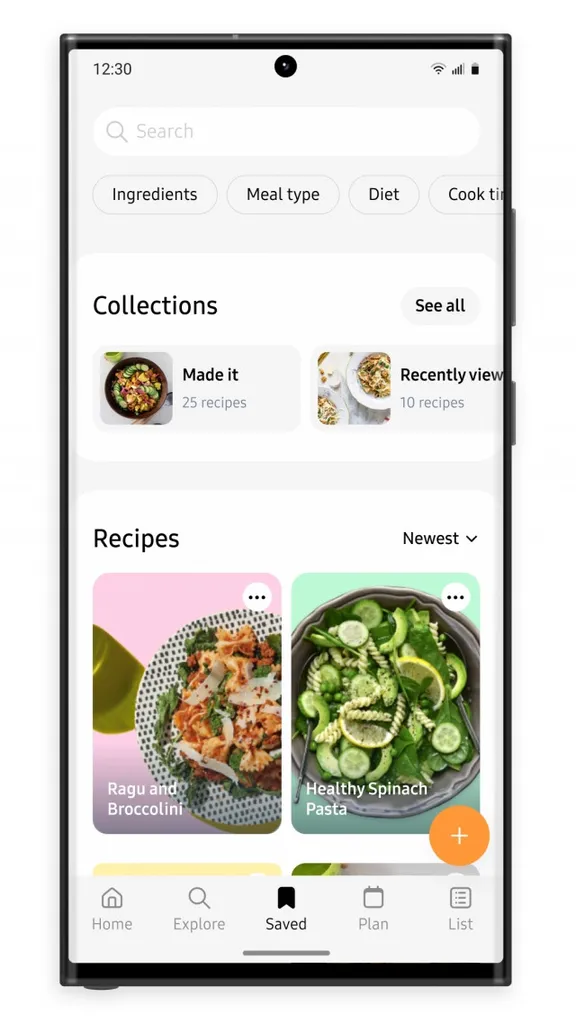
The dilemma of "What should I eat for dinner tonight?" is actually not a matter of simple laziness. In cognitive psychology, this is called "Decision Fatigue." An adult makes more than 200 food-related decisions on an average day; when the brain's energy is depleted during this process, one eventually reaches for the fastest and most stimulating delivery food or processed goods.
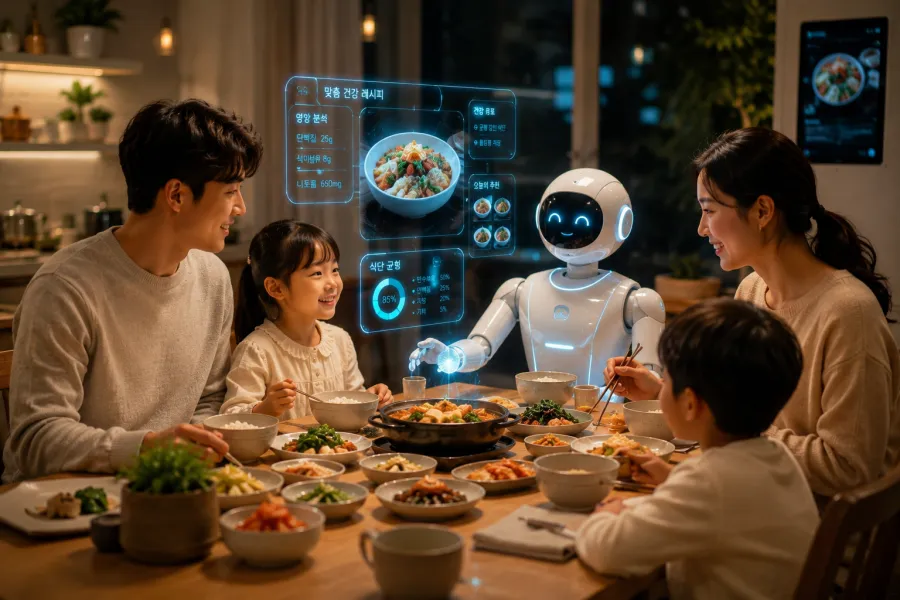
As of 2026, the relief pitcher solving this structural failure is the AI Meal Planner. Services like Jenova's Meal Planner, which are gaining attention recently, go beyond merely listing recipes.
- Personalized Weekly Planning: It perfectly remembers my dietary restrictions (allergies, keto, FODMAP, etc.) and preferences.
- Smart Grocery Shopping: It prevents duplicate purchases and creates grocery lists organized by aisle to prevent unnecessary spending.
- Ingredient Virtuous Cycle: It suggests "ingredient maximization" strategies, such as making salads, tacos, and soups from a single rotisserie chicken.
In fact, unplanned shopping and impulsive food choices deal a heavy blow to household economics. In the US, statistics show that people waste thousands of dollars every year due to unplanned eating habits. AI planners are performing the role of smart asset managers, protecting not only my body's health but also the health of my wallet.
The Era of 'FoodCare' Where Professional Nutritionists and AI Collaborate
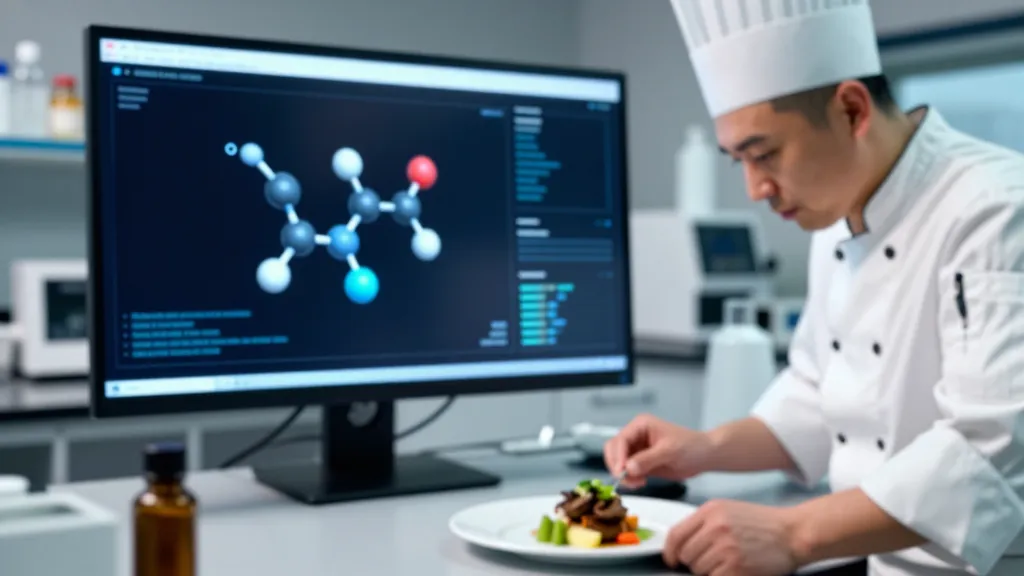
Then, how is this smart diet created? It is on a completely different level from simply asking a chatbot, "Tell me a diet for weight loss." Companies leading the market today, such as MEDI.SOLA, are building a unique ecosystem where medical professionals, clinical nutritionists, and AI experts collaborate.
The core technology they use is 'Recipe Design (RD).' This is a technology that finds the optimal ratio of nutritional components based on genetic algorithms.
- RD Planner: Used by hospital and restaurant professionals to check disease-specific risks and design recipes.
- RD Reformer: Determines if the diet an individual usually eats is suitable for their condition (diabetes, kidney disease, etc.) and automatically converts it into healthy menus.
In particular, MEDI.SOLA is accumulating clinical data based on SCI-level papers and is pioneering the Medifood market, where "meals become treatment" beyond simple lunchbox delivery. In April 2026, based on this technological prowess, they successfully entered the Hong Kong market, proving that Korean food tech is at a world-class level.
AI-Customized Nutritional Management: How to Begin?
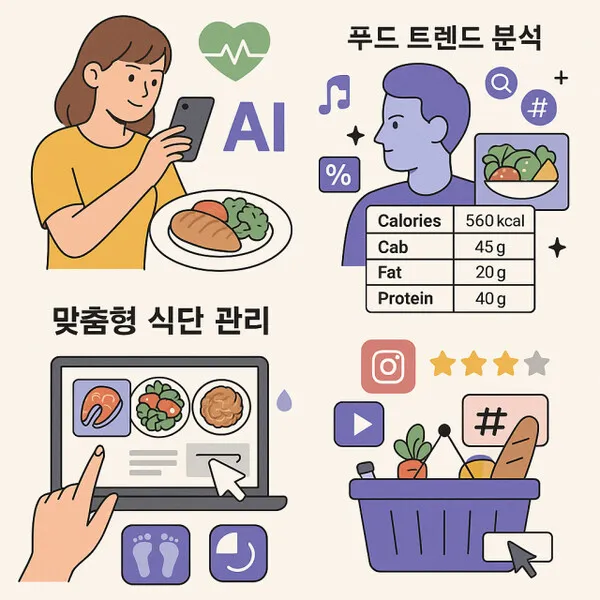
For those who are just starting to encounter this technology, I suggest a practical guide. Rather than being immersed in the glamour of the technology, AI nutritional management should be approached centered on "data accuracy" and "sustainability."
First, be cautious when choosing a genomic analysis service. While there are various companies such as Macrogen, Solagem, and Etax, you must check whether they provide "Actionable Insights"—how they link the results to a diet—rather than just throwing results at you.
Second, utilize integrated agents. It is much more advantageous to choose a system that integrates and manages my exercise data (via wearable device linkage), blood sugar levels, and meal records, rather than an app that only manages weight. Advanced AI systems in 2026 are flexible enough to adjust recommended protein intake in real-time based on my exercise intensity.
Third, verify scientific evidence. It is necessary to develop the habit of checking whether the AI's recommendations are based on the latest nutritional guidelines or clinical research results. As technology changes rapidly, one must be careful of unverified services staying in the 'Grey Zone.'
In conclusion, customized nutritional management in 2026 is a precise science completed when the 'blueprint' of the genome meets the 'architect' of AI.
Through this technology, we no longer need to eat amidst vague anxiety. A new lifestyle has opened where we understand the language of our bodies and supply the optimal fuel accordingly, thereby preventing disease and improving the quality of life.
What is your dining table telling your body right now? Did you perhaps choose just any food today because of 'decision fatigue'?
What data do you consider most important for your health management? Please share your thoughts in the comments!
References
- 2026년, 내 건강 AI가 예측? 당신의 유전자가 미래를 말해준다! · youtube.com
- AI 식단 플래너: AI로 몇 분 만에 주간 식단 계획 세우기 (2026년 5월) · jenova.ai
- AI 건강 식단 플래너: 인공지능으로 구현하는 개인 맞춤형 영양 관리 ... · jenova.ai
- 개인맞춤영양 AI Diet 식품산업 · kfn.or.kr
- 생성형 AI를 활용한 맞춤형 식단 추천 시스템 설계 - 한국학술지인용색인 · kci.go.kr
- 영양유전체학과 맞춤영양의 윤리적ㆍ법적 쟁점과 규제 프레임워크에 ... · kci.go.kr
- [기업탐방] 메디쏠라(MEDI.SOLA) - “식사가 곧 건강관리” · kueherald.co.kr
- 메디쏠라, '2026 월드IT쇼' 참가…AI·데이터 기반 'RD' 중심 영양 설계 ... · etnews.com